





Tessa's Recipe Rundown
Taste: Olive oil + fresh rosemary + salt = bold, savory, craveworthy flavor!
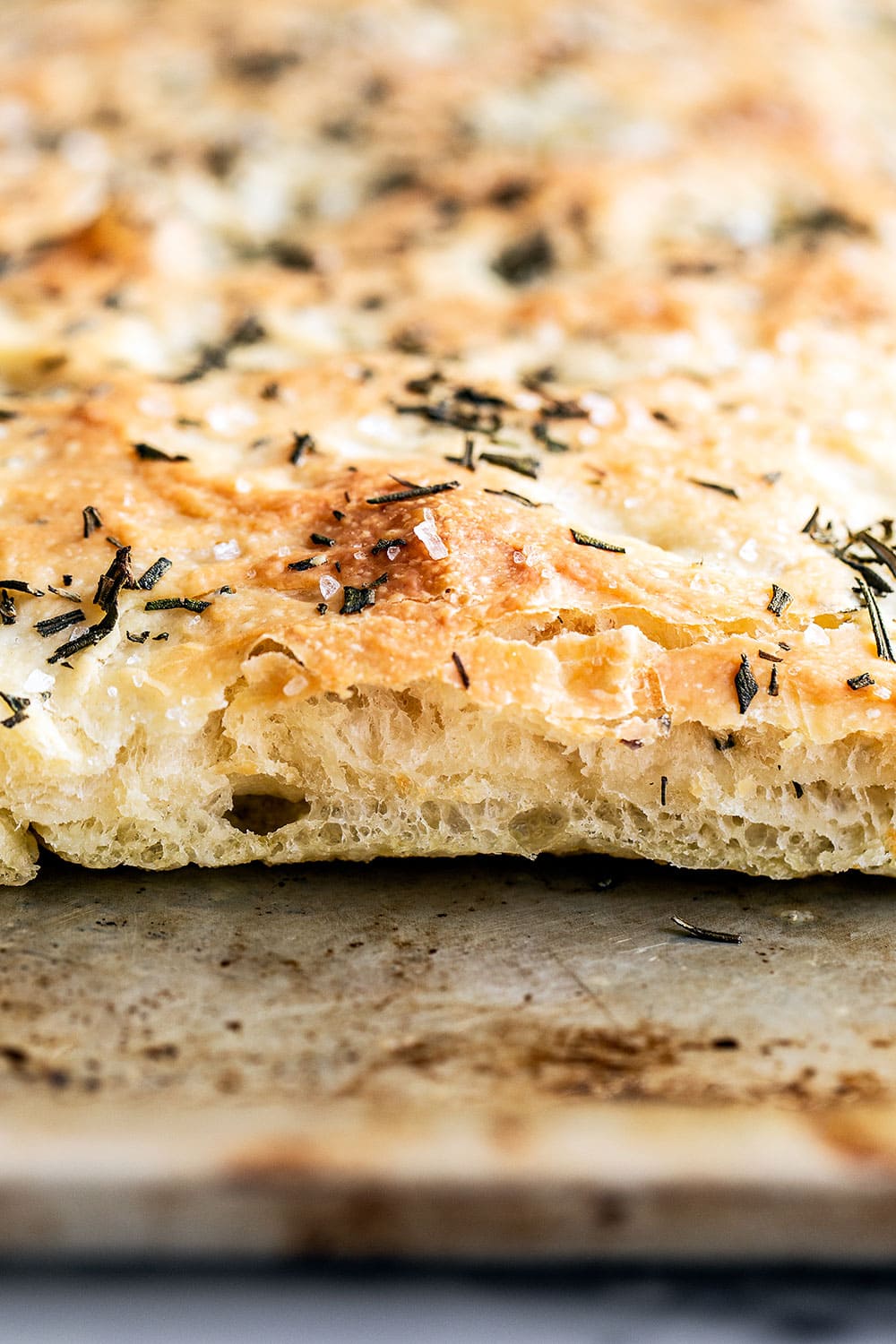
Texture: Soft and chewy inside with perfectly crisp golden edges.
Ease: No kneading, no mixer, just time & patience.
Why You’ll Love This Recipe: Incredibly forgiving and beginner-friendly, though you’d never guess from the amazing results.
This post may contain affiliate links. Read our disclosure policy.
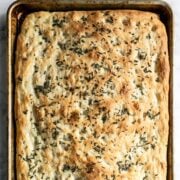

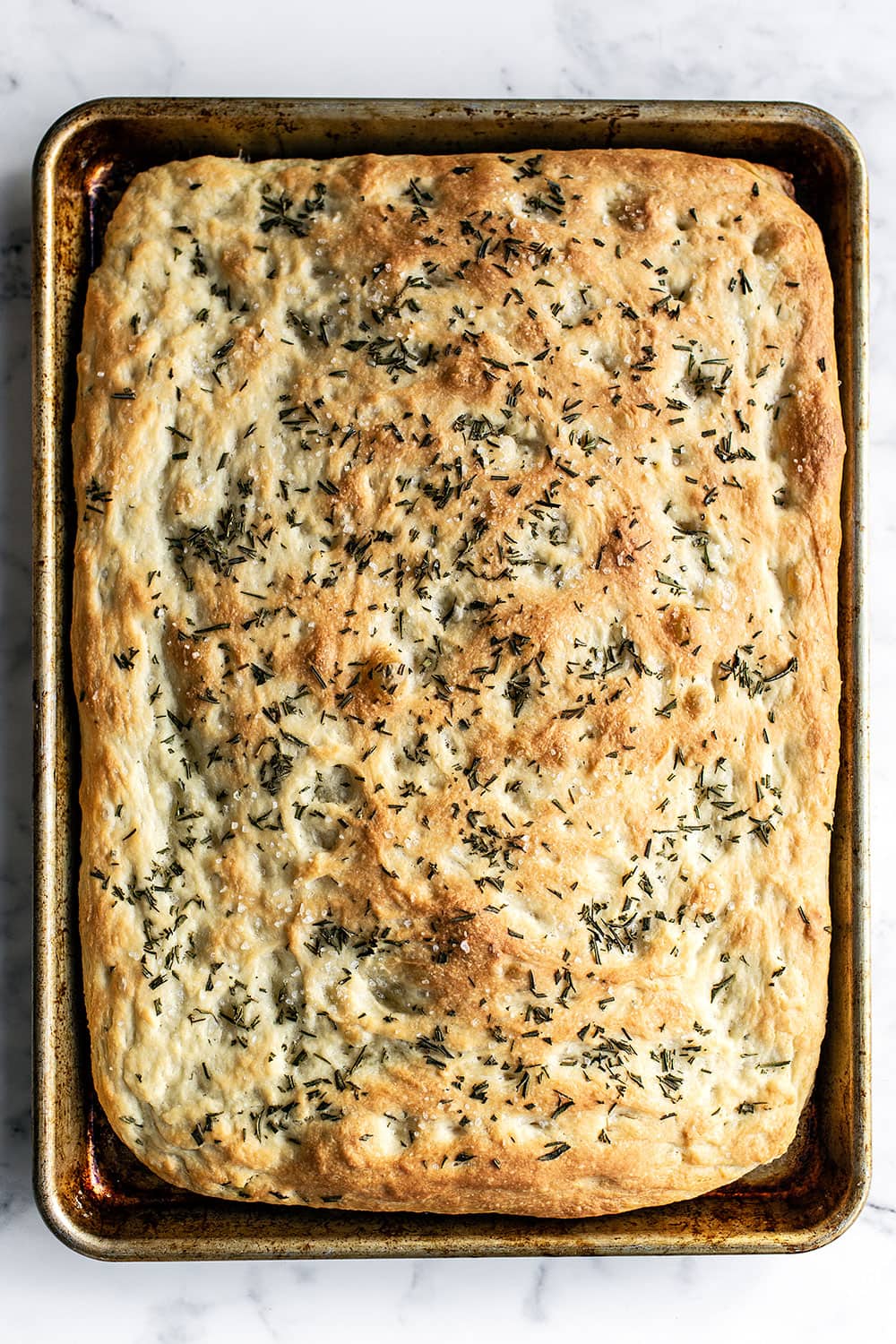
My focaccia recipe is one of the highest reward, lowest effort breads you can make right at home.
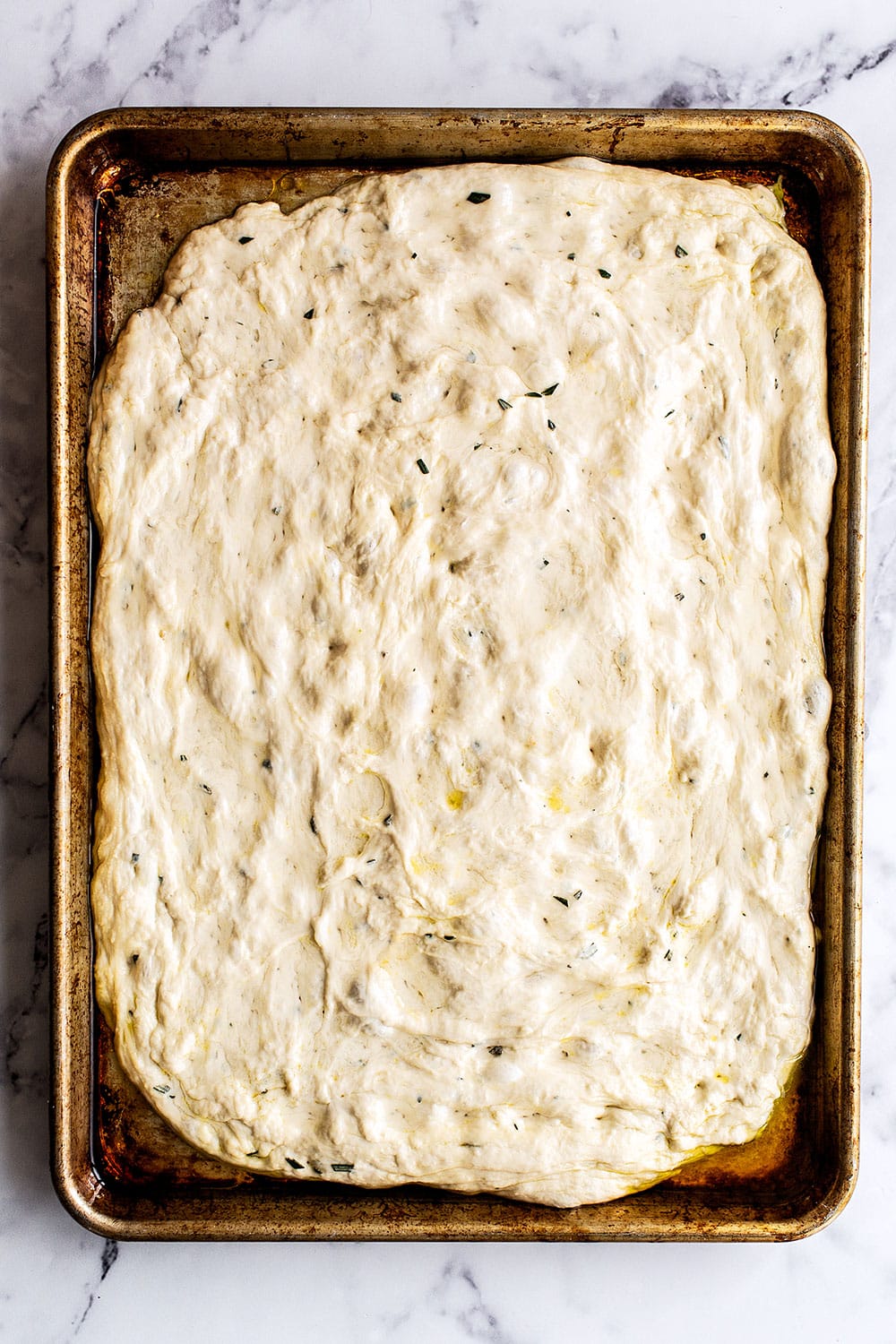
After watching Salt Fat Acid Head on Netflix , I tweaked my original focaccia bread recipe to reduce the yeast and extend the fermentation time.
This dramatically improved the flavor and texture without adding more difficulty. In fact, this method now allows for flexibility. You can bake it the same day or refrigerate the dough for several days to develop more flavor.
Reader Love
Made this for some friends for dinner to go along with my beef and barley soup. So delicious and easy to make! Everyone loved it.
–

Sprinkle of Science
Ingredients Notes
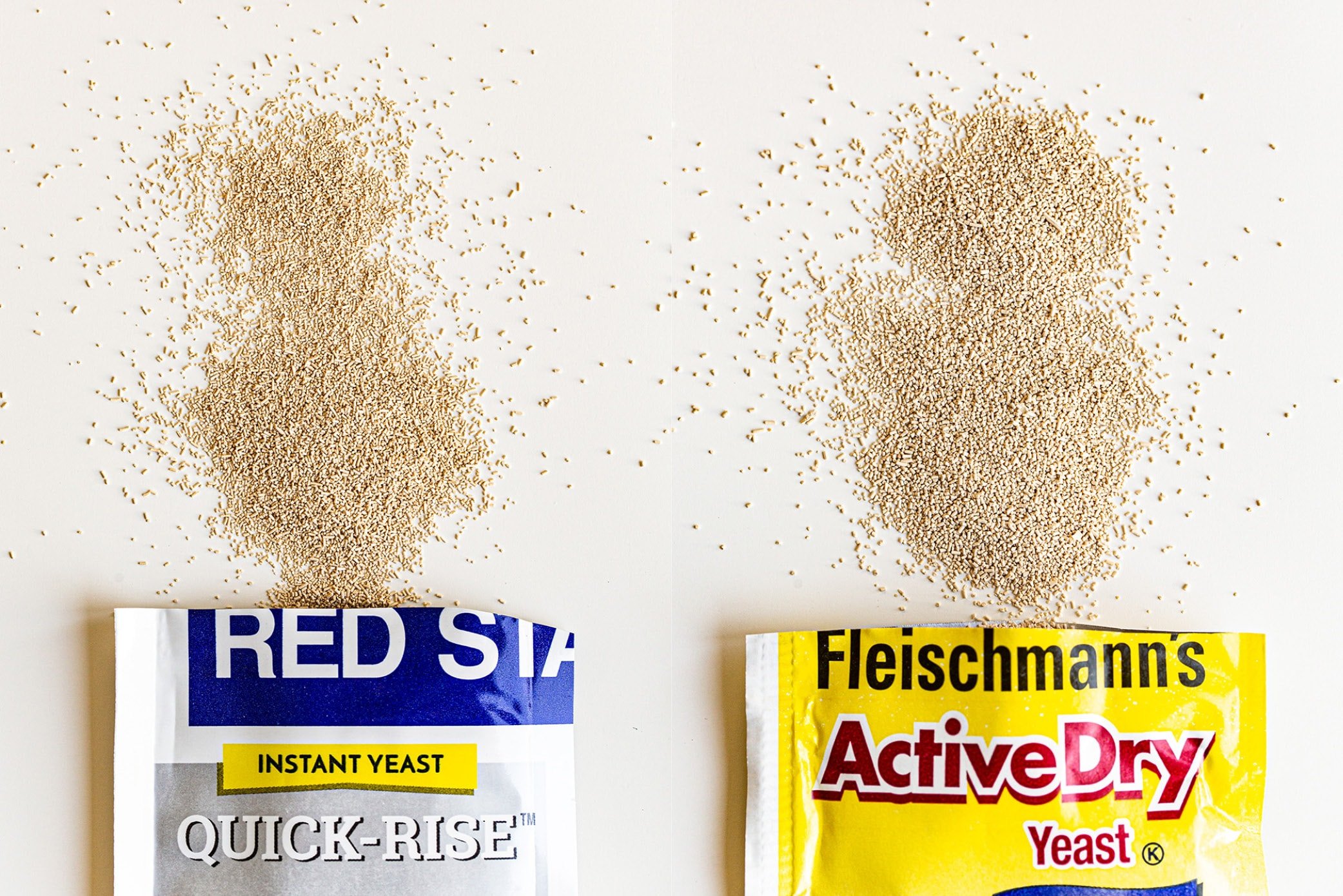
- Active dry yeast – A small amount of yeast + a long rise time = more flavor.
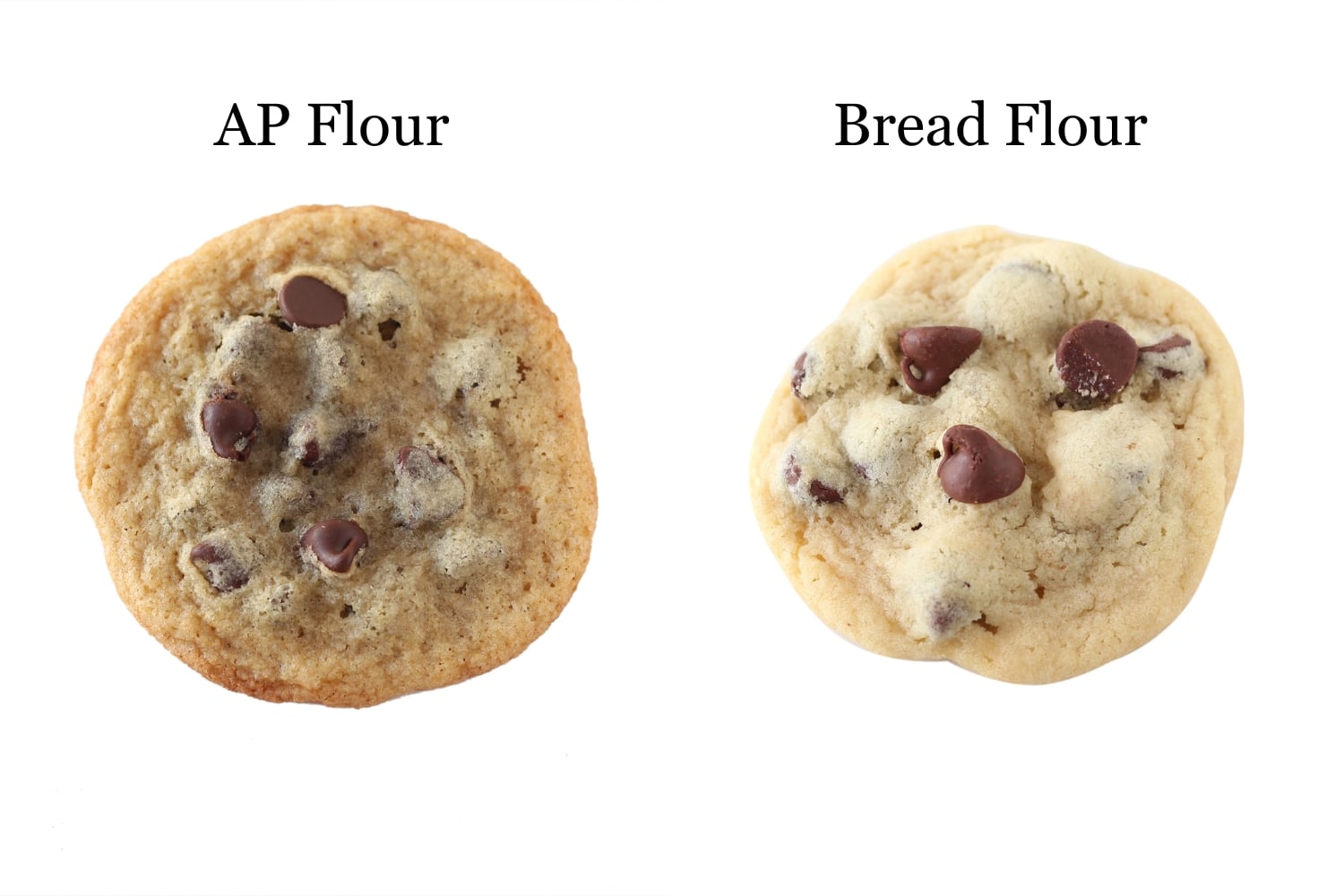
- All-purpose flour – The backbone of our focaccia bread, no need to run to the store for bread flour here!
- Granulated sugar – Just a little, to help feed the yeast as the bread ferments.
- Salt – Do not skimp! It may seem like lot (there’s three salt additions), but trust the process.
- Fresh rosemary – Adds aroma and that classic flavor. Chop finely so it doesn’t burn. And yes, fresh is best.
- Extra virgin olive oil – Again, do not skip. It’s a lot of oil, but it provides flavor, moisture, and crispness.
How to Make Focaccia Bread (Step by Step)
- Activate the yeast.
In a large bowl, combine warm water (110-120°F), yeast, and sugar. Let sit until slightly foamy, about 5 minutes. The surface should look cloudy with small bubbles. - Mix the dough.
Stir in 2 teaspoons chopped rosemary, half the flour, and the salt. Add ½ cup olive oil, then gradually add remaining flour until a shaggy, slightly sticky dough forms. The dough should look rough and loose, not smooth. - First rise (bulk fermentation).
Use wet hands to transfer dough to a lightly oiled bowl, cover, and let rise at room temperature for 8–10 hours, until doubled.
Optional: Refrigerate for up to 3 days for deeper flavor. - Spread onto pan.
Coat a rimmed half-sheet pan generously with remaining ½ cup olive oil. Turn dough out and gently stretch to fit the pan.
If it springs back: Cover and rest 10 minutes, then continue. - Dimple deeply.
Use your fingertips to press deep dimples all over the dough, reaching through to the pan bottom. This creates texture and holds the brine. - Add the brine.
Dissolve salt in warm water. Pour evenly over dough, letting it pool in the dimples. - Second rise.
Cover loosely and let rise until visibly puffy, about 45 minutes. - Bake.
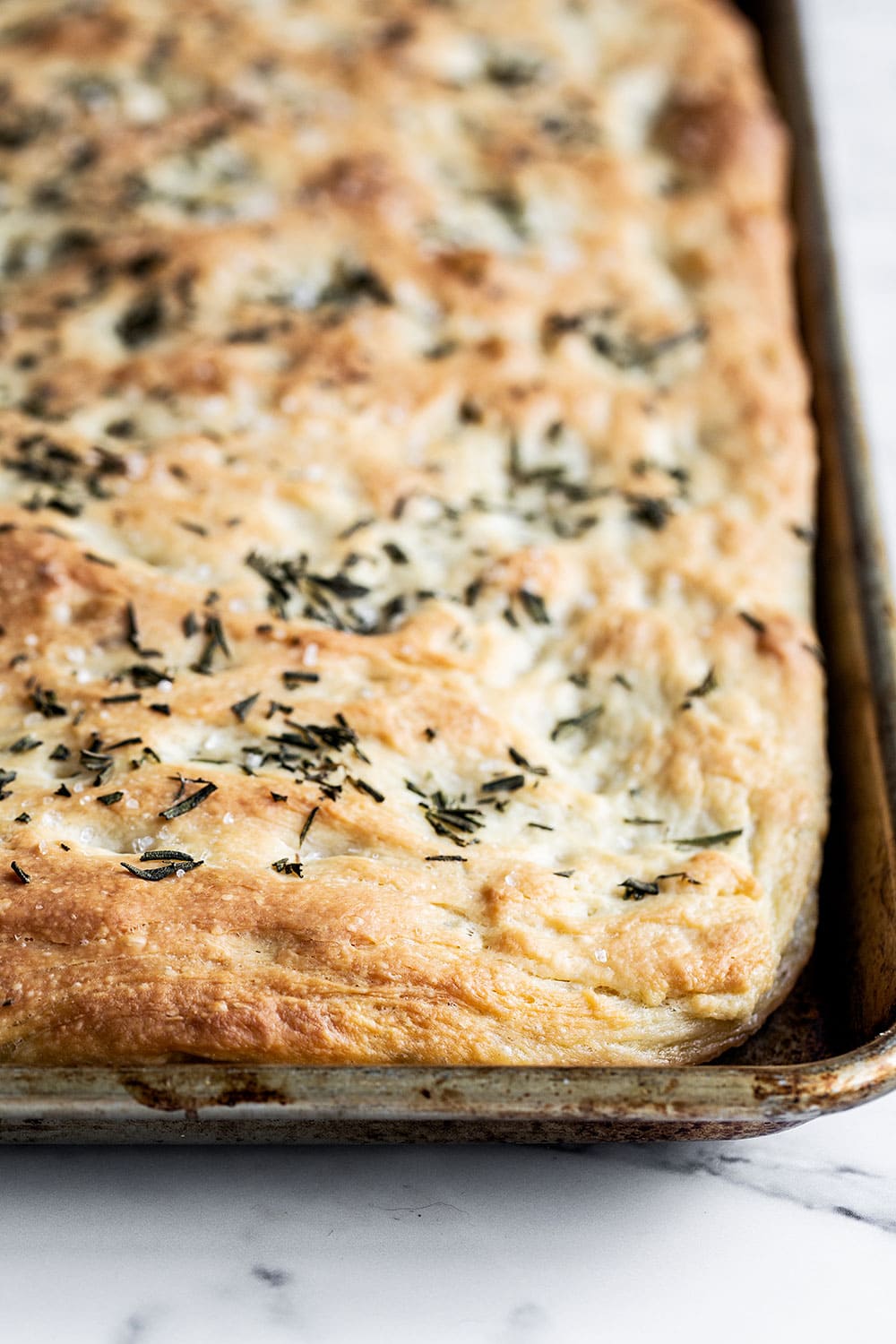
Preheat oven to 450°F. Sprinkle dough with flaky salt and remaining rosemary. Bake on the stone for 25–30 minutes, until deeply golden with crisp edges.
To guarantee crispy golden brown edges, I like to use a pizza stone to bake the tray of focaccia dough on. If you don’t have one, simply invert a high-quality rimmed baking pan and use in place of a stone.
Variations for Homemade Focaccia Bread
- Fresh herbs – Feel free to add whatever herbs you like to this focaccia bread. Fresh sage is a delicious alternative/addition. Fresh thyme, basil, and chives are also fabulous options.
- Toppings – You can also top the bread with whatever you fancy. I like shredded cheese (parmesan cheese works great), crumbled feta or goat cheese, torn fresh mozzarella, olives, bell peppers, cherry tomatoes, or even caramelized onions.
- Homemade everything bagel seasoning adds a fun touch.
- Garlic cloves – Add fresh, finely minced garlic to the dough.
- Pizza – Make a Focaccia Pizza!
- Sandwiches – Use a serrated knife to slice your cooled bread in half and make focaccia sandwiches.
- Dip into your favorite soups!
Storage
Focaccia bread is best the day it’s made. Store leftovers in a plastic bag for up to 1 day or freeze for up to 1 month.
Allow to defrost at room temperature then refresh in a 325°F oven until warmed through and crispy again, about 5 minutes.
FAQs
Focaccia is an Italian bread known for its olive oil–rich dough, dimpled surface, and crisp edges. It’s softer, flatter, and more flavorful than regular sandwich bread.
Usually not enough olive oil or insufficient oven heat. Use a metal pan (even a dark colored pan, which I usually avoid unless I want deeply golden bottoms & edges!), bake at 450°F, and don’t skimp on oil.
No! This no-knead focaccia bread recipe is beginner-friendly and relies on time, not technique.
Yes. Refrigerate the dough after the first rise for up to 3 days for better flavor. If refrigerating, don’t allow the dough to fully double before placing in the fridge, otherwise you may risk over-proofing.
Yes, that should work, but your crust may turn out much chewier and your dough stiffer.


Email This Recipe
Enter your email, and we’ll send it to your inbox.
Ingredients
For the dough:
- 2 cups lukewarm water, about 110° to 120°F
- 1 teaspoon active dry yeast
- 1 tablespoon granulated sugar
- 5 sprigs fresh rosemary leaves, chopped and divided
- 5 1/4 cups (670 grams) all-purpose flour
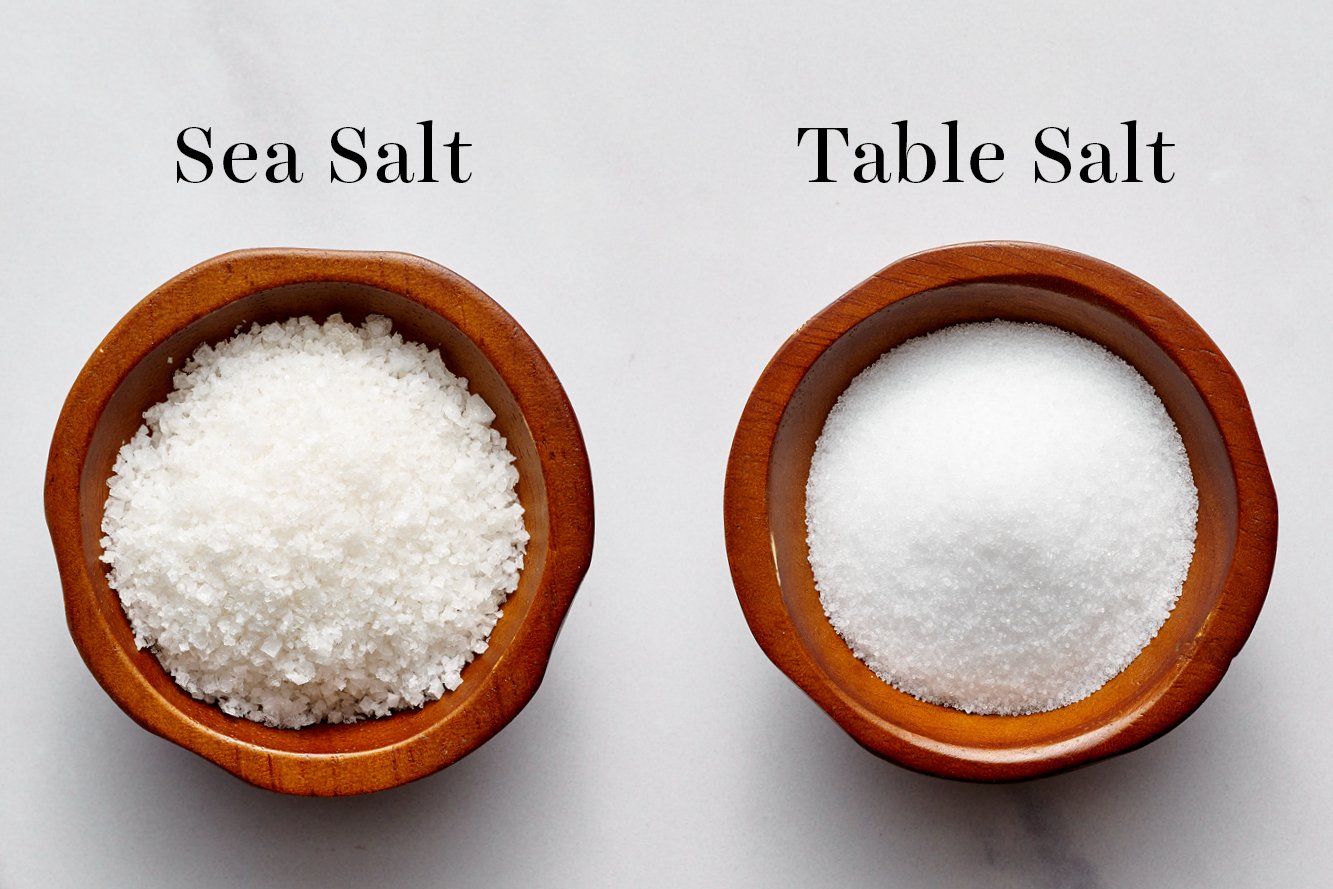
- 1 tablespoon kosher salt, plus coarse sea salt for sprinkling
- 1 cup extra-virgin olive oil, divided
For the brine:
- 3/4 teaspoon fine sea salt
- 1/3 cup lukewarm water
Instructions
- In a large bowl, combine the warm water, yeast, and sugar. Add in 2 teaspoons of the chopped rosemary, half the flour, and the salt, and stir to combine. Add 1/2 cup olive oil. Gradually add in the remaining flour until a shaggy mass forms. Only add in as much flour as you need to create a shaggy, slightly sticky dough.
- Transfer the dough to a lightly oiled bowl. Cover with plastic wrap and let ferment at room temperature for about 8 to 10 hours, or until doubled in size.
- You can also refrigerate the dough for several days to rise slowly. This will also develop more flavor. Note the second rise will take at least twice as long if the dough is cold.
- Coat a rimmed half-sheet pan with the remaining 1/2 cup olive oil. Turn the dough onto the pan and begin pressing it out with your fingertips to fit the size of the pan. Coax and stretch the dough to fit the entire pan, or just about. If the dough springs back, cover and let it rest for 10 minutes before proceeding. Spread your fingers to make little dimples all the way through the dough.
Make the brine:
- Combine the warm water and salt together until the salt is dissolved. Pour all over the dough to make little pools of water in the dimples. Cover loosely with plastic and allow to rise again until the dough is puffy, about 45 minutes.
Bake the bread:
- Meanwhile, place a baking stone in the oven and preheat to 450°F. If you don't have a baking stone, invert a heavy-duty rimmed baking sheet and place in the oven to preheat.
- Sprinkle the dough liberally with coarse sea salt and the remaining rosemary leaves. Bake with the sheet pan on top of stone until the focaccia is golden brown, 25 to 30 minutes.
- Let cool until just warm before serving. Store leftovers in an airtight container for 1 day, or freeze for up to 1 month.
More Savory Recipes You’ll Love:
This recipe was originally published in 2014 and has been updated with recipe improvements and new photos. Photos by Ashley McLaughlin.


Easy to make! I love this bread. I’ve used it for croutons, sandwiches and just plain eating! It’s pretty much foolproof. I’ve always been afraid to bake bread, but this stuff is easy and delishious!
What size pan are you using?
I have made this twice. Once for a football get together and second for an oyster roast with friends. Both times it got rave reviews! I followed the recipe, except I used a whole packet of yeast. The rising time was much shorter. The taste and texture of this bread is fantastic! On the second loaf, I used anything bagel seasoning along with the resemary. Amazing!! THANKS!
Hi Tessa! I am a (veryveryvery) beginner bread maker (I’ve made exactly 3 loaves of yeast bread in my life). Can you please clarify what a “shaggy dough” looks like?
The opposite of smooth 🙂
Thanks so much for the great recipe! I have made this so many times for friends and family and it is always a hit. However, I was disappointed to see the recipe updated to include more time/steps than before! I was wondering if you would be willing to send or post your older recipe as it was such a favorite…
Hi, Tessa! About a month ago … in August 2019 … I came across your video on how to make FOCACCIA BREAD and bake it on an Emile Henry rectangle pizza stone. And, fortunately, right after that, also in August 2019, I was able to find and buy the 2nd. last Emile Henry glazed rectangle pizza stone online, to use for baking your recipe for Focaccia Bread. Your video on how to make Focaccia bread, which I had initially watched back in August 2019, showed how you place the jelly roll pan RIGHT ONTO THE HOT Emile Henry GLAZED RECTANGLE PIZZA STONE IN THE OVEN. But just moments ago, today … Sept. 12, 2019 … I went to watch that same video, on the internet, which I had found and watched back in August 2019, on the internet, but this time the video DIDN’T SHOW YOU PLACING THE JELLY ROLL PAN ONTO THE HOT rectangle Emile Henry glazed pizza stone in the oven. I went on You Tube but couldn’t find that video showing you placing the Emile Henry glazed rectangle pizza stone in the oven to heat up & then showing you place the jelly roll pan with the Focaccia Bread dough on it, onto the hot preheated rectangle glazed pizza stone. This time, the video I found and watched only shows you spreading the Focaccia Bread dough in the jelly roll pan, & then bringing the jelly roll pan back to the counter with the BAKED Focaccia bread on it … but it doesn’t show the Emile Henry pizza stone in the oven, or you placing the jelly roll pan with the Focaccia Bread dough on it, onto the preheated hot pizza stone in the oven. Where can I find and watch the same video I had found and watched back in August 2019 which shows the Emile Henry glazed rectangle pizza stone & you placing the jelly roll pan with the Focaccia Bread dough onto it?
Hi, Tessa! I had sent you a question about Focaccia Bread, some time ago, & now when I just received an email from you saying that there’s a new comment on Focaccia Bread, I thought it was the answer to my question … but it wasn’t. My question WAS … Can I use TYPE 00 FLOUR to make your Focaccia Bread recipe? I use TYPE 00 FLOUR to make some excellent breads … TYPE 00 FLOUR is what most commercial pizzerias use to make pizza dough. TYPE 00 FLOUR is also very commonly used in Italy. If I can use TYPE 00 FLOUR, how much of it can or should I use to make your Focaccia Bread recipe? Sheila.
How do I use the brine and when
Hi, Tessa! I am looking forward to making your Focaccia Bread recipe very soon. I have been BAKING for decades, and now in my retirement lifestyle I TEACH BAKING (for free) to young mothers & teenagers from ethnic backgrounds whose own cultural foods don’t include our “European / western style” baking and cooking. I have won prizes for my baking over the decades. I have been using (organic) TYPE 00 FLOUR TO MAKE PIZZA DOUGH FOR A FEW YEARS NOW … and I would like to know if it’s okay to use this Type 00 Flour to make your Focaccia Bread, even though your recipe for this Focaccia Bread uses All Purpose Flour. I used to IMPORT small amounts of ORGANIC ITALIAN TYPE 00 FLOUR FROM A COMPANY IN THE UK (England) called “Bakery Bits UK) … it was EXCELLENT for making pizza dough. But more recently I have been able to find ORGANIC CANADIAN GROWN TYPE 00 FLOUR right here in the Toronto area where I live … the brand name of this Organic Canadian Grown TYPE 00 Flour is “Anita’s Organics” … I think you can buy it online … but I bought mine at a local health food store in the Toronto area. Please advise if your recipe for Focaccia Bread will turn out OK if I use Type 00 Flour. PLEASE KEEP MY CONTACT INFORMATION CONFIDENTIAL. BLESSINGS … Sheila.
i can’t thank you enough for this recipe. It turned out superb. Best foccacia bread I’ve made. Once again thanks.
Uh oh. The recipe has changed and I didn’t save the original. I’ve been making this for a few years and it’s a favorite. I haven’t tried the updated version yet and I’m slightly afraid to as the original was so highly received.
We used your focaccia dough recipe the other day. We made the dough in the early afternoon and let it rise until late at night. We then transferred the dough into a pan where we let it rise for 2 hours and then refrigerated it overnight. We took the pan out in the early afternoon and let it rise for another 2 hours and then applied toppings. We let it bake for 50 minutes and I can’t describe how delicious it was and how it reminded me of what my mom used to make when I was much younger. Thank you for sharing.