






Tessa Arias, Chef and Cookbook Author
This post may contain affiliate links. Read our disclosure policy.
I started blogging in 2009 (!) and since then have published over 1,000 recipes, as well as written two cookbooks. Over the years I’ve learned one thing for certain: baking is a science!
That’s why I now dedicate so much time and energy to publicizing fun experiments like this one, to show you how small changes can sometimes make a big difference in the final result of your baked goods.
With all of the information I post about baking science, you’ll be empowered to enter the kitchen with confidence. In this pumpkin puree article specifically, you’ll be empowered to enter the grocery store with confidence!
What is Pumpkin Puree?
Pumpkin Puree is the roasted and blended flesh of the pumpkin, with the skin and seeds removed. Fresh pumpkin puree will be a very different color, texture, and flavor, compared to canned pumpkin. See our comparison and experiment results further below!
How to Make Homemade Pumpkin Puree
Before we get into the fresh vs. canned pumpkin nitty gritty, be sure to check out this step-by-step video and my easy recipe for making your own pumpkin puree. It’s surprisingly simple!
The full fresh pumpkin puree recipe is in the printable recipe card below, but the steps are straightforward:
- Preheat oven to 375°F.
- Cut your pie or sugar pumpkin(s) in half and scoop out the seeds and pulp.
- Roast for 45 minutes, or until fork tender.
- Remove skin and place pumpkin in the bowl of a food processor and puree until smooth.
Which Kind of Pumpkin Should I Use for Cooking and Baking?
If you attempted to make homemade pumpkin puree from a regular field pumpkin that you would use to carve a jack-o-lantern for Halloween, the result would be stringy, watery, and bland. Instead, use pie pumpkins or sugar pumpkins for the best flavor and texture in any sweet or savory recipe.
What to do with Pumpkin Seeds?
- Let them air dry, toss with oil and seasonings, and roast them low and slow at 250°F for an hour
- Add them to your favorite homemade granola or trail mix
- Blend into pumpkin seed butter
- Garnish your favorite soup or dip with them
- Add them into guacamole
- Use instead of pine nuts in homemade pesto
- Add them into a salad
- Sprinkle on oatmeal
The full detailed instructions for roasting seeds are also included in the printable recipe card.
How Long Does Pumpkin Puree Last? Can you Freeze Pumpkin Puree?
Use or store in the fridge in an airtight container for up to a week, or in the freezer for 6 to 8 months. This applies to both leftover canned puree and homemade fresh pumpkin puree.
Fresh vs. Canned Pumpkin Puree
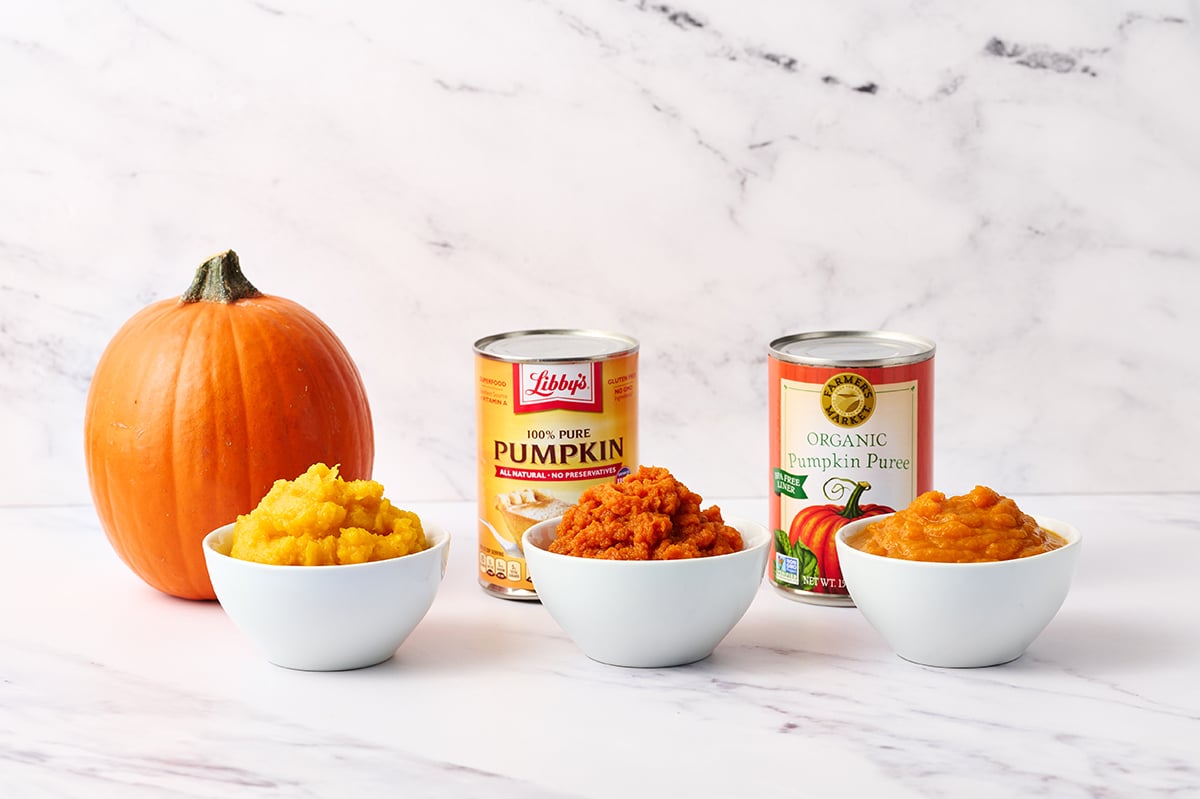
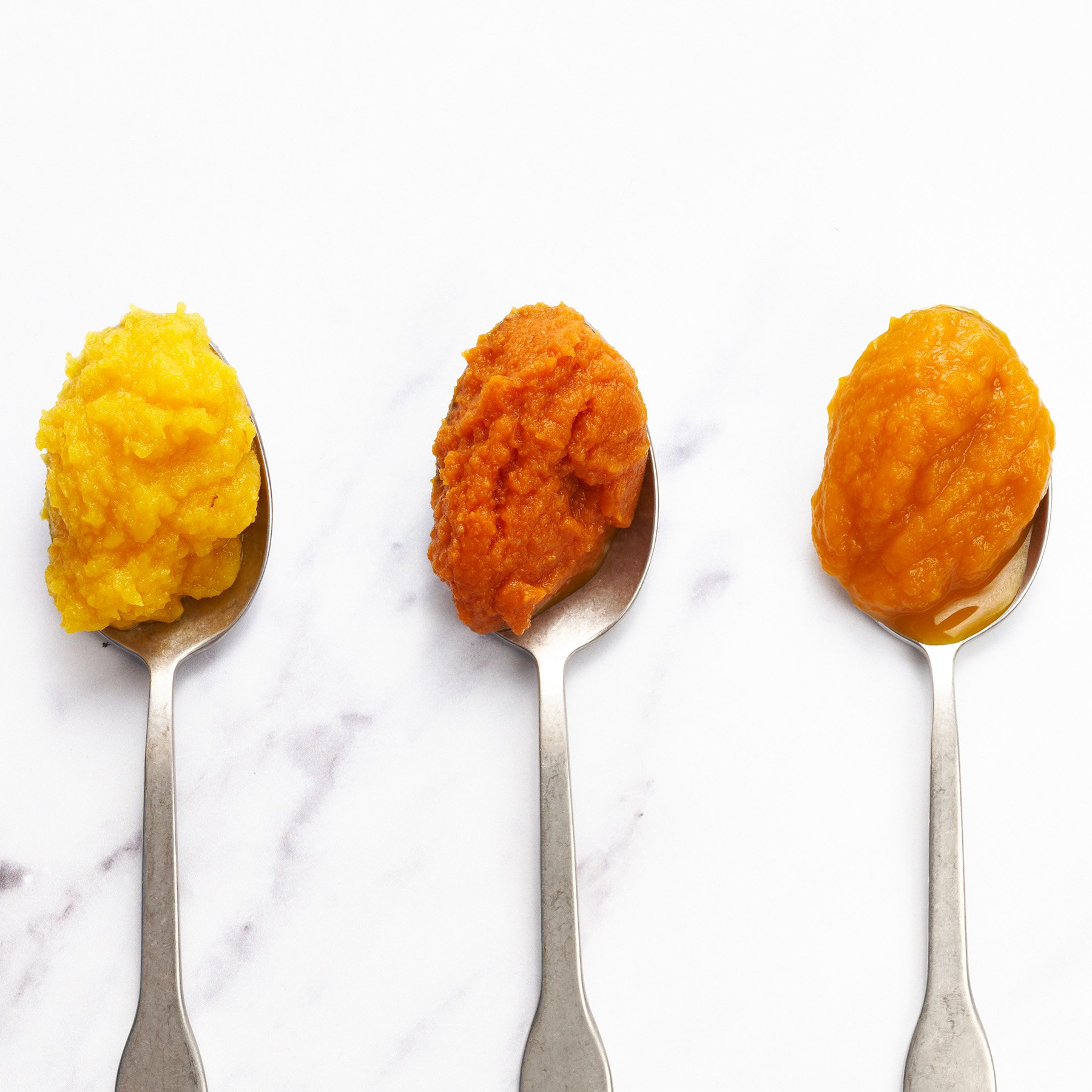
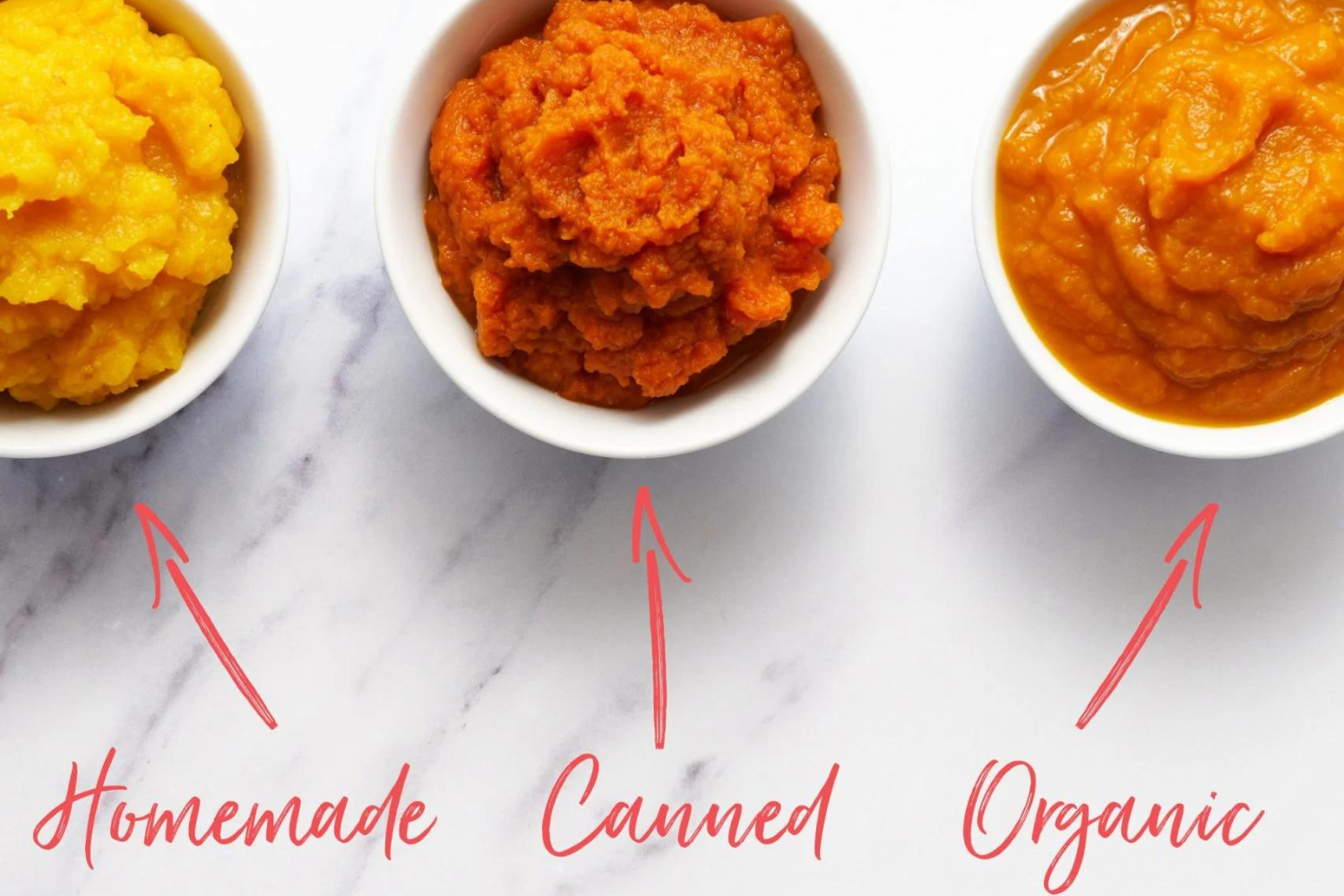
From left to right: Fresh, regular canned (Libby’s), organic canned (Farmer’s Market brand).
As you can see from just a quick visual assessment, there is a BIG difference in color and even in texture between these three purees. What you can’t see is there were also slight differences in the flavor.
The fresh is notably the lightest in color; it almost just looks like any ol’ pureed squash. The organic is the second darkest, while the regular canned stuff is practically a completely different color.
Why is Libby’s Canned Pumpkin so Dark in Color?
A quick Google search revealed that Libby’s uses a proprietary variant of the Dickinson pumpkin, which actually looks more like a butternut squash than a pumpkin. The claim is that these pumpkins have been grown specifically for pumpkin puree in cooking and baking, so the result is a sweeter and creamier product. Interesting.
Of course, anything that’s been canned will likely taste different than the fresh product.
Pumpkin Puree Texture Comparison:
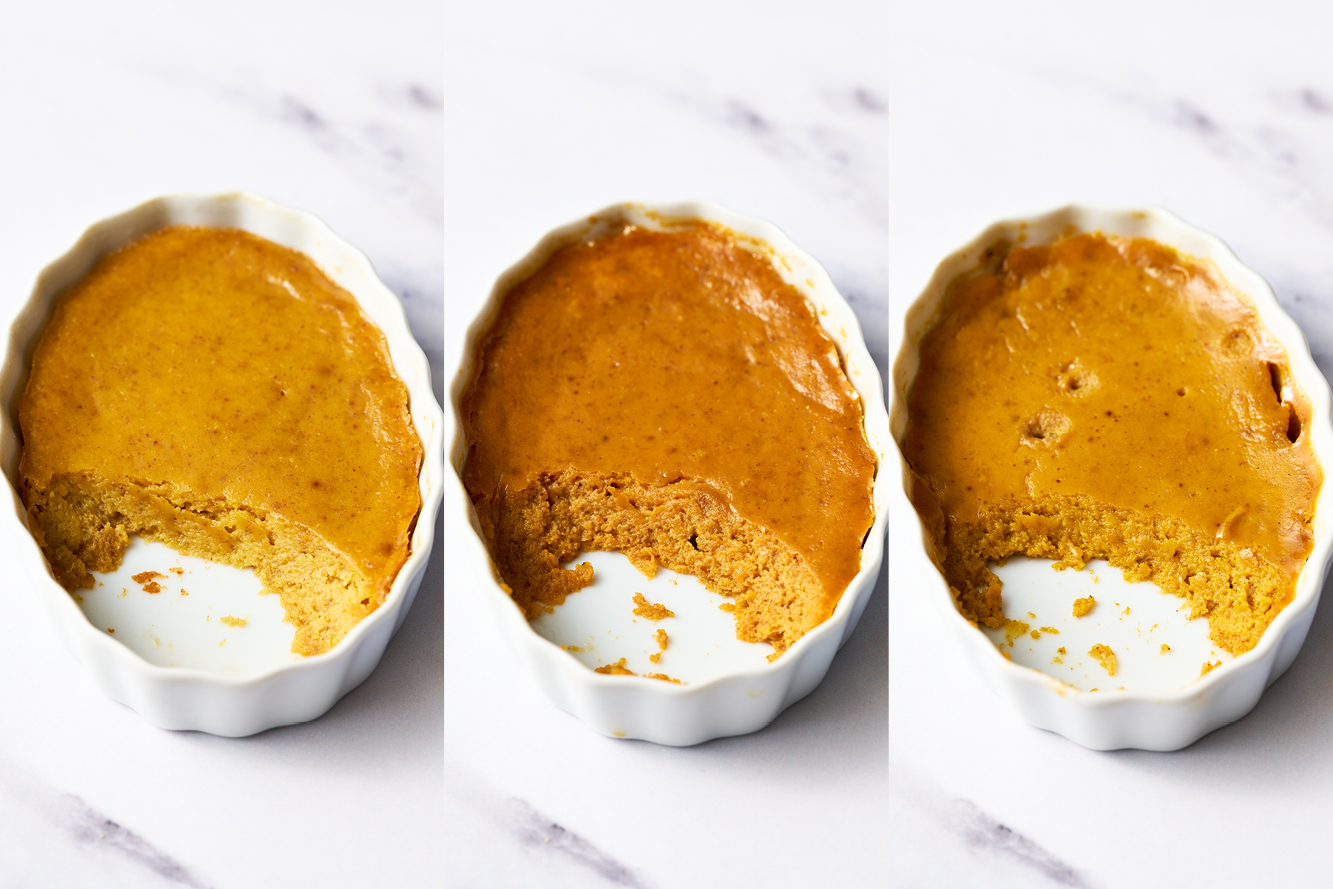
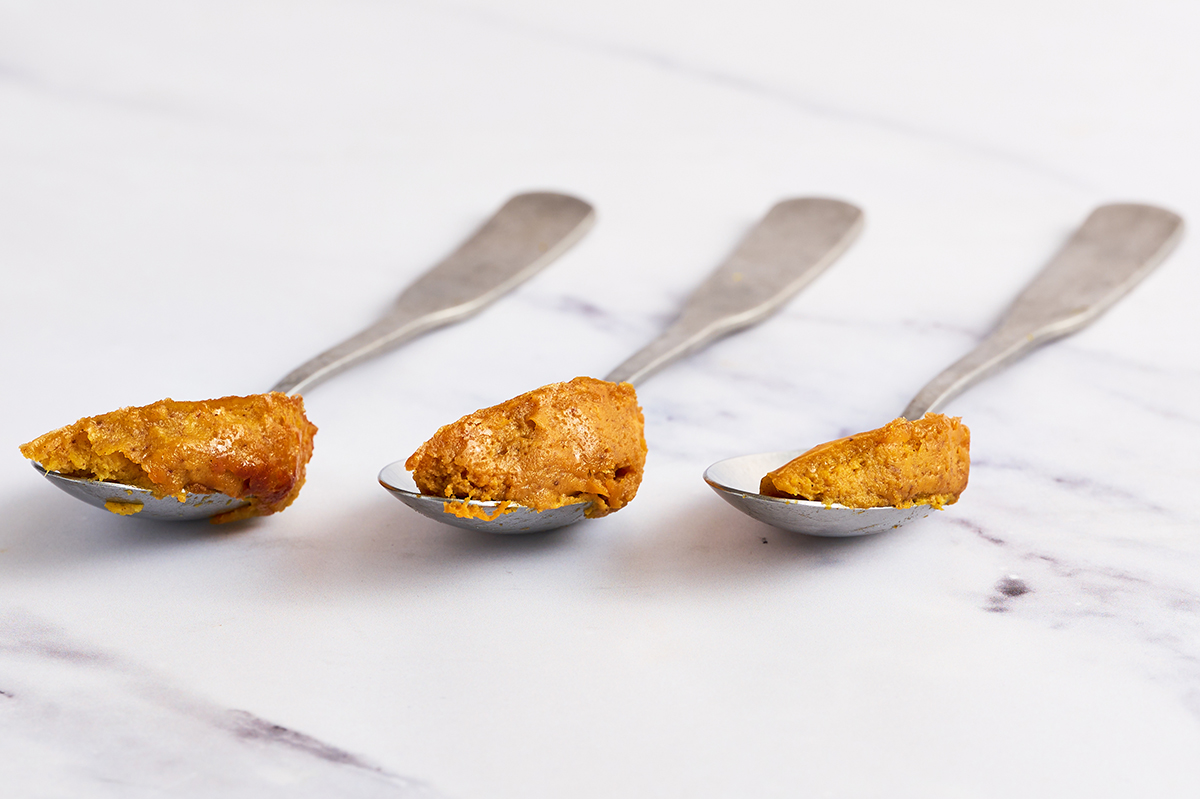
- Fresh: Velvety, creamy, and slightly loose and fluffy. The baked pumpkin pie filling made with fresh puree almost reminded me of flan (but a slightly overcooked one).
- Regular canned: Loose, smooth, very thick, and reminiscent of ricotta cheese. This was the least watery of the three. The baked pumpkin pie filling made with Libby’s also shrank the least, because of that lack of water content.
- Organic canned: The puree on its own was extremely watery and almost looked like applesauce. It had the most air bubbles form during baking, making the appearance less appealing. In the final baked pumpkin pie filling, its texture was more custard-y, almost gelatinous. I did get a stringy bit in one of the bites I took.
For baking recipes where you really don’t want excess water content, such as Pumpkin Cheesecake or Brown Butter Pumpkin Chocolate Chip Cookies, I recommend avoiding using organic or homemade canned pumpkin puree. The extra liquid could throw off the texture of the recipe.
Pumpkin Puree Taste Comparison:
- Fresh: Squashy/pumpkiny, subtle almost herbaceous flavor.
- Regular Canned: Deep, slightly intense unique flavor.
- Organic Canned: More similar to the fresh stuff than the regular canned, but with more flavor than homemade.
Since in most pumpkin baking, we add tons of sugar and spices, the texture is as important, if not more so, than the taste. In fact, pure pumpkin puree kind of just tastes like straight-up baby food.
Once baked into mini pumpkin pies (following the standard recipe from Libby’s), the color differences among the purees became less obvious.
After adding sugar and spices which disguise the original pumpkin flavor, it was all about the texture. The regular canned was definitely the firmest, the organic canned was most watery, and the fresh puree was the lightest and most velvety.
Canned Pumpkin vs. Pumpkin Pie Filling:
It’s very important to never confuse these two cans. Canned pumpkin should contain the puree only. It’s one ingredient. Pumpkin pie filling, on the other hand, will contain sugar and spices. Unless the recipe you’re following specifically calls for pumpkin pie filling, avoid purchasing it to avoid the possibility of a mix-up in the kitchen.
Results: Which Pumpkin Puree is Best?
Well, this is a tough question because each puree had good qualities. I think it depends on the use and your personal preference.
Based on my taste tests, I think that fresh puree would easily elevate any savory pumpkin dish such as soup or pasta. The fresh, unadulterated flavor and fluffy texture would work wonderfully in savory dishes, especially because even “sugar pumpkins” aren’t very sweet on their own. While testing, everyone at the studio enjoyed the taste of the fresh puree.
When it comes to most baking, I think you’d be fine using either canned or fresh. I’ll always keep a few cans of regular pumpkin puree in my pantry because I love to bake with the stuff. It’s certainly significantly easier!
I think I will stay away from organic canned pumpkin, because that excess water content can really mess with so many recipes.
Which is your favorite? What will you try next time you’re baking or cooking with pumpkin?

Email This Recipe
Enter your email, and we’ll send it to your inbox.
Ingredients
- 1-2 pie or sugar pumpkins
Instructions
- Preheat the oven to 375°F. Line a rimmed baking sheet with foil.
- Using a large sharp knife, slice off the stems then cut each pumpkin in half. Spoon out all the seeds and pulp, reserving the seeds for roasting if desired. Place the pumpkin on the baking sheet, skin side down, and roast for about 45 minutes, or until fork tender. Let cool until comfortable enough to handle.
- Use your fingers to peel off the skin. Place the pumpkin flesh in the bowl of a food processor, high-powered blender, or food mill. Puree until completely smooth, this may take several minutes. Turn off motor and stir mixture occasionally to ensure an even puree. If the puree looks dry, add a tablespoon or two of water.
- Use or store in the fridge in an airtight container for up to a week or in the freezer for 6 to 8 months.
To Roast the Seeds:
- Place the pulp and seeds in a colander and run under cold water, removing the pulp from the seeds. Spread the seeds out evenly on a rimmed baking sheet and let air dry for several hours or overnight, do not attempt to blot with paper towels. Drizzle with 2 teaspoons olive oil and generously season with salt and other desired flavorings. Roast low and slow at 250°F for 1 hour, or until golden. Serve.
This article was originally published in 2014 and updated in 2022. Photos by Joanie Simon.


I would love to have Susan’s recipe for pumpkin butter !! My son in law made some prickly pear jam and it was so delicious ! Pumpkin butter would be great for this fall season !
Okay, this side by side comparison is awesome! I was the most surprised by the organic!
I started making fresh pumpkin puree from sugar pumpkins when I moved to Belgium. Canned isn’t available here (though they do sell it frozen in cubes which is good for savory dishes!!). It certainly is a much brighter color than the store bought stuff I used to get back home! 🙂 Great tutorial!
I love pumpkin! I think I’m ready to try making my own puree now.
P.S. I did notice the cabinets. They look amazing! I just finished reading your post on the door knob update and I thought I just had the paint color stuck in my head. I was going to go back and check earlier videos.
I’ve used the farmers market organic brand for soup and had great results..but i’ve never baked with it.
I LOVE this comparison post. I often default to canned pumpkin because I’m too lazy to add one more step to the equation, but now you’re making me want to taste test on my own! Pinned!
Love this!
Pretty random comment, but there are a few things that usually mark out US blogs straight away, 375F, ounces, gallons… but lately it’s been pumpkins. I’m going to have to check the shelves next time I go shopping and see if there’s any cans of pumpkin. It’s slightly mind boggling that you can buy pumpkin in cans at all.
I’m guessing it’s part cultural part climate, because we don’t get the same deluge of pumpkin recipes in Autumn as you guys do for Fall, but we don’t really get snow either (at all here), so there’s a much longer growing season, less need for canning..
After the first year of using fresh pumpkin puree for pumpkin pies, my family will not let me go back. It’s a running joke that they do use “Libi’s” pumpkin because that’s my name. 🙂 I tend to do very large batches and freeze them in 15 oz portions. That way, I can grab what I need for pies or cookies. Unfortunately, sugar pumpkins have gotten pricey over the years.
Haha! Love “Libi’s.” Hmm it would be interesting to factor the cost of buying sugar pumpkins, running the oven for nearly an hour, etc. vs. buying the canned stuff (though it sounds like you’ll never go back to canned!).
Your testing is very interesting. Back when I was much younger and more energetic I used to make pumpkin butter from the neighbors’ Halloween jack-o-lanterns, and it turned out wonderful. I did this for multiple years and never had any issues with either texture or flavor. That said, these days I don’t enjoy regular pumpkin flavor all that much, so I think it would be helpful to use a better quality pumpkin. I’ve been buying canned, generally our grocery store brand, and think I would be much better off making my own puree if I need it for something. As usual, your experiment was very helpful.
Every year, we draw faces on our Halloween pumpkins with markers, and then, afterward, use them to make pumpkin pies for Thanksgiving. I know one is supposed to use sugar/pie pumpkins, but the gigantic Halloween pumpkins still taste pretty darned good. I cook and freeze the chunks of pumpkin first, and when thawed in a colander in the sink, a lot of water comes out, so I don’t have the “watery pumpkin” issue. I squish the pumpkin chunks into a measuring cup, and then toss them in a blender with the canned milk (I use the standard Libby’s recipe) and blend, blend, blend. It’s not stringy at all. It’s smooth and velvety, and heck, all the spices make it great. Then I continue on with the rest of the recipe. My kids have always loved the “Halloween pumpkin” factor, and even the gigantic jack o’ lanterns tasted better than that canned crap.
Great post. I love your blog and read it with enthusiasm. My husband and I have an urban mini-farm. One of the delights we grow are pumpkins. We found that the absolutely BEST pumpkins for pie are not the usually recommended Sugar Pie pumpkins, but an odd duck shishigatani. You can find a good photo and info at http://loghouseplants.com/plants/shop/heirloom-squash-shishigatani-japanese-pumpkin/
It is ugly, pinkish white, knobby, and shaped like the a two-tiered snowman. But the flavor is exceptional, texture, smooth and silky. We puree them and vacuum bag, then freeze in flat layers of bags. Too unbelievably good.
Thanks so much Anita! Interesting tidbit about the odd duck shishigatani! Fascinating name AND appearance. I’d love to try that.
This post came at the perfect time! I picked up a pie pumpkin when we took our son to the pumpkin patch this weekend. I made puree with it but its just sitting in a bowl in the fridge. I planned to make muffins with it but it came out so much lighter than the canned stuff I wasn’t sure if it would make the muffins too soft or watery, I’ll give it a try, especially considering I ended up with easily 6-8 cups of the stuff.
Wow that’s a lot of pumpkin! Hope you find a delicious way to use it 🙂