




Tessa’s Recipe Rundown
TASTE: Perfect level of sweetness without being cloyingly sweet.
TEXTURE: I love how creamy this frosting is! It has a velvety, silky texture that can’t be beat.
EASE: Super easy. This frosting comes together in just a few minutes.
WHY YOU’LL LOVE THIS RECIPE: With so many customization options, your cakes and cupcakes are about to be more delicious than ever.
This post may contain affiliate links. Read our disclosure policy.
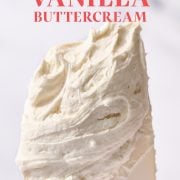
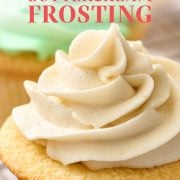
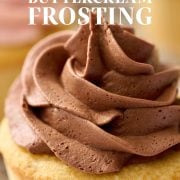
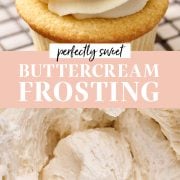
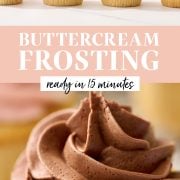
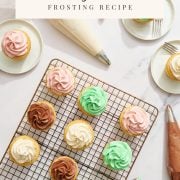
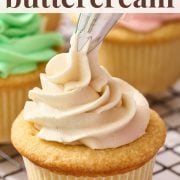
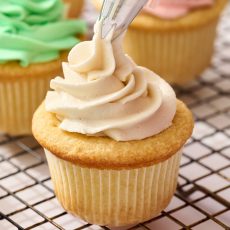
This is my go-to best buttercream recipe for layer cakes and cupcakes: smooth, creamy, and easy to pipe without being overly sweet or gritty.
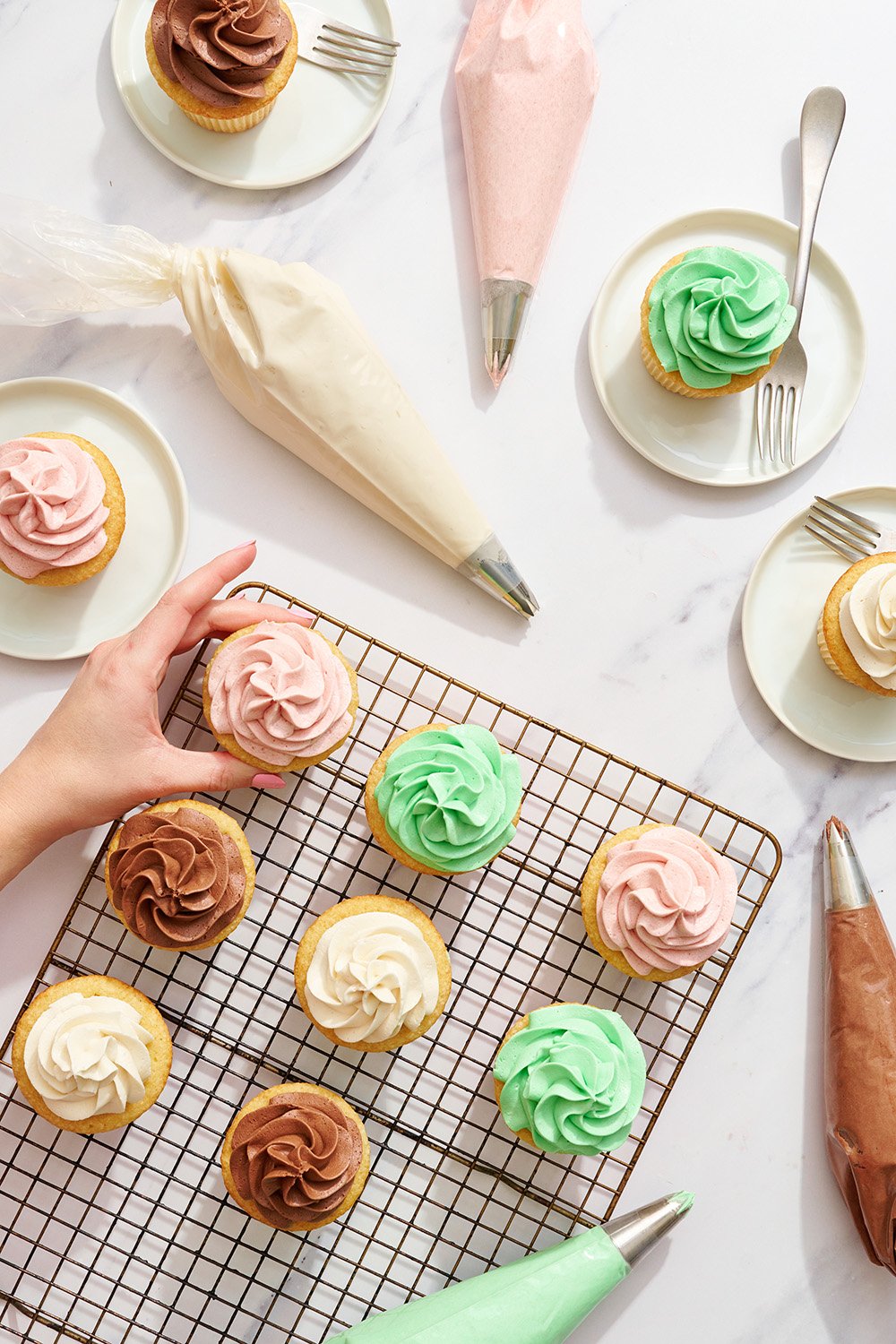
It’s a classic American buttercream frosting recipe made with simple ingredients, a carefully balanced ratio, and kitchen tested troubleshooting tips so it works every single time.
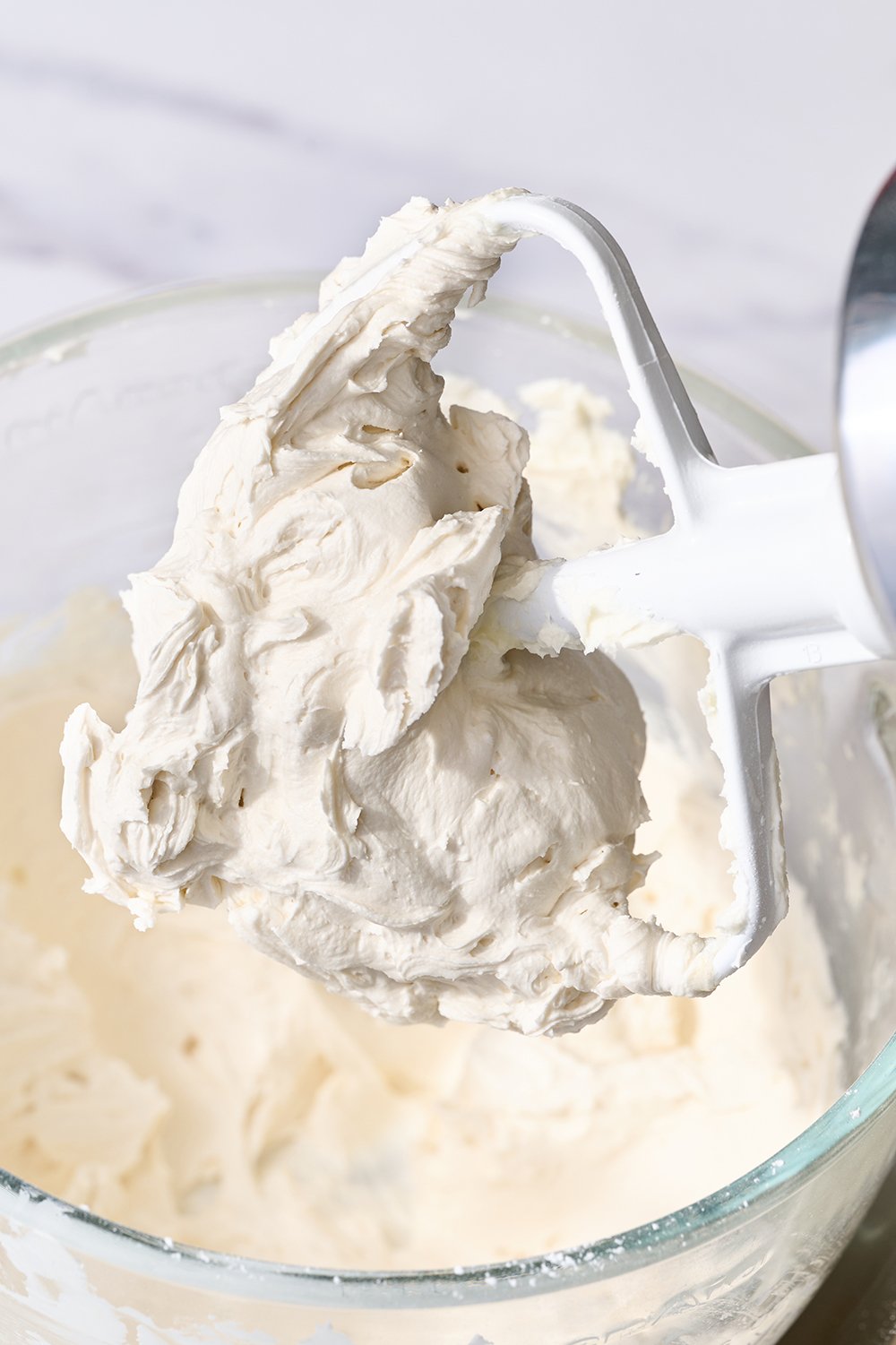
American buttercream gets a bad reputation for being too cloying or hard to pipe. But that’s usually a ratio or technique problem.
After testing multiple batches with different butters, brands of sugar, and mixing methods, my version consistently produces a smooth, pipeable frosting that tastes balanced instead of sugary.
Reader Love
Made this buttercream for my niece’s fifth birthday–it was perfect. Tripled it and was able to frost 50 cupcakes! Didn’t realize how important sifting the powdered sugar was–texture was so smooth! Definitely my go-to recipe!
–

Sprinkle of Science
Buttercream Types: Which One Should You Use?
Before diving in, it helps to know not all buttercream is the same.
- American Buttercream (this recipe): Made with butter and powdered sugar. Sweet, quick, and sturdy. Best for beginners and decorative piping.
- Swiss Meringue Buttercream: Egg whites + sugar cooked and whipped, then butter added. Silky and less sweet, but more technical.
- Italian Buttercream: Hot sugar syrup whipped into egg whites, then butter. Very stable, great for warm conditions.
- French Buttercream: Uses egg yolks for richness. Softer and custard-like.
- Cream Cheese Frosting: Not exactly a buttercream, but made of rich dairy product and sugar all the same.
If you want the easiest, fastest option, American buttercream is the best place to start.
Ingredient Notes
There’s only a handful of ingredients, so each one matters!
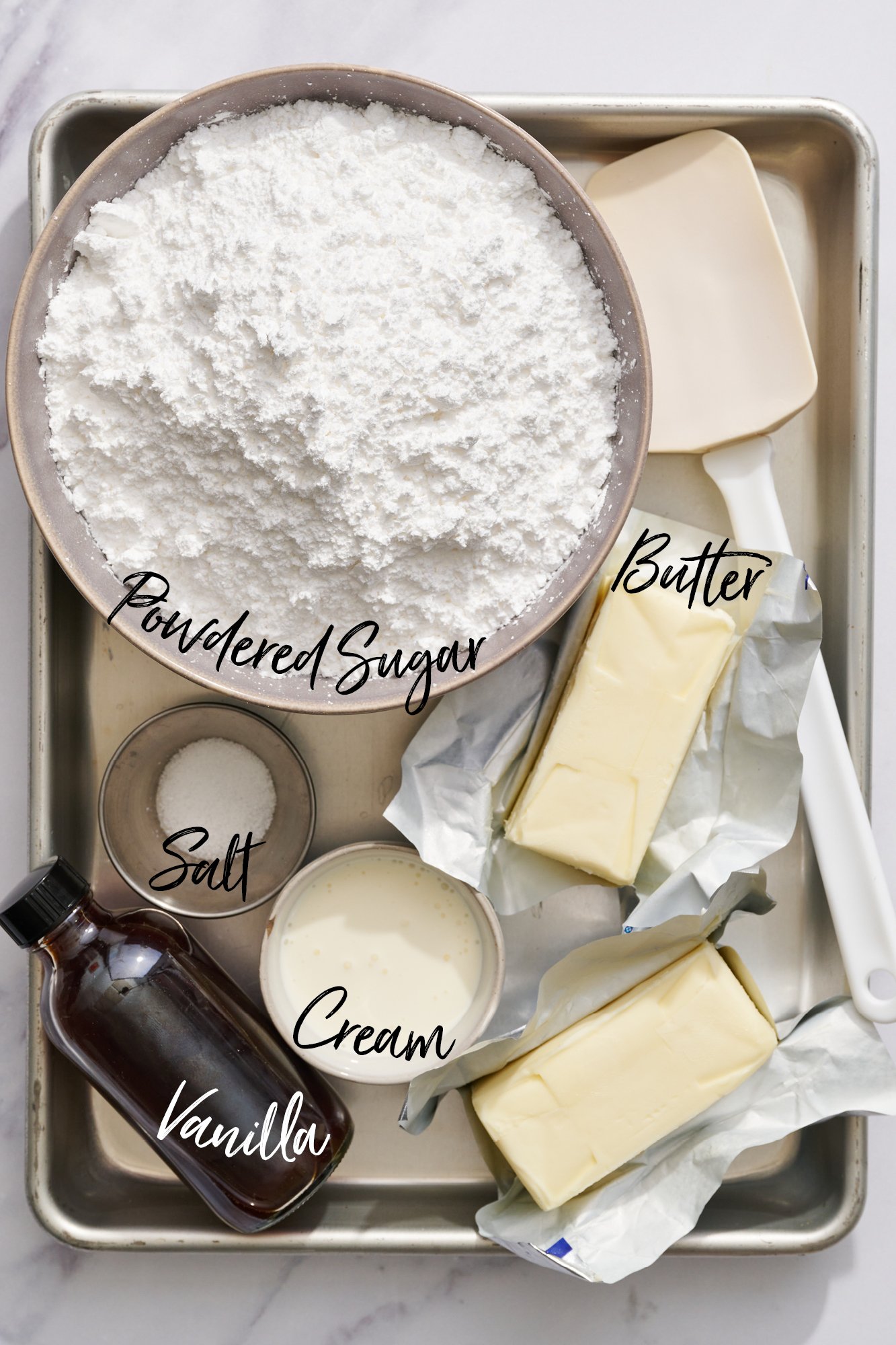
Powdered sugar: Also called confectioners’ sugar. For the smoothest texture, choose an organic powdered sugar with tapioca starch instead of cornstarch, which can add a gritty texture. Sifting is essential for a smooth texture!
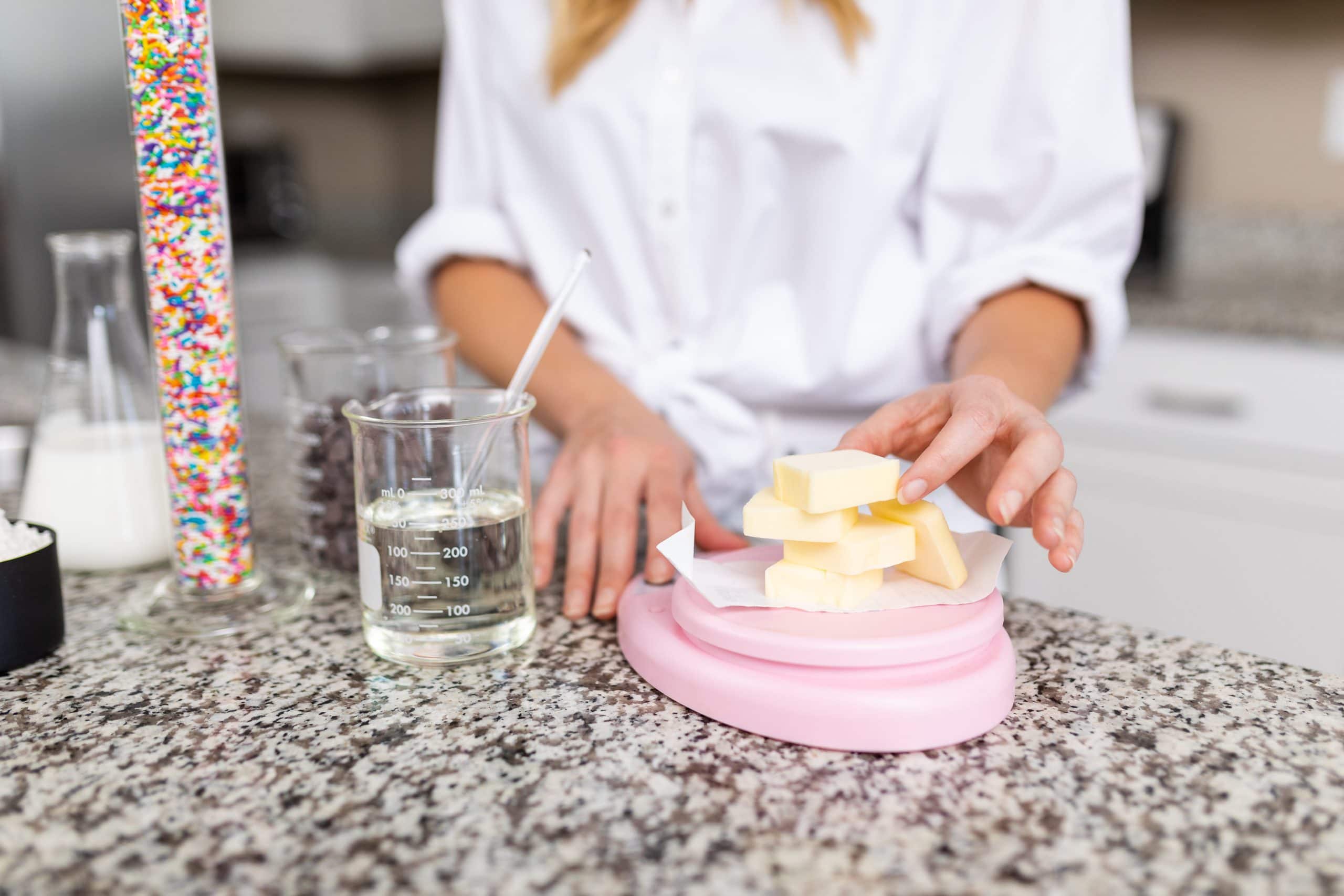
Unsalted butter: Use butter that’s cool but pliable (about 67°F). Too warm = greasy frosting; too cold = dense instead of fluffy. If using salted butter, cut the salt in the recipe in half.
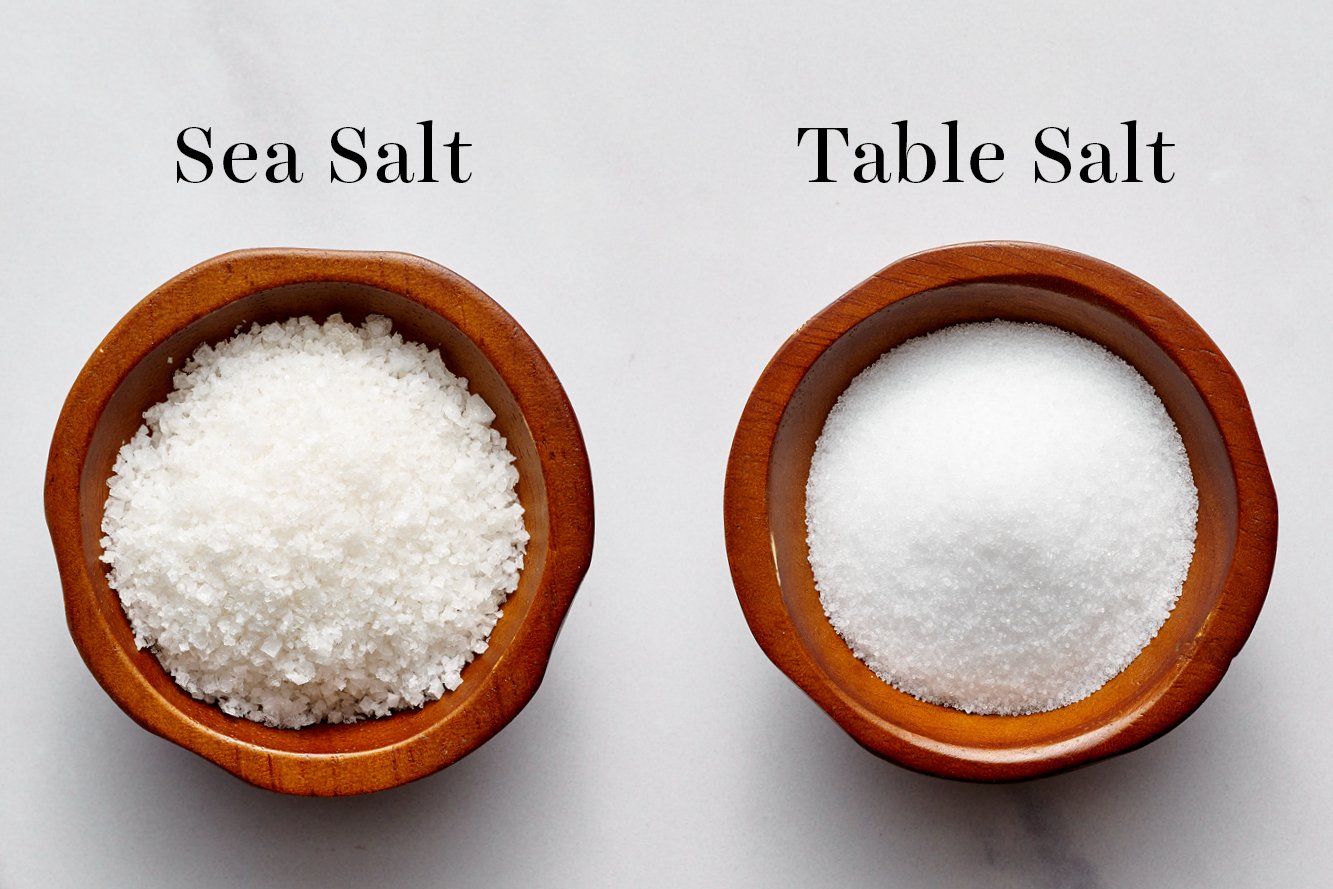
Salt: Don’t skip! It balances flavor.
Vanilla extract: Use real vanilla for the best flavor. For an upgrade, try using vanilla bean paste!
Heavy cream or milk: Cream creates a richer mouthfeel, while milk makes a slightly lighter frosting. Either will help smooth out the buttercream for easier spreadability.
How to Make the Best Buttercream (Step-by-Step)
- Cream the butter. Beat the butter on medium speed with the paddle attachment (not the whisk — that’ll create more air bubbles!) until smooth and creamy, about 2 minutes. It should look pale and spreadable, not shiny or greasy.
- Add the powdered sugar gradually. Add the sugar on low speed in batches to prevent is from making a mess.
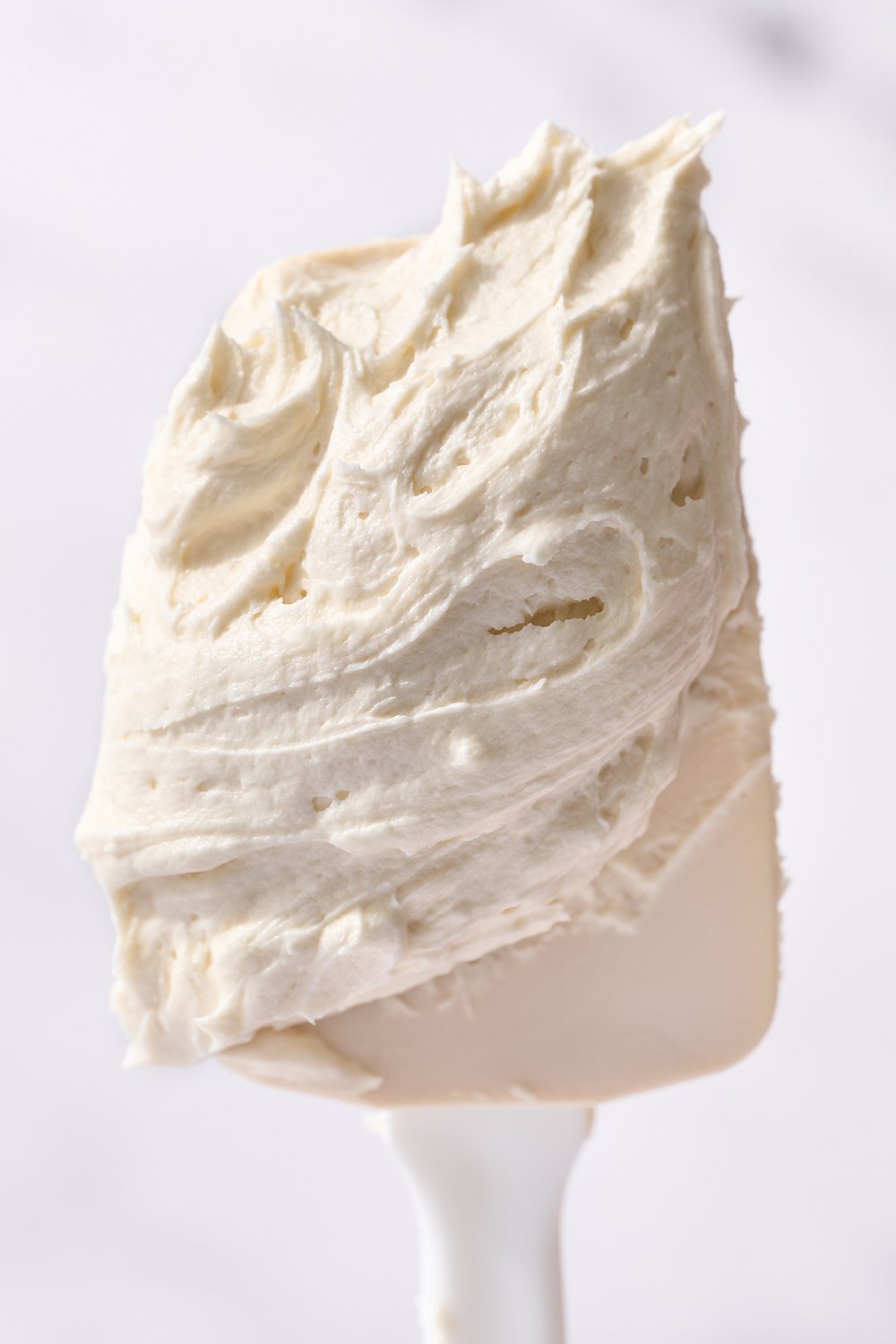
- Adjust the consistency. Add cream or milk a tablespoon at a time until the frosting is smooth and pipeable. The frosting should form soft peaks that hold their shape.
- Flavor and finish. Add vanilla and salt, then beat on low to medium speed until fluffy.
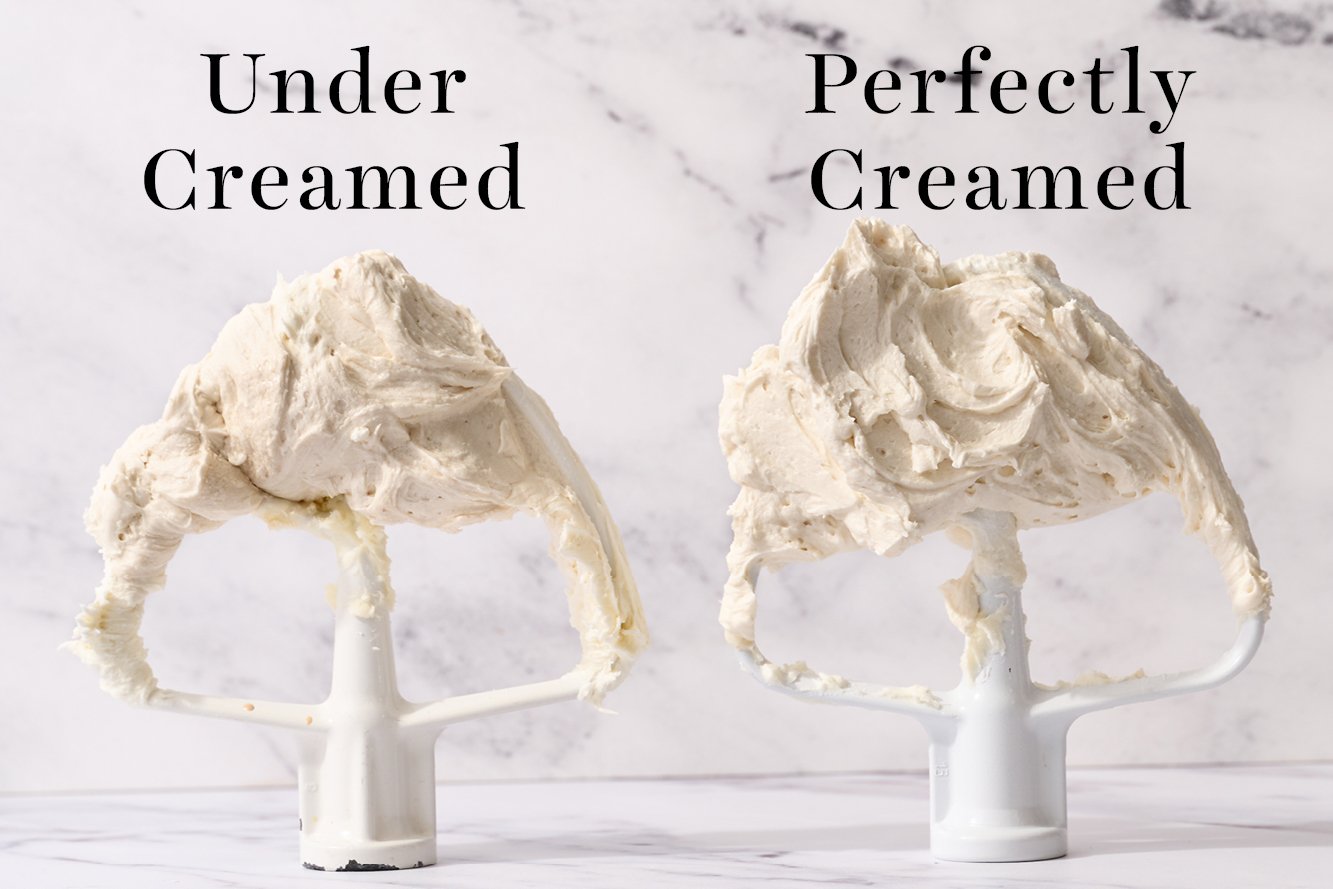
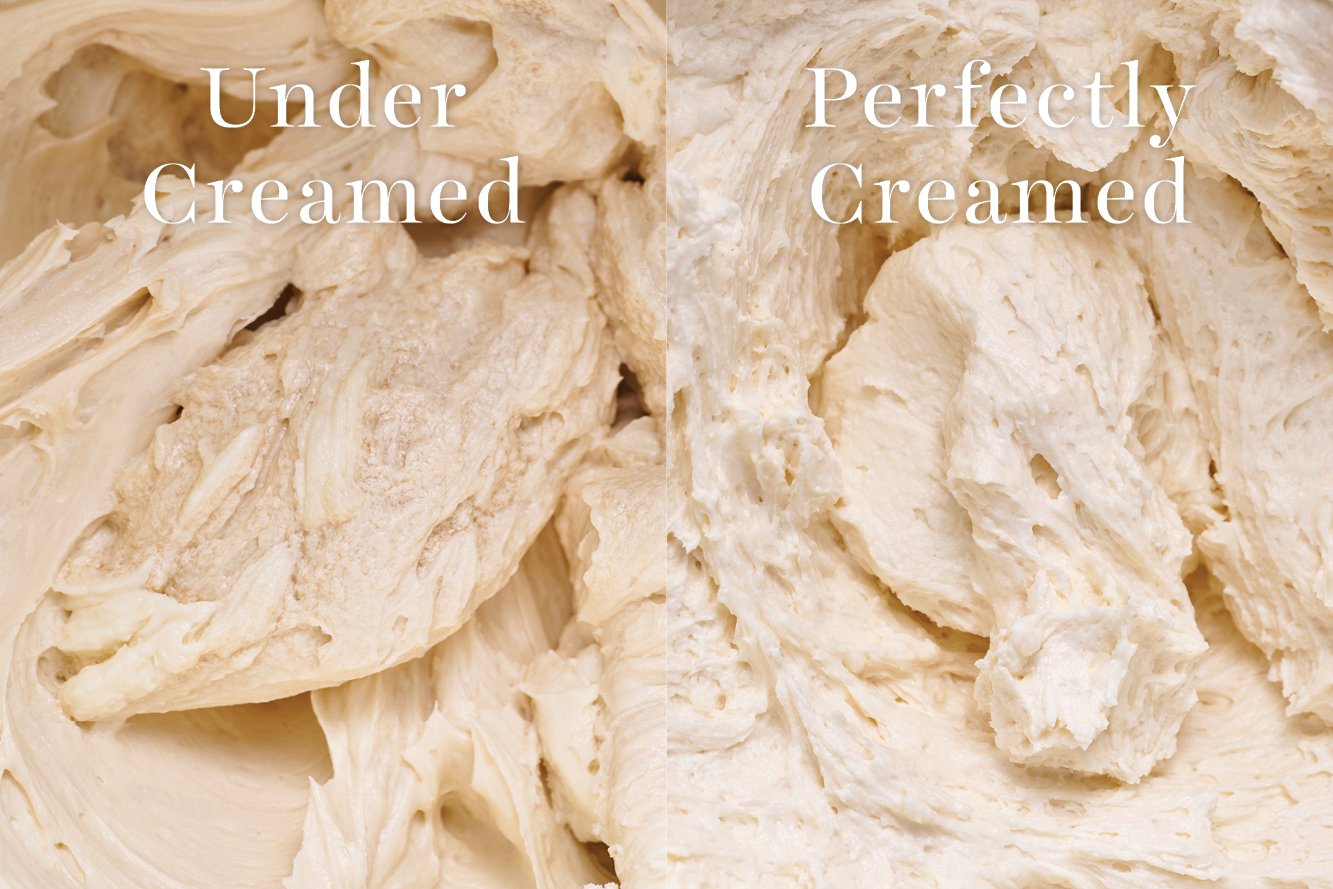
Storage & Make Ahead
Room temperature:
Buttercream can sit out safely for up to a day, if your kitchen is cold.
Refrigerator:
Store in an airtight container for up to 1 week. Bring to room temperature and re-whip before using.
Freezer:
Freeze for up to 3 months. Thaw overnight in the fridge, then beat until smooth.
Flavor Variations
You may need to adjust the powdered sugar ratio depending on your flavor preferences and adjust the cream ratio depending on your texture preferences.
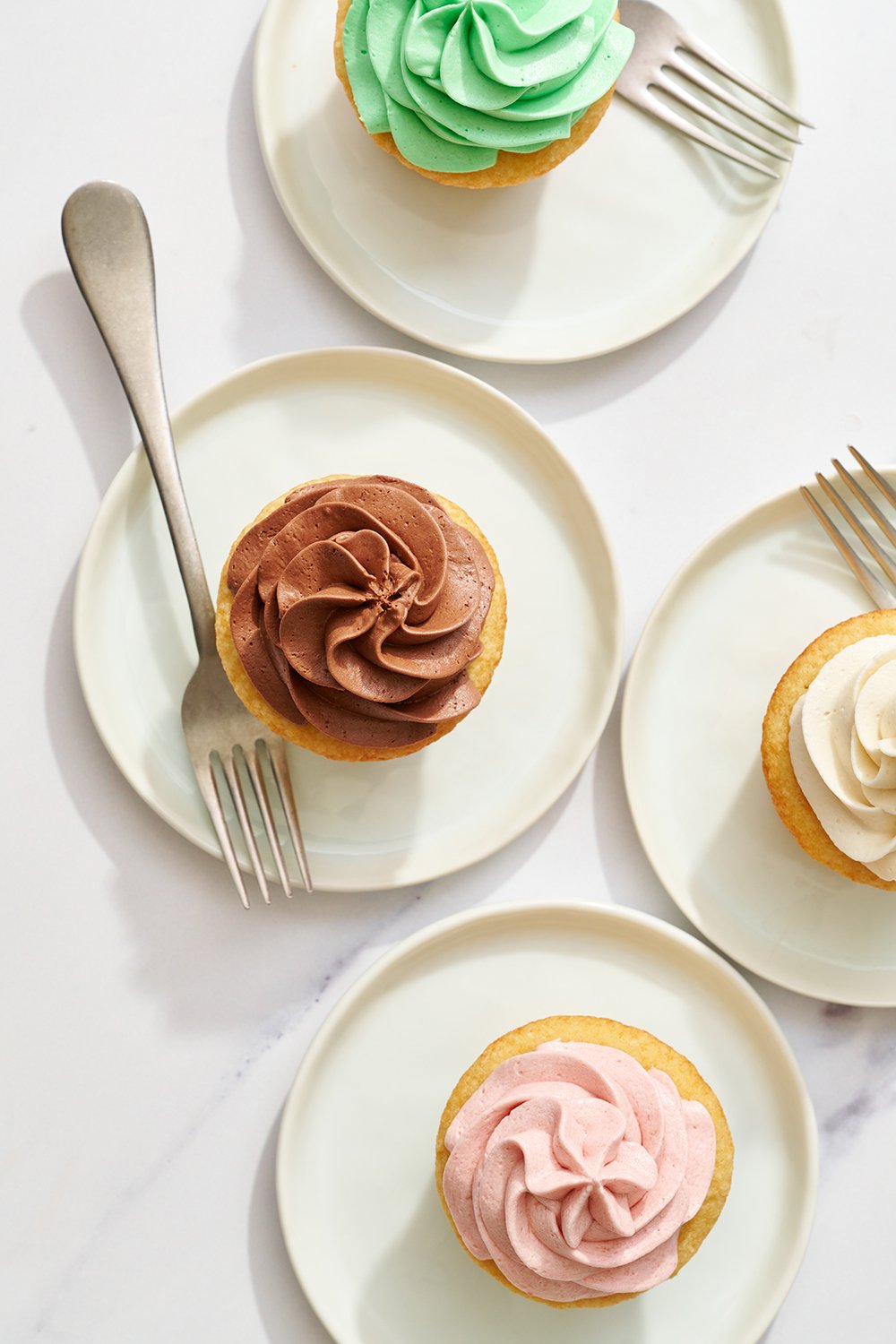
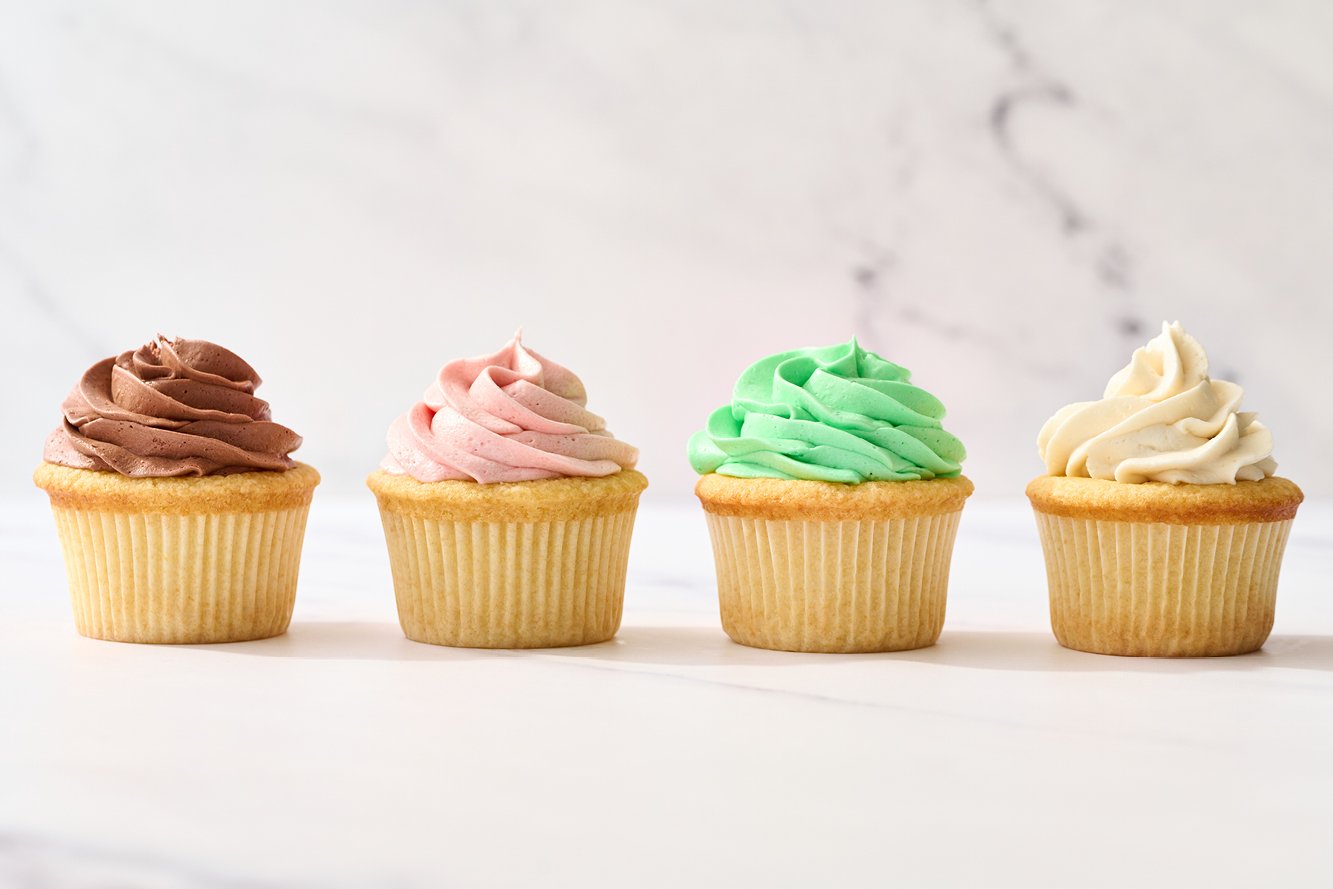
- Chocolate: Add 1/2 cup sifted unsweetened cocoa powder.
- Strawberry: Add 1/3 cup seedless strawberry preserves and a few drops of red food coloring.
- Raspberry: Add 1/3 cup seedless raspberry preserves and a few drops of red food coloring.
- Mocha: Add 1/2 cup sifted unsweetened cocoa powder and 2 teaspoons instant espresso powder.
- Chocolate Malt: Add 1/2 cup sifted unsweetened cocoa powder, 1/2 cup malted milk powder, and use 1/4 cup milk, plus more if needed.
- Peanut Butter: Add 1 cup creamy peanut butter and reduce the powdered sugar to 2 1/2 cups.
- Irish Cream Buttercream: Use Bailey’s Irish Cream instead of cream.
- Kahlua: Add 1/2 cup sifted unsweetened cocoa powder and 1/2 cup Kahlua in place of the cream.
- Mint: Add 1/2 teaspoon of peppermint extract and a few drops of green food coloring.
- Nutella: Add 2/3 cup Nutella and reduce powdered sugar to 2 cups.
- Lemon (or any other citrus): Add 2 tablespoons lemon zest and 3 tablespoons lemon juice and increase powdered sugar to 3 1/2 cups.
- Pumpkin: Add 1/2 cup pure pumpkin puree and 1 teaspoon pumpkin pie spice, remove cream.
- Salted Caramel: Add 1/3 cup caramel sauce, remove cream, and increase salt to 1 teaspoon (if your caramel sauce isn’t salted).

Email This Recipe
Enter your email, and we’ll send it to your inbox.
Ingredients
- 3 cups (375 grams) powdered sugar, sifted
- 2 sticks (227 grams) unsalted butter, at a cool room temperature
- 1/4 teaspoon fine sea salt
- 2 teaspoons pure vanilla extract
- 1 to 2 tablespoons heavy or whipping cream
Instructions
- In the bowl of a stand mixer fitted with the paddle attachment, add the sugar and butter. Mix on low speed until well blended and then increase the speed to medium and beat for another 3 minutes.
- Add the salt, vanilla, and cream and beat on medium speed for 1 minute, adding more cream if needed.
STORAGE:
- Transfer to an airtight container and store in the fridge for up to a week or in the freezer for up to 3 months. Let come to room temperature and re-whip in the stand mixer until light and fluffy again. Add a tablespoon or 2 of powdered sugar if it needs to thicken.
Notes
More Recipes You’ll Love:
This post was published in 2021 and updated in 2023 with new photos and recipe improvements. Photos by Joanie Simon.


Have made this recipe many times! I love decorating with it – so stable as well as delicious!
Do I need to reduce the sugar if adding a gel coloring (that has sugar in it)?
May I ask you how I can make the buttercream feel very smooth when eating it? I tried it, sifting the sugar, but still we could taste small grains of the icing sugar. Thanks!
Yes, it should be smooth. Tessa mentions her favorite powdered sugar to use in buttercream (and why) in the baking science section above the recipe here.
Hi Tessa! I made your recipe but reducing the sugar to half of the weight of the butter (and omitting the milk/cream) otherwise too sweet for me. In this case, can it still be safely let at room temp for a long time? How long?
Also, if wanting to use your suggestions for different flavours (for e.g. 226 g butter and 113 g sugar) do the quantities of the flavour (chocolate, lemon, salted caramel, etc.) remain the same you suggested or should I change them in some way?
Thanks!
Chiara
Hi Chiara! We have not tested this recipe with your changes, but yes, you would need to make adjustments to the measurements listed for the different flavors as they were tested using the recipe as written. Buttercream can typically sit at room temp for about two days because the high amount of fat and minimal amount of milk/cream keeps it from spoiling; however, it all depends on your kitchen climate. I would personally recommend refrigerating the buttercream until about an hour or so (again, it depends on your kitchen climate) before you’re ready to use it, and rewhip it in the mixer.
Thanks a lot! And once used to frost goods, I take it can still at room temp again only for a couple of days? Or does the reduce amount of sugar (half dose of the butter) makes it less stable and safe at room temp?
Is the the higher sugar or the higher fat in butter that allows it to be safe at room temp?
Correct. After frosting goods, the time still remains the same. For best results, I wouldn’t recommend reducing the sugar in our recipe; however, as I mentioned, it’s the high amount of fat that keeps it from spoiling.
This turned out fantastic! Your tip of the butter being 67 degrees was SO helpful!!!
If you need to thin this frosting down, I recommend using a little milk instead of heavy cream. The cream turns into more butter. The consistency holds together better with milk. I love the recipe, though.
Hi Tessa! Amongs all different buttercreams which one would you suggest for cookies that need to be packed (therefore a buttercream that sets and crusts) but without being as sweet as the american buttercream? Thank you
Hi Chiara! I might recommend using an icing rather than a buttercream, as American buttercreams like this may not fully set. Here is the link to Tessa’s sugar cookie with icing recipe. I hope this helps!
Can I use coconut cream
I love this recipe! It is delicious! I am so glad you do not use shortening. Once you have decorated the cake, should you you refrigerate the cake or keep at room temperature if I make it the day before I need it?
I’m so glad! I would refrigerate it overnight and then bring it out to room temperature for a few hours before serving.
Heyy I was wondering if this buttercream can be used in high temperatures. ( for detailed decoration on cakes ) ( with powder frosting colour )
Hi NKK! Detailed decorations will need additional powdered sugar, so add additional sifted powdered sugar until your desired consistency is reached. Feel free to experiment with powder frosting colors – we haven’t tried that and typically recommend using gel food coloring, but it may work just fine. As for the high temperatures, any buttercream will melt in the heat, but if you store the cake/cupcakes in the fridge and take them out shortly before serving, that should help! If you need to display your dessert, make sure to keep it out of the direct sunlight. You could even place ice packs underneath it to help it stay cool. I hope that helps! Happy baking 🙂
This buttercream was smooth and fluffy and perfectly sweet. I made a batch and a half, and it frosted 24 cupcakes generously. This will be my go-to recipe for sure! Thank you!
Such beautiful cupcakes!! So glad you enjoyed this frosting, Abby!
Hello! If using this or the cream cheese frostings to top cookies, should then the cookies be stored for the next days outside or in the fridge, and then let them come back to room temp to eat them? Thank you
Hi Chiara! Sugar acts as a preservative, so the cream cheese frosting on the cookies won’t necessarily need to be refrigerated, but I’d still recommend storing the cookies in the fridge if they need to be stored longer than about 8 hours, or if you live somewhere very hot. I’d still recommend serving a little closer to room temp, for best flavor and texture. This buttercream recipe won’t need refrigeration. I hope that helps!
I love your buttercream frosting! Do you have a vanilla cake recipe?
Hi Kim! So glad to hear that you enjoyed Tessa’s buttercream! We don’t currently have a white cake recipe, but we do have a couple delicious yellow vanilla-scented cake recipes! Check out Tessa’s Best Birthday Cake recipe here (you can use this buttercream recipe instead, if preferred) or all Tessa’s cake recipes here. Happy baking!