






Tessa Arias, Chef and Cookbook Author
This post may contain affiliate links. Read our disclosure policy.
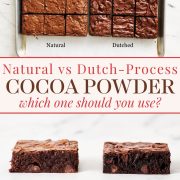
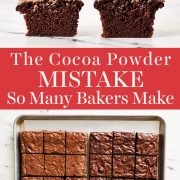
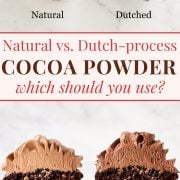
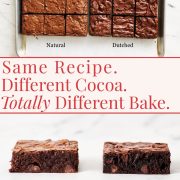
If you’re a chocoholic and avid baker like me, you probably find yourself using cocoa powder often. You’ve probably noticed that cocoa powder labels can be confusing — “natural,” “Dutch process,” “alkalized.”
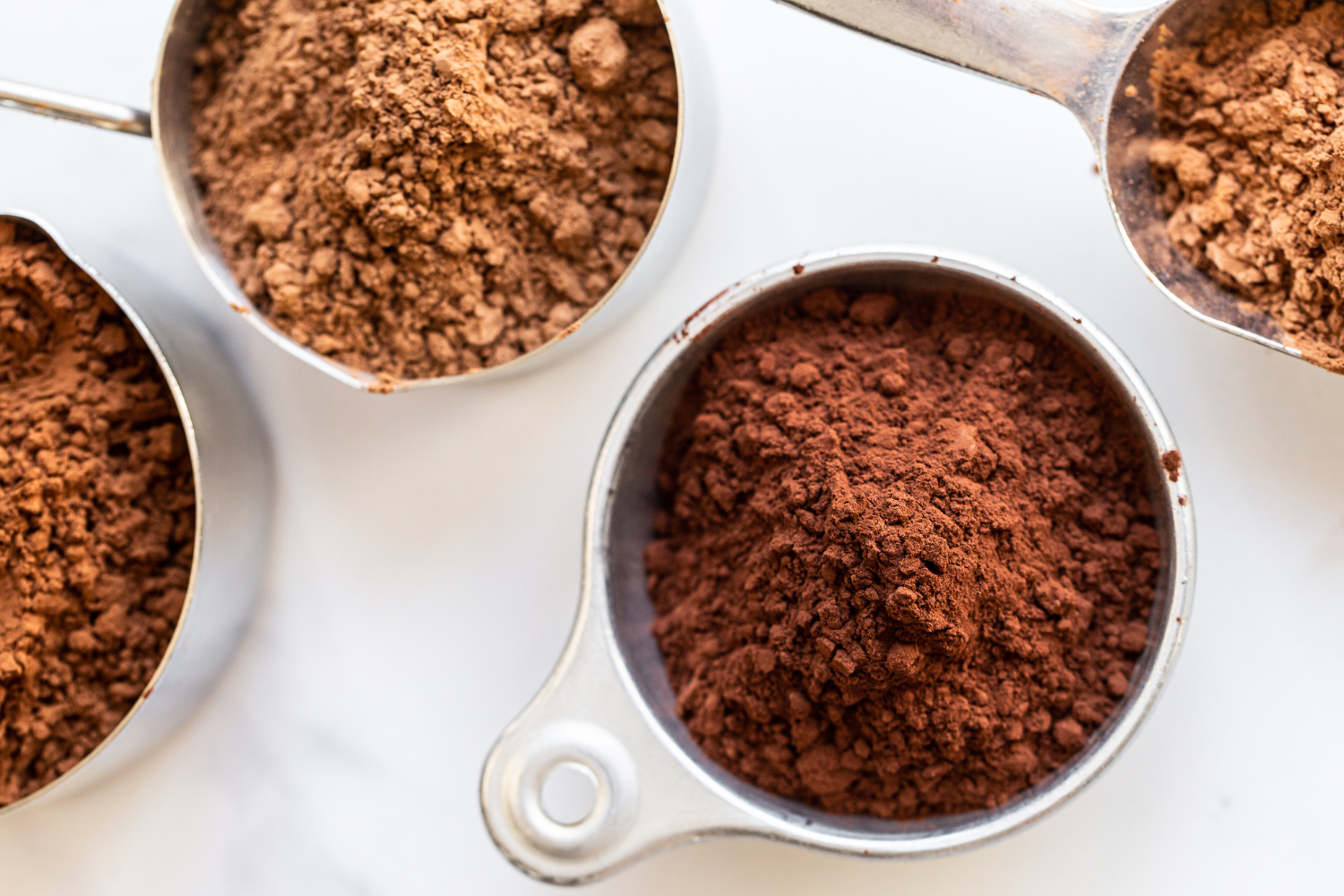
In my early baking days, I swapped out cocoa powders without thinking. This sometimes led to flat cakes, dry brownies, or even a weird metallic taste. I learned the hard way: cocoa powder chemistry directly affects taste, texture, and structure.
Let’s break it down.

Sprinkle of Science
What is Cocoa Powder?
Cocoa powder is made by fermenting, drying, roasting, and grinding cocoa beans, then removing most of the cocoa powder to yield a fine powder. Cocoa powder offers more chocolate flavor than solid chocolate in baking recipes.
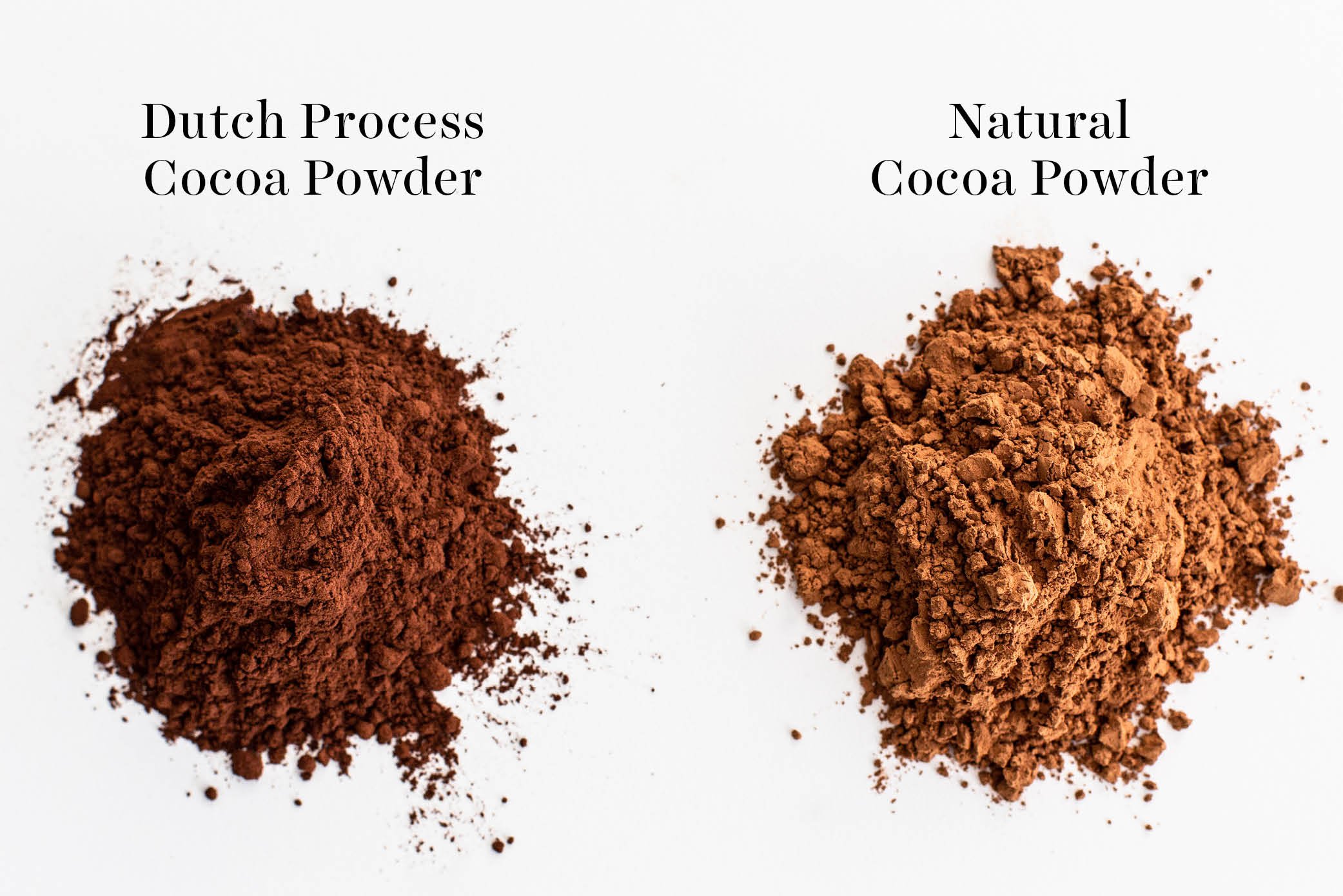
Quick Comparison:
| Feature | Natural Cocoa | Dutch Process |
|---|---|---|
| pH | Acidic (~5.5) | Neutral (~7-8) |
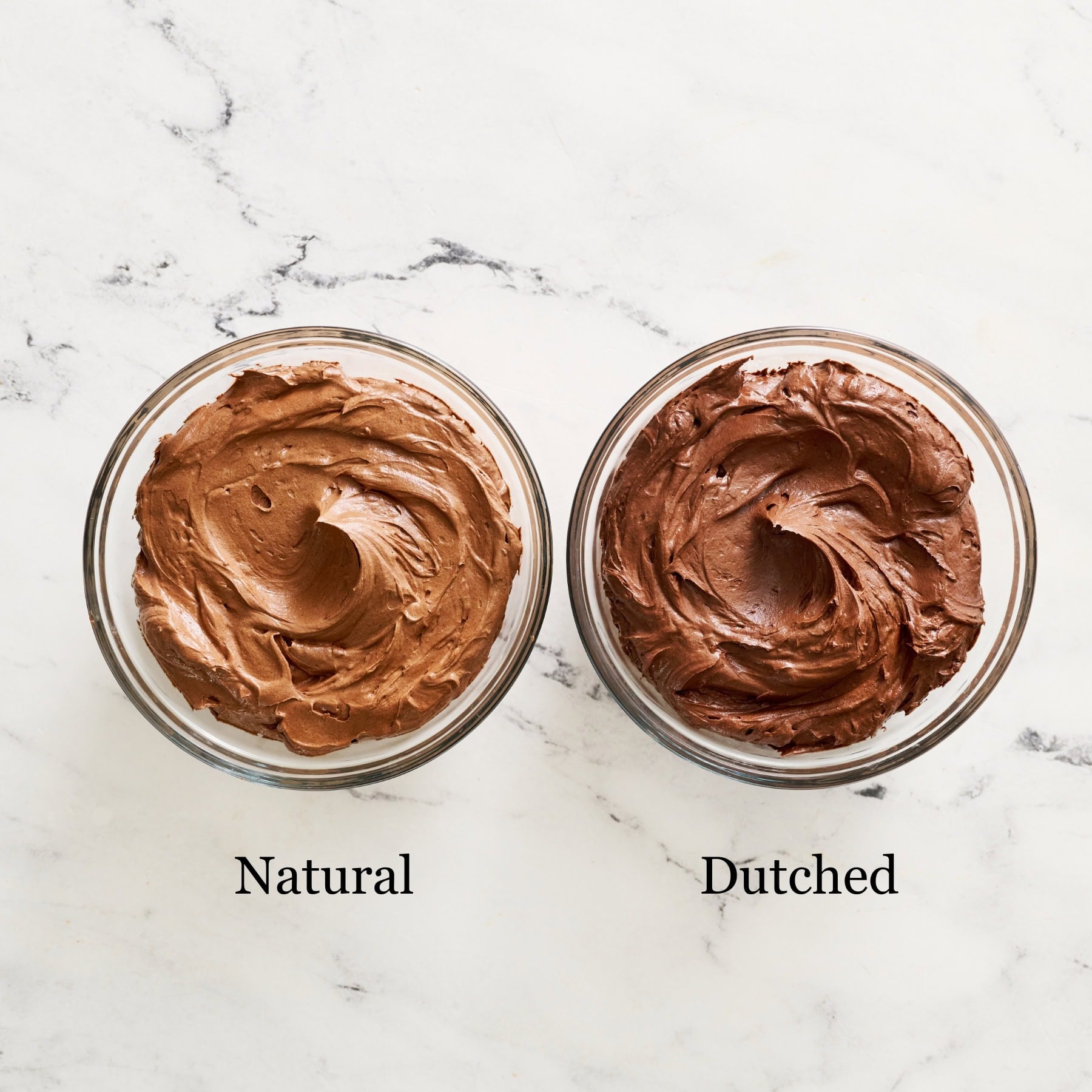
| Color | Light brown | Deep, rich brown |
| Flavor | Fruity, sharp | Smooth, mellow |
| Best with | Baking soda | Baking powder |
| Fat content | Lower (~10%) | Higher (~20-26%) |
What is Natural Cocoa Powder?
Natural cocoa powder is unsweetened, medium brown in color, bitter, sharp, and fruity in flavor. It’s commonly used in American brownie and cake recipes.
Natural Cocoa Powder Quick Facts:
- Acidic (pH ~5.5)
- Activates baking soda
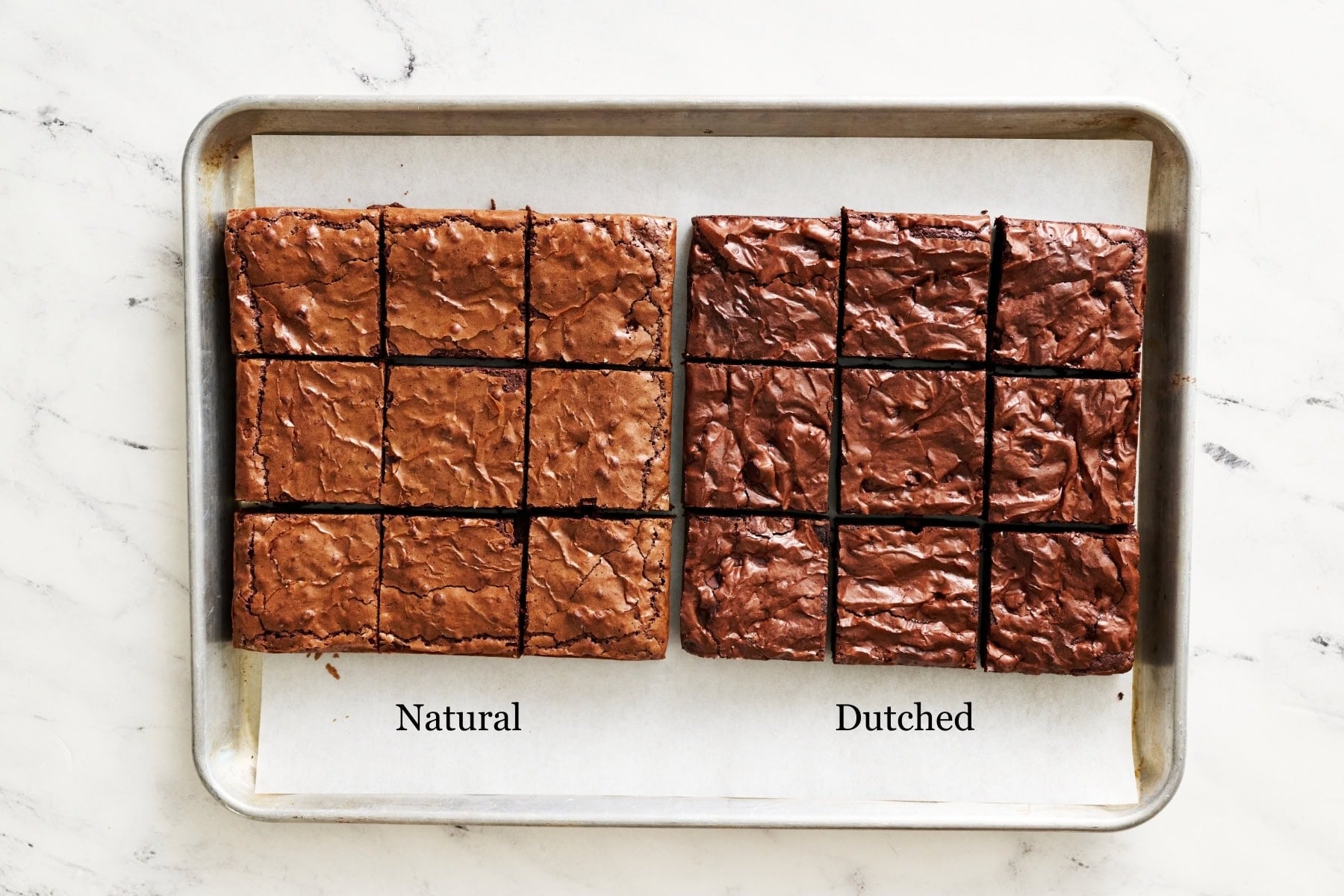
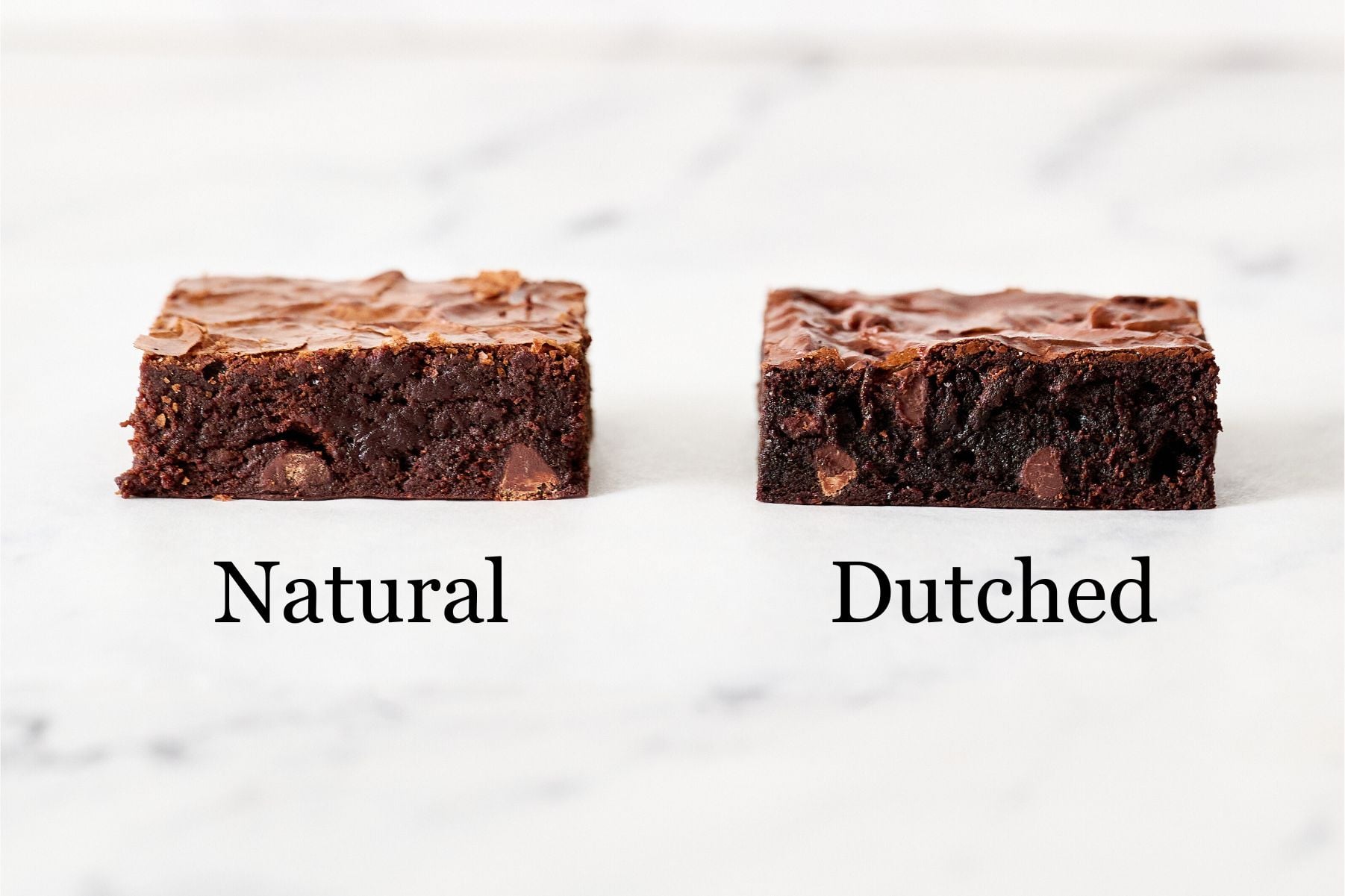
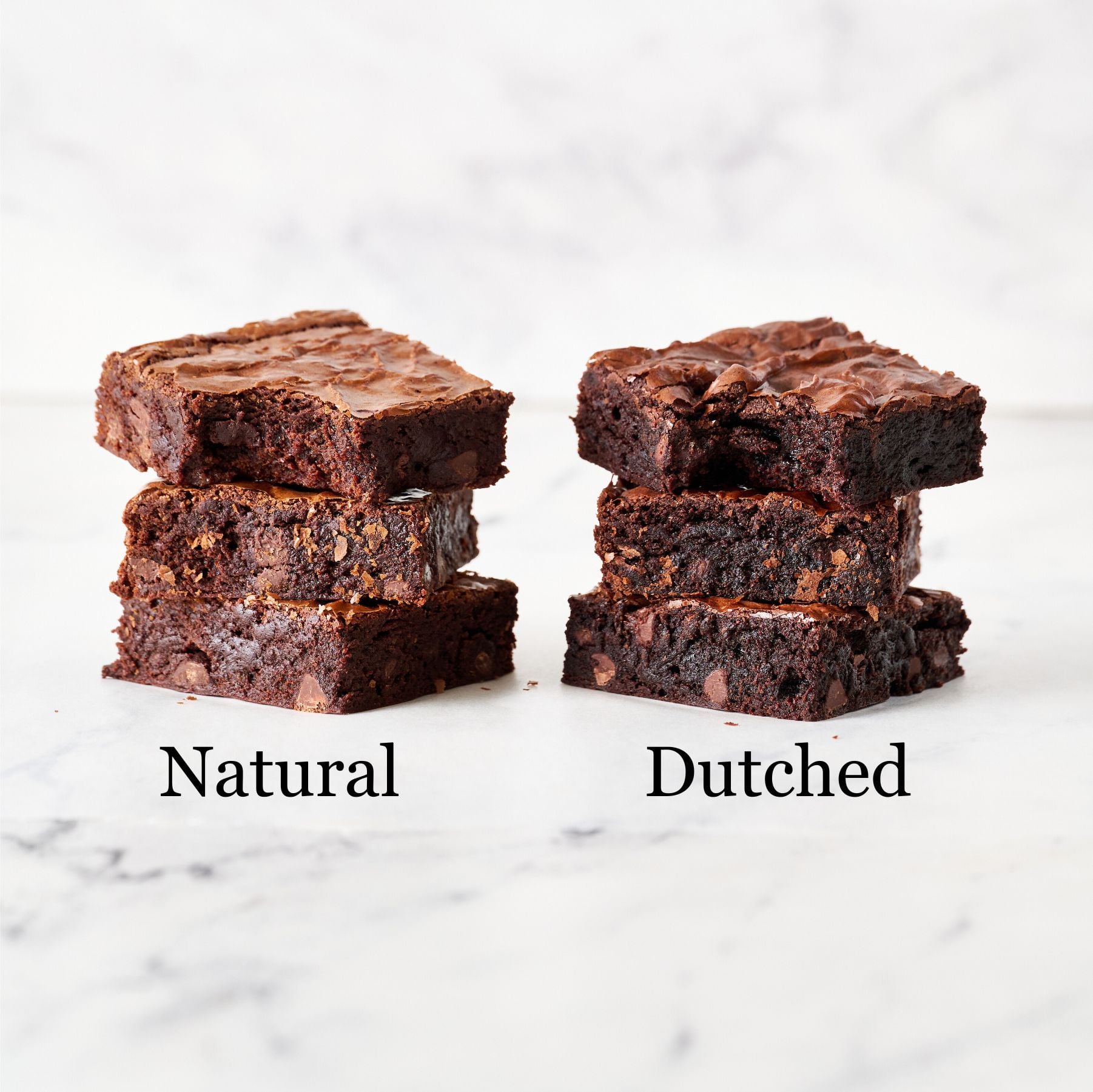
- Produces lighter-colored baked goods that rise taller but can sometimes be drier
How Natural Cocoa Powder Works in Baking
Its acidity helps the proteins in baked goods set more rapidly and create taller cookies and cakes.
What leavener works with natural cocoa powder?
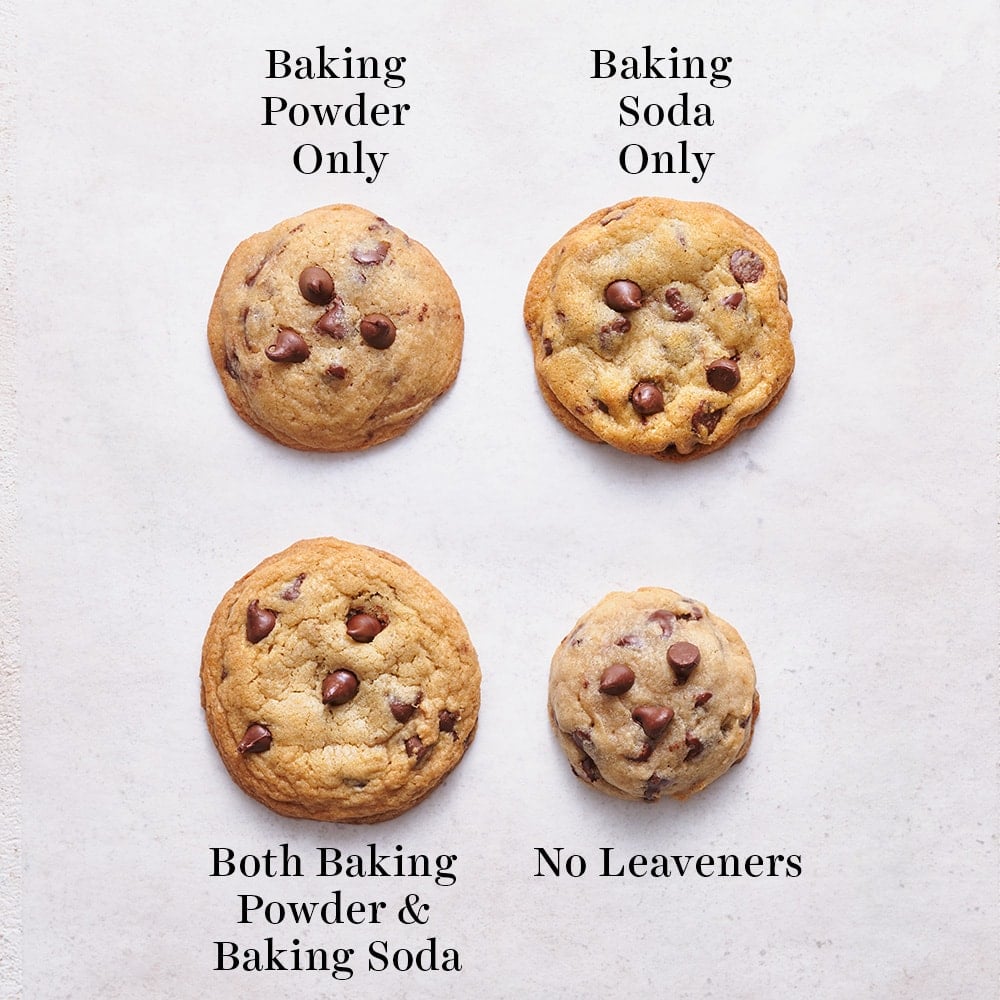
Baking soda. The acidity in the natural cocoa powder will activate the baking soda, allowing proper rise in the oven, as well as neutralizing the acidity of the cocoa powder itself for a more pleasant taste.
Is unsweetened cocoa powder the same as natural cocoa powder?
Yes. The word “natural” may not exist on the label, but it is the more commonly found cocoa powder product on grocery store shelves in the U.S.
Cocoa Fat Content = KEY!
Natural cocoa powder often contains less cocoa butter and more starch, which makes it more drying in baked goods. Most grocery store varieties contain around 10% fat, which can lead to dry or crumbly baked goods or goods that don’t stay moist for long after baking.
For best results:
Choose a cocoa powder that contains at least 20% fat.
How to determine the fat content in cocoa powder?
Check the nutrition label: you want at least 1 gram of fat per 5-gram serving, which equals about 20% cocoa fat.
What is Dutch-Processed Cocoa Powder?
Dutch-process cocoa powder has been treated with an alkaline substance, like potassium carbonate or sodium carbonate, to raise the pH to a neutral 7 or alkaline 8.
Dutch-Process Cocoa Powder Quick Facts:
- Neutral to alkaline with pH of 7 to 8
- Often paired with baking powder
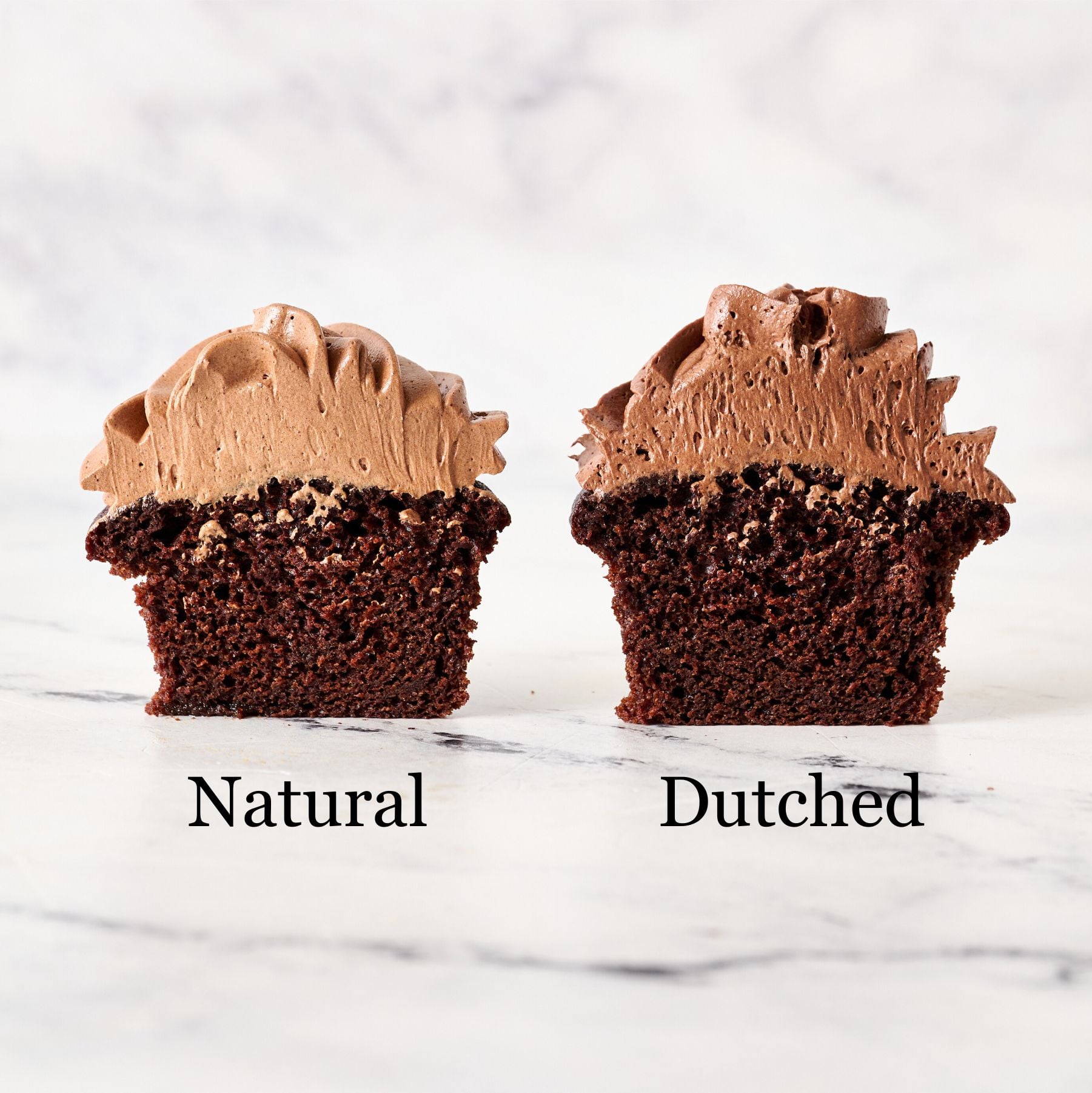
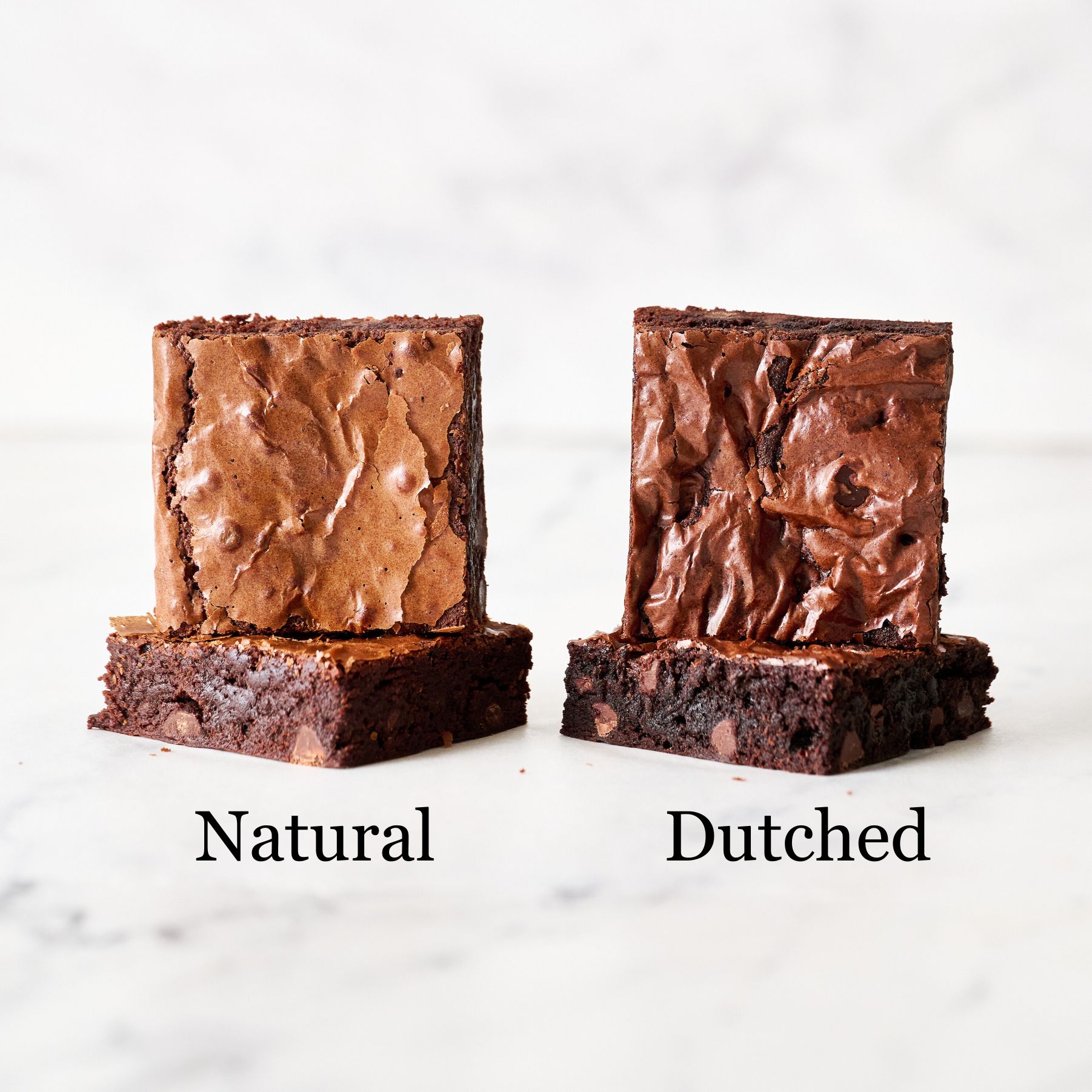
- Creates deep-colored, denser, and fudgier bakes
How Dutch Cocoa Powder Affects Flavor and Texture
This process creates a smoother, fuller, softer flavor and deepens the color. It also creates baked goods that won’t rise as high but instead will be more dense, fudgy, and moist.
This is due to both its lack of acidity and its tendency to have a higher concentration of cocoa butter compared to most natural cocoa powder products.
How do I tell if a cocoa powder is Dutch-processed?
Look out for the words “Dutched,” “cocoa processed with alkali,” “alkalized,” or “European-style” on the packaging.
What leavener works with Dutch-processed cocoa powder?
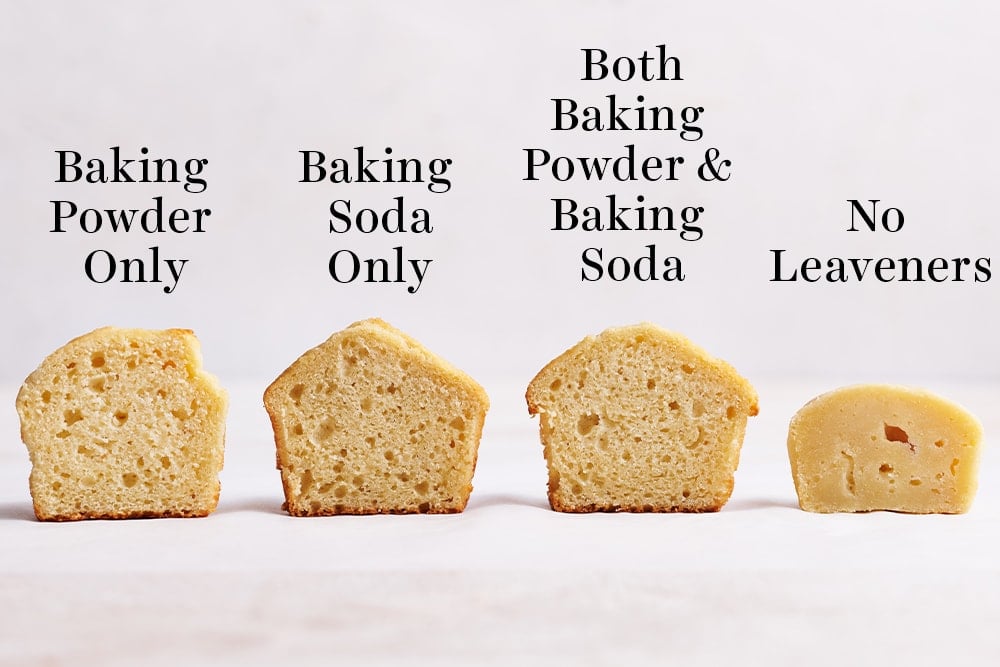
Baking powder, since Dutch-process cocoa is no longer acidic. Baking powder does not require acidity to activate, simply liquid and heat. Learn more about Baking Powder vs. Baking Soda here.
Note: Dutch-process cocoa powder won’t activate baking soda. Your batter or dough will need another acidic ingredient, such as brown sugar, lemon, buttermilk, sour cream, or yogurt, or you won’t get much leavening effect.
Color does NOT equal flavor or quality!
What’s perhaps most immediately noticeable about Dutch cocoa is its rich, deep, and sometimes reddish color that is a byproduct of Dutching. Contrast that with the lighter tan color of natural cocoa. However, the deeper the color, the less chocolate flavor present (think of Oreo cookies!).
Can You Substitute Natural and Dutch Process Cocoa?
Sometimes, if the recipe allows…
Safe to Substitute (No Leavening Needed):
- Buttercream
- Frosting
- Ice cream
- Pudding
- Tiramisu
- My Chewy Brownie recipe, which doesn’t call for leaveners!
Not Safe (Without Adjustments & Experimenting):
- Cakes
- Cupcakes
- Cookies
- Brownies that use leavening
Setting aside the differences in pH, natural cocoa powder typically has less fat and more starch content, which can also greatly impact textures and structures.
What is Cacao Powder?
In cacao powder, the beans are processed at temperatures low enough that the final powder is considered “raw.” This means it has more nutrients, but is also much more bitter.
Cocoa powder goes through a process of roasting and higher heat exposure, which means it is not raw and loses some of its nutritional value. That’s what helps to make regular cocoa powder less bitter.
I don’t bake with cacao powder. In part because of its bitter taste. But also because most recipes I use cocoa powder in are baked, which would strip the more expensive cacao powder of those raw nutrients.
Storage Tips for Cocoa Powder
Store in a cool, dry place in an airtight container and use within 1 year of purchase. Don’t refrigerate or freeze, which promotes moisture and therefore spoilage.
How to Enhance Cocoa Powder’s Chocolate Flavor
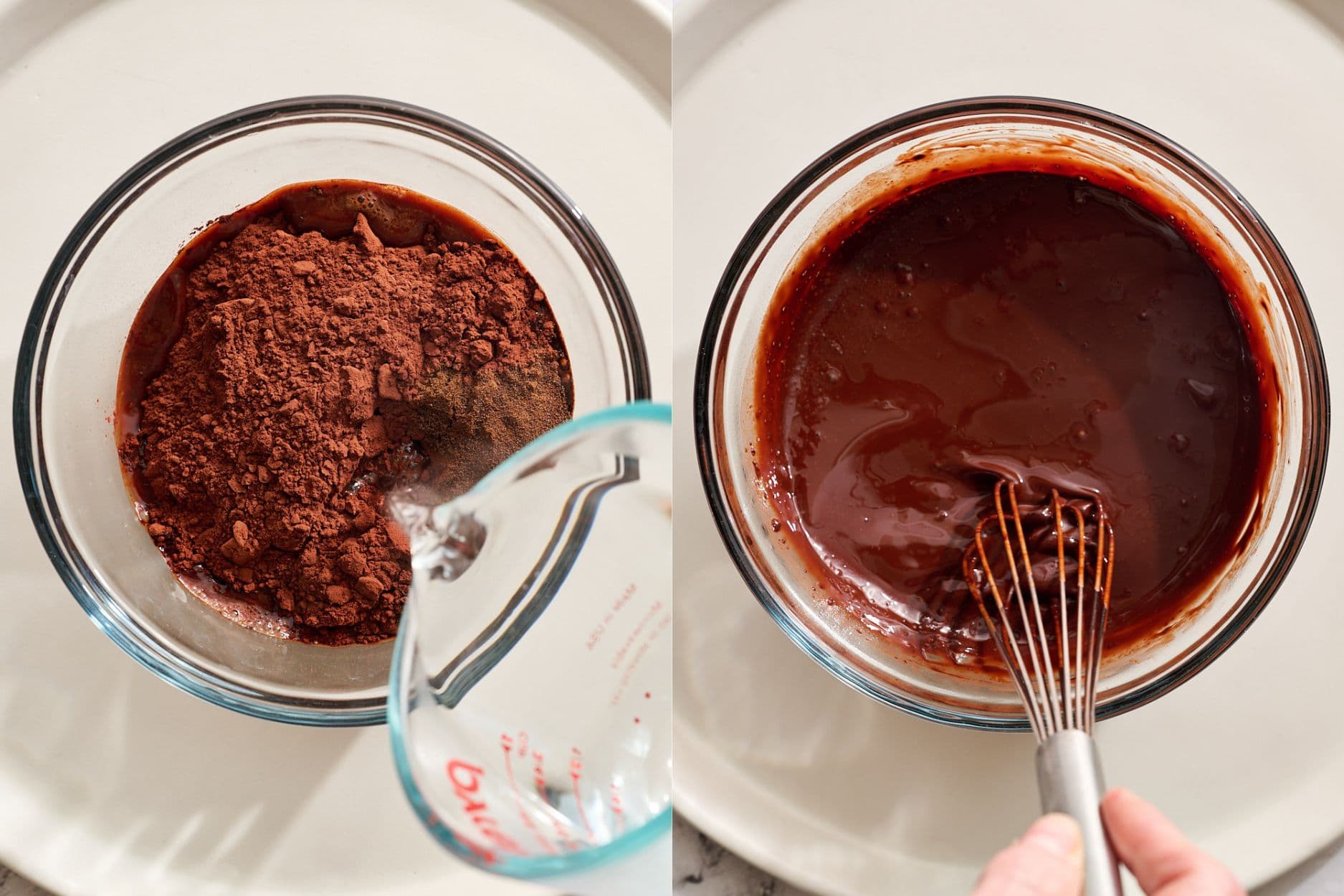
“Blooming” cocoa by combining it with a hot liquid, like boiling water or very hot coffee, intensifies its chocolate flavor and helps dissolve the powder for a smoother batter (this is especially helpful with natural cocoa powder, which doesn’t dissolve as readily as Dutch-process). You can see this demonstrated in my Chocolate Cake Recipe.
FAQs
No. At least not without significant experimenting and adapting.
The starches in cocoa powder are very drying. In fact, they will absorb more liquid than an equal amount by weight of flour. So if you are attempting to convert a vanilla cake into a chocolate cake recipe, for example, you would need to consider the added cocoa powder like flour. Meaning, you will need to reduce or increase the amount of liquid to rebalance the recipe’s ratios.
The one exception is for American buttercream, which you can usually add cocoa powder to without issue.
If a recipe doesn’t specify or offers you the choice between the cocoa powders, note that Dutch-process will create a darker product with a smoother, mellower, and more earthy flavor vs. natural cocoa powder, which will create a lighter colored product with a fruitier and more astringent flavor.
I personally find natural cocoa powder to be more reminiscent of childhood chocolate treats in America so it has a nostalgic feel. But for me, I almost always prefer Dutch-process cocoa powder for its richness and smoothness.
It depends on the other ingredients in the recipe. Dutch-process cocoa powder won’t activate baking soda since it’s not acidic. Your batter or dough will need another acidic ingredient, such as brown sugar, lemon, buttermilk, sour cream, or yogurt, or you won’t get much leavening effect.
I sometimes find it at regular stores, but it’s a hit-or-miss. You can more often find it at more gourmet stores such as Whole Foods, Sprouts, Penzey’s, or simply purchase it online from Amazon or King Arthur Baking. I really like Guittard, Bensdorp, and Penzey’s.
Dutch-Process: Penzey’s (22%), Guittard Cocoa Rouge (22%), Bensdorp (24-26%)
Natural: Penzey’s High Fat Natural (22%), Ghirardelli (20%)
Hershey’s “Special Dark” cocoa powder is indeed Dutched. Their regular “natural unsweetened” is not Dutched.
The ever-popular Oreo cookie is made with highly Dutched cocoa powder, sometimes called black cocoa. It imparts that characteristic dark color but very little chocolate flavor or fat, resulting in a more dry or crumbly product.
Cacao powder is processed at lower temperatures and considered “raw.” It retains some more nutrients but is more bitter and will behave differently in baking. I don’t bake with cacao powder — most baking recipes apply heat, so those potential extra nutrients will be negated, making it not worth the extra cost.
No. That has added sugar and flavorings that will throw off the chemistry of your recipe.
Best Cocoa Powder Recipes:
- Best Chocolate Cake
- Chocolate Cupcakes
- Double Chocolate Cookies
- Flourless Chocolate Cake
- Best Chocolate American Frosting
Sources:
America’s Test Kitchen (Firm. Everything Chocolate : A Decadent Collection of Morning Pastries, Nostalgic Sweets, and Showstopping Desserts. Boston, Ma, America’s Test Kitchen, 2020.
Arthur, King. The King Arthur Baking School: Lessons and Recipes for Every Baker. The Countryman Press, 11 Oct. 2022.
Corriher, Shirley O. BakeWise : The Hows and Whys of Successful Baking with over 200 Magnificent Recipes. New York, Ny, Scribner, 2008.
Figoni, Paula. How Baking Works : Exploring the Fundamentals of Baking Science. 3rd ed., Hoboken, N.J., John Wiley & Sons, 2011.
Guittard, Amy. Amy Guittard on Chocolate. 13 Nov. 2025.
McGee, Harold. On Food and Cooking: The Science and Lore of the Kitchen. New York, Scribner, 2004.


funny thing husband was in the room while i was watching so all he could do was listen he commented no humms no uuuughs no stuttering very thorough explanation. LOL thought i would let you know a non baking comment, as for me i will have both types available in house from now on.
thanks Judy
Hahaha! Love this.
Do you have another cocoa choice to buy since the Rodell isn’t available? Thank you
Do I need to increase/decrease the quantity of sugar depending on the cocoa powder I use?
I have learned so much from you. Thank you for explaining things so well. I look forward to making this cake. I am confident it will turn out great.
Coco unsweetened powder taste bitter and the tuffle taste terrible. Can you use sweetened coco to roll tuffles in.
Hi,
I have a question about your description of taste between Dutch process vs natural. Would you say that a Dutch process has a dark chocolate flavor and a natural cocoa has a milk chocolate flavor?
Since I’m a bit of a purist, I always use natural cocoa. I find that it tastes infinitely better than dutch processed cocoa. When the acids are neutralized during the dutching process, many of the natural chocolate flavors are neutralized as well. (Think decaf vs. regular coffee, a similar process). Besides, I’m not crazy about my food being chemically messed with in any way!
If recipe calls for dutch and I only have Nestle cocoa and there is no baking powder or soda in recipe how much baking soda would I add if recipe only calls for 2 tbsp of dutch cocoa?
I also have a recipe that calls for Dutch Processed cocoa + baking soda. But there’s not brown sugar. I’m guessing that the buttermilk is the acid that causes leavening with the baking soda?
Yep, sounds that way!
I have the same question as Chris. It calls for Dutch Processed baking aoda. But it does have brown sugar. Will it still rise correctly and taste okay?
I have a recipe that is calling for dutch process cocoa and baking soda. Should I switch one ingredient out to correct the leavening issue.
I made chocolate cookies with dutched cocoa and drained, chopped sauerkraut (yes, sauerkraut) added, because I’m always looking for interesting additions to plain chocolate cookies. They’re good! I used 1 tsp. baking powder and 1/2 tsp. soda for a recipe that called for 1/3 cup cocoa. I assume that the soda helped neutralize the acid in the kraut; at any rate, the cookies rose just fine and are moist and tender.