
Tessa’s Recipe Rundown
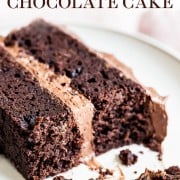
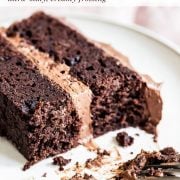
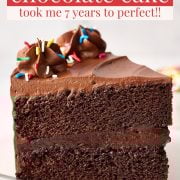
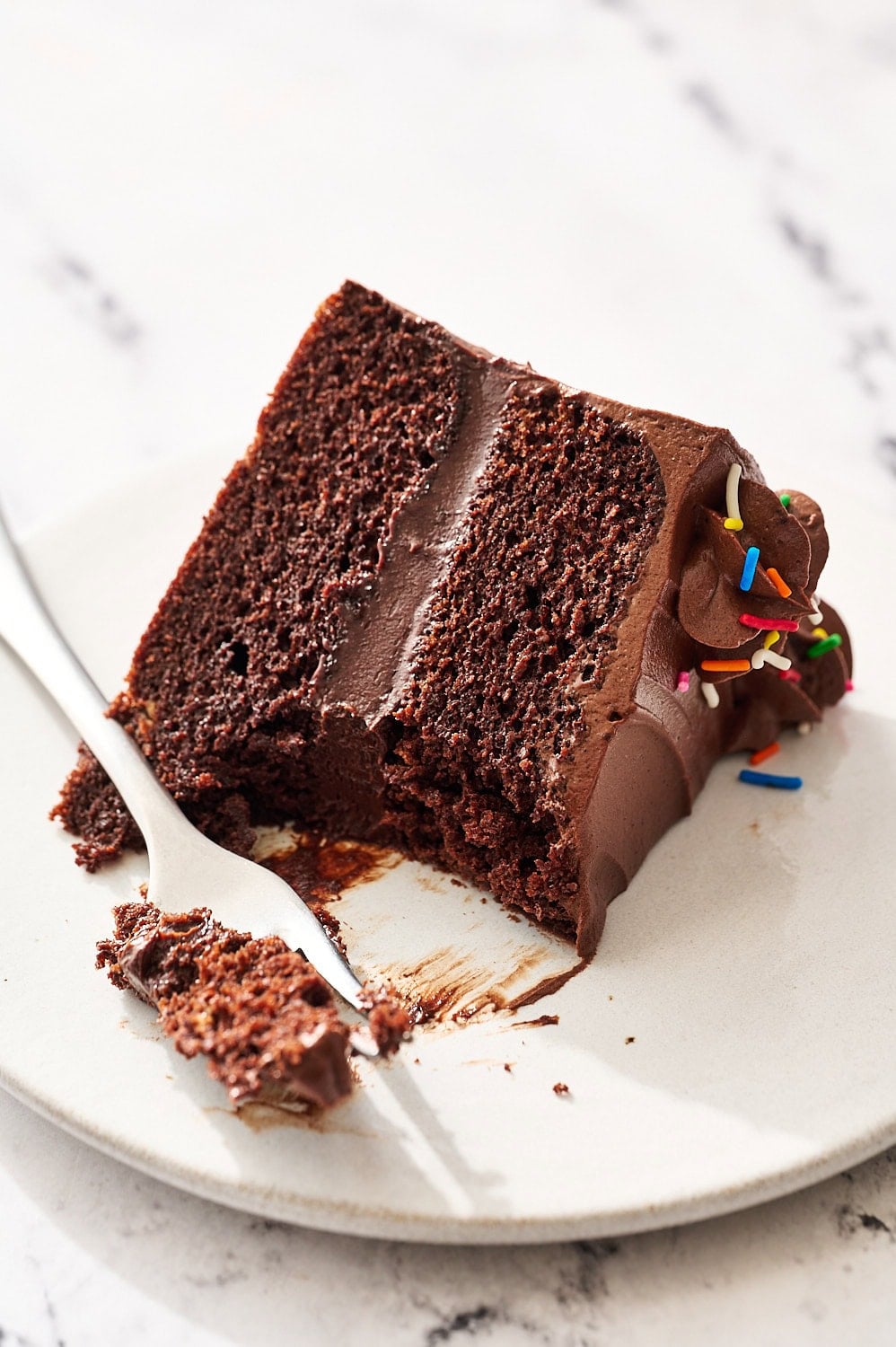
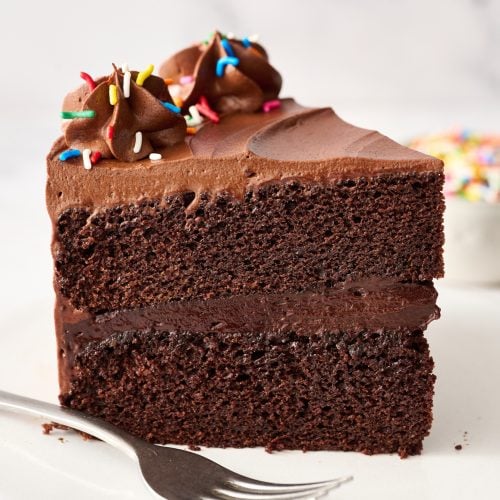
Taste: So rich with chocolate flavor but not overpowering.
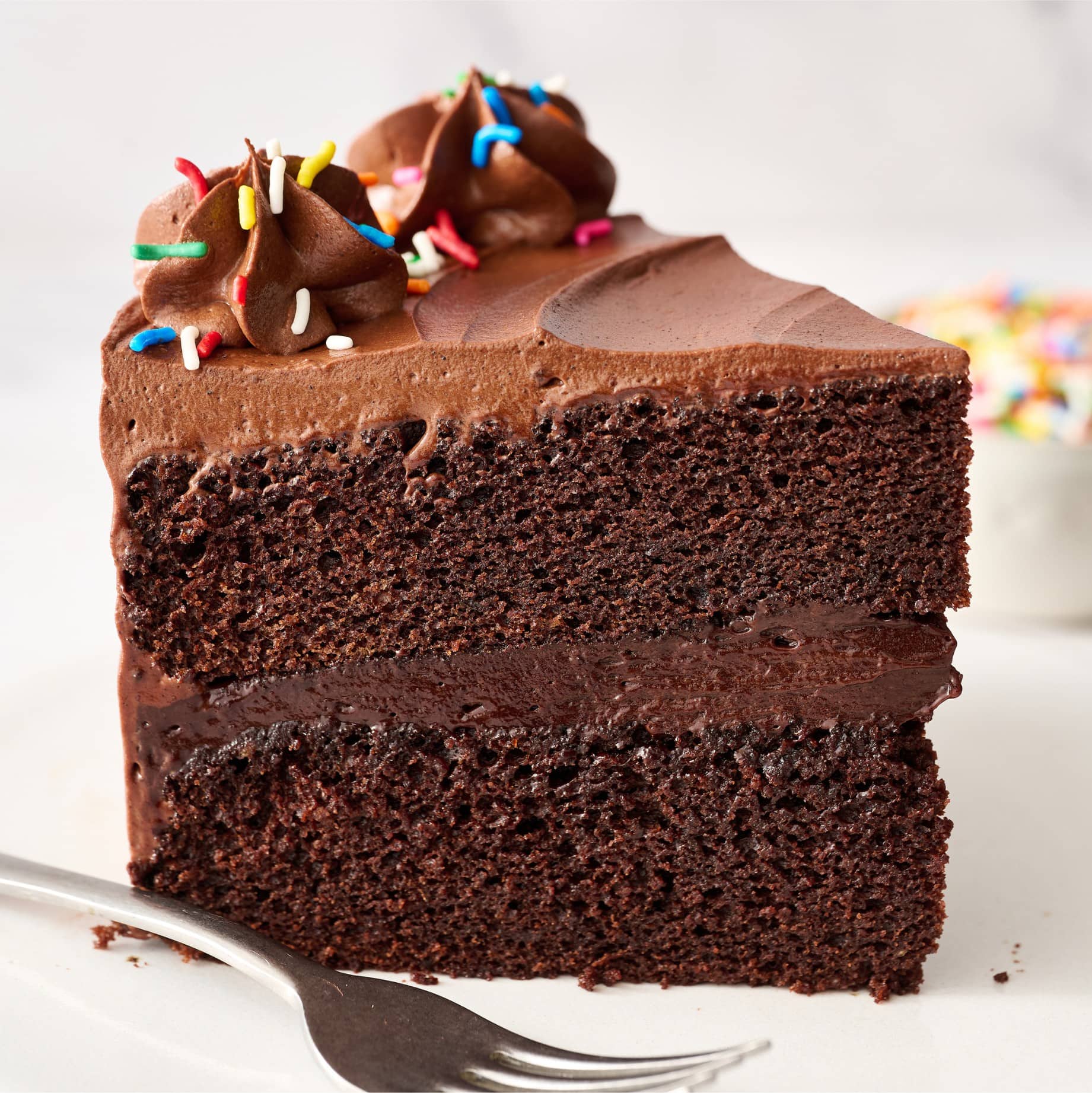
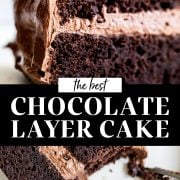
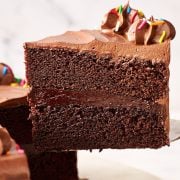
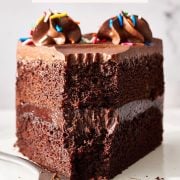
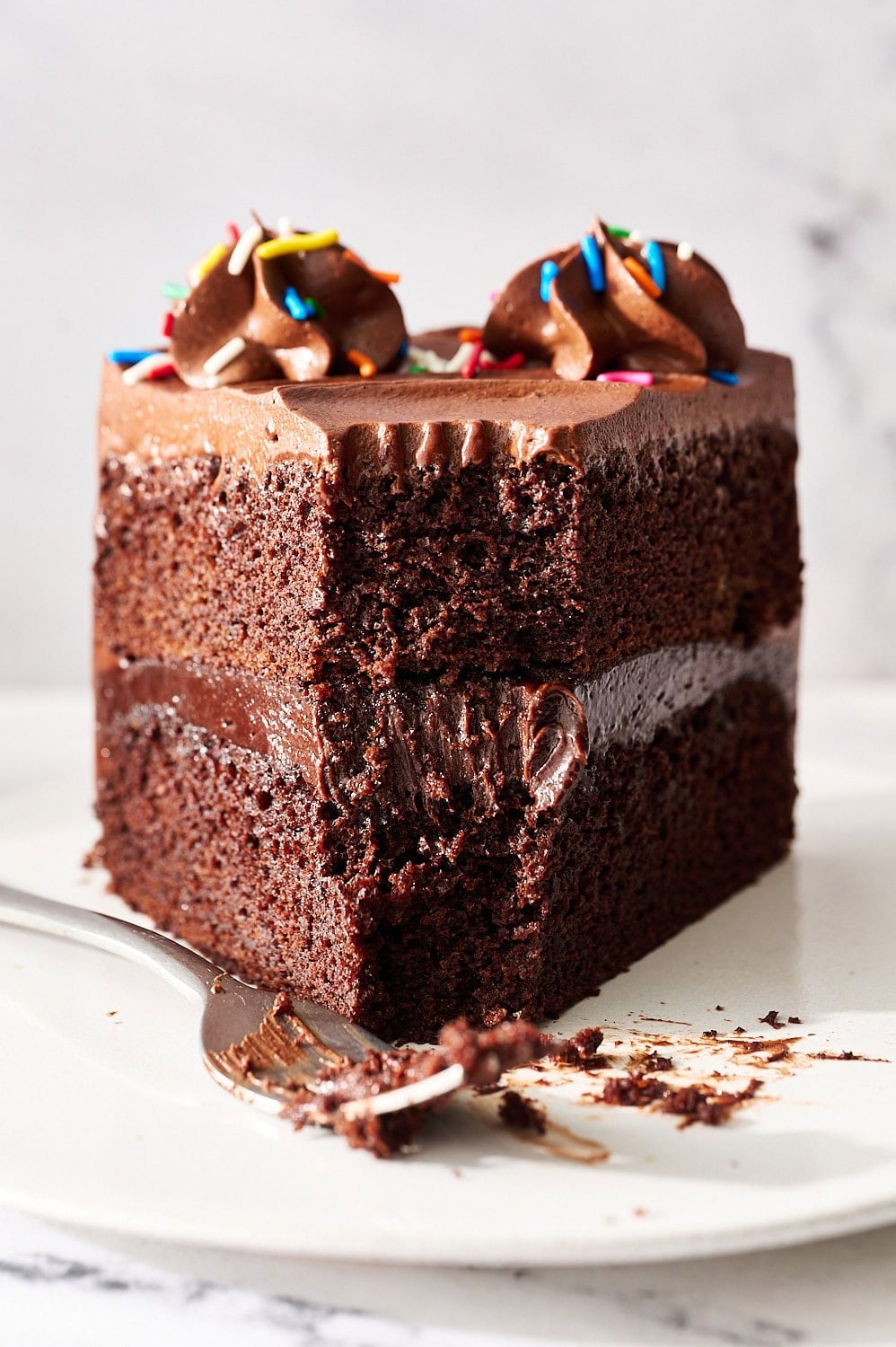
Texture: Unbelievably moist and fudgy with an insanely velvety frosting.
Ease: The cake layers come together in minutes, and the frosting is simple and straightforward (but tastes so gourmet).
Why You’ll Love This Recipe: My improved cake is quicker, easier, and cheaper to make with deeper chocolate flavor and a more moist texture!
This post may contain affiliate links. Read our disclosure policy.
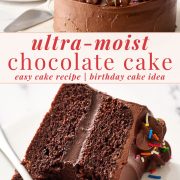
This is the best chocolate cake I’ve ever made, no joke. It’s deeply chocolatey, ultra-moist, and surprisingly easy. (Apologies in advance for the excessive use of the word “moist.”)
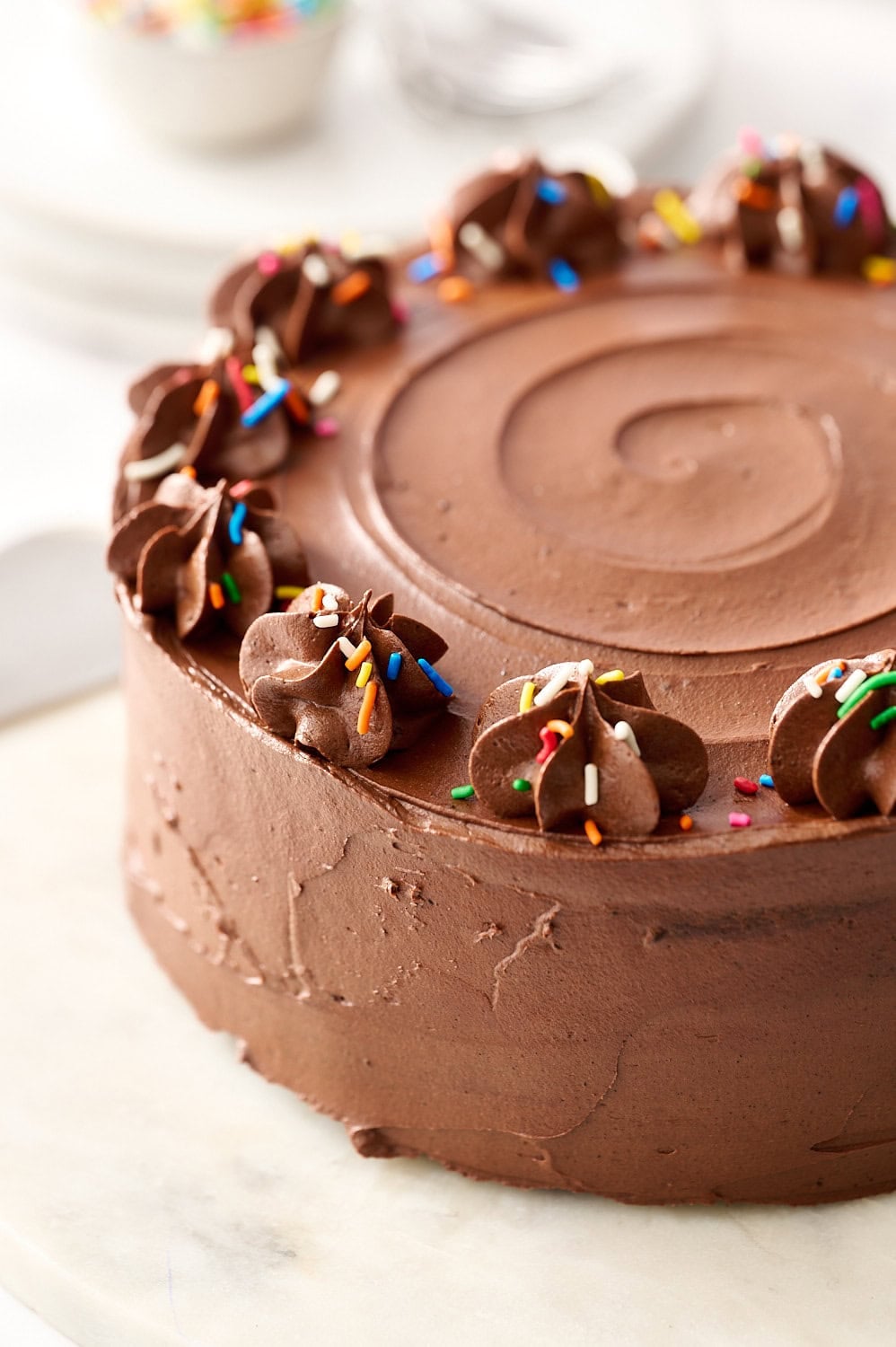
After 7 years of reader feedback and over a year of testing, I simplified the ingredients, improved the texture, and made it more moist than ever. The result is a homemade chocolate cake that stays soft for days and tastes rich without being too heavy or overpowering.
Why I Updated This Recipe
This chocolate cake has been one of the most popular recipes on Handle the Heat for years… but something always bothered me.
I kept getting the same question: “How can I make it more moist?” So I went back to my kitchen and tested it again. And again. And again.
After nearly 10 test batches, multiple recipe testers, and a lot of side-by-side comparisons, I realized the answer was counterintuitive: less chocolate actually made a better chocolate cake. Removing the melted chocolate from the batter improved moisture, texture, and flavor, making the recipe quicker, easier, and cheaper to bake!
Ingredient Notes
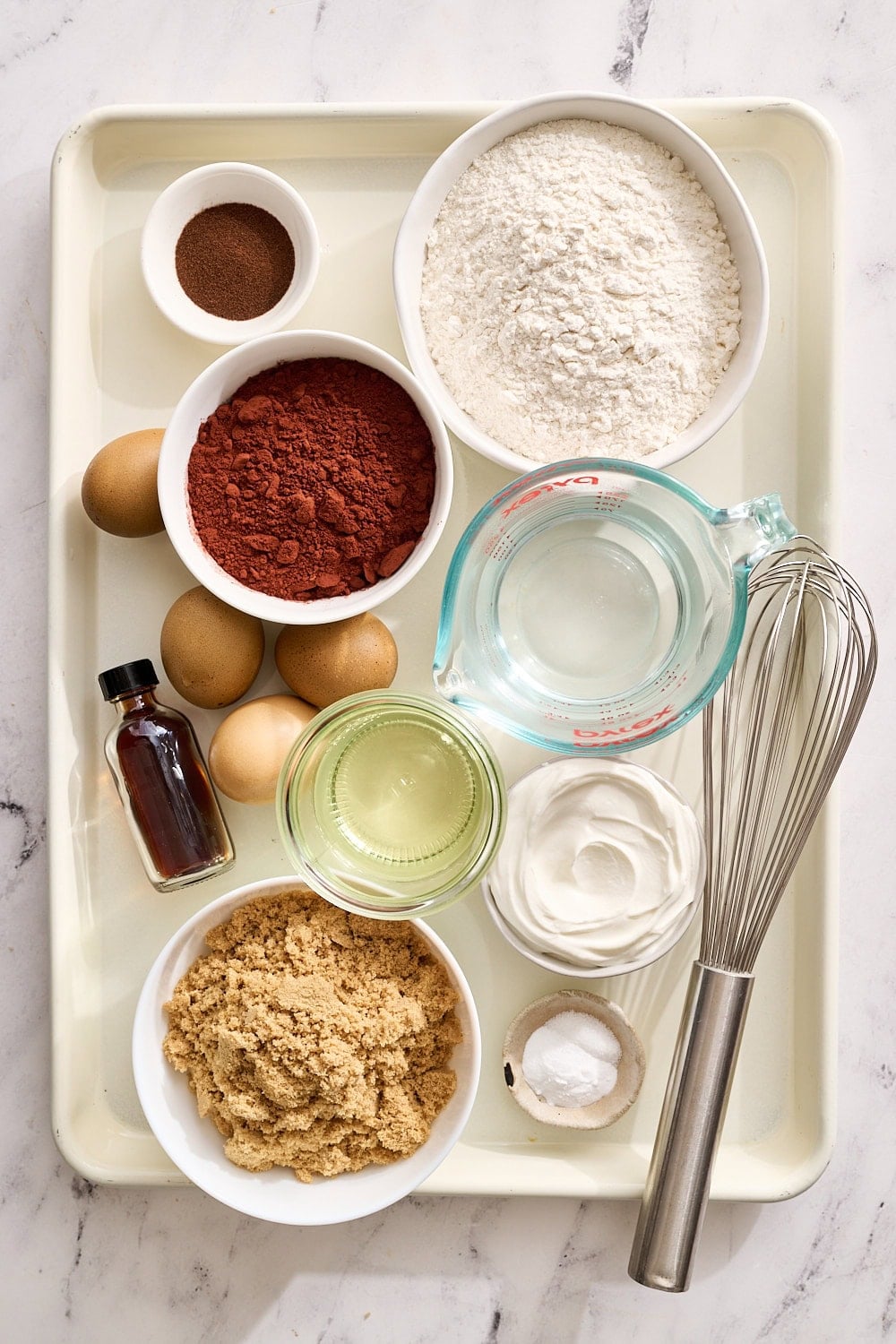
Dutch-Process Cocoa Powder
This recipe relies on cocoa powder for the primary chocolate flavor. Cocoa powder actually transmits more chocolate flavor than solid chocolate. Dutch-process cocoa creates a smoother, darker, more balanced chocolate taste without bitterness.
Espresso Powder + Hot Water (Or Coffee)
Espresso powder intensifies chocolate flavor without making the cake taste like coffee. Blooming cocoa powder in hot liquid releases fat-soluble flavor compounds, giving the cake a deeper chocolate taste. Hot coffee works too, as well as just hot water if you don’t drink coffee.
Light Brown Sugar
Brown sugar adds moisture and softness thanks to its molasses content. In testing, replacing granulated sugar with all brown sugar yielded a more moist and flavorful cake that stayed moist for longer.
Sour Cream
This is a key moisture and flavor ingredient! The acidity activates the baking soda and, coupled with the fat content, tenderizes the texture and balances the sweetness with its distinct tang. Use full-fat for best results. You can also use full-fat plain yogurt.
Eggs
Eggs are key to both structure and richness. Room-temperature eggs emulsify better, creating a smoother batter and more even crumb. I have yet to find a suitable substitute for eggs.
Oil (Not Butter)
Oil stays liquid at room temperature, which keeps this chocolate cake moist for longer than butter-based cakes. Use any neutral oil that doesn’t solidify: vegetable, canola, avocado, etc., but not coconut oil.
How to Make Chocolate Cake (Step by Step)
Prep the pans and oven
Preheat your oven to 350°F. Line two 8-inch round cake pans with parchment rounds (I like these ones with pull tabs!) and spray with nonstick spray (I like Baker’s Joy). This ensures a clean release.
Bloom the cocoa
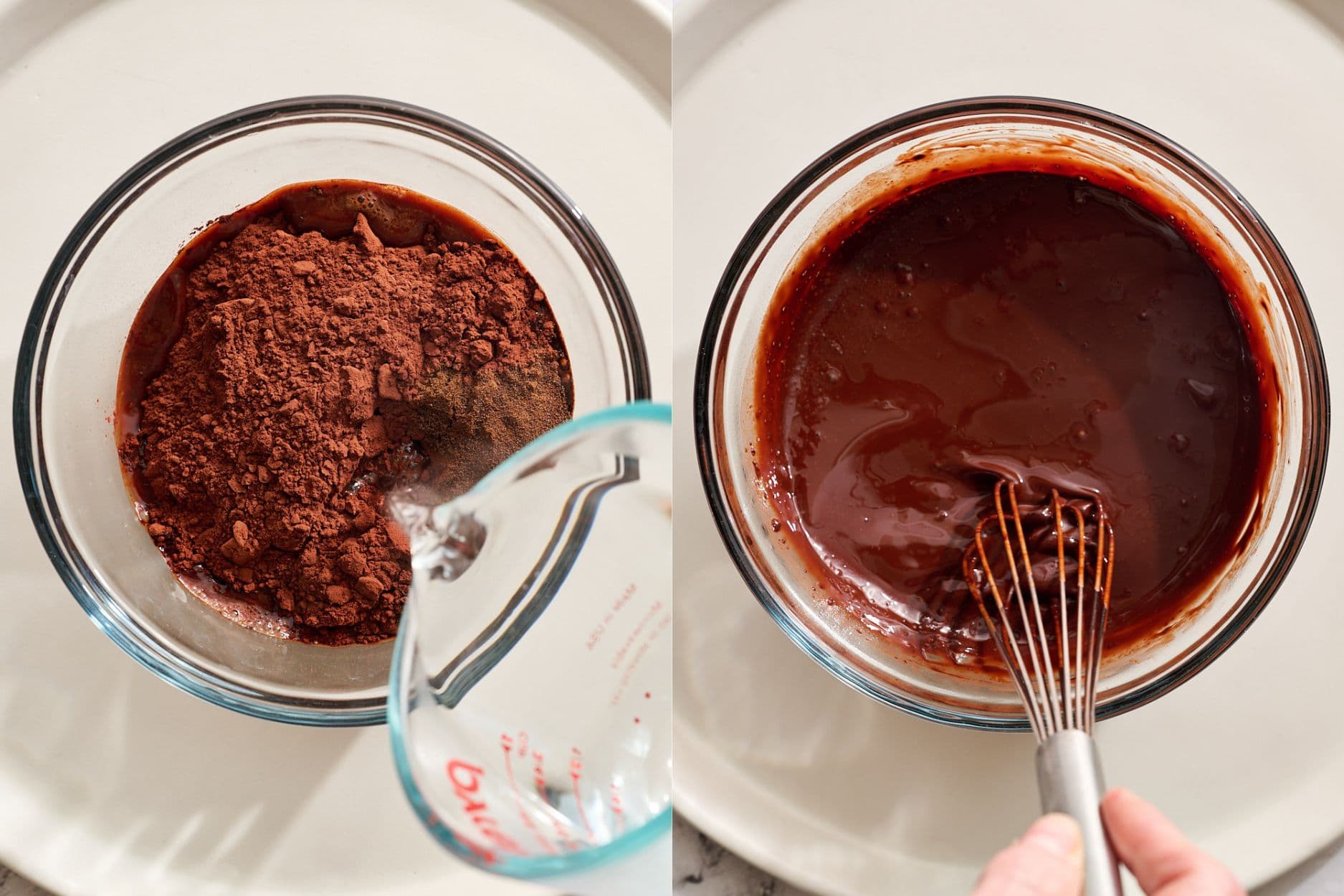
Pour boiling water over the cocoa and espresso powder (or use coffee). Whisk until smooth and glossy. Set aside to cool completely. This “blooms” the chocolate flavor compounds in the cocoa.
Mix the dry ingredients
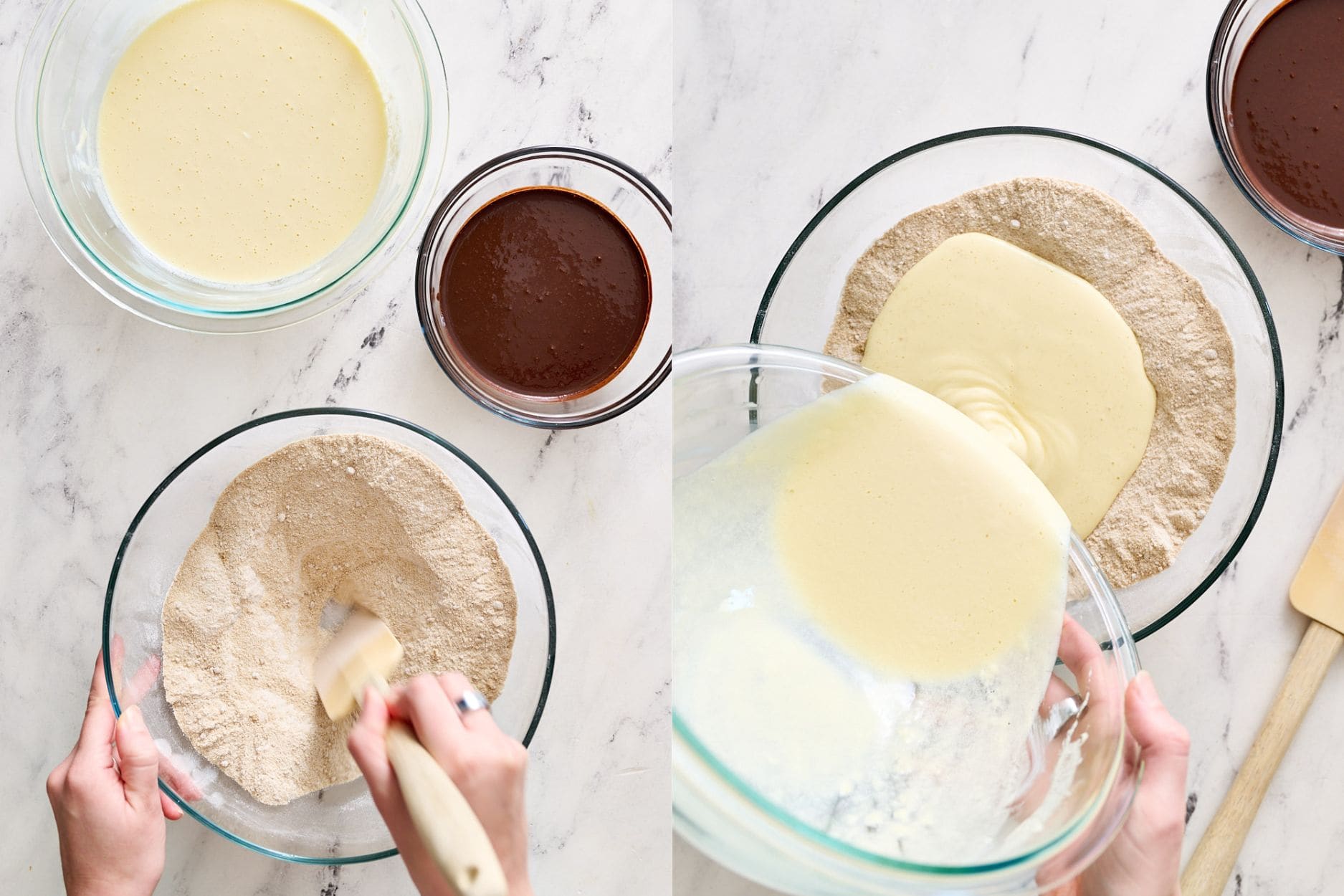
In a large bowl, whisk together the flour, salt, and baking soda. Add the brown sugar and whisk or use your fingers to break up any clumps until it looks like sand.
Combine the wet ingredients
In a separate bowl, whisk the sour cream, oil, eggs, and vanilla until smooth.
Make the batter
Create a well in the dry ingredients and pour in the wet mixture. Mix gently from the center outward until mostly combined. Avoid overmixing, which can cause “tunnels” in your baked cake or make the final texture rubbery.
Add the cocoa mixture
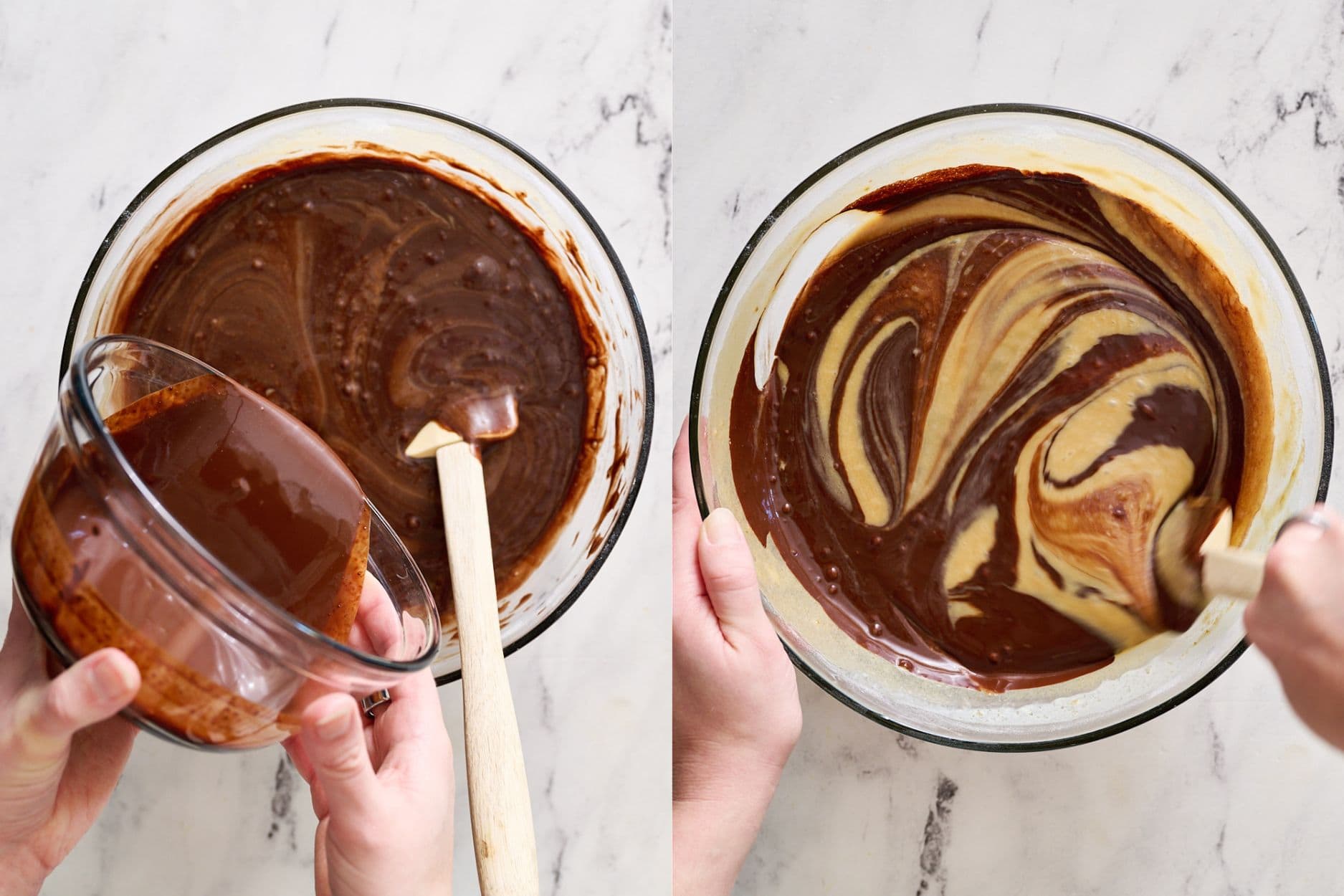
Pour in the cooled (!) cocoa mixture and whisk until the batter is smooth and evenly combined. If this mixture is too hot, it’ll overly activate the baking soda and cause doming.
Bake
Divide evenly between pans (about 740 grams per pan if you’re using a scale). Tap pans on the counter to remove air bubbles. Bake 32–35 minutes, until a toothpick comes out with moist crumbs.
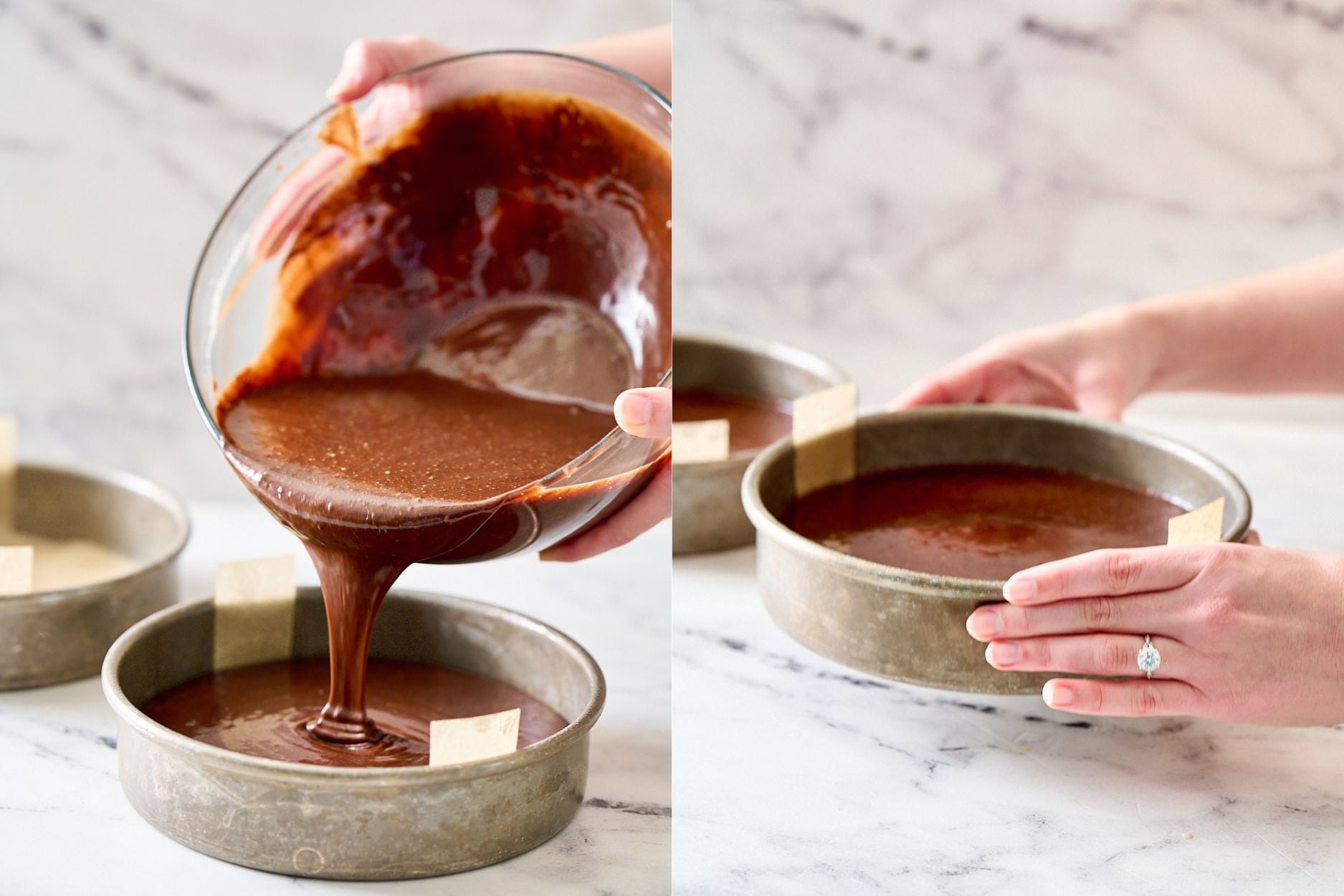
Cool completely
Cool in pans for 30 minutes, then turn out onto a rack and cool fully before frosting. For even easier frosting, chill the cake layers in the fridge for 30 minutes beforehand.
Cake Decorating Tips
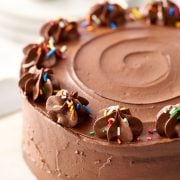
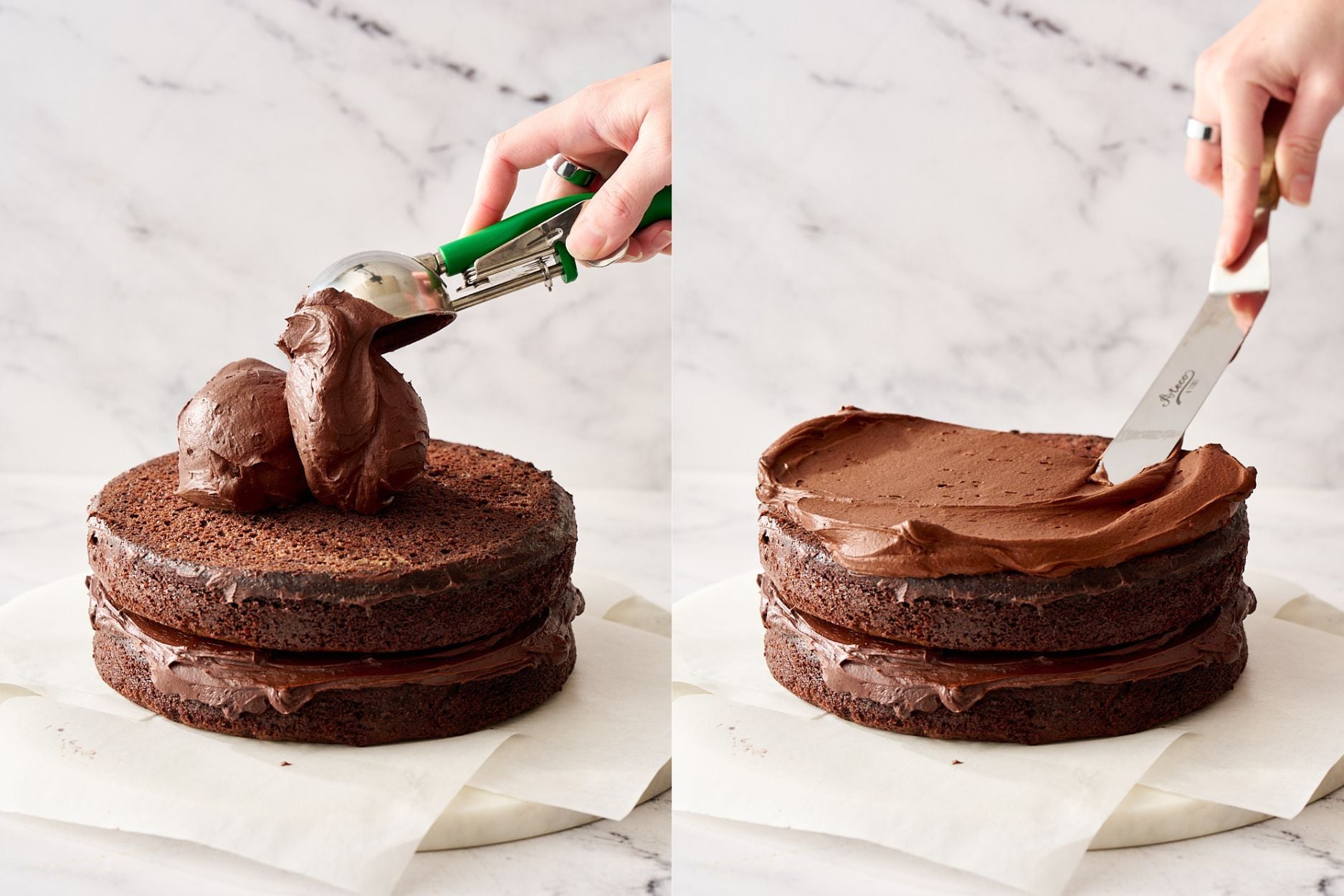
There are a few products + tricks that make cake decorating a breeze. Luckily, this recipe is particularly easy to assemble and decorate. The cake layers are sturdy and the frosting is so velvety smooth that it’s perfect for beginners.
- Parchment Strips: Cut and tuck rectangular strips of parchment underneath the border of your base cake layer to catch stray frosting for quick and easy cleanup and presentation.
- Cake Leveler (optional): If your cake has domed at all, this makes easy work of leveling it flat for easier assembly and frosting. You can also use a serrated knife.
- Cake Turntable (optional): This is basically a lazy susan for cake, and it makes decorating so quick, easy, and enjoyable. I like to place my cake plate on top of this so I don’t need to worry about moving a frosted cake later.
- Offset Spatula: Practically an essential tool for cake decorating with any semblance of smooth and even frosting.
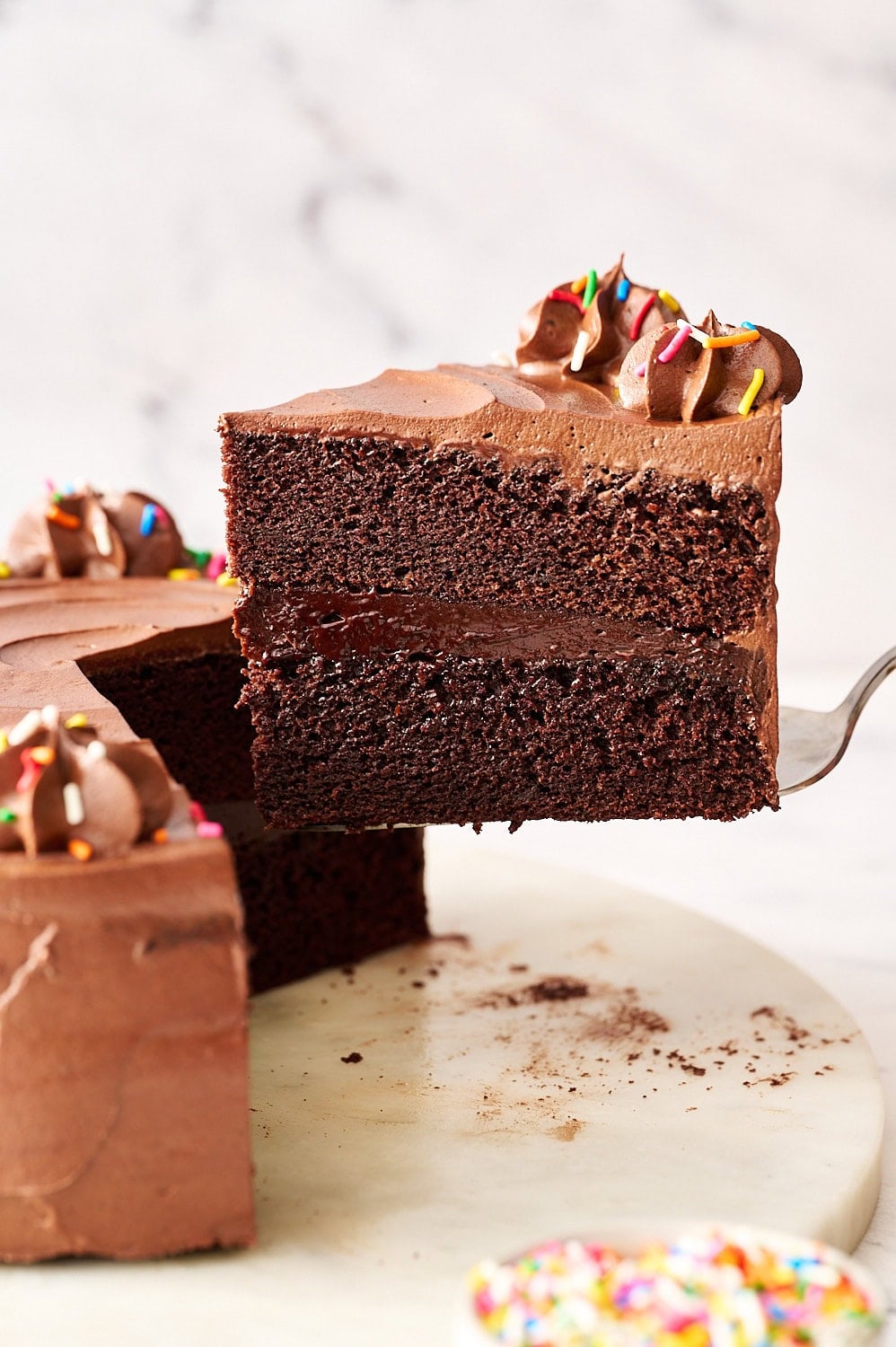

Sprinkle of Science
Why removing melted chocolate made this cake better:
Solid chocolate firms up as it cools. That’s because it’s saturated fat, like butter. This can create a tighter crumb and denser texture in cake that dries out faster.
Cocoa powder, on the other hand, delivers intense chocolate flavor without adding a ton of saturated fat that solidifies. Combined with oil (which stays liquid), the result is a cake that’s softer, more flavorful, and stays moist longer.
Storage & Make Ahead
Frosting: Cover and refrigerate for up to 2 days. Bring to room temperature and re-whip before using. It will oxidize (darken in color), but this won’t affect flavor or texture.
Unfrosted cake layers: Wrap and freeze for up to 2 months.
Frosted cake: Refrigerate for up to 2 days. Serve chilled for an extra fudgy cake, if desired!
Freezing leftovers: Freeze slices for up to 2 months. Freeze on a parchment-lined baking sheet until solid, then wrap in plastic and place in an airtight container. Thaw overnight in the fridge.
Test Kitchen BTS
This recipe underwent about 20 iterations between myself and four recipe testers in four different states.
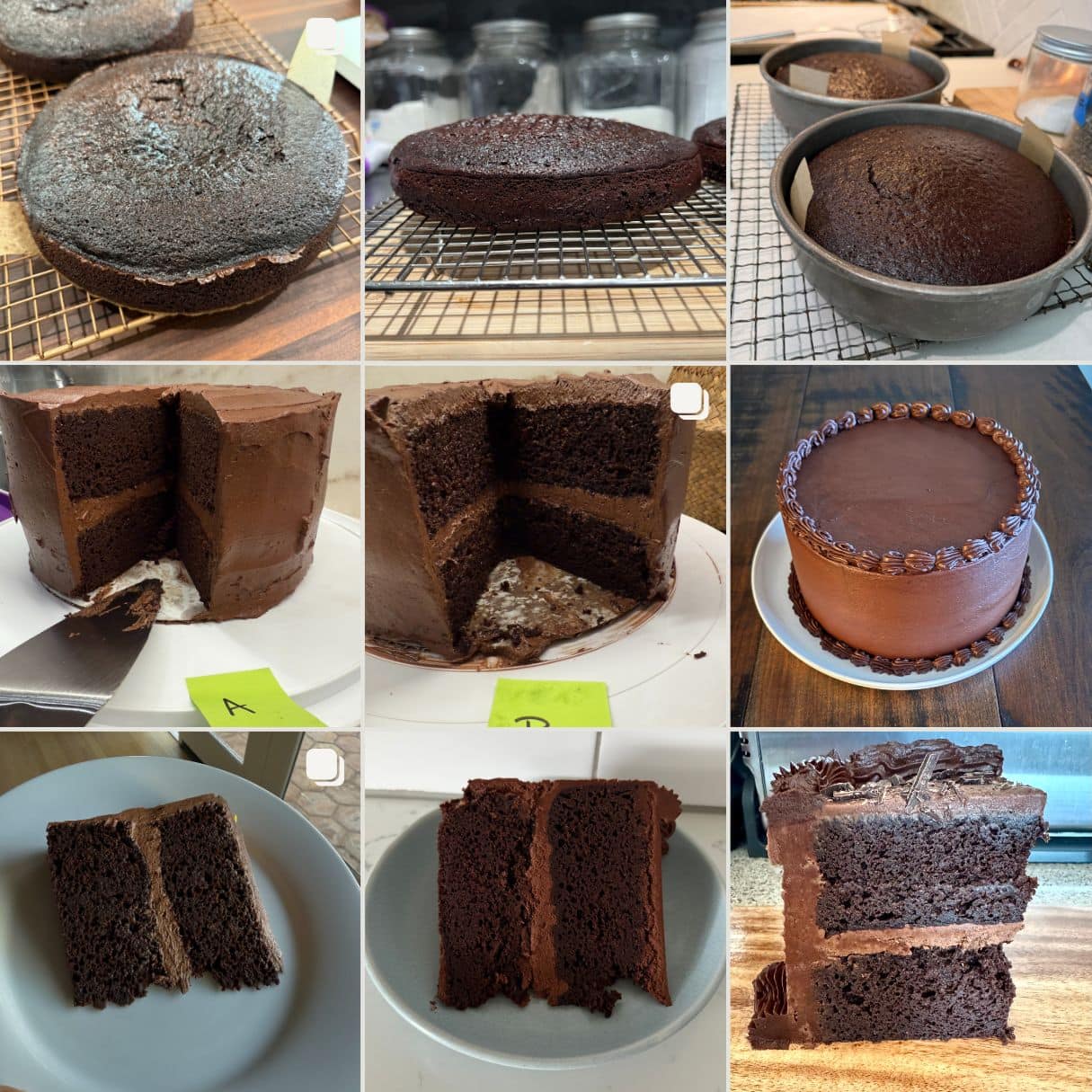
We experienced just about every issue you could imagine: sinking, doming, tunneling, dry edges, sticky cake layers, etc. I gave away multiple cakes and involved many friends in taste testing! It was a journey.
FAQs
What makes chocolate cake moist?
Oil, brown sugar, and sour cream keep this chocolate cake moist. Oil stays liquid at room temperature, while brown sugar and full-fat sour cream prevent drying.
Can I make this chocolate cake without coffee?
Yes. Replace the espresso powder and water with hot water only. The cake won’t taste like coffee either way.
What are the best cake pans?
I adore my Fat Daddio’s 8-inch cake pans. I prefer the 2-inch deep size. If you use 3-inch-deep cake pans, note that you may experience more cake doming.
Can I make this into a sheet cake?
I haven’t tested that, but I do have a Chocolate Sheet Cake recipe already!
What frosting works best with chocolate cake?
I wrote this recipe with my favorite Chocolate American Buttercream because it’s easy, smooth, and balances the cake without overpowering it. However, you can also use my Chocolate Swiss Meringue Buttercream if you prefer.
Why do my cake layers have big holes in them?
Big holes, or tunnels, happen when the batter is overmixed or ingredients aren’t at room temperature. Overmixing forms strong gluten strands that trap air bubbles, creating holes. To prevent this, mix just until combined, use room-temperature ingredients, and tap your pans before baking to release large air pockets. Also, try sifting your dry ingredients!
Why did my chocolate cake sink?
This is often due to underbaking your cake. Make sure your cake tester or toothpick comes out with moist crumbs, not wet crumbs. Check out my article on how to prevent sinking cakes here.
Best Chocolate Cake

Email This Recipe
Enter your email, and we’ll send it to your inbox.
Ingredients
For the cake:
- 1 cup (85 grams) Dutch-process cocoa
- 2 teaspoons instant espresso powder*
- 1 cup (237 grams) boiling water
- 1 3/4 cups (222 grams) all-purpose flour
- 1 teaspoon fine sea salt
- 1 teaspoon baking soda
- 2 cups (400 grams) lightly packed light brown sugar
- 1 cup (227 grams) sour cream or full-fat plain yogurt, at room temperature
- 4 large eggs, at room temperature
- 1/2 cup (112 grams) neutral oil, such as canola or avocado oil
- 2 teaspoons vanilla extract
- 1 batch Chocolate Buttercream Frosting
Instructions
Make the cake:
- Preheat the oven to 350°F. Line two 8 by 2-inch cake pans** with parchment rounds and spray evenly with nonstick cooking spray.
- In a small heatproof bowl, whisk together the cocoa powder and espresso powder. Pour the boiling water over mixture and whisk gently until smooth. Set aside to cool completely.
- In a large bowl, either sift*** or whisk together the flour, salt, and baking soda. Add brown sugar and use your hands to break up any clumps until the mixture resembles sand.
- In a separate small bowl, whisk together the sour cream, oil, eggs, and vanilla until smooth. Make a well in the center of the dry ingredients and pour in the wet ingredients. Starting in the center, use a whisk to slowly pull the dry ingredients into the wet until mostly combined. The batter may be slightly lumpy.
- Add the cooled cocoa mixture and whisk until the batter is smooth and evenly combined.
- Divide the batter evenly between the prepared pans (about 740 grams per pan). Tap each pan firmly on the counter a few times to pop any air bubbles. Bake for about 32 to 35 minutes, or until a toothpick or cake tester comes out with moist crumbs attached.
- Cool in the pans for 30 minutes, then (if needed) run a thin knife around the edges and remove to a wire rack to cool completely.
Assemble the cake:
- If your cake has domed at all, level with a serrated knife or cake leveler until it is flat.
- Place one cake layer on a cake turntable or cake stand. Place strips of parchment paper under the cake to prevent a frosting mess.
- Spread a generous, even layer of frosting over the top, pushing it out over the edges slightly. Place the second layer upside down onto the frosting so the top of the cake is nice and flat.
- Using an offset spatula, spread the remaining frosting evenly all over the cake, smoothing the edges. Serve immediately, or cover and refrigerate for up to 2 days. Let sit at room temperature for an hour before serving.
Recipe Notes
More Cake Recipes You’ll Love:
This recipe was originally published in 2018, and updated in 2026 with a recipe overhaul, new photos, and more baking tips. Photos by Joanie Simon.
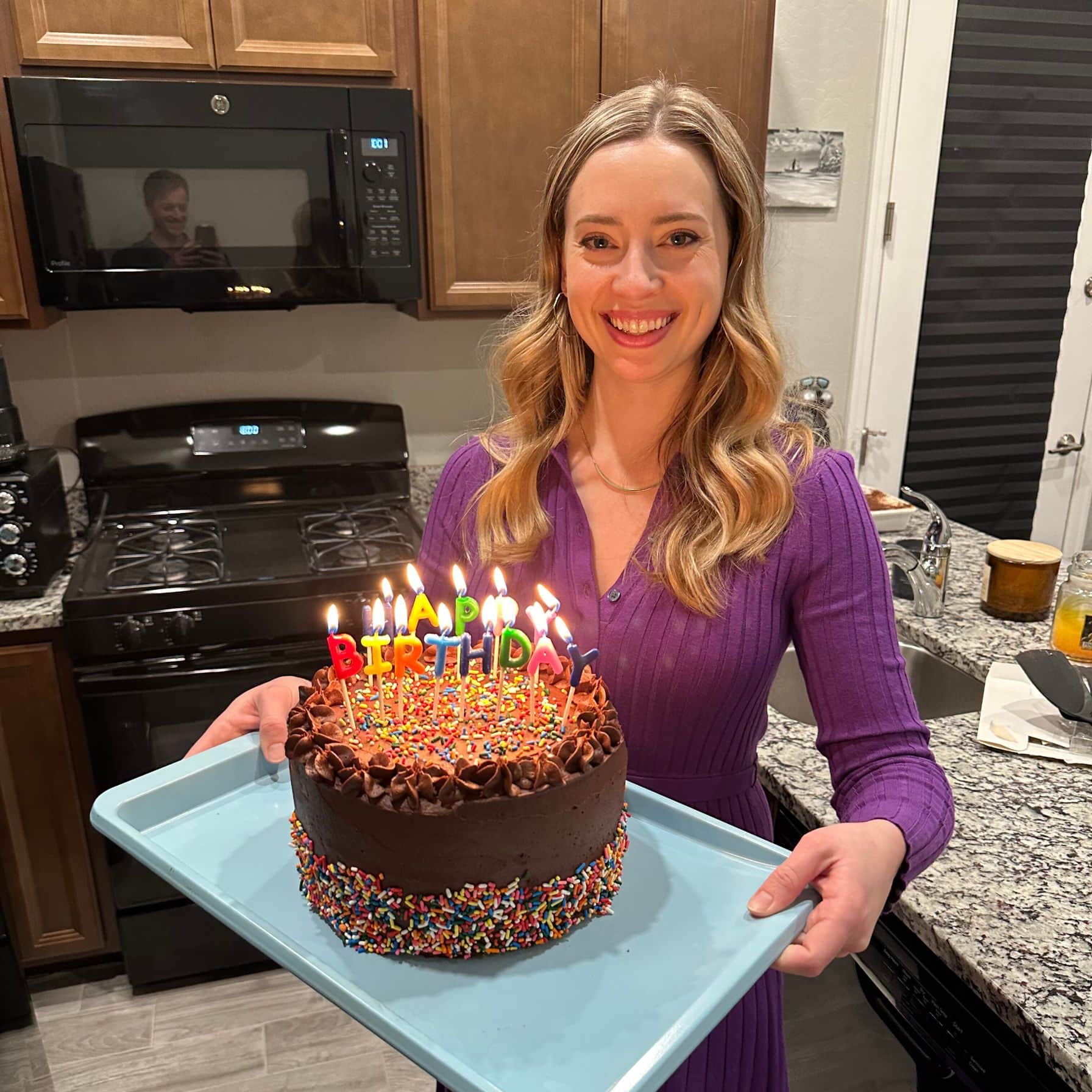
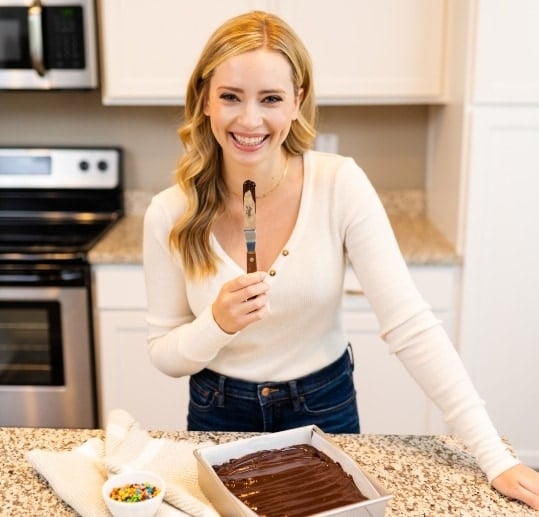
I made this chocolate cake for my dad’s birthday and it was a big hit! PS: Can you see my husband’s smiling proud face in the reflection of the microwave? Ha!











can I use avocado oil instead of vegetable oil? Will I need to change the measurement if so?
Hi there! We haven’t tried that, so we can’t say for sure! Let us know how it goes if you give that a try 🙂
I only have 10 inch round pans. Should I double the recipe?
Hi Michelle! We have only tested this recipe in 8-inch round cake pans, and it’s tough to say exactly how doubling in 10-inch pans will go, as they’re not quite twice the volume of 8-inch pans. Check out this article by The Food Network for more info and help with the math here! I hope that helps! Let us know how it goes 🙂
This frosting looks amazing! Would it also be really good to pipe on cupcakes? Will it be stable enough and hold up? It looks amazing.
Hi Deb! Yes, this frosting is perfect for piping on cupcakes! It’s a softer frosting, so it won’t hold up super well to very intricate piped designs, but it will look beautiful and hold up well with a simple star tip. If you find the frosting is a little too soft, refrigerate for 5-10 minutes to firm up slightly, refrigerating a few minutes longer if needed until it’s slightly firmed but still pipeable. Keep the frosted cupcakes refrigerated until about 1 hour before serving, for best results. Let us know how it goes 🙂
I am confused about this meringue buttercream. I noticed in your freebie download it says to whip it until stiff peaks but this one did not say that. is that correct? of so, why?
Hi Debbie! This Swiss meringue style buttercream uses a different method compared to American-style buttercream, so reaching stiff peaks isn’t as important here. Feel free to use either variety of frosting on this cake, but in our opinions, nothing beats the silkiness of this style of buttercream 🙂 Follow Tessa’s directions in the recipe for beautifully smooth, delicious Swiss meringue buttercream! Enjoy!
This is probably a long shot, but have you ever made a Barbie cake? I want to recreate one for my sister. Any tips on how I might adjust the ratios for this recipe? Thank you!!
Hi Elizabeth! We haven’t tried that, so I can’t say for sure. Let us now how it goes if you give that a try 🙂
I have made some recipes that claim they are the “Best Chocolate Cake.” They were not! But this one….it’s easy, it’s moist and delicious. The flavor is amazing. The espresso powder is a must! Thank you for this! I made my own birthday cake with this recipe and it was perfect!
Wow, thank you so much for choosing our recipe to make for such a special occasion! We’re thrilled to hear how much you enjoyed it 🙂 Happy belated birthday from Team HTH!
Could you put this cake in a tube pan or a Bundt pan? I have a recipe for a coconut filling that you put in the middle of the cake by putting some batter in the Bundt or tube pan then put spoon fulls of the coconut filling and then top with the rest of the batter.
Hi Nancy! We haven’t tried baking this cake in a bundt pan, but Tessa has lots of delicious chocolate bundt cakes you could try this with – such as this cheesecake-filled chocolate bundt cake, or this chocolate sour cream bundt cake, or this chocolate peppermint bundt (just leave out the mint extract). I hope that helps!
Is there a reason that you don’t use cake flour instead of regular AP? Also, do you think King Arthur AP flour would work well? It has a higher protein content than most AP flour and it works beautifully for my pie crust recipe, but I used it to make brownies and thought it made them too cake-y.
Hi Mary Lynn! We wanted to create a recipe that used more readily available ingredients, so we stuck with AP flour during the development of this recipe. If you’ve found that you notice a more cakey texture using King Arthur AP flour, I’d recommend trying Gold Medal Bleached All-Purpose Flour, Tessa’s go-to!
Hi! I’m glad I came across your recipe for this chocolate cake. The instructions were very thorough. I’m a novice baker, and I have a question about how my layers turned out. Initially when I checked my cake layers at the 28 minute mark, I was a little scared the batter was going to overflow, as it was all the way to the very top. When I wet back to check at 32 minutes, my layers deflated by about 1/4″. Is this normal or did I affect the cake layers setting when I opened the oven?? I’m wondering if I should rebake the cake as it is for a birthday celebration next week (my judgment call obviously). Right now the layers are in the freezer, so I have no idea of the texture. Thanks for any guidance you can provide!
Hi Brandy! I’m glad to hear that the instructions Tessa provided here were clear and easy to follow! It is normal for cakes to rise in the oven, thanks to chemical leavening agents (baking powder and/or soda), along with various other factors (such as creamed butter/sugar, eggs, and more). The batter will rise and it may shrink down a tiny bit as the batter sets into cake and bakes all the way through, but if the cake sinks substantially or very suddenly, there may be several reasons why. Tessa actually just published an article on How to Prevent Cakes & Cupcakes From Sinking – check it out here! I hope that article helps and provides some insight into what causes sinkage. Let us know if you have any further questions! 🙂
I have made this before, and it is by far the best chocolate cake ever. So, can it be made in three 8 inch cake pans. Yes, the layers will be smaller, but would the sturdiness be compromised?
Hi there! We haven’t tried that, so I can’t say for sure! You would need to carefully watch the bake time and reduce it quite a bit, to ensure the cake layers didn’t get overbaked and dry out. They also would be a little less sturdy, because they would be thinner. Let us know how it goes if you give this a try!
Absolute Delicious! My son loves chocolate cake!
This cake is delicious, moist and flavorful!
Yum !!
Question can i make this as a 3 layer cake instead of two ? if so is it the same measurement or double ?
Hi Amari! We haven’t tried that, but it should be fine. Just know that the layers will be much thinner, so you’ll need to reduce the baking time. Be sure to follow the sensory indicators in the recipe (“until a cake tester or toothpick comes out clean”). Good luck!