





Tessa's Recipe Rundown
Taste: Sweet, nutty, and delicious.
Texture: Perfectly crunchy with a slight candy chew.
Ease: Just 3 ingredients and 15 minutes prep and cook time.
Pros: Such a fun DIY!
Cons: None.
Would I make this again? Absolutely, I like to make a double batch and sprinkle them on everything I bake for weeks.
This post may contain affiliate links. Read our disclosure policy.





I adore toffee.
Like butterscotch, toffee seems to be caramel’s forgotten cousin. To me, it deserves as much adoration as caramel. Maybe more!
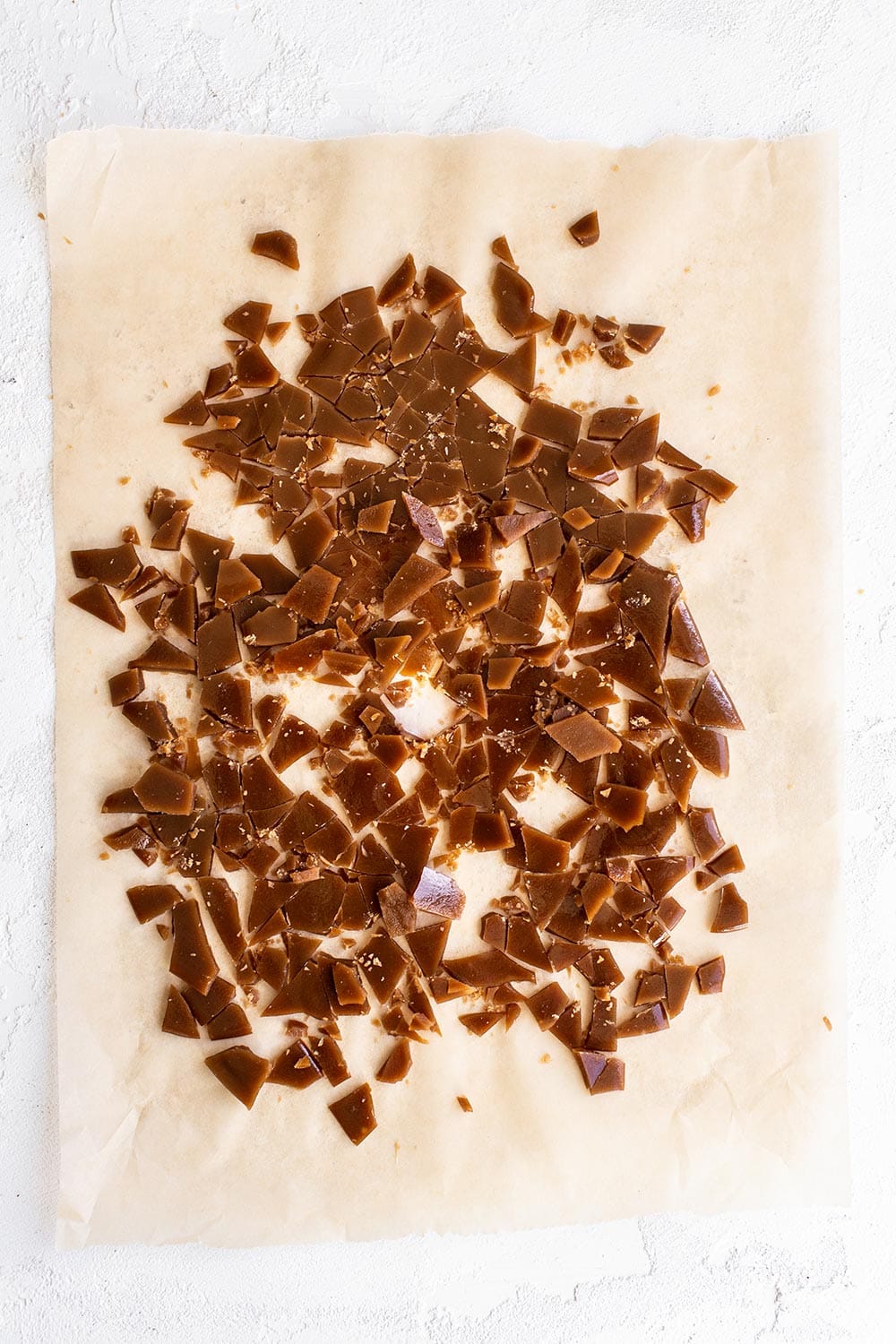
As much as I love a buttery toffee recipe on its own, my favorite is when it’s added to something already delicious.
It’s the perfect addition to a chocolate chip cookie, blondie, brownie or even banana bread. Or sprinkle the toffee on cupcakes, French toast, or ice cream. Plus, you likely already have the simple ingredients on hand to make it from scratch.
Bonus: this toffee recipe is also a great treat for giving as delicious holiday gifts during the holidays or Christmas!

Sprinkle of Science
What is Toffee?
Toffee is a crunchy, sweet, buttery, cooked sugar candy, similar to caramel and butterscotch. These three classic dessert components seem very similar – so how do they differ?
- Caramel: Based on white granulated sugar. Typically, butter, milk/cream, and vanilla are added for flavor and to produce a thick, creamy caramel. Caramel can be heated less for a sauce consistency, longer for a chewy soft caramel, or even longer for a crunchier hard caramel. I have a recipe for caramel sauce here.
- Butterscotch: Similar process to caramel, but made with brown sugar instead of granulated white sugar. Cream and vanilla are also often added. I have a recipe for butterscotch sauce here.
- Toffee: Just like butterscotch, toffee starts with brown sugar – but the difference between butterscotch and toffee is the temperature it’s heated to. Toffee is cooked longer to a much higher temperature – all the way to the ‘hard crack’ stage. This means that toffee will harden completely as it cools, and can then be cut or broken into pieces, to be added to other delicious desserts, or simply enjoyed by itself!
What are Toffee Bits?
Just what it sounds like! Bits of crunchy sweet toffee, chopped or broken into pieces about the same size as chocolate chips.
Can’t You Just Buy These?
Yes, you can buy them in the baking aisle under the Heath brand. However, they can be difficult to find in some regions and stores. Additionally, many stores only carry chocolate-covered toffee bits, which you may not always want.
But trust me, this homemade toffee recipe is even tastier than the Heath version! Plus, no preservatives or artificial flavors in these homemade sweet morsels!
Only 3 Ingredients:
- Butter (more on this below)
- Light brown sugar
- Salt
Why American-Style Butter?
European-style butter (such as Kerrygold) contains a higher butterfat percentage, compared to American-style butter. This lack of water content in European-style butter results in the toffee separating, and/or refusing to set fully. Any butter over 80% butterfat will cause these issues unless you add in 1-2 tablespoons of water to the melting butter.
Step by Step:
- Line a baking sheet with parchment paper.
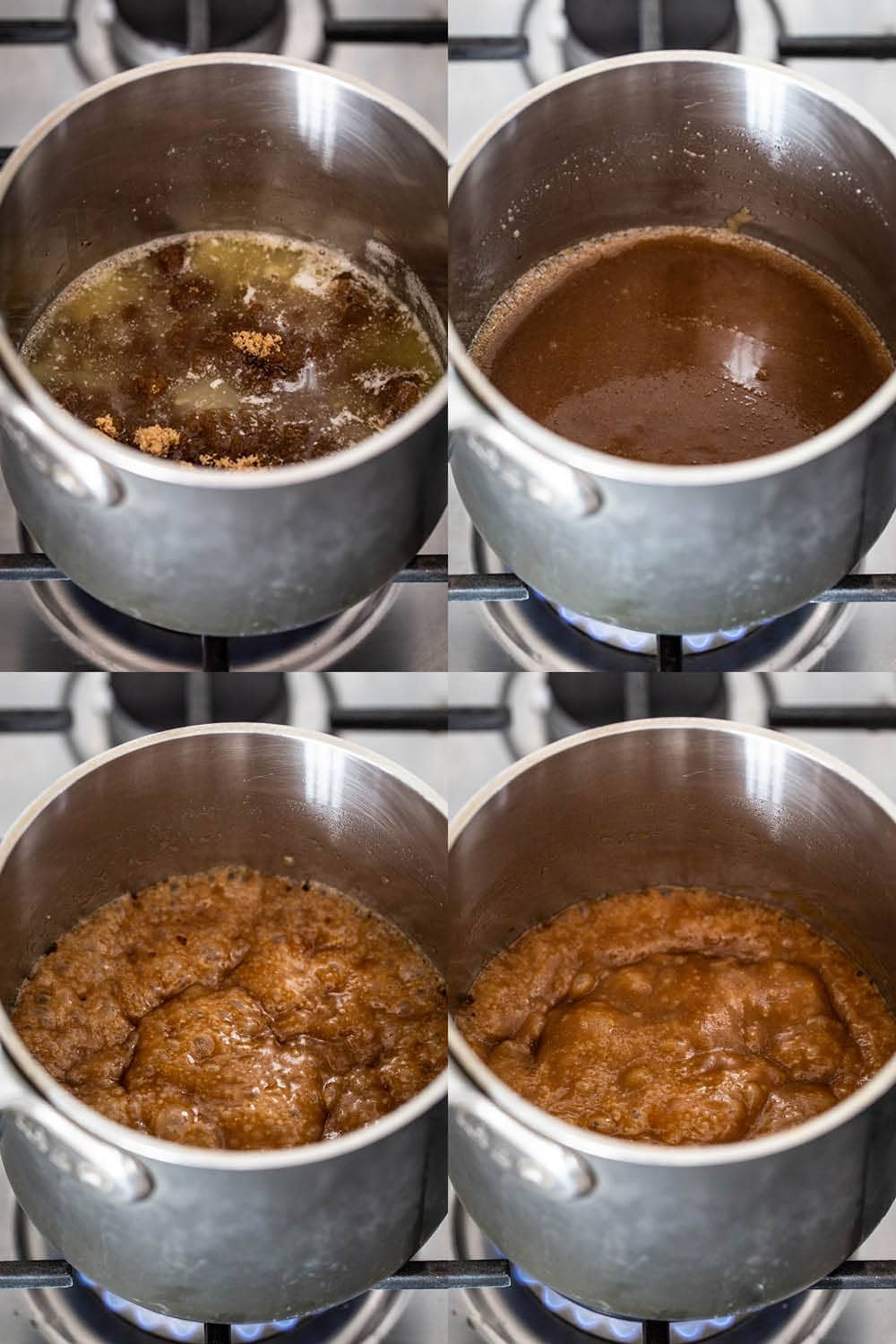
- In a small saucepan, melt the butter. Then, add the sugar and salt and whisk until combined. Continue whisking for about 10 minutes, or until the mixture looks like melted peanut butter (reference the picture below). Make sure it doesn’t stick to the bottom of the pan or pot.
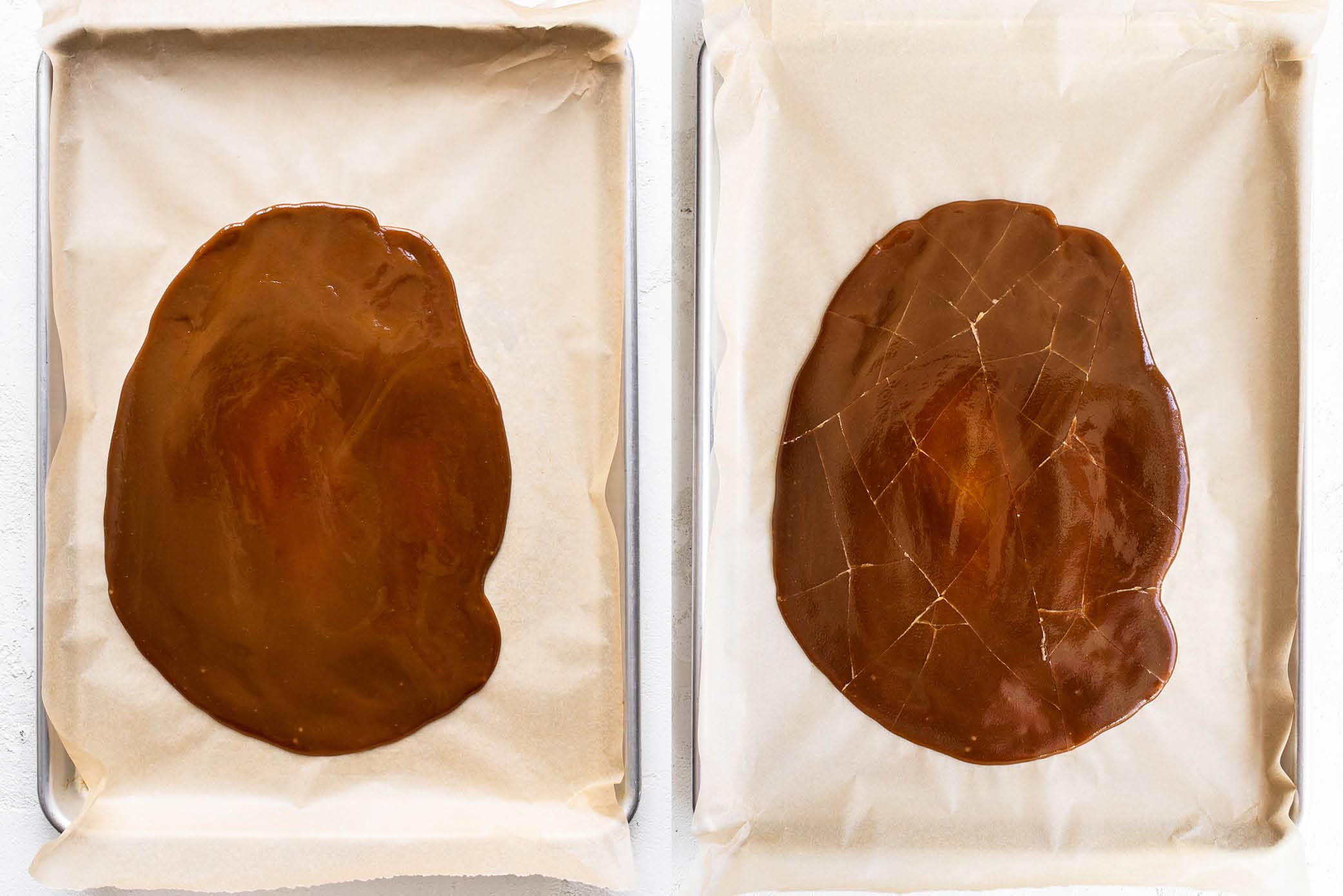
- Pour the toffee onto the prepared baking sheet pan, allowing it to spread. Let cool for about 20 minutes.
- Use a mallet, rolling pin, or heavy object to crack the batch of toffee into small bits.
- You can now use your toffee pieces to amp up the flavor in cookies, brownies, streusel toppings, sprinkled on top of vanilla ice cream, you name it!
Tips for Making Toffee:
- Before you start the recipe, line a rimmed cookie sheet with parchment paper or a silicone mat. It’s best to do this first because you will need to pour the finished toffee onto the prepared pan immediately.
- Use a heavy-bottomed saucepan. Pans with thinner bottoms will heat too aggressively and may cause separation or scorching.
- Never step away from the toffee while it’s on the stove. It can burn quickly.
- Do not try to touch or taste the sugar while it’s cooking, as it will be extremely hot.
- Separated toffee can sometimes be saved by removing the saucepan from the heat and whisking vigorously until it comes back together into a smooth mixture. You may need to add a tablespoon of water to re-emulsify.
- A candy thermometer is so helpful in making toffee. This is my favorite candy thermometer.
- Make sure to let the toffee cool completely before you break it into bits and store it.
- If the toffee is flexible instead of hard, it wasn’t cooked long enough. You can break into pieces, return to the stove, and re-melt and cook to 295-305°F.
How to Store Toffee Bits
Once cooled and cut or broken into pieces, store in an airtight container in a cool, dry place for up to 1 month. Alternatively, freeze in an airtight container or zip-top bag for up to 3 months. Allow to thaw at room temperature before enjoying or adding to cookie dough, streusel or other baked goods.
Try Next: Dutch Apple Pie With Caramel Streusel Topping

Email This Recipe
Enter your email, and we’ll send it to your inbox.
Ingredients
- 1 stick (113 grams) unsalted American butter*
- 1 cup (200 grams) light brown sugar
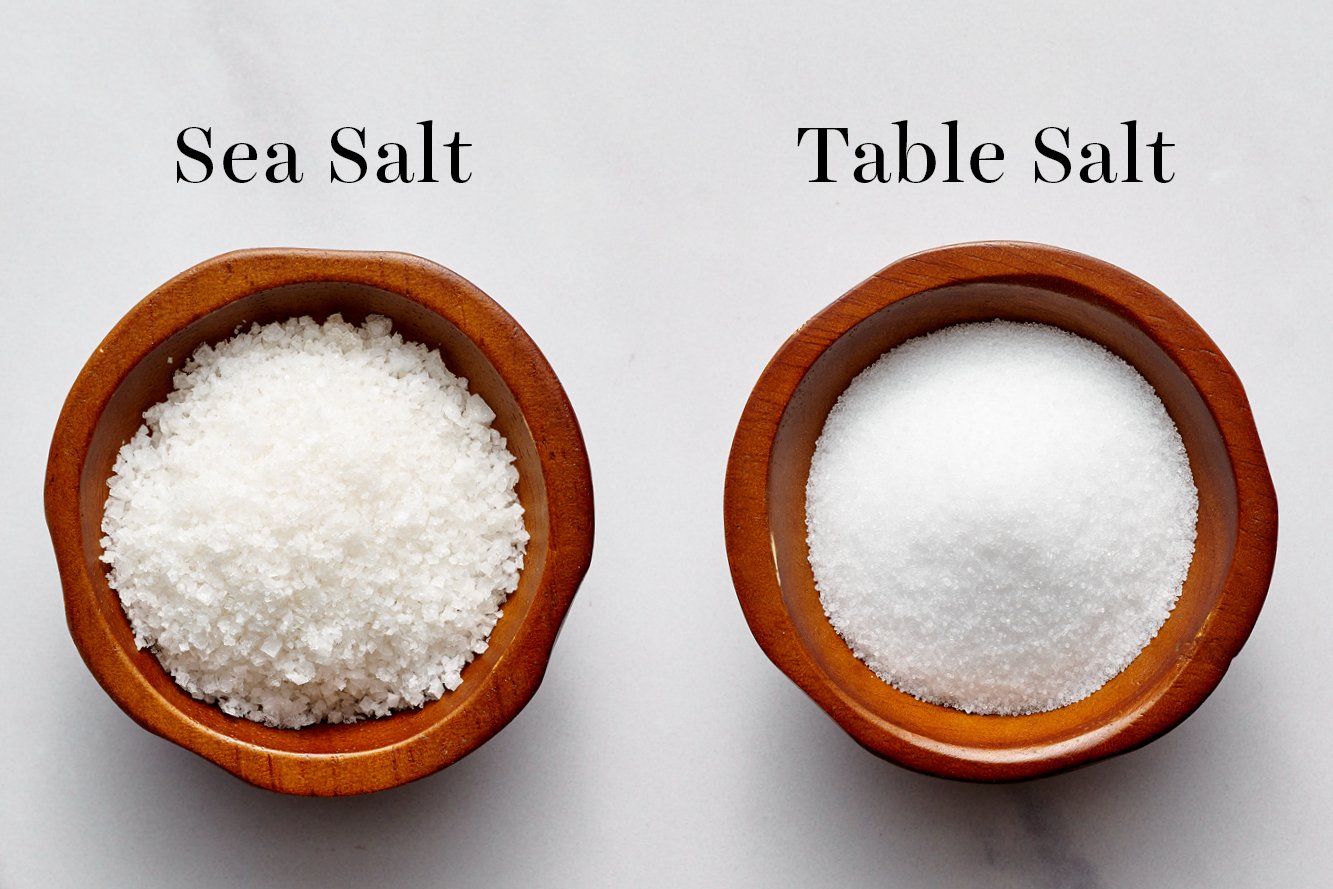
- 1 teaspoon fine sea salt
Instructions
- Prepare your pan first: Line a rimmed baking sheet with parchment paper or a silicone baking mat. This will make it easy to pour and cool the toffee later.
- Melt the butter: Place butter in a small, heavy-bottomed saucepan over medium heat and let it melt gently. Heating over high heat may cause the mixture to separate.
- Add sugar and salt: Once the butter is partially melted, stir in the brown sugar and salt, then use a whisk to whisk vigorously for 1 full minute until smooth and evenly combined. The sugar won't be fully dissolved yet—that's normal.
- Cook carefully: Keep the pan over medium heat, stirring constantly, including the edges to scrape up any sugar that sticks. The mixture will bubble, thicken, and look like smooth, melted peanut butter.⚠️ Important: Don't leave the pan unattended or stop stirring, even for a moment. Toffee can burn very quickly if ignored.
- If the mixture separates: If the butter and sugar split at any point (see Notes), remove the pan from heat and whisk vigorously until smooth. Return to medium heat, stirring constantly, to finish cooking.
- Check for doneness:*With a candy thermometer: 295°F-305°F (about 8-10 minutes)*Without a thermometer: Watch and smell closely. The mixture is ready when all three of these happen: the mixture is very smooth and glossy, the color turns a deep golden-brown, and a rich, toasty caramel aroma fills the air.
- Pour and spread: Immediately pour the hot toffee onto the prepared pan and use a spatula to spread evenly. Be careful, it's very hot! Let cool and harden, about 20 minutes.
- Break into pieces and store: Once hardened, crack into small pieces with a mallet, rolling pin, or heavy object, or cut with a sharp serrated knife. Store in an airtight container in a cool, dry place for up to 1 month.
Notes
- Butter: American-style butter gives the best texture and flavor. If using European-style butter ( 82% or more fat), add 1 tablespoon (14 g) of water as it melts to compensate for the lower water content. Cook to 300°F. The resulting toffee may be slightly greasier and is best used immediately.
- Salt: Don’t skip it! Salt helps stabilize the mixture and enhances the flavor overall.
- Pan: Heavy-bottomed pans distribute heat evenly. Avoid thin-bottomed or cheap pans, which can create hot spots and cause separation or burning.
- Heat: Keep medium heat consistent. Avoid abrupt changes or cooking on higher temperatures to speed up.
- Timing: Cooking time depends on your pan and stove. If separation happens within the first few minutes or your toffee cooks much faster than the time listed, your heat is likely too high. Always rely on sensory cues — texture, color, and aroma — rather than the clock alone.
- Toffee not hardening? If your toffee hasn’t set and is bendy, it likely didn’t cook long enough. To fix it, simply return the mixture to the pan over medium heat and cook while following the three sensory cues listed in the recipe — texture, color, and aroma — to know when it’s ready.
Recipes Using Toffee Bits:
Photos by Ashley McLaughlin. Recipe instructions updated in December 2025 for clarity.


We loveeeee this recipe! So easy and it’s always a hit. How do you suggest making these GF?
None of the ingredients in this recipe contain gluten, so no changes are needed.
GREAT JOB creating a wonderfully delicious alternate to “Heath Bar” toffee. This is SO MUCH better, and with simple ingredients! I used it for this Martha Stewart recipe. It worked perfectly!
https://www.marthastewart.com/316680/salted-toffee-chocolate-squares
THANK you so much!
This toffee is scrumptious!
The instructions were really clear, so it felt like a foolproof recipe to follow.
I’m using the toffee bits in pumpkin cookies so I added some pumpkin pie spice to the light brown sugar before putting it in the saucepan & mmmm, these bits will be PERFECT in the cookies!
5 stars!
Can I use dark brown sugar for this recipe? 😀
I used 1/4 dark 3/4 white and it came out good. COOK IT LOW AND SLOW. I used just under medium heat because it tasted like it burned a bit with the first batch.
YAY! Success! Soooo good!
I am NOT a baker. I never do the baking in our house. But I got a hankering for toffee and looked for the simplest/quickest recipe I could find. 3 ingredients and 35 minutes? That’s the recipe for me!
I was SURE I would mess this up. We didn’t have unsalted butter, so I used the salted Kirkland butter we had. We didn’t have enough light brown sugar, so I used a combination of light and dark. Since the butter was salted, I only used 1/2 teaspoon of salt.
I followed the recipe as carefully as I could. I whisked and I stirred constantly. I used medium heat. We don’t have a candy thermometer, and our kitchen thermometer wouldn’t work. So, I just kept stirring and watching the clock. The consistency changed at about 8 minutes. At 10 minutes or so, I removed it from the heat and poured it in the pan (with parchment paper). Put it in the fridge for 20 minutes and PRESTO…. WONDERFUL TOFFEE that I MADE MYSELF!! Came off the paper just fine. Thank you! My wife and kids are so proud of me! 🙂
I forgot to include a star rating in my comment. 5 STARS! * * * * *
Yay!! Thank you so much for sharing your experience, Mike. I’m happy this recipe worked perfectly for you! Your toffee looks delicious.
Easy and delicious!
I’m a pretty seasoned baker and this was impossible to make. After 90+ minutes of sweating over the stove stirring constantly and trying every troubleshooting tip I could find in the comments (adding water, changing pans, modulating heat), I finally went with the KAF buttercrunch recipe (adding water and corn syrup and NOT STIRRING until it reached temp) and had success. I can’t recommend this recipe 🙁
I’m so sorry to hear you experienced issues, Mariana. Can you please share what was going wrong as you made the toffee, as well as the brands of ingredients you used? I’d love to help troubleshoot!
good recipe but I found it does not take even close to 10 minutes for this to burn. even when I keep it on low it takes about 5 min and then if I leave it any longer it scorches within seconds.
I’ve made this recipe twice to use in the chocolate chip toffee brown butter cookies and the chocolate coffee toffee crunch muffins. I used a small to medium stainless steel frying pan both times, along with a candy thermometer, and a baking sheet lined with silicon liner. Have everything measured out before you start melting the butter. You are not going to be able to stop to measure out brown sugar or salt. I weighed the brown sugar, which I think is important since I bake a lot and my gut is to pack the brown sugar into the measuring cup. That way the brown sugar is loose is a bowl and not clumped together in the measuring cup. A digital thermometer works best for me. It did not take long for the mixture to quickly jump to above 305 and with the digital thermometer I was able to constantly monitor the temperature and could see the temperature increase. I whisked with a silicone whisk and it took less time than indicated. If you think the texture is not right, lift the pan off the heat and whisk vigorously, then return to heat until it hits the temperature range. Pour immediately and have a silicon scraper or spoon handy to scrape every drop. I had never had toffee before and wanted to make cookies for a dear friend. I took her the leftover toffee bits to sample before I made the cookie dough and she loved them and ate over vanilla ice cream. And the cookies and muffins were equally loved!
These toffee bits are fantastic- I have a favorite sourdough chocolate chip cookie recipe I like to add the bits to. I have made this recipe several times and I do have one very slight modification to help avoid separation of ingredients- I’ve found if I add all ingredients at once instead of melting the butter first, I have consistent success but when I melt the butter first, it separates and is unsalvageable. I have noted the comments to keep the heat low and that has also helped with consistency of results.
Hi! The recipe is great, i’ve made it twice alredy and use the toffee bits in homemade cookies and on top of ice cream or yogurt, and it’s amazing 🙂
I’m from France, so I used our local butter both times :
– first time, butter was 80% fat content, didn’t have any issue with separating
– second time, butter was 82% and it did indeed separate. Once I realised, I took it off the heat, whisked continuously while adding hot water, just a little at the time, until it reached the desired consistency (maybe 2-3 tablespoons in total?), then I put it back on the stove on medium-low heat and gradually increased until it reached the bubbling point, then followed the recipe steps, and it still turned out great!
Hope this helps other european folks ^^ Thank you !
Add water if using high fat butter
how much water should you add?