






Tessa Arias, Chef and Cookbook Author
This post may contain affiliate links. Read our disclosure policy.
It’s easy to tell the difference between homemade pie crust and store-bought. The latter usually lacks the buttery flavor and ultra flaky texture that you can achieve by making pie crust yourself. Yet, most people are intimidated by that idea even though pie crust relies on the most basic ingredients and equipment you likely already have on hand and is actually fairly easy to make. It just requires some patience. If you know anything about making pie crust, you know the ingredients need to be very cold. Cold ingredients mean flaky texture. Also, you should avoid overworking the dough and making it tough.
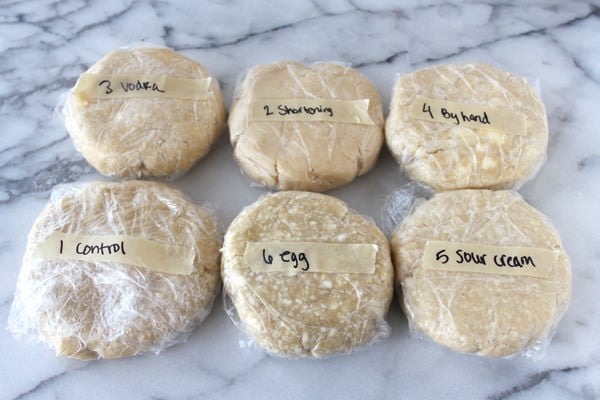
Beyond those little baking rules, there are some variations in pie crust recipes that lend different results. Whether the crust is buttery, flaky, tender, hard, firm, or crumbly all depends on a few key ingredients and methods. Some recipes make quick work of pie crust whereas others are more hands-on. Should you use butter or shortening? Make the crust by hand or with a food processor? Should you add a tenderizing ingredient, such as sour cream or vodka? I went to work testing out these various ingredients and techniques to find out how they affect the final pie crust. I started with a very basic, all-butter and food processor based pie crust and made small experimental changes. I used the same ingredients, utensils, and bakeware when applicable to ensure consistent results. Instead of baking a whole pie, I rolled out each dough into about an eighth-inch thickness and cut out small circles with a cookie cutter. I brushed each circle very lightly with egg wash then baked in a 350°F oven for about 13 minutes, until golden. This allowed me to really compare the shape, texture, and taste of each batch. Take a look at the results, I hope they help you discover the tricks to making your version of the perfect pie crust!
Control Recipe:
Yield: 1 9-inch single pie
Ingredients:
1 1/4 cups (5.3 ounces) all-purpose flour
1/2 teaspoon salt
1 teaspoon sugar
1 stick (4 ounces) cold unsalted butter, cut into small pieces
2 to 4 tablespoons ice water
Directions:
In the bowl of a food processor, pulse the flour, salt, and sugar until combined. Add the butter, and pulse until the mixture resembles coarse meal, with larger chunks of butter remaining. Drizzle 2 tablespoons of ice water over the mixture and pulse until it just comes together without being wet, sticky, or crumbly. Do not over mix. If the dough doesn’t hold together when pinched between your fingers, add another tablespoon of water and pulse.
Place the dough on a large sheet of plastic wrap. Shape the dough into a disk, wrap well in the plastic, and chill in the fridge until firm, at least 1 hour or up to 3 days. Make ahead and freeze, well wrapped in plastic, for up to 2 months. Defrost in the fridge overnight. The dough is now ready to be rolled out and baked.
Shortening:
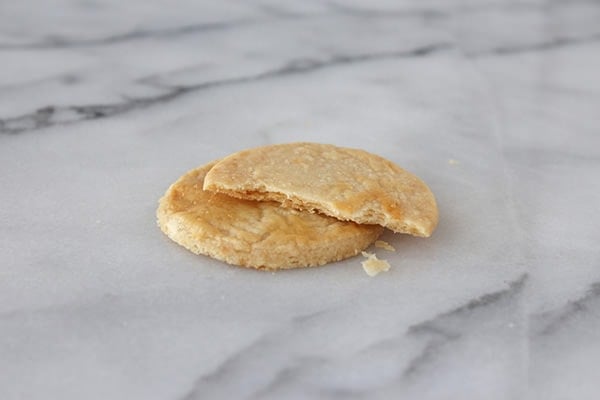
I wanted to determine the differences between using butter versus shortening in this experiment so I substituted all of the butter with 1/2 cup well chilled and cubed vegetable shortening, proceeding with mixing in the food processor. This dough was very easy to work with since shortening has a higher melting temperature than butter. However, this also means that unlike the very hard chunks of cold butter that remain in the control dough, shortening is soft enough that it is easily overworked, resulting in a crumbly dough instead of a flakey dough. All-shortening dough doesn’t require as much chilling time and is very soft and malleable. As you can see in the photograph, this all-shortening dough ended up being flat, tender, and fairly crumbly. The texture was actually reminiscent of shortbread and it was completely lacking in flavor. In fact, the flavor reminded me of store-bought dough. Using a ratio of shortening and butter would produce better results, or mixing the shortening dough by hand instead of using the food processor to avoid over mixing.
Vodka:
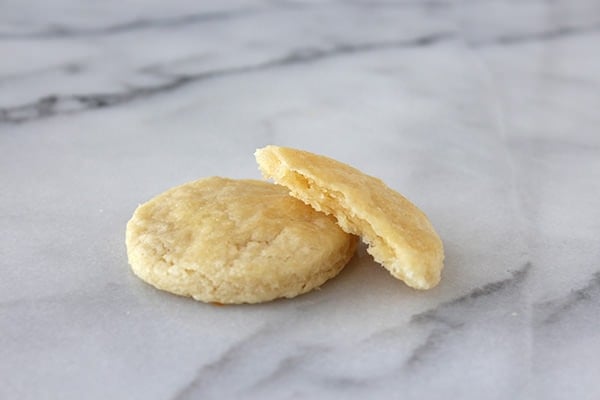
The kitchen scientists over at Cook’s Illustrated magazine claim that by substituting a portion of the water with vodka in a pie crust recipe, you prohibit gluten development and therefor ensure a tender, flaky crust. I wanted to see if they were right so from the control recipe I added 2 tablespoons of cold vodka and reduced the water to 2 tablespoons. The texture of the dough was surprisingly crumbly but still easy to work with. It baked up flakey but also very tender, though I didn’t find the difference to be revolutionary by any means. I would probably skip the vodka trick altogether next time I make pie crust.
By Hand:
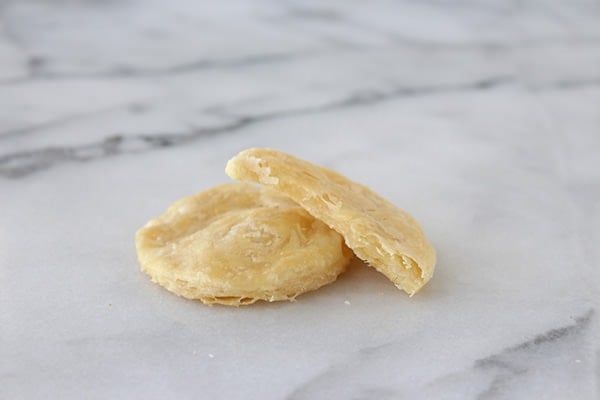
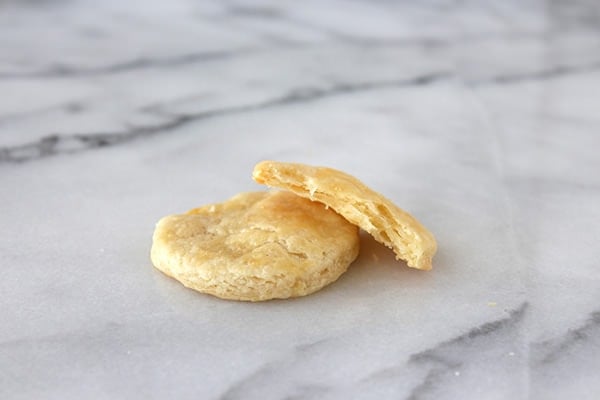
In this trial I used the same exact ingredients but made the dough by hand, not in the food processor. I used a pastry blender to cut the butter into the flour mixture until it resembled coarse meal then gently stirred in ice cold water until the dough came together. This method was much more time-consuming and messy than the food processor method. The dough was more difficult to bring together into a cohesive disk because the chunks of butter were so irregular. However, those irregular chunks of butter produced the flakiest results of all my pie crust experiments. If you don’t have a food processor (or don’t want to lug it out) or if you want the flakiest possible crust, this is definitely the method to use.
Sour Cream:
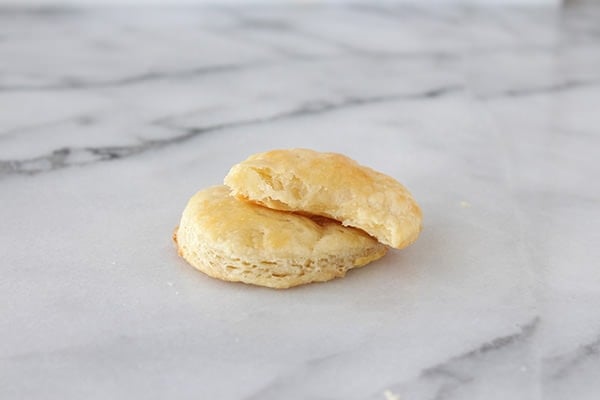
Sour cream acts as a tenderizer in baked goods and I was curious to see if it would significantly affect the texture of pie crust. I added 2 tablespoons of sour cream to the control recipe along with the butter, keeping everything else the same. The dough itself was very soft and slightly sticky, but easy enough to work with. My circles of sour cream pie crust puffed up to a surprising height. The texture was ultra light, puffy, and flaky, almost like puff pastry. The flavor was also fantastic. Beyond the classic control and by hand recipes, this was my favorite pie crust.
Egg:
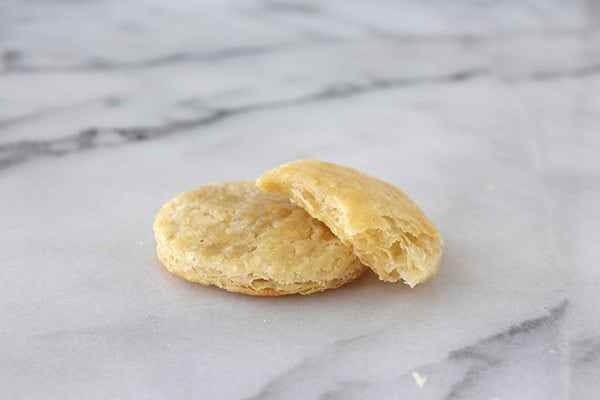
Adding an egg to pie crust is something I first saw from The Pioneer Woman, though many recipes for tart dough call for an egg. I wanted to know how the extra fat and liquid would affect the pie crust, so I added a whole beaten egg along with the water to the control recipe, keeping everything else the same. The dough came together in a more cohesive ball, which was not surprising since egg acts as a binding agent. The baked crust was rich and firm but tender. The flaky layers seemed heavier than the by hand crust and overall this bordered on being slightly greasy.
Read Next: How to Make a Lattice Pie Crust
Final Comparison:
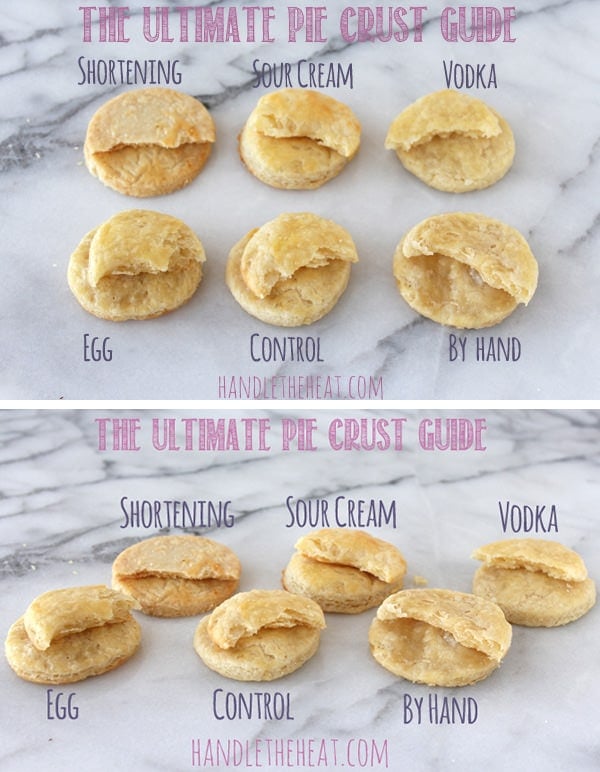
The article The Ultimate Cupcake Guide was originally posted at Relish.com.
Also be sure to check out these ultimate guide posts:
The Ultimate Guide to Chocolate Chip Cookies
The Ultimate Guide to Chocolate Chip Cookies Part II
The Ultimate Brownie Guide
The Ultimate Cupcake Guide


the Ultimate link keeps overriding to BING search engine. Can you please update the link?
That isn’t happening when I tap the link… maybe it’s something on your browser or possibly an advertisement?
I’m a big believer in using both butter and shortening. Also making them by hand because I always seem to over process in the food processor. I’m really intrigued by adding sour cream. I’ll have to give that a try this Thanksgiving. Great post.
This is perfect timing for me. I am attempting pie crust for the first time ever and I am making my mom’s pie where she uses a sour cream crust. I love that you do these series Tessa!! Sharing on my facebook page!
How do you stay so slim? I really enjoy your recipes and the way you present them.
So intrigued by the sour cream crust! Love this!!
It’s awesome!! Thanks Gaby!
I saw Mel (Mel’s Kitchen Cafe) posted an all sour-cream pie crust recipe recently. It must be the new thing! I’ve got to try it! Thanks for your experimenting 🙂
I love even a touch of sour cream in the pie crust! Will have to try all sour cream.
So excited to see! I recently tried a crust with vodka and thought it was good, but I would love to see the other results. I’m heading over now. 🙂
P.S. – I did my own little experiment changing out the flours: all-purpose, wheat, and whole wheat pastry. No blog post about it though, although it would have been a good one. Opportunity missed, dang!
That would have made a great blog post! If you ever do those flour batches again let me know – I’ll link it here!
Love that you experimented. Cannot wait to read the results so going there now!
This was an awesome experiment, Tessa! I may have to give the sour cream a try. I don’t have a food processor, so of course I’ll be doing the by-hand method. 🙂
The links to Relish.com said page not found.
I use an iPad 3
I keep getting page not found at Relish 🙁
The link should be working now! Sorry about that!
The Relish.com link is currently not working. I would love to see your analysis.
The link is working now! So sorry for the inconvenience.