





Tessa’s Recipe Rundown
Taste: These scones are ultra buttery with a hint of sweet tanginess. The customization and flavor options are endless!
Texture: Extremely tender, flaky, light, and golden brown on top. Every bite is heaven!
Ease: Super easy. Less than 40 minutes from start to finish, plus you can make them ahead of time.
Why You’ll Love This Recipe: The perfect recipe to have in your back pocket for any special breakfast or brunch.
This post may contain affiliate links. Read our disclosure policy.









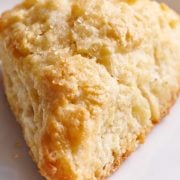



I never used to understand the obsession and appeal of scones – that is, until I took a bite of a truly great scone!
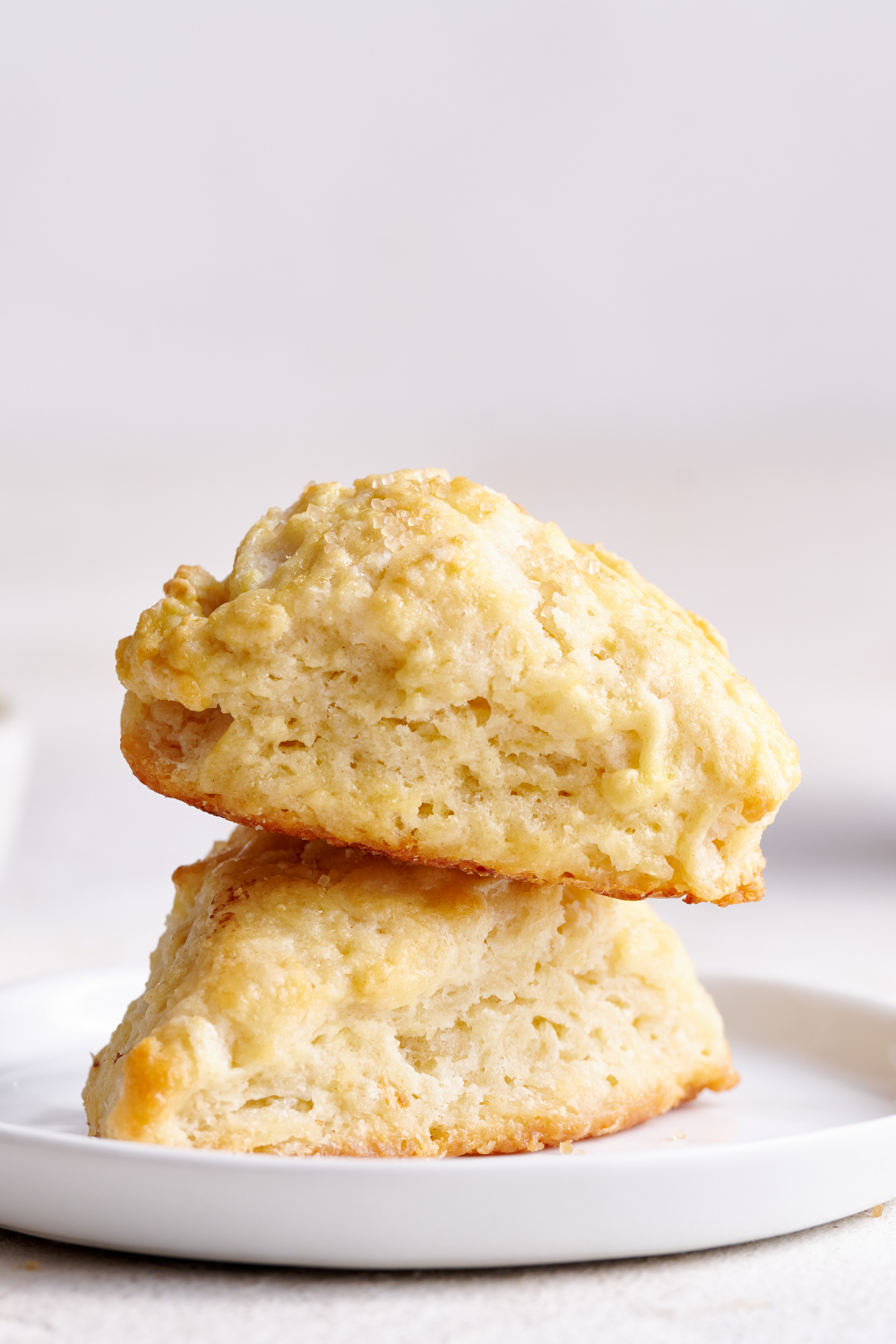
Many are bland and dense – but once I perfected this scone recipe, I realized how delightful they can be. They’re sturdier and heartier than biscuits because they contain eggs and more sugar.
Reader Love
These came out incredible! Thank you for the careful and detailed instructions! I chose to add ham, cheddar, and chives to mine and so did not include the sugar on top. I will be making these many more times with many more mix-ins.
–
What I love most about them (besides all. the. BUTTER.) is that they belong on any breakfast or brunch table. Totally customizable!
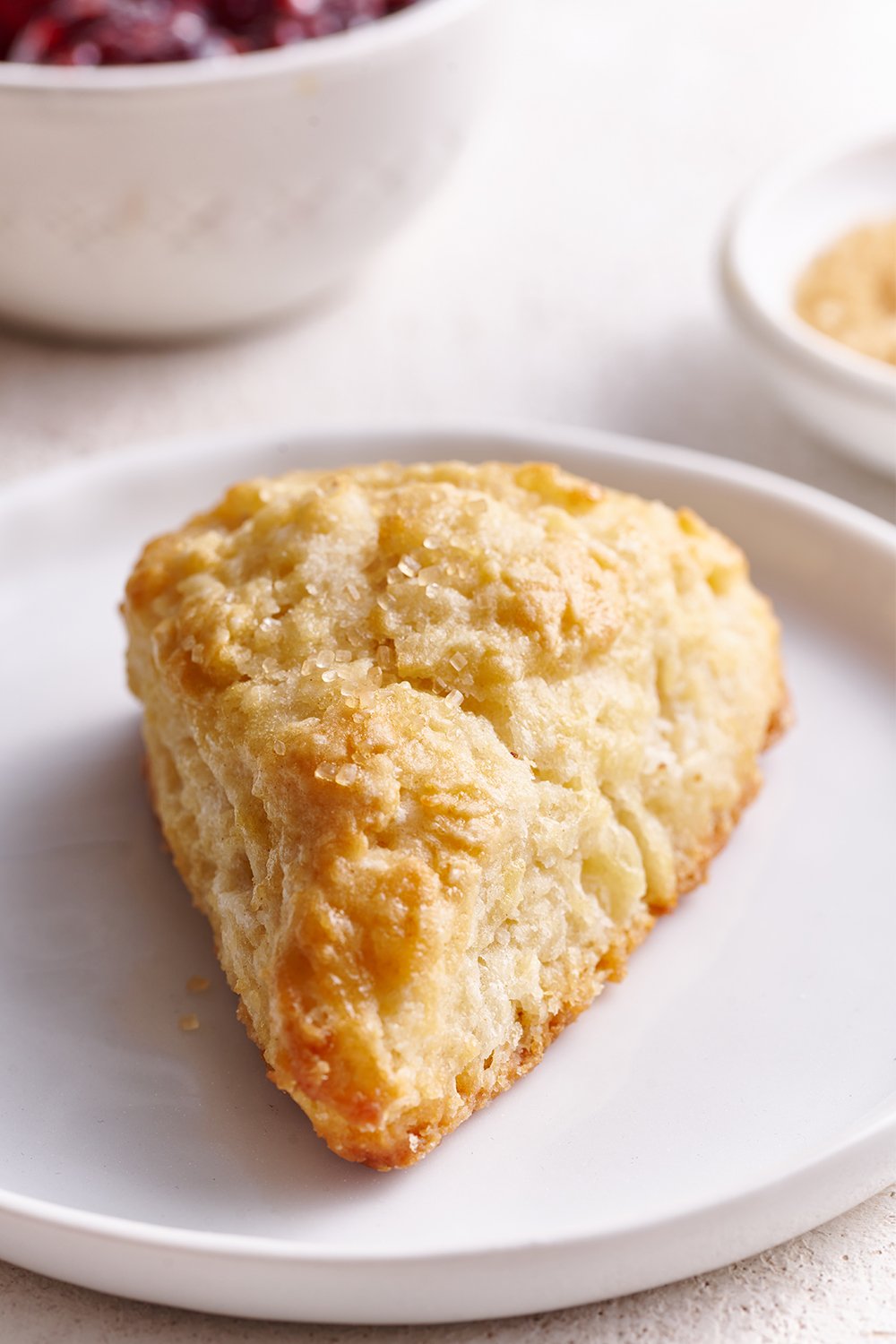
British publication The Mirror even noted how unforgettable this from-scratch recipe is in their recent article all about scones!
You can add nuts, citrus zest, chocolate chips, dried fruit like raisins or currants, or simply serve alongside flavored butter or your favorite jam and clotted cream (although this is more of an American scone recipe than British).
Ingredient Notes
All-Purpose Flour: I prefer to use Gold Medal AP flour, as I find it yields a more tender scone than flour made with a high protein wheat variety, like King Arthur Flour. If using a measuring cup instead of a scale, be sure to spoon and level.
White Sugar: This is where scones differ from biscuits! A relatively small amount of sugar adds a touch of sweetness and encourages lightly golden brown edges.
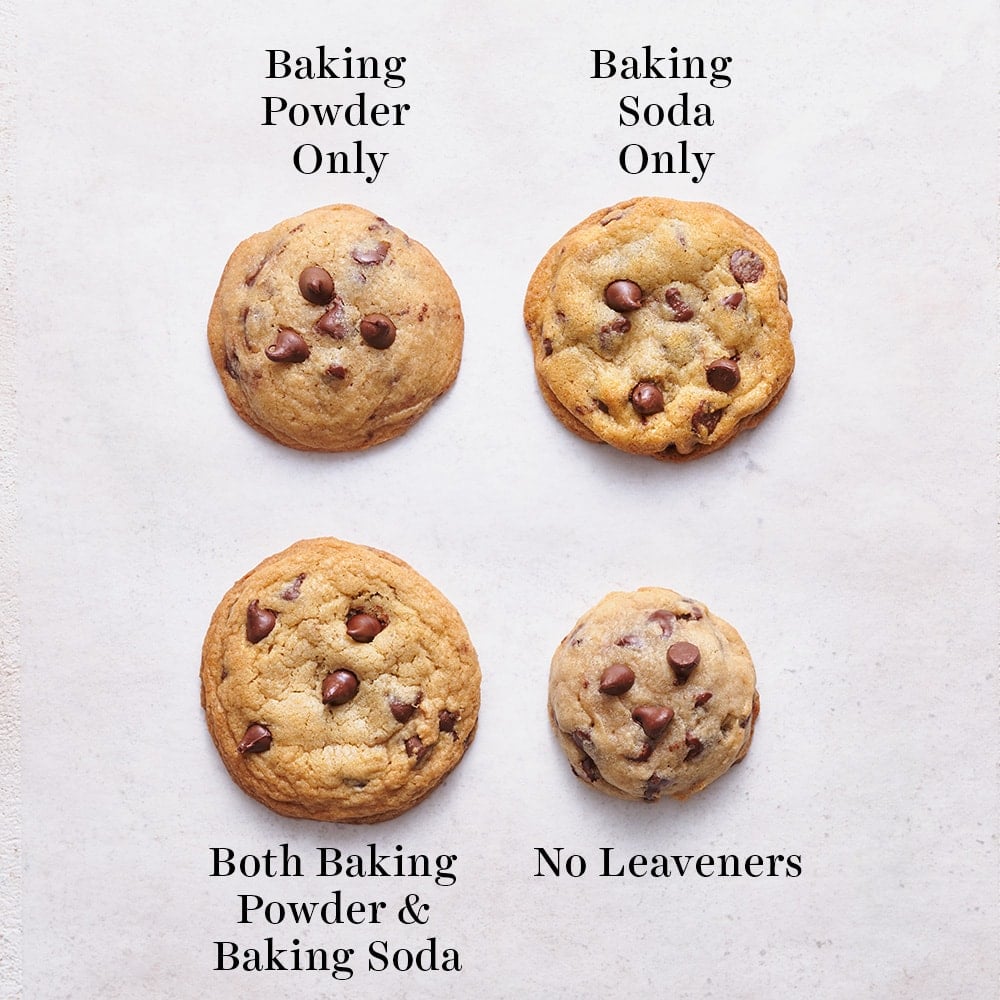
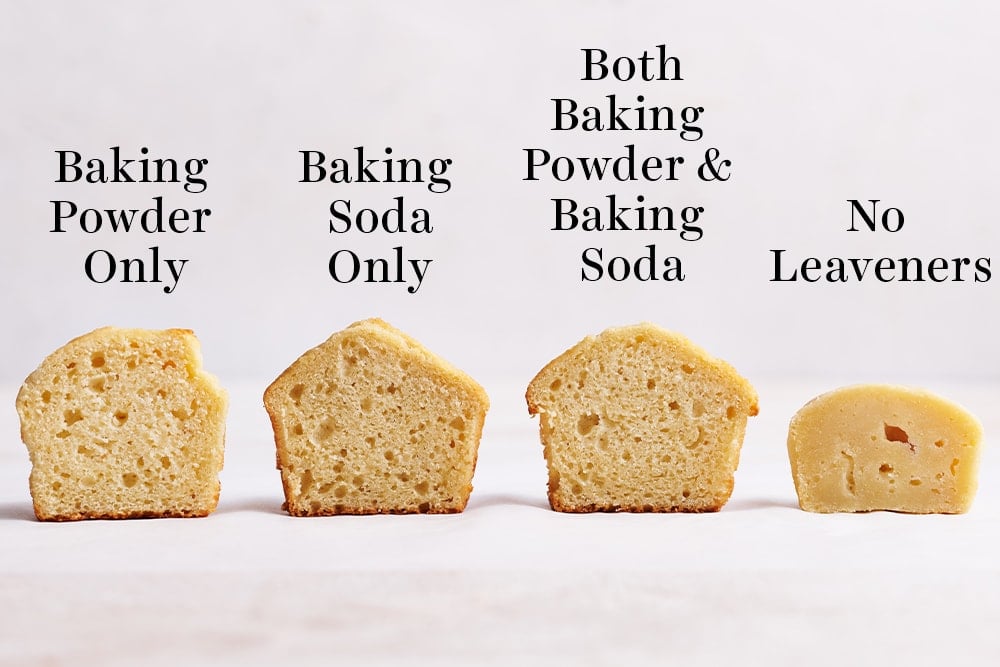
Baking Powder: A whole tablespoon is used to create tall and light scones.
Baking Soda: A small amount also helps leaven the scones and will help create that light golden crust.
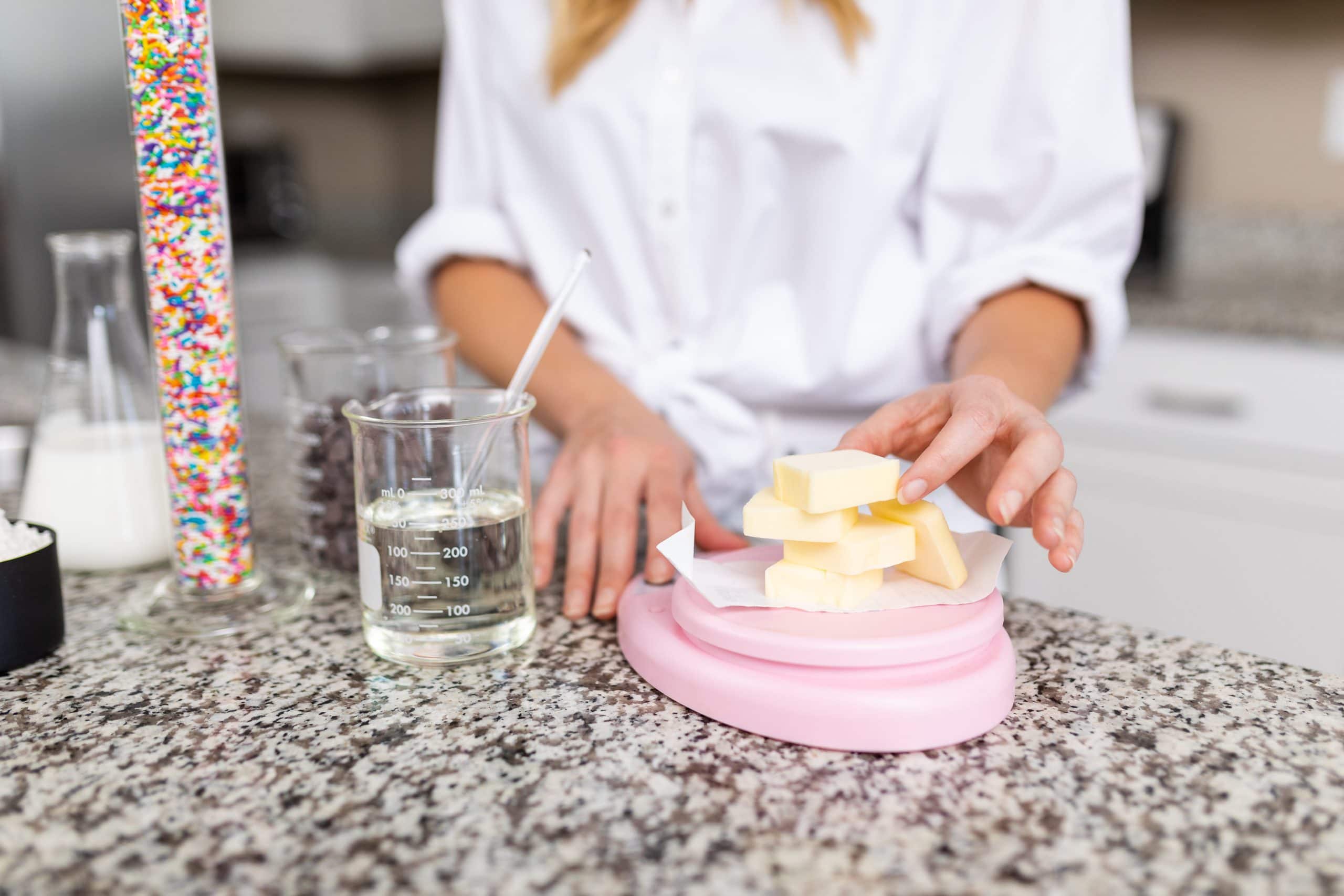
Butter: It must be COLD and stay cold until the dough hits the oven, or you will not achieve flaky scones.
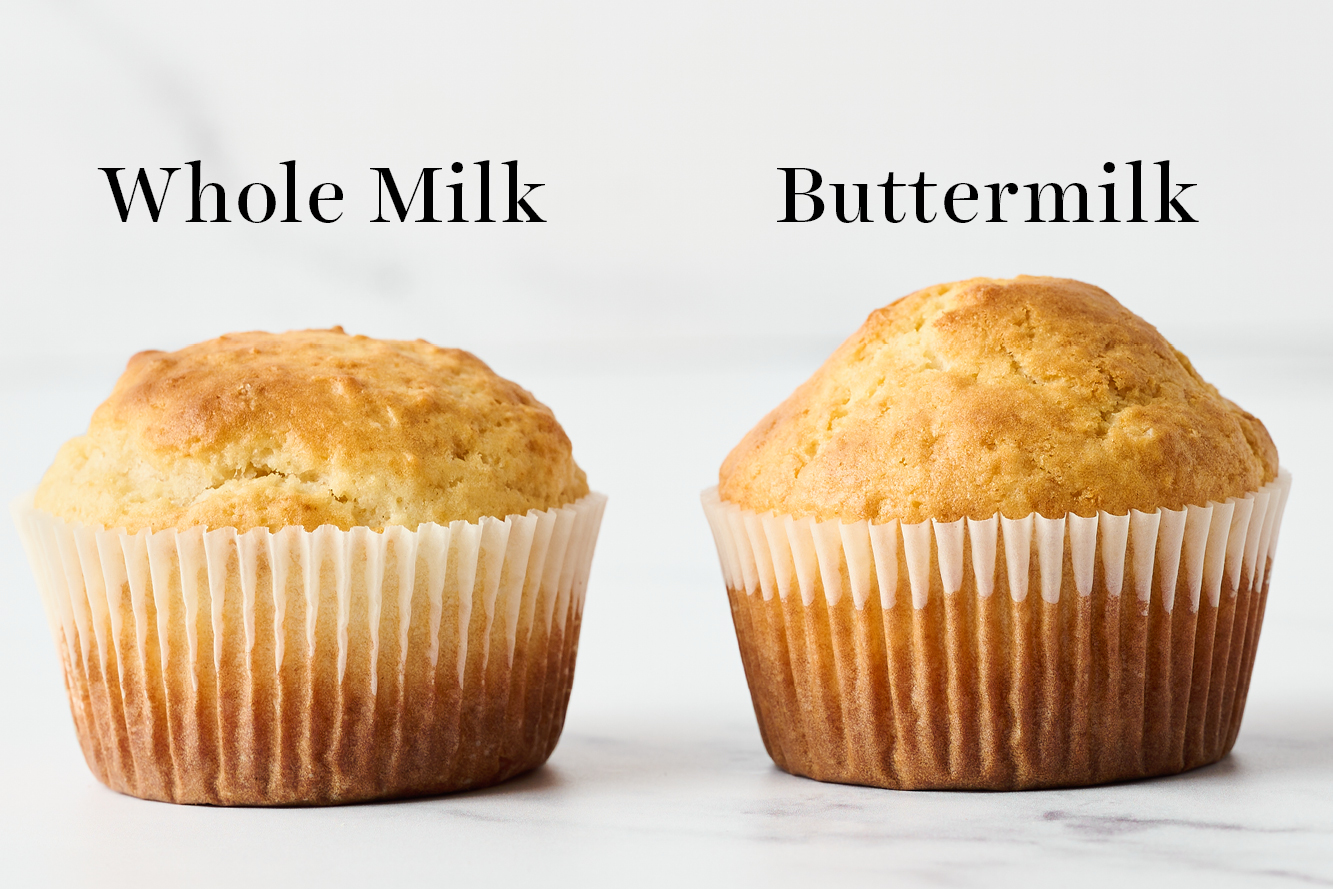
Buttermilk: This is absolutely my preferred liquid. Buttermilk will result in tender, taller scones because its acidity reacts with the baking soda and tenderizes the dough. It also adds a lovely tang to create more depth of flavor. I don’t recommend a DIY substitute. You can use keffir instead, or heavy cream, which will alter the taste and texture. Learn more about the science of buttermilk here.
Eggs: This is the other ingredient that distinguishes scones from biscuits. Eggs add richness, structure, and color.
Vanilla: Don’t skip, unless you’re making a savory variation.
Coarse Sugar: This is an optional topping ingredient, but I highly recommend it! You get pretty sparkly scones with a bit of a crunchy exterior. Yum.
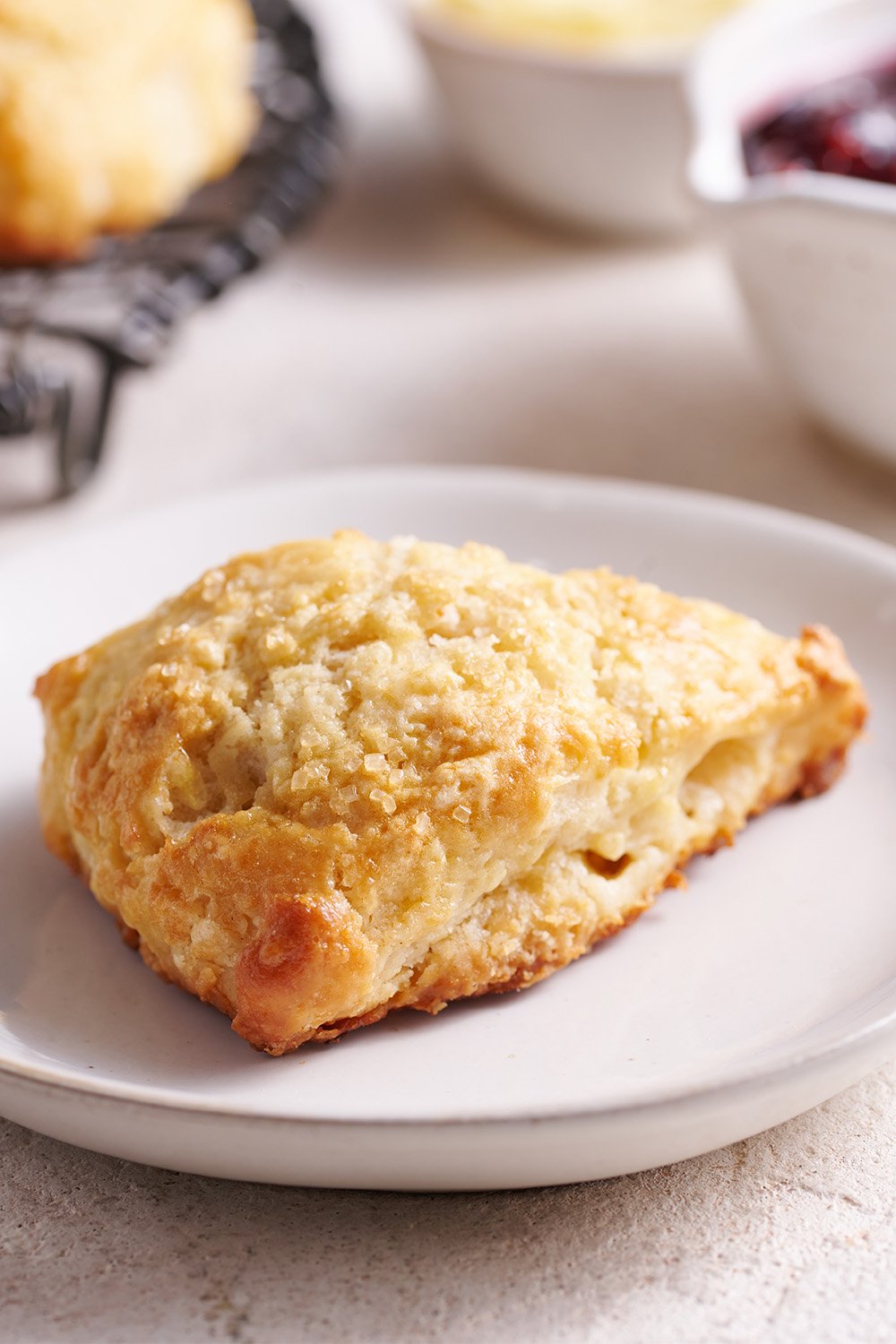
Tessa’s Tips for Scone Dough
Don’t overmix! Whatever you do, do not overmix the flour mixture or dough or allow it to get too warm, to avoid flatter, tougher, and less flaky scones.
My favorite tool: this OXO bladed pastry blender makes quick and easy work of forming the dough by hand (so I don’t have to lug out my food processor).
Keep cold: Use a marble pastry board to help keep the dough cool. You can even place ice water in ziptop bags and ice down your counter if it’s a particularly hot day (just make sure it’s wiped dry before working the dough). If at any point you notice the butter become greasy and melty, pop the dough into the freezer for 10 to 15 minutes before proceeding.
Chill before baking: Once shaped, you can also place the baking sheet of unbaked scones in the fridge or freezer while the oven preheats, to ensure the butter remains nice and cold.
Sprinkle of Science
We’re stealing a trick from croissant baking that I also use in my Best Ever Pie Crust recipe! A little bit of “lamination” gets the scones to shoot up sky-high with tons of flaky layers. Don’t worry, it sounds more complicated than it actually is.
If this seems like too much work, just skip this step – they’ll still be delicious! Check out my How to Make Tall Scones & Biscuits article for more tips.
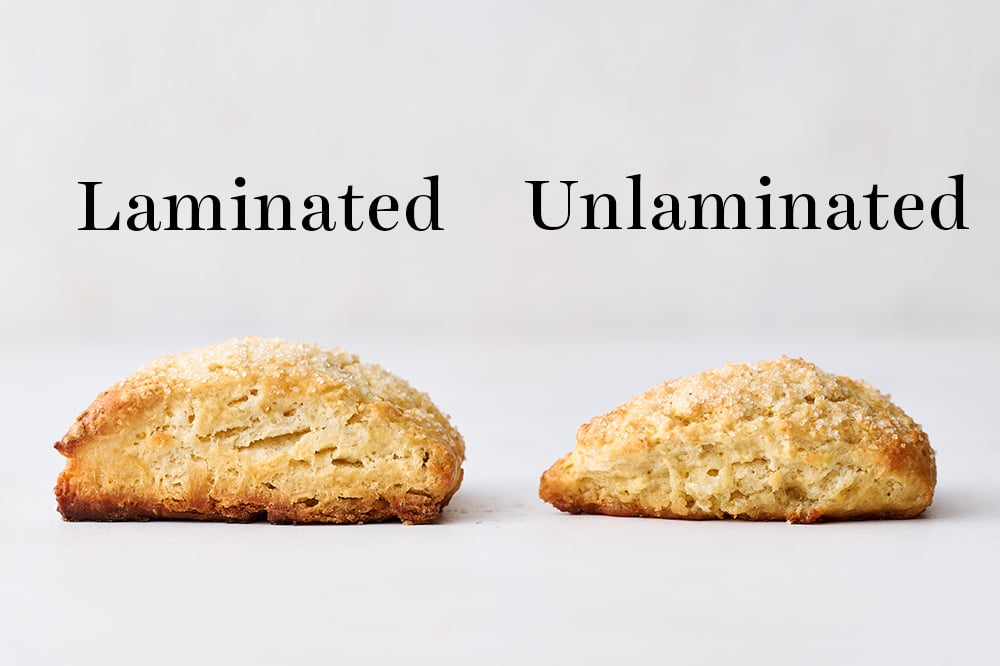
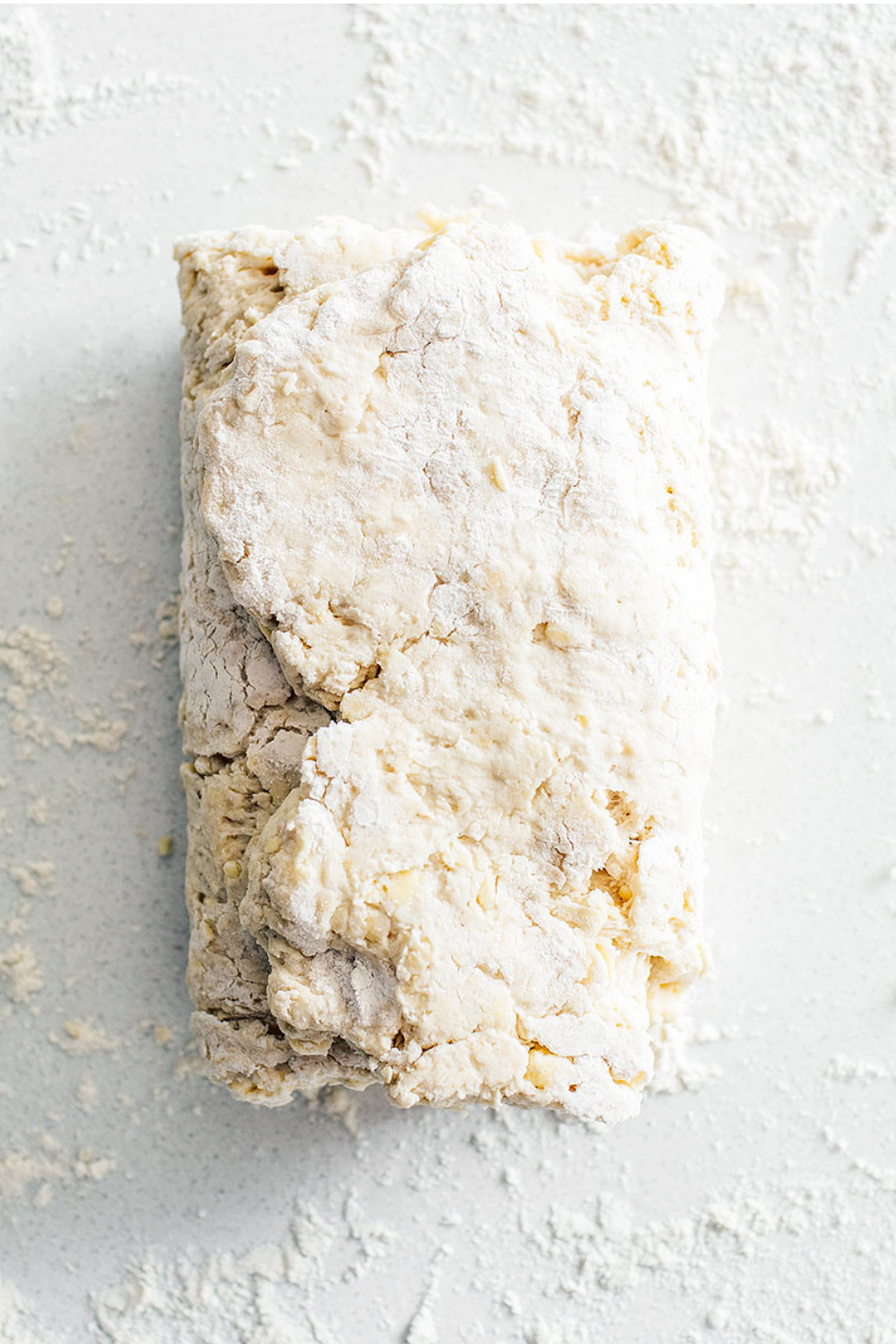
If adding any mix-ins, fold into the dough now. Turn the craggly mass of dough out onto your work surface. Shape it into a rectangle. Fold the rectangle horizontally in thirds, like you’re folding a piece of paper to go into an envelope. Flatten it out into a rectangle again.
Now fold it in thirds once more, but going the opposite direction. This will also help you to gently ‘knead’ the dough so it comes together into a more cohesive disk without overmixing it. Overmixing leads to rubbery and tough scones and biscuits.
Storage & Make ahead
Scones are best served within a few hours of baking. This is why I recommend making the dough in advance:
Refrigerate the Dough: The shaped unbaked scones can be covered with plastic wrap and refrigerated overnight. Bake from the fridge as the recipe directs.
Freeze the Dough: Place shaped, unbaked scones inside an airtight container and freeze for up to 1 month. No need to thaw, you can bake from frozen, adding about 2 minutes to the baking time.
Flavor Variations
Feel free to get creative with add-ins! You can fold in about 3/4 cup of dried fruit, chocolate chips, nuts, etc. Dried fruit or frozen berries, like raspberries, work better than fresh.
- Cranberry Orange Scones
- Pumpkin Scones
- Blueberry Scones
- Chocolate Chip Scones
- Lemon Poppy Seed: Add 3 tablespoons poppy seeds + 2 tablespoons grated lemon zest to the dough.
- Cinnamon Sugar: Mix 3 tablespoons granulated sugar with 1/2 teaspoon ground cinnamon and sprinkle on the after the egg wash.
How to Make A Glaze
- 1 1/2 cups (188 grams) powdered sugar
- 2 tablespoons water, milk, or citrus juice
- 2 tablespoons unsalted butter, melted
- 2 teaspoons vanilla extract, or other extract
- Citrus zest, to taste, if desired
Directions: Whisk all glaze ingredients together until thick but still pourable glaze forms. Spread or drizzle over cooled scones and let stand until glaze has set.

FAQs
I don’t recommend it, it’s worth the extra trip to the grocery store, promise. Did you know you can even freeze leftover buttermilk? Learn more about buttermilk here.
If you need to substitute, you can use Kefir. Or, for a different taste and texture altogether, use cream instead.
If you’re baking outside of the U.S., some kind readers have let me know how they find buttermilk or something similar in their home country:
France: Lait ribot or lait fermenté
Italian: latticello
UAE: Laban
India: Chaas leftover from paneer
Britain: Tesco and Asda sell buttermilk
Sweden: Filmjölk
Generally, American-style scones contain eggs and sugar, whereas biscuits do not. This makes for a sweeter and denser product.
Generally, American-style scones are richer, denser, and often loaded with different flavor additions. British-style scones are often lighter, drier, and more plain because they are meant to be served with clotted cream and jam. My recipe is American-style.


Email This Recipe
Enter your email, and we’ll send it to your inbox.
Ingredients
- 3 cups (381 grams) all-purpose flour, measured correctly
- 1/3 cup (66 grams) granulated sugar
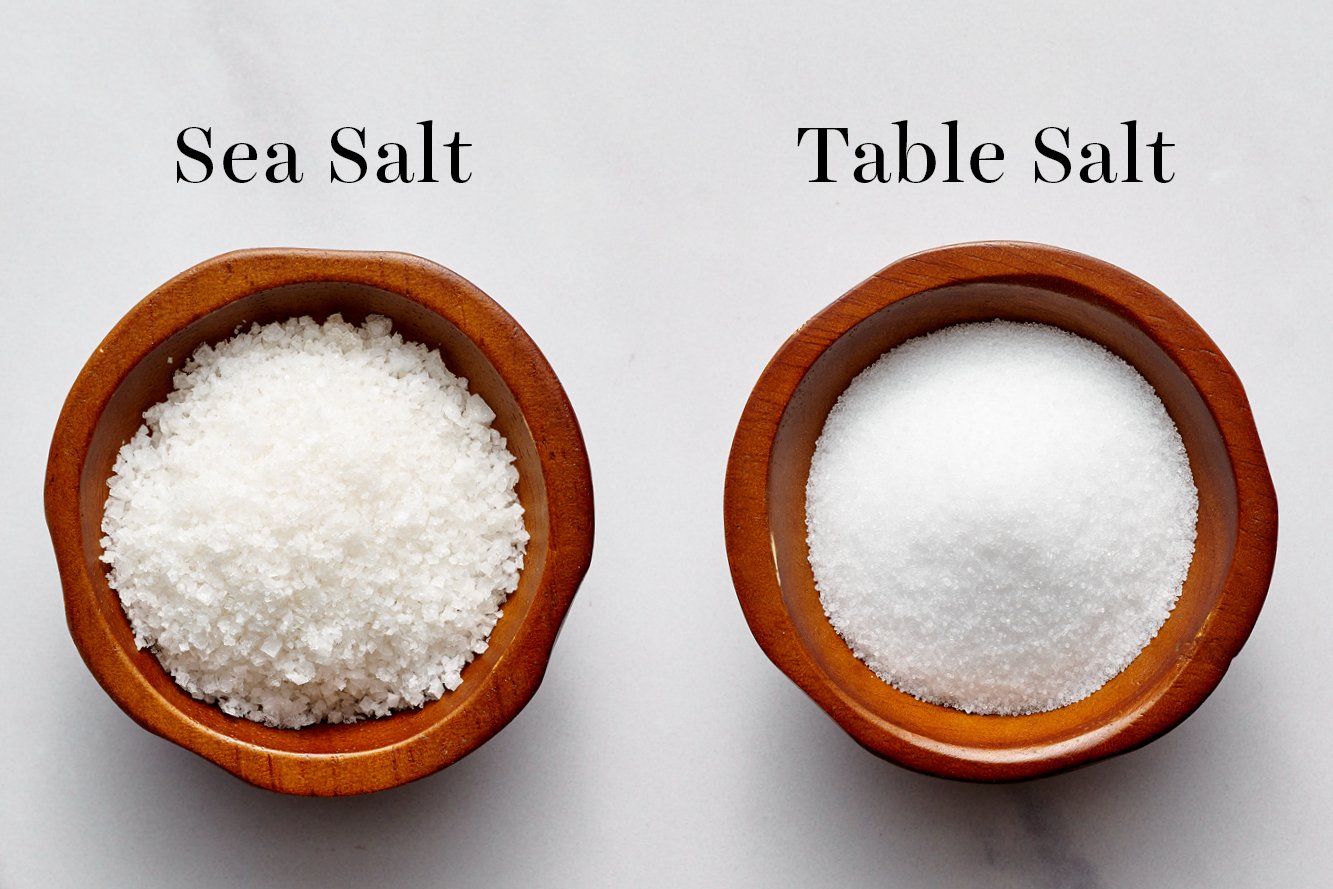
- 1 teaspoon fine sea salt
- 1 tablespoon baking powder
- 1/2 teaspoon baking soda
- 1 1/2 sticks (170 grams) unsalted butter, cold and cubed
- 1 cup (237 grams) buttermilk
- 2 large eggs, divided
- 1 teaspoon vanilla extract
- Coarse sugar, for topping
Instructions
- Adjust the oven rack to the center position and preheat to 400°F. Line two baking pans with parchment paper.
- In a large bowl, combine the flour, sugar, salt, baking powder and baking soda.
- Add the butter and cut with a pastry cutter or a fork until the butter is the size of large peas.
- In a separate bowl, whisk together the buttermilk, 1 egg, and vanilla extract.
- Make a well in the middle and add the liquid mixture. Mix until just combined. Don't over mix. If adding in dried fruit, nuts, chocolate, or other flavorings, do so now.
- Transfer the dough to a floured surface. *Optional Step: See Recipe Notes for lamination instructions.
- Divide into 2 equal parts. Lightly knead each into 3/4-inch thick, 6-inch diameter rounds. Cut each round into 8 wedges and place on your prepared baking pans. Space them out about 2 inches apart.
- Make Ahead: At this point, the unbaked scones can be covered and refrigerated overnight, or placed inside an airtight container and frozen for up to 1 month. If baking from frozen, add about 2 minutes to the baking time.
- In a small bowl, combine the remaining egg with 1 teaspoon water. Brush over the scones. Sprinkle with the coarse sugar.
- Bake for 12 to 15 minutes or until lightly browned. The scones are best served warm, or within a few hours of baking.
Notes
- Turn the craggly mass of scone dough out onto your work surface.
- Shape it into a rectangle.
- Fold the rectangle horizontally in thirds, like you’re folding a piece of paper to go into an envelope.
- Flatten it out into a rectangle again.
- Fold it in thirds once more, but going in the opposite direction.
- This will also help you to gently ‘knead’ the dough so it comes together into a more cohesive disk without overmixing it. Continue with step 7 above.
More Brunch Recipes You’ll Love:
- Savory Scones (made with shallots, jalapenos, and cheese!)
- Ultimate Muffin Recipe (customizable!)
- Quiche Lorraine
- Chocolate Chip Coffee Cake
This recipe was originally published in May 2017 and updated in 2023 with new photos and even more baking tips. Photos by Joanie Simon.


These turned out wonderful. Made them for an afternoon tea and they turned out to be a big hit! Thanks for the wonderful recipe.
Have used this base recipe to make different types of sweet scones a few times and they always turn out amazing. I’m wondering if there’s a way to tweak the recipe for savoury scones?
So happy to hear that, Jordan! Making these scones savory will really depend on the ingredients you’re adding, so it may take a bit of experimentation. If it’s helpful for comparison, we actually used this base recipe when creating our Shallot, Jalapeño, Goat Cheese, and Honey Scones (phew, long name haha!). You can see there that we made some adjustments to the sugar and flour to account for the extra add-ins. I hope that helps!
These are yummy. I added cinnamon to the batter and cinnamon chips. OMG I am in heaven. I like that they are not dry. I didn’t know they were going to be so large , but I’m not complaining. Lol. I love the light layers. I will be making these a lot. The recipe is so simple and doesn’t take a lot of time .
I have made several of your scones recipes and they have turned out great! Thank you for all of the extra information to help ensure success. I am wondering if you have ever tried scones with rhubarb. I am thinking that there may need to be some extra sugar and that adding cinnamon and nutmeg might compliment rhubarb well. We love baking with rhubarb and it is in season right now. Thanks for any advice.
Thank you so much for your kind words, we’re so happy your scones turned out perfectly! While we haven’t tested a rhubarb scone ourselves (Tessa isn’t a fan of rhubarb, unfortunately!), your ideas sound like a great starting point for experimenting. Please let us know how it turns out if you give it a try!
Just a small correction; buttermilk reacts to baking soda. The acidity in the buttermilk and the alkaline nature of the baking soda react and creates loft in baked goods.
About the stickiness. My suggestions is: if your buttermilk is rather thin then only use 3/4 cup, if it is nice and thick use 1 cup. I think that’s the problem Lisa R was having. Hope this helps.
I made these for brunch and they were an absolute hit! Thank you for a fantastic recipe 🙂
That was the best lemon poppyseed scone I’ve ever had. It was buttery soft and flakey. 10 minutes out of the oven was so delicious with my lemon glaze. This is a giant problem for me because I’m going to have to not eat them all in one sitting😂 I had one. It was my dinner lol Definitely going to use this same recipe for all my other flavors. This was the first time I’ve ever made them, and I am a true believer that the buttermilk is what made the difference.
Hi,
M’y family and i, we tried this recipe long time ago, and we love !!! I want to do it again, but I realize that in the ingredients said 2 eggs, and in the directions I just find one, where I’m get lost ?
Hi Nohra! One egg is added to the scone dough in Step #4, and the other is saved until Step #9, where you make an egg wash to top the scones.
This is the first time I’ve made scones from scratch and they were a hit! It’s a great recipe that was easy to follow and they were delicious! I added lemon zest and frozen blueberries and then topped them with a citrus glaze as soon as they came out of the oven. I cut them a little too big so they took longer to bake. I also noticed the dough was pretty wet but I trusted the process, popped them in the freezer while the oven heated up, and they turned out great. I will make these again!
Perhaps you could tell us the quantity of butter in the real world. 1 1/2 sticks (170 grams) — means nothing!
Thanks for your feedback, Kris! I understand that measurements like ‘sticks’ of butter can feel a bit unfamiliar, especially if you live outside the United States. In our recipes, we list butter in sticks primarily for our American readers who can buy it pre-wrapped this way, but to keep things precise, we also include gram measurements. For reference, 1 stick of butter equals 1/2 cup, or 113 grams (about 4 ounces), and 1 1/2 sticks (3/4 cup) would be 170 grams. Please let us know which format you typically use in the kitchen. Our goal is to make baking our recipes accessible to anyone, no matter where you live.
Her request to you was incredibly rude! she could have easily googled a conversion herself. you were super sweet with your response back!
Yes Cory her request was ride indeed. I live in South Africa ,if I don’t understand any measurements I just go to Google and check .
The recipe is perfect and easy o follow. I made my dough yesterday,just baked them this morning fo our Christmas brunch and they are perfect. Thank you
My dough was incredibly wet. I’ve never made such wet scones, usually they are on the drier side. I added flour as I laminated, but they were still incredibly sticky and flat. Hope they bake ok. I don’t know that I’ll use this recipe again.