





Tessa Arias, Chef and Cookbook Author
This post may contain affiliate links. Read our disclosure policy.
Cupcakes have proven themselves to be much more than a fleeting baking trend. With the amount of cupcake bakeries, reality television shows, and recipes in general, it’s clear they’re here to stay. Cupcakes are much easier than layered cakes to bake and transport, not to mention their cute size makes them the perfect indulgence for just about any occasion or holiday, like Halloween! It’s no wonder they’re so popular.
Despite their popularity, many cupcakes you find at the grocery store bakery are either bland or cloyingly sweet. Not to mention so many have an awful crumbly or greasy texture and artificial aftertaste. Homemade cupcakes are always better, and most recipes out there for basic yellow cupcakes are fairly similar. Small changes in the flour, fat, baking times, and baking temperatures, however, can result in very different cupcakes.
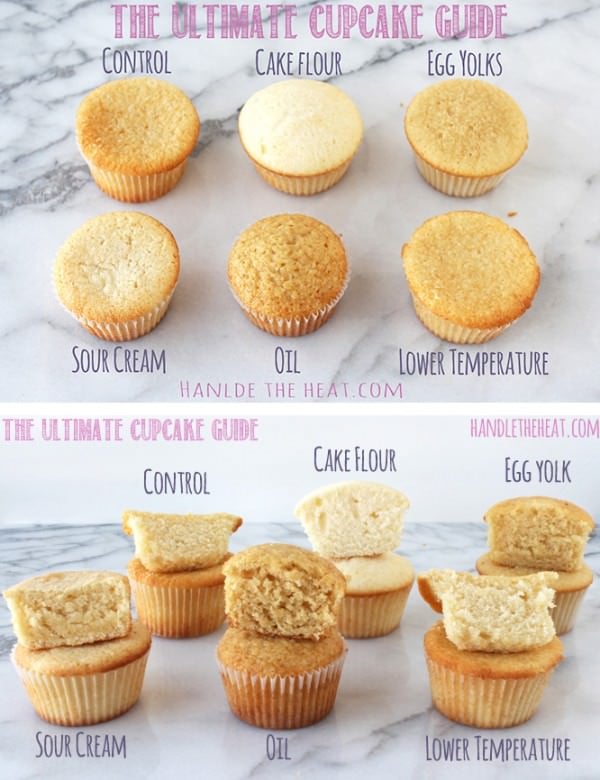
For this round of kitchen experimenting, I tested six batches of cupcakes to discover what makes a cupcake domed or flat, rich or crumbly, soft or slightly chewy, to help you create your version of the perfect cupcake. Since most cupcake recipes are very similar, I used a very basic recipe that is from no one source in particular as my control recipe. From there I tested how cake flour, extra egg yolks, sour cream, oil, and a lower baking temperature affect the cupcakes. To keep the results as consistent as possible, I used the same ingredients, utensils, techniques, and bakeware when applicable. I also maintained a 350°F oven temperature and a twenty-minute baking time when applicable. Take a look at the results to see the ins and outs of cupcake baking; I hope they help you discover the tricks to making your version of the perfect cupcake!
Control Recipe
Ingredients:
1 1/2 cups all-purpose flour (6.35 ounces)
1 1/4 teaspoons baking powder
1/4 teaspoon fine salt
1 cup granulated sugar
1 stick (1/2 cup or 4 ounces) unsalted butter, at room temperature
1 large egg
3/4 teaspoon vanilla extract
1/2 cup plus 2 tablespoons whole milk
Directions
In the bowl of an electric mixer, beat the sugar and butter until light and fluffy, about 3 minutes. Add the egg and vanilla and beat until combined. Add the dry ingredients and milk alternatively, starting and ending with the flour, beating well after each addition. Continue beating for one minute. Divide the batter between the cupcake cups, filling each about 2/3 full.
Bake at 350°F for 20 minutes, or until a toothpick inserted comes out clean. Let cool for 10 minutes before removing to a wire rack to cool completely.
Cake Flour
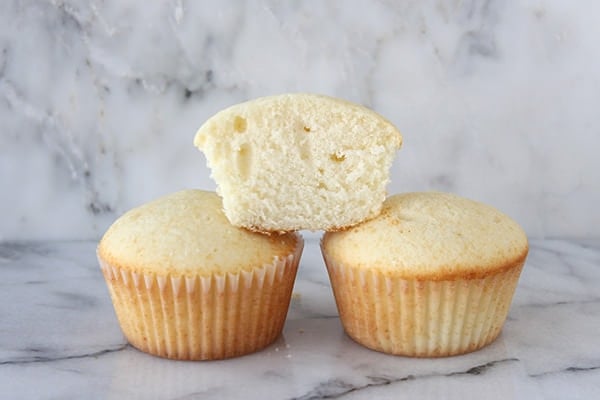
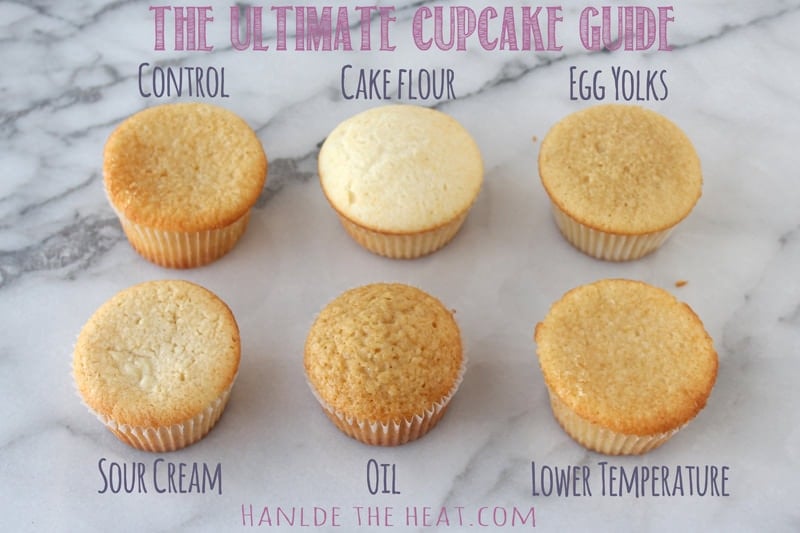
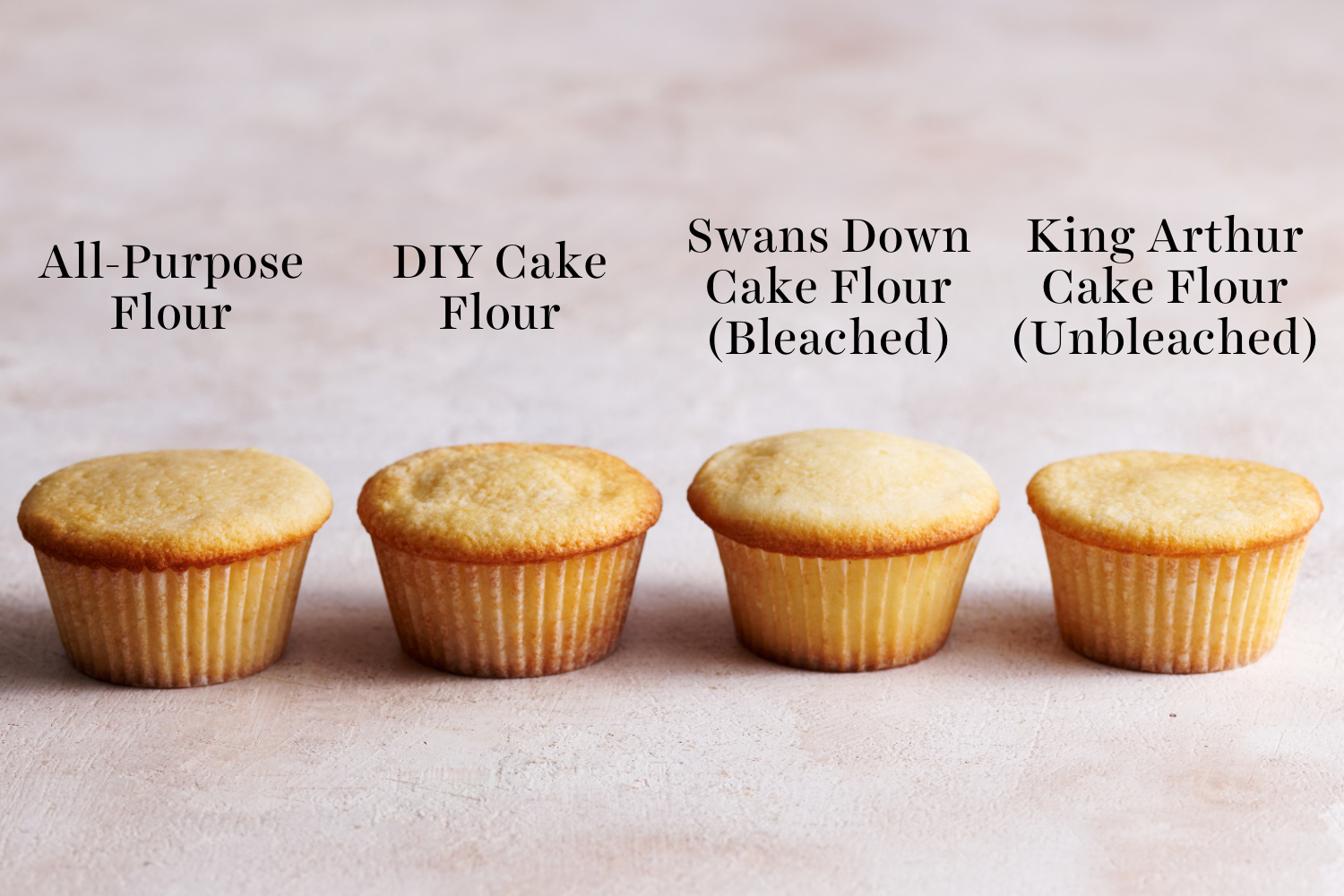
For this test I substituted the 1 1/2 cups (6.37 ounces) all-purpose flour in the recipe with 1 1/2 cups of sifted Swans Down brand cake flour, which weighs 5.25 ounces after sifting. Everything else in the recipe was left as-is. The cupcakes were visibly lighter in color with very domed tops. The texture was super fine and soft but also on the dry side with a slight crumbly feel. In taste testing these cake flour cupcakes I felt that using all cake flour was too much. If you want to make your cupcakes softer you might consider using half cake flour, half all-purpose flour.
Learn more about the science of cake flour and how it works in baking here.
Egg Yolks
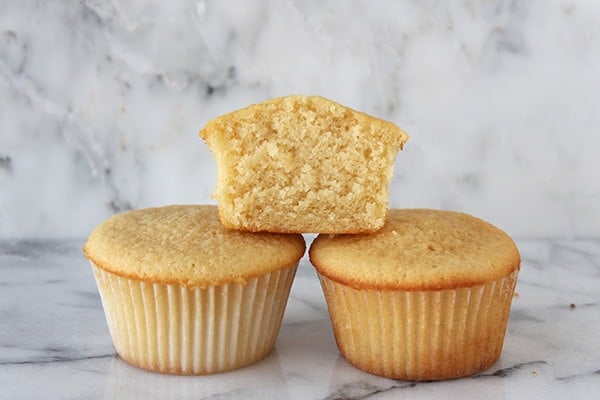
In addition to the one whole egg called for in the control recipe, I added an additional two egg yolks to test how they affect the cupcake’s texture and flavor. The additional egg yolks not only lended a deeper yellow tint to the cupcakes, they also domed slightly more than some of the other tests. The batter itself looked a little grainy, which concerned me, but the baked results were slightly chewy yet still soft, ultra moist, and full of rich flavor, all desirable traits in a cupcake. These egg yolk cupcakes would stand up nicely to a rich and thick frosting. I enjoyed the taste and texture of these cupcakes and will probably use at least one additional egg yolk in my yellow cupcake recipes from now on.
Sour Cream
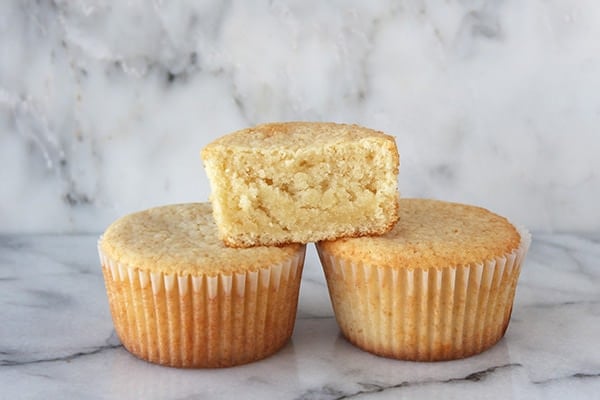
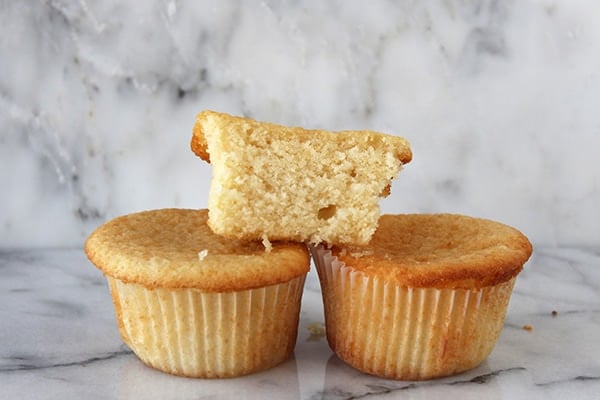
The control recipe calls for milk, but there are many cupcake recipes that call for sour cream instead so I decided to test the difference. I substituted the exact amount of milk with plain sour cream. The batter itself was visibly thicker and tighter, not quite as loose as the control batter. The finished cupcakes were denser and slightly chewier than the control, with the perfect amount of moisture. They also had a slight tang, which added a nice depth of flavor. These sour cream cupcakes and the egg yolk cupcakes proved to be my favorites.
Oil
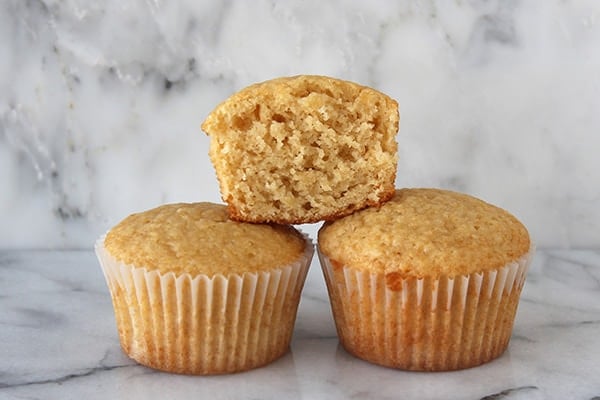
Most yellow cupcake recipes use butter as the main fat, however quite a few recipes for chocolate cupcakes or red velvet cupcakes use oil instead. I wanted to see what kind of difference oil makes so I substituted 1/2 cup canola oil for all the butter called for in the control recipe. Instead of beating the oil and sugar together, I simply mixed very well by hand. The resulting cupcakes were unsurprisingly very similar to muffins in their appearance and texture. They were spongier than any of the other cupcakes but also had the worst flavor. These cupcakes almost tasted like they were fried to me, that’s how pronounced the oil taste was. There’s definitely a reason why oil is only reserved for chocolate or red velvet cupcakes, which include flavorful ingredients that mask the oil flavor. I would definitely stick to using butter in yellow cupcakes because it provides that characteristic buttery flavor and light, finer-textured crumb.
325°F Baking Temeprature
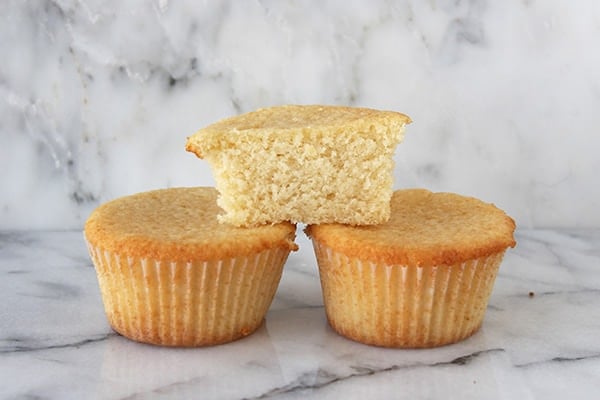
For this test I took the exact control recipe but baked it in a 325°F oven for 22 minutes. I peeked through the oven window to watch these cupcakes as they baked and they domed up surprisingly high during baking but proceeded to collapse slightly during the last minutes of baking and during cooling. As expected, they didn’t brown as much as the control cupcakes and were actually extremely difficult to remove as the edges had overflowed and stuck to the tin. Since they were so soft and tender, I ended up damaging a few of the cupcakes while trying to remove them from the tin. This dilemma surprised me and I would certainly avoid baking cupcakes at a lowered temperature again, though the lower temperature would probably work well for producing ultra soft and tender layer cakes.
Final Comparison
More Ultimate Guide Posts
- The Ultimate Guide to Chocolate Chip Cookies
- The Ultimate Guide to Chocolate Chip Cookies Part II
- The Ultimate Brownie Guide
The article The Ultimate Cupcake Guide was originally posted at Relish.com.


Great post! I always use oil in my cupcakes and muffins instead of butter. I like to use grapeseed oil, because it has such a neutral flavour that you can’t taste it in the finished product at all. While the cakes are less buttery, I find that the crumb is still nice and soft (and hey, less butter in the cake means you can have more buttercream frosting!). Thanks for going to the effort of doing such a comprehensive test!
Hi,
Thanks for a great great guide! I would want to make chardonnay cupcakes, would you think it is possible to relace the milk with chardonnay?
Hope to hear from you soon!
Thanks,
Helena
I read it and my passion for baking the right cup cake has gone more stronger.
Every time I bake something goes wrong. Lets hope for the best.i will consider mixing up of the two flours one.
I really appreciate your effort for the learners like me.
Thanks for posting these experiments, haha! This is something I was so interested in learning about, especially since trying a “Pumpkin Beer Cupcake” recipe via Pinterest and realizing I must’ve added too much of a certain that prevented the cupcakes from baking like usual. This is a really helpful guide and will be referring to it as I continue to explore this baking hobby I’ve started. You’ve got a new fan! 🙂
xx
I have to make 3 dozens of red velvet cupcakes tomorrow, and I can’t find all-purpose flour anywhere. All I have is cake-flour and I’ve seen from a bunch of people that cake flour just produces dry cupcakes, and I have no idea what to do. I have no all purpose flour at all, so I can’t mix half and half, what to do?
Any suggestions would be highly appreciated.
Loved this guide. It’s so much more fun and personal than the boring text books I had at culinary school. My personal fav is to use the sour cream. Love it!
What if you wanted a cupcake that had a moist, shiny domed top wit a soft and granular inside?
Nice to see that side by side comparison!
Just a side note, If you use sour cream or other soured milk product in the batter, there is no need for baking powder. Baking powder has the acidity already built in to the right ratio to produce the rise. Baking soda has no acidity, so it is better to use when you have a strong acid for the liquid. When you add a soured milk product, you are adding more acid, which throws off the acid/alkaline ratio… So you need more alkaline to restore balance. I have found that usually 1/2 tsp baking soda and 1/2 tsp salt to a cup of soured milk produces a pretty good rise for me.. but you can experiment.
Thanks for your feedback! I tried to only change 1 element in each batch, so I refrained from altering the leaveners in the recipe. Sounds like you have a good understanding of baking science!
Hi
Will you also reduce the baking powder or completely not use it
Hi,
I was wondering how you exactly did your test? Did you bake the cupcakes all the same day or on different days? Were all liquid ingredients (and I would consider the sour cream and eggs liquid with this question) at room temperature or were they used straight out of the refrigerator? If they were at room temp, was it consistent across recipes or did some use room temp ingredients and some not? This can affect the degree to which a cake domes, which is why I would like to know.
Hi Jennifer,
As I mentioned in the post, I did my best to keep the results as consistent as possible. Everything was baked on the same day so they could be photographed together the day of baking. Ingredients were at room temperature, each batch was baked separately in the same (but completely cool) baking tin, in a carefully monitored 350°F. oven.
você é realmente incrível, obrigada por nos ajudar sob o resultado de um produto melhor1
hello. im from indonesia, im realy realy love your blog. my inspirations. i wish and i hope i like you soon..
Instead of canola oil, I use macadamia oil to substitute butter, it has quite a buttery flavour and tastes great! Good for a dairy free alternative 🙂
That’s great to know! Thanks for the tip 🙂