






Tessa Arias, Chef and Cookbook Author
This post may contain affiliate links. Read our disclosure policy.
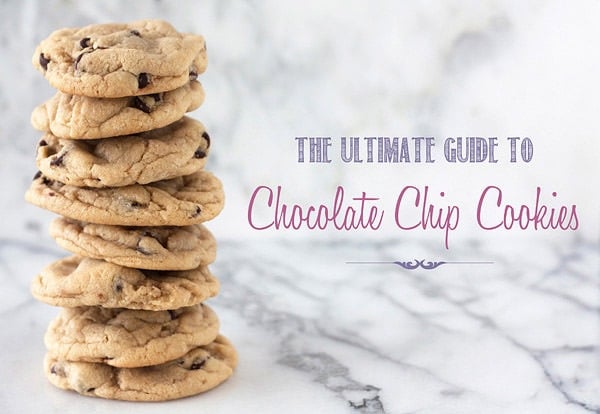
In this post I’m going to share with you how various ingredients and techniques can affect the taste, texture, and appearance of your chocolate chip cookies. This will hopefully help you understand how a Chocolate Chip Cookie Recipe works so you can make the PERFECT batch every time, whatever you consider to be perfect. This information will allow you to alter or create your own chocolate chip recipe that produces cookies just the way YOU like them. You’ll be an expert on the anatomy of the chocolate chip cookie.
I used the Nestle Tollhouse Chocolate Chip Cookie recipe as my control and made little changes and variations in techniques and ingredients to show you how they affect the cookie.
I halved and adapted the original Tollhouse recipe. I kept everything the same through each recipe test, changing just one key thing to see its effect and photographing the results for you.
Cookie Tools and Ingredients Used:
Tools and Ingredients Used (when applicable):
-Spring-Loaded Cookie Scoop (Medium or 1 1/2-Tablespoon size)
–Chicago Metallic sheet pans
–Escali Digital Food Scale
–KitchenAid 5-quart Stand Mixer
–Oven thermometer
–Unbleached parchment paper
-Gold Medal All-Purpose Flour
-Fine sea salt
-Light brown sugar
-Large eggs
-Unsalted butter at a cool room temperature
Control Recipe
Ingredients:
1 cup plus 2 tablespoons (142 grams) all-purpose flour
1/2 teaspoon baking soda
1/2 teaspoon salt
1 stick (113 grams) unsalted butter, at room temperature
1/4 cup plus 2 tablespoons (75 grams) granulated sugar
1/4 cup plus 2 tablespoons (75 grams) packed light brown sugar
1/2 teaspoon vanilla
1 large egg
1 cup (170 grams) semi sweet chocolate chips
Directions:
Preheat oven to 350°F. Line baking sheets with nonstick baking mats or parchment paper.
In a medium bowl combine the flour, baking soda, and salt.
In the bowl of an electric mixer beat the butter, granulated sugar, and brown sugar until creamy, about 2 minutes. Add the egg and vanilla, beating well to combine. Gradually beat in the flour mixture. Stir in the chocolate chips. Scoop 1 1/2 tablespoon-sized balls and place onto prepared baking sheets.
Bake for 9 to 11 minutes, or until golden brown. Cool for 2 minutes before removing to wire racks to cool completely.
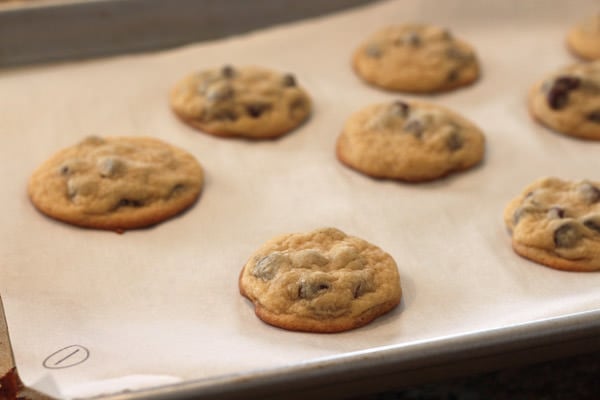
Here is the control, an adapted version of the Nestle Tollhouse recipe. The full recipe I used to base all of the tweaks on is at the bottom of this post.
Baking Powder:
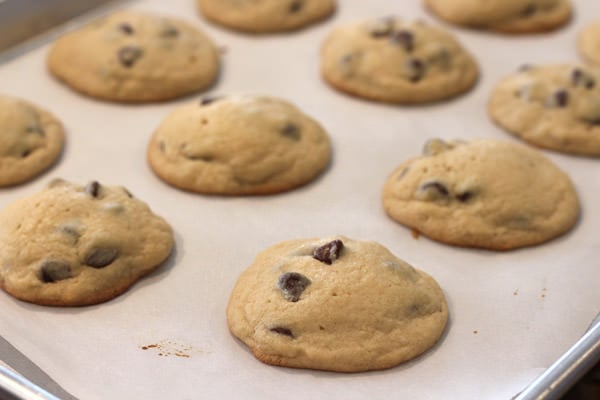
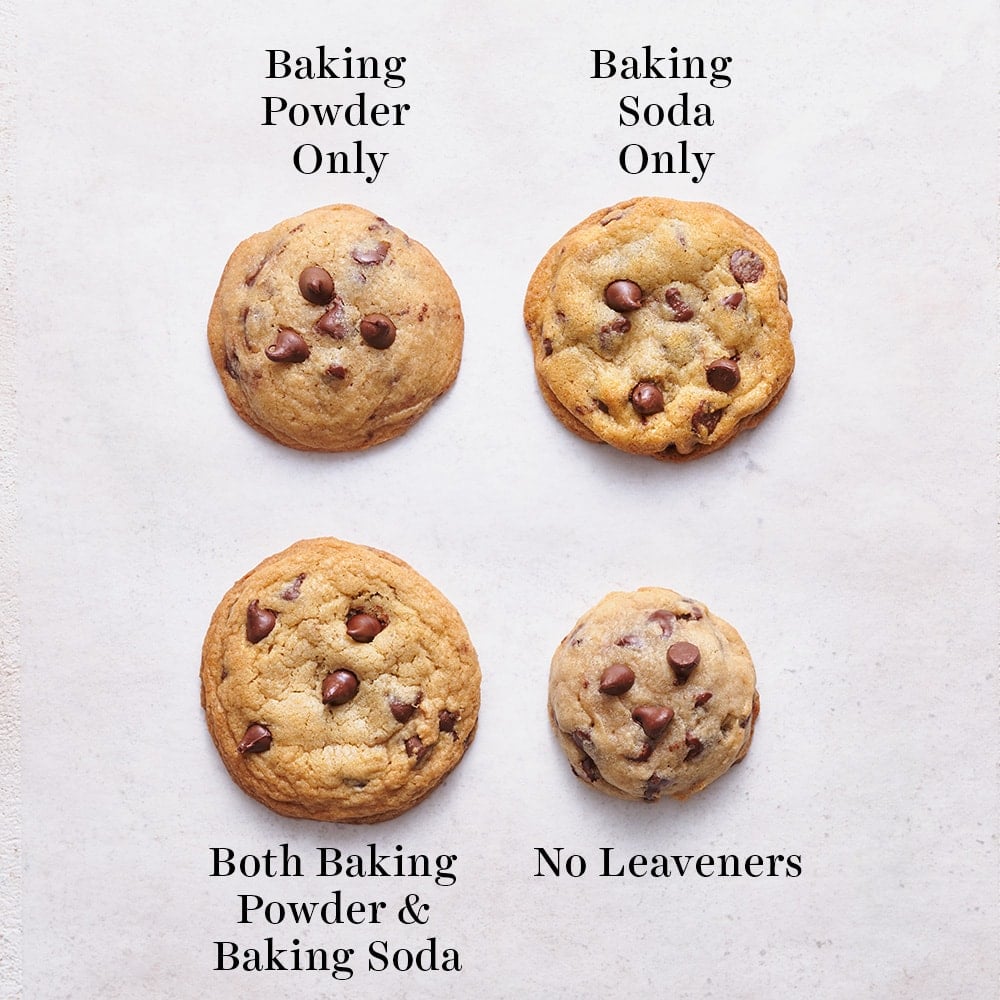
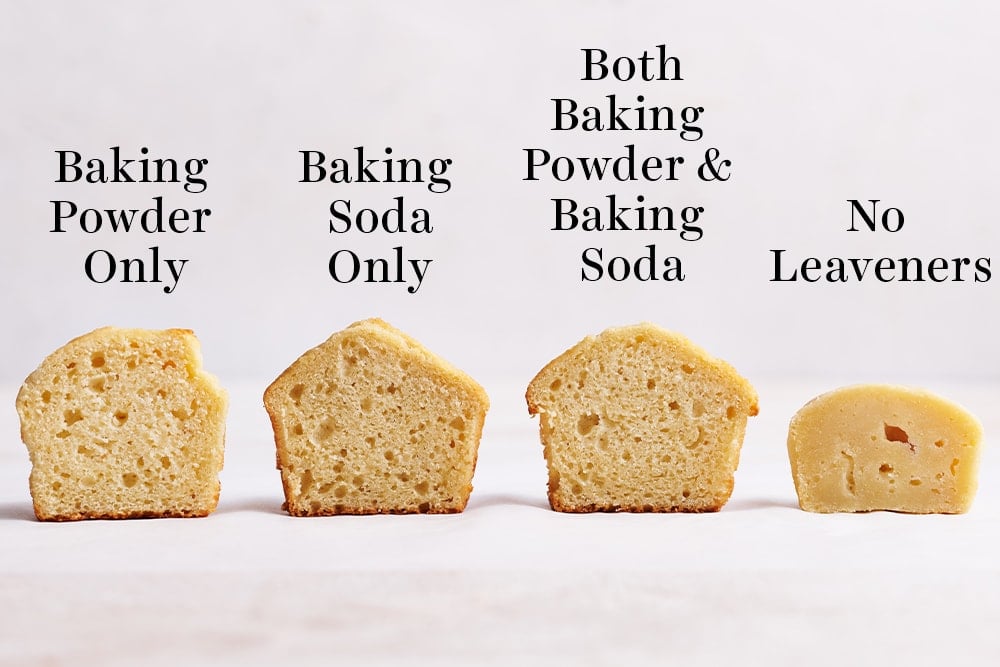
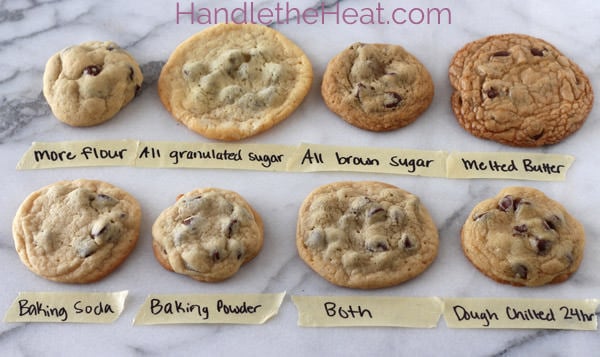
Removed baking soda from recipe and used 1/2 teaspoon baking powder. This produced results that were more cakey and puffed while baking.
Baking Powder AND Baking Soda:
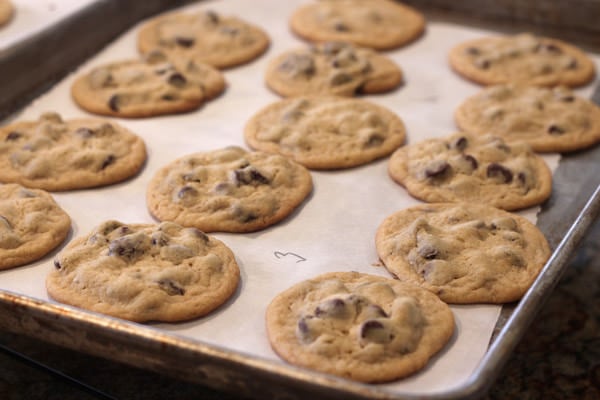
Used 1/4 teaspoon baking powder and 1/4 teaspoon baking soda. This produced results that were crisp at the edges, soft in the middle, with a good amount of spread. The combination of the two leaveners produced the best results in my opinion.
MORE Flour:
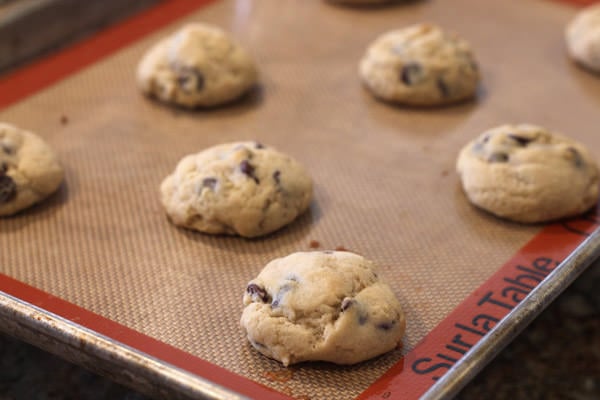
Increased the flour to 2 cups (250 grams) which created a more crumbly dough and very little spread. The cookies were small yet thick and relatively undercooked (ooey and gooey) in the middle.
MELTED Butter:
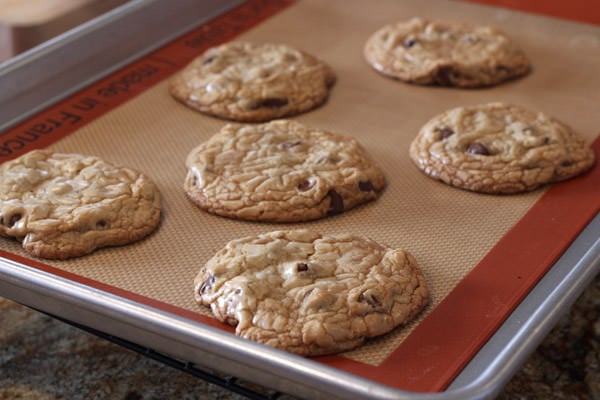
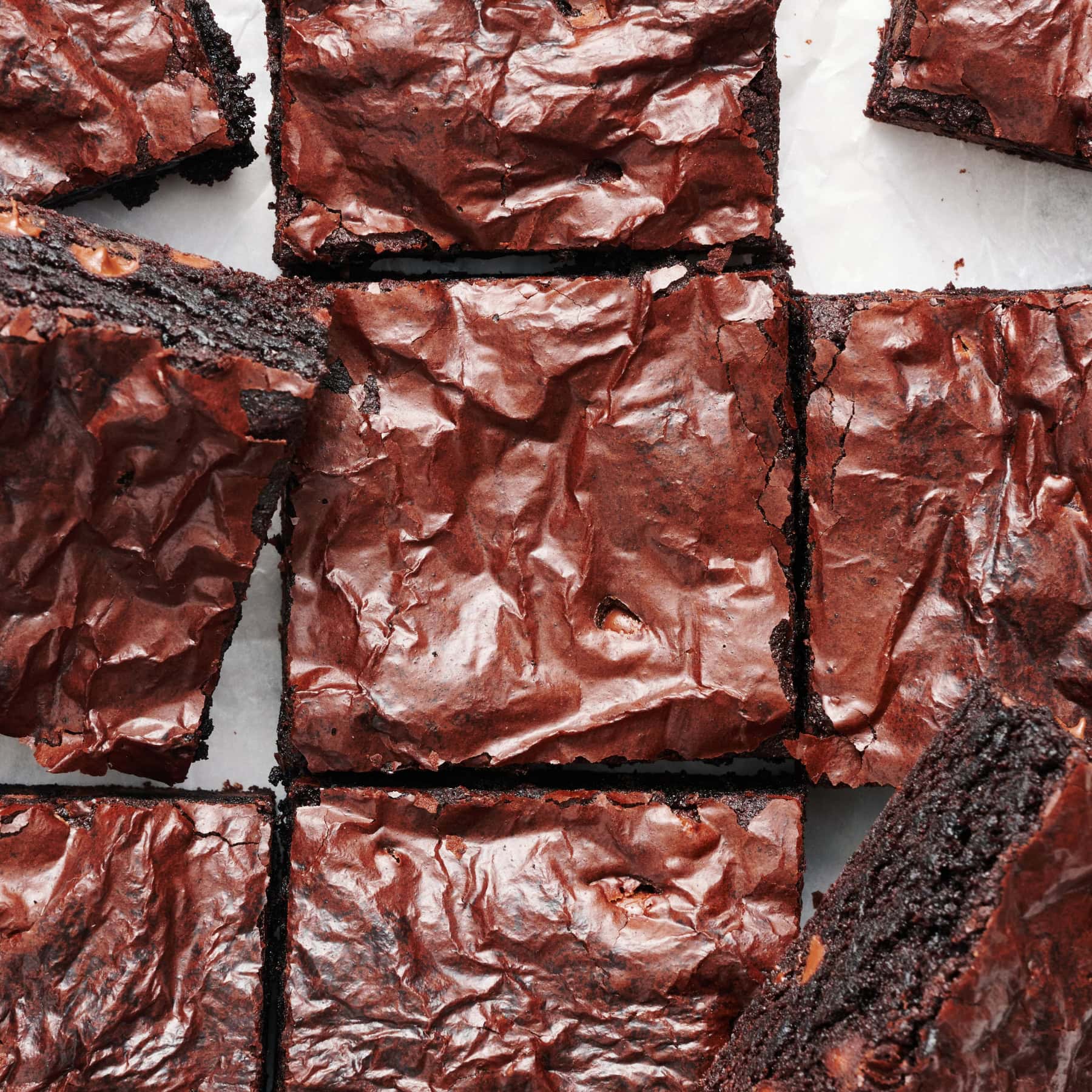
I replaced the room temperature butter with melted and cooled butter. Instead of creaming the butter and sugar with an electric mixer, I simply stirred the butter and sugars together then let sit for 5 minutes, until the sugar was better absorbed by the butter. This produced flatter cookies that had a shiny, crackled top reminiscent of brownies. They were also more crisp at the edges.
All Granulated Sugar:
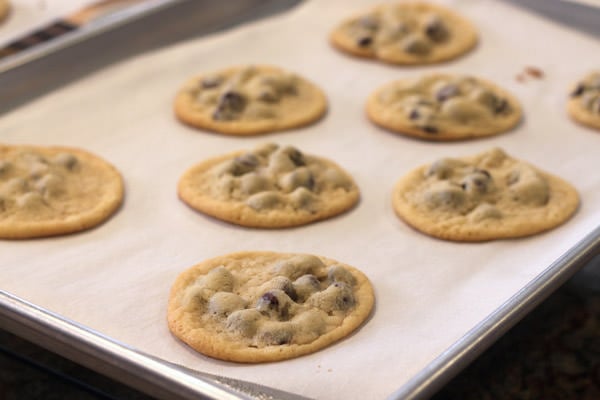
I used 3/4 cup granulated sugar (150 grams) in this recipe which produced flat, white, chewy, and slightly crunchy cookies but with little flavor. Since baking soda (called for in the control recipe) requires an acid (such as brown sugar) to react, these cookies fell very flat as you can see by the way the chocolate chips protrude.
All Brown Sugar:
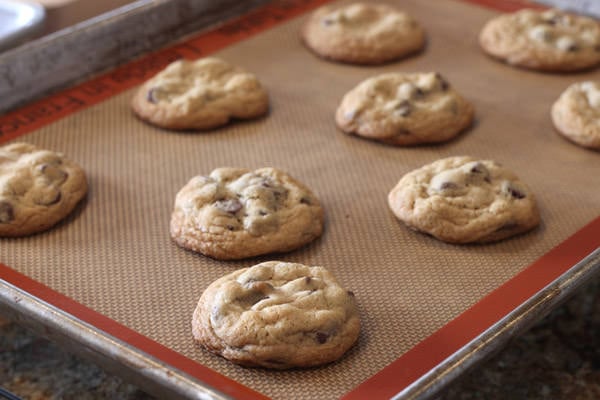
I used 3/4 cup (150 grams) packed light brown sugar in this recipe which produced thick, brown, and soft cookies with an intense butterscotch flavor. The original control recipe uses an even ratio of granulated and brown sugars. If you prefer your cookies to be flatter, chewier, or crisper, use more granulated sugar. If you prefer your cookies to be softer and thicker and have a pronounced butterscotch flavor, use more brown sugar.
24-hour CHILLED Dough:
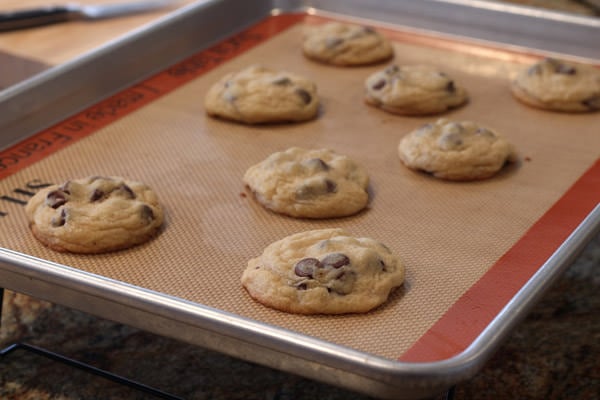
I used the control recipe but chilled it in the fridge for about 24 hours before shaping and baking. This produced cookies that were slightly thicker, chewier, darker, and with a better depth of butterscotch flavor. If you have time, try chilling your next cookie dough for at least 24 hours, or up to 48 hours.
Final Comparison:


Thanks for sharing all your well researched work with us. What a delicious challenge you had before you!
This is an awesome reference! I saw it on tumblr, and I’d like to follow up with one variation I always use: I substitute honey for the white sugar (actually, I use about 2/3 brown sugar and 1/3 honey). I find that this gives the cookies a new and exciting flavor – by using different varieties of honey (I generally use acacia) you’ll get different secondary flavors to the cookies. The honey is a little sweet though, so reducing the amount of honey can work well, and I usually have to add a few more tablespoons flour because of the honey being more liquid. It results in very moist cookies though, and the great taste of the honey shines through.
Sourwood, tupelo, or orange blossom honey are also good choices to substitute in. The honey trick also works amazingly well with peanut butter cookies or cakes.
Why not try it altering margarine, butter, shortening and/or oil?
Perfect post ! So helful thank you !
This post is invaluable for me! THANK YOU! 🙂 My cookies are not my forte…looking forward to using this as a guide next time I bake!
Great! I’ve always wanted to try something like this, but I’m not willing to “mess up” cookies on purpose! Others have mentioned it, but when you try again, I would love to see comparisons of butter, margarine, and butter-flavored Crisco. My sister used to make the Crisco version, and I imagine them now as “oily,” as you mentioned, but otherwise perfect.
This is AWESOME! I saw this on Pinterest but it wasn’t pinned from this page, so I went on a search for the original and found your blog post. So glad I did! Pinning this directly from HERE now!
Did you observe any difference between lining your sheets with parchment and a silpat?
This info is so helpful … my husband prefers his chocolate chip cookies to be soft and chewy. It’s always been hit or miss for me, now I will know just how to alter the recipe to make “his” perfect cookie (it’s thin and crispy for me) … hmm, they do say that opposites attract 🙂
Thank you. This is a wonderful example of kitchen science. I’ve always found that under cooking them results in the perfect cookie – chewie in the middle and crunchy at the edge.
I’m curious about the effect of using a mixer vs. hand-stirring. I think it would have an effect on the consistency and taste. Would you consider testing that in round 2?
Thanks for posting this! It explains so much. 🙂 Have you ever added vanilla pudding, dry out of the box? I have an Amish recipe that calls for that in chocolate cookies. They usually look great but seem a little dry or cake like. I just wondered if you had tried it.
What a great article. Thank you for doing this experiment on everyone else’s behalf. I hope you managed to eat all the cookies you baked? Did you personally have a favourite? How did all your tests compare to the original control version in terms of taste quality?