




Tessa's Recipe Rundown
Taste: Buttery with a slight tang from the buttermilk – perfect for topping with jam, gravy, or honey.
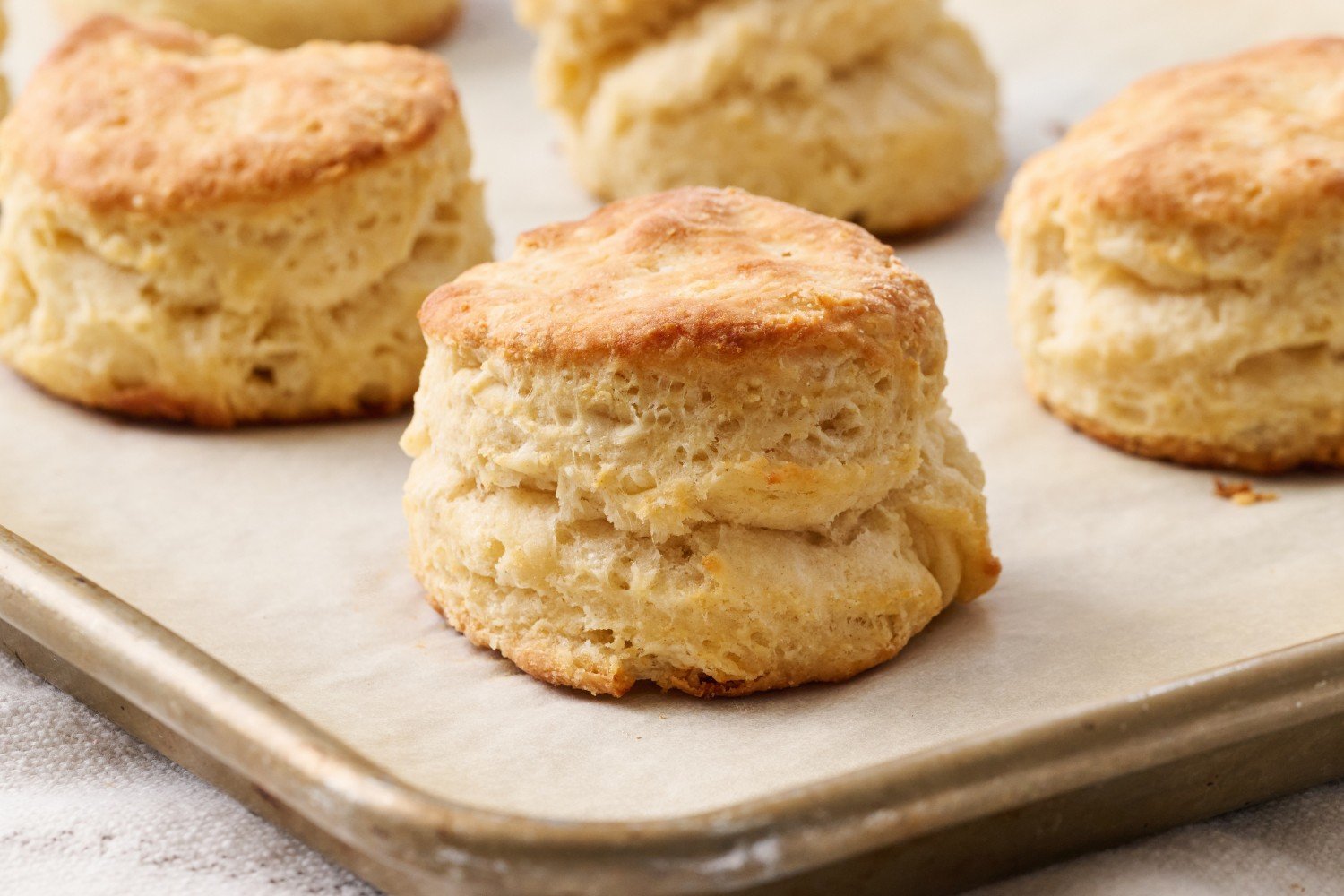
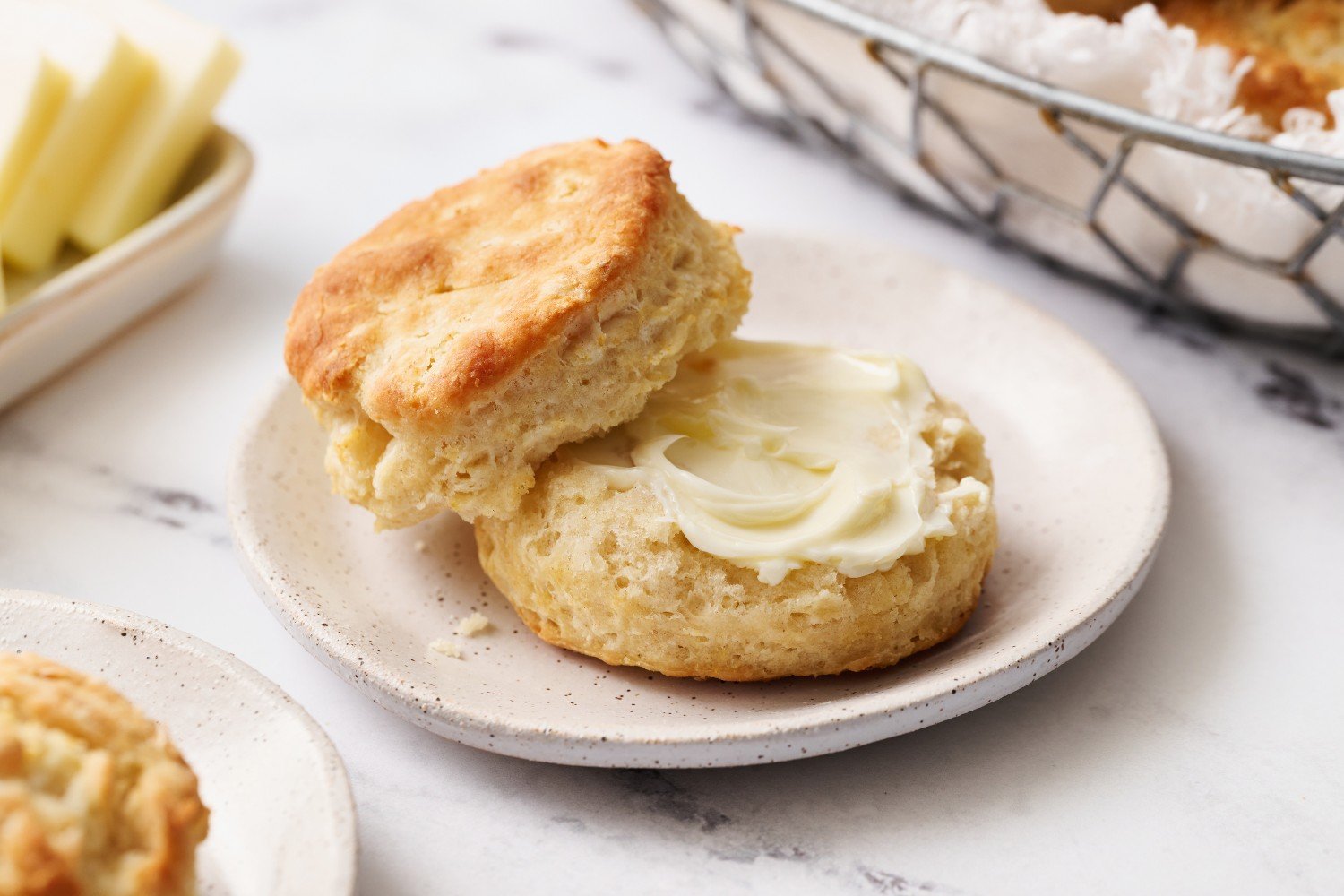
Texture: Crisp on the outside, light and fluffy on the inside, with super flaky buttery layers throughout.
Ease: So easy! I’ve included plenty of tips for tall, flaky biscuits below.
Why You’ll Love This Recipe: Quick comfort food that everyone adores.
This post may contain affiliate links. Read our disclosure policy.







Perfectly tender, buttery Buttermilk Biscuits are one of those treats where you just can’t stop at one.
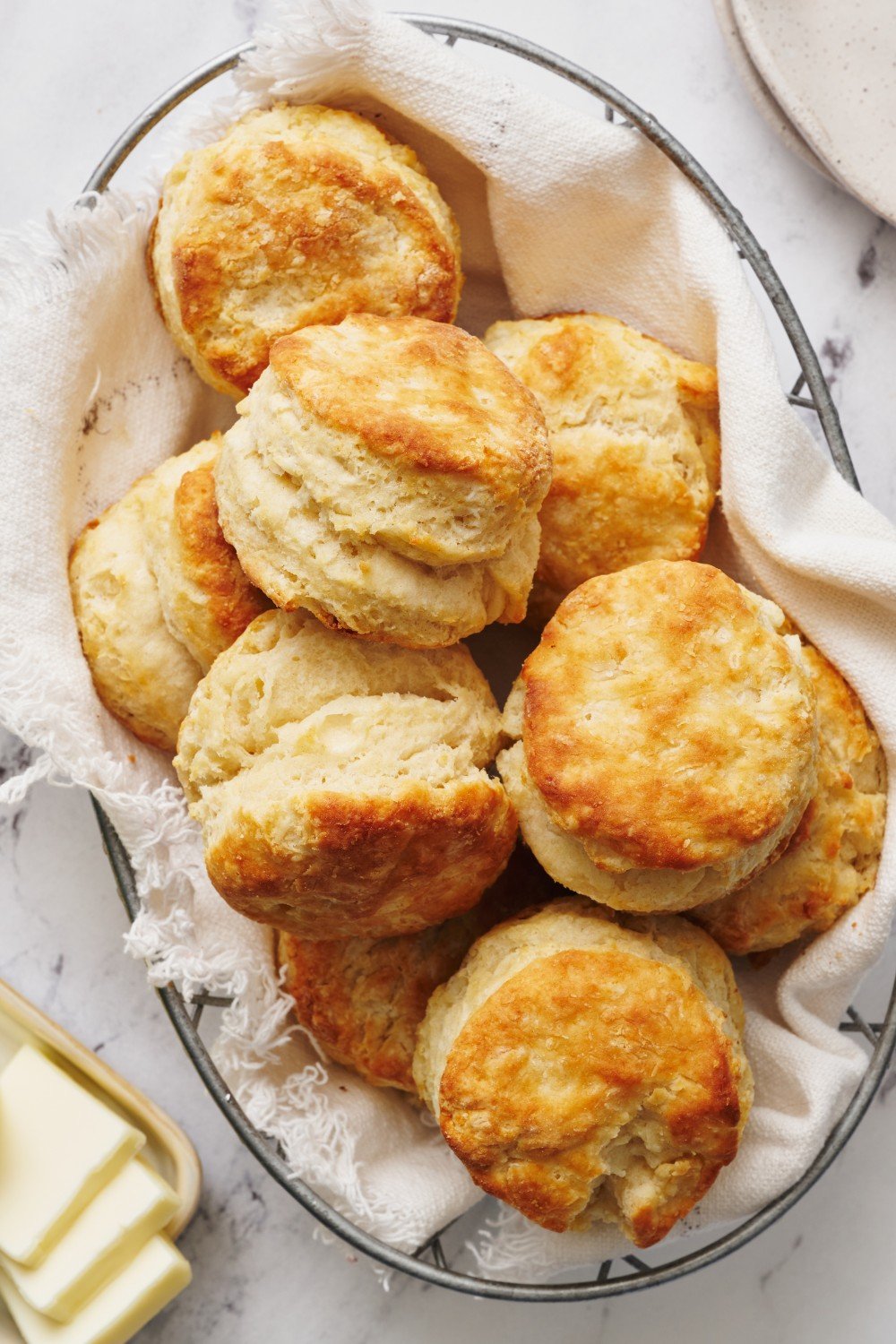
Homemade Biscuits are a must for Thanksgiving and Friendsgiving celebrations. They pair beautifully with my crowd-pleasing Sweet Potato Casserole, delicious Cheesy Green Bean Casserole with Bacon, and my favorite Soft Pretzel Stuffing. With sides this good, who even needs turkey?!
But biscuits aren’t just for Thanksgiving—they’re wonderfully versatile and can be served sweet or savory. Whether they’re part of breakfast (think sausage & gravy!), a midday snack, or a fun dinner side, the possibilities are endless!
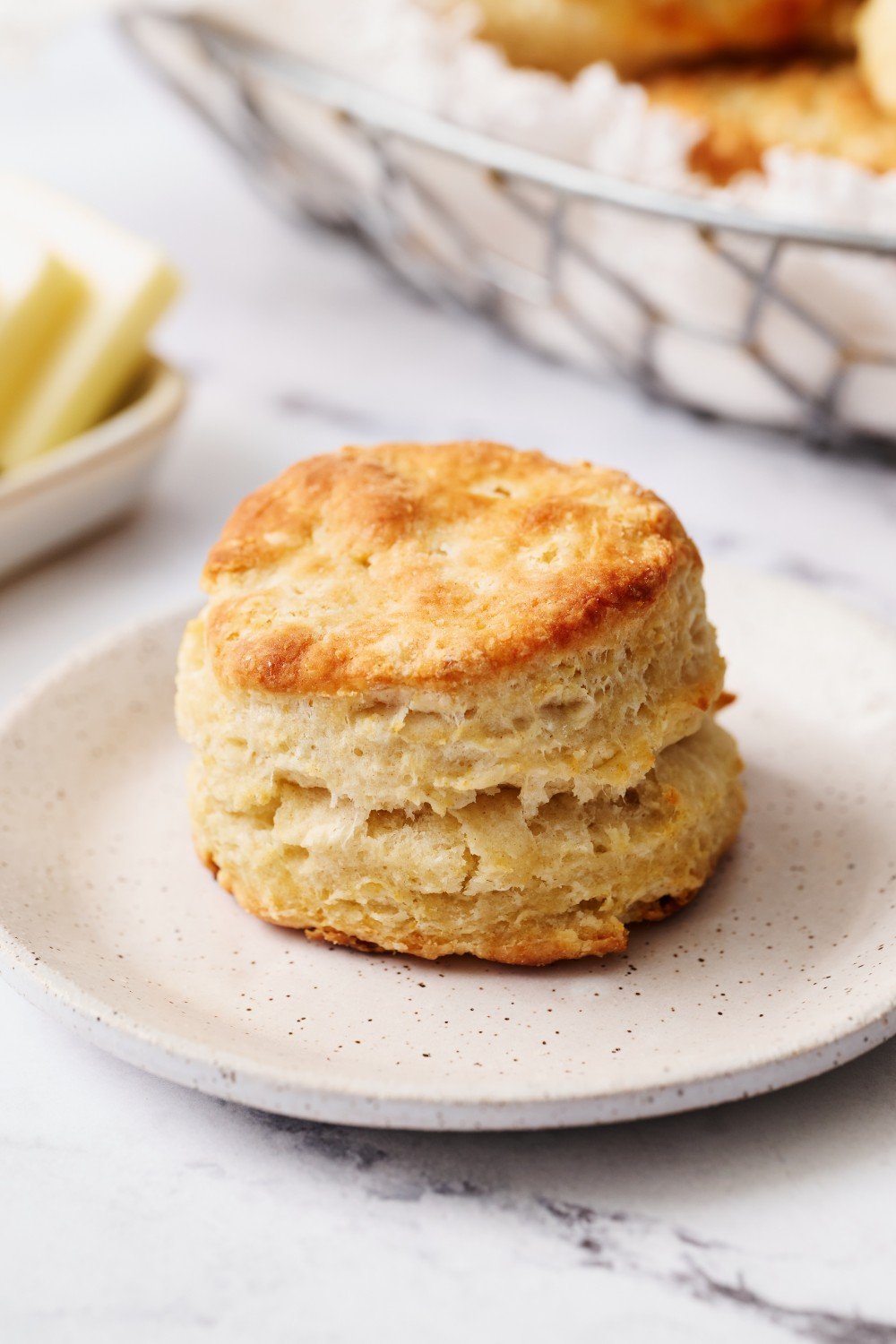
This biscuit recipe has become a reader favorite. Just take a look at one of the many glowing 5-star reviews:
Reader Love
These were FANTASTIC!!! It’s DEFINITELY a keeper recipe!! Thank you so much for all the extras that you included, i.e. the “laminating”, which I’ve not heard of!! They were SO TALL and YUMMY!!!!!!!
–
Serve these warm, homemade biscuits slathered with jam for breakfast, alongside a cozy dinner, or as the ultimate Christmas or Thanksgiving side dish. Your friends and family will adore them!

Sprinkle of Science
How to Make Perfect Buttermilk Biscuits
Do I Have to Use Buttermilk in Biscuits?
For the very best flavor and texture, yes, I highly recommend using real buttermilk. After much testing using buttermilk substitutes and alternatives, I find that nothing quite compares to the tangy taste and thick texture of real buttermilk.
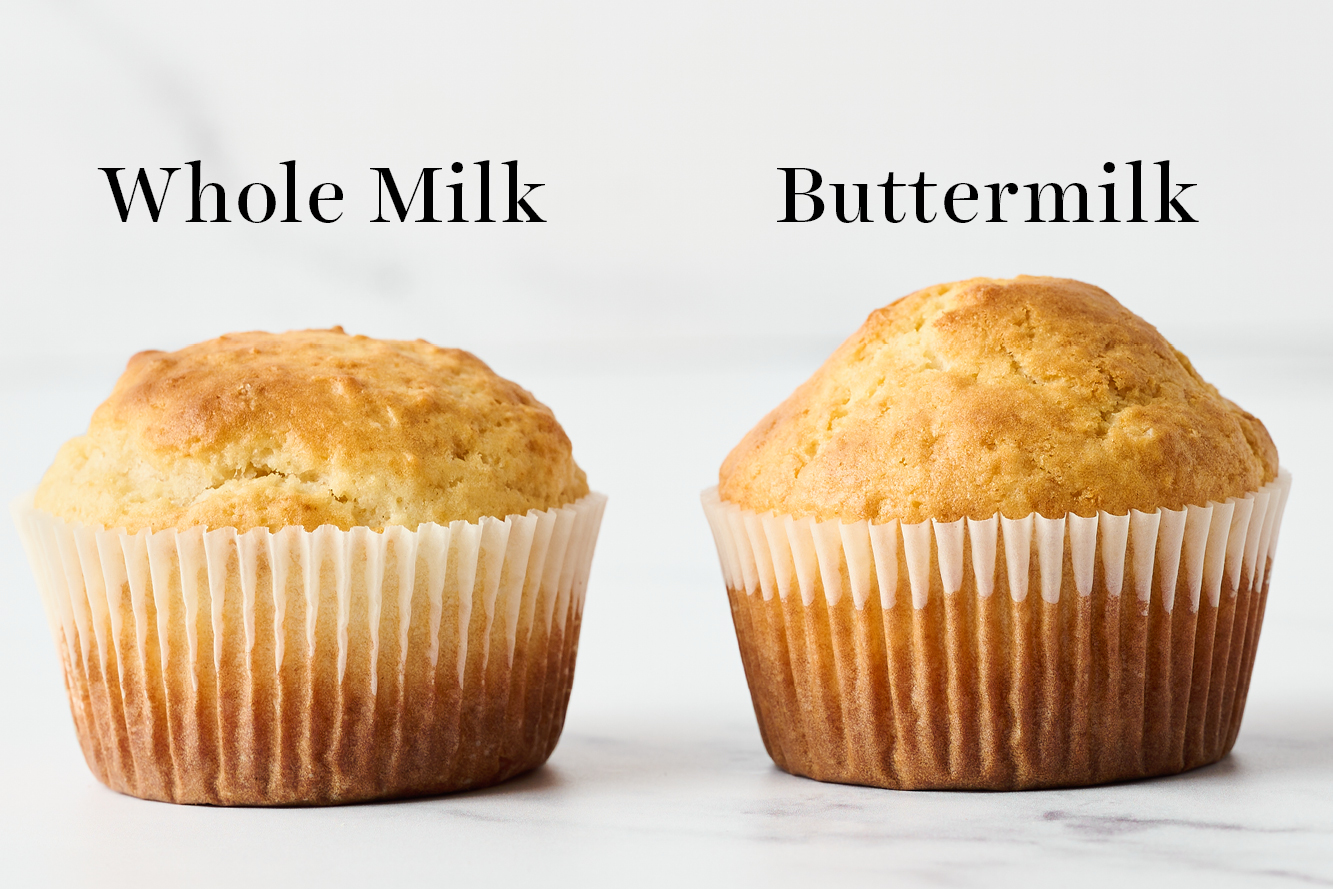
See my side-by-side experiments and read about the science of baking with buttermilk here.
Help – I Don’t Have Buttermilk!
If you can’t use real buttermilk, use 1 scant cup whole milk + 2 teaspoons distilled vinegar or lemon juice – just note that this will change the flavor and texture of the biscuits.
If you’re using this substitute, I recommend adding some mix-ins to the dough, such as shredded cheese, diced jalapeño, garlic powder, green onion, or everything bagel seasoning, to enhance the flavor of your biscuits.
How to Make Tender Biscuits
Be super gentle with the dough. I usually make biscuits by hand with a pastry cutter because you’re less likely to overwork the dough. I’ve also included instructions for using a food processor if that’s your preferred method.
I like my biscuits to be slightly crunchy on the outside and tender and fluffy on the inside, which is what this recipe produces. If you prefer very tender biscuits, use a southern-style flour such as White Lily, which has a lower percentage of protein. If you can’t find that, you can combine all-purpose flour with pastry flour for a similar result.
Whichever flour you use, make sure to measure your flour correctly. Too much flour will result in dense, dry, and tough biscuits.
Butter or Shortening for Biscuits?
I’ve also done side-by-side testing with biscuits made with butter vs. shortening and found I much prefer the taste and texture when using only butter. However, biscuits made with shortening create a more traditional Southern-style texture. Feel free to use half cold shortening and half cold butter for the best of both worlds.
How to Make Tall Buttermilk Biscuits
- Tall biscuits require tall dough: The dough should be 1 inch in height. You could even pat the Buttermilk Biscuits dough out to 1 1/4 inches for mile-high biscuits – but note you’ll end up with fewer biscuits.
- Use a metal biscuit cutter: You want to create sharp edges when you shape the biscuit dough so nothing prevents the biscuits from rising. A round cookie cutter also works.
- Do NOT twist the biscuit cutter as you shape the dough, as this seals the edges and prevents the biscuits from rising as nicely.
- Lamination: The most important step in creating tall biscuits is to “laminate” the dough. Take a look at the picture below to see the difference in laminating your dough makes. Check out my How to Make Tall Scones & Biscuits article for even more tricks.
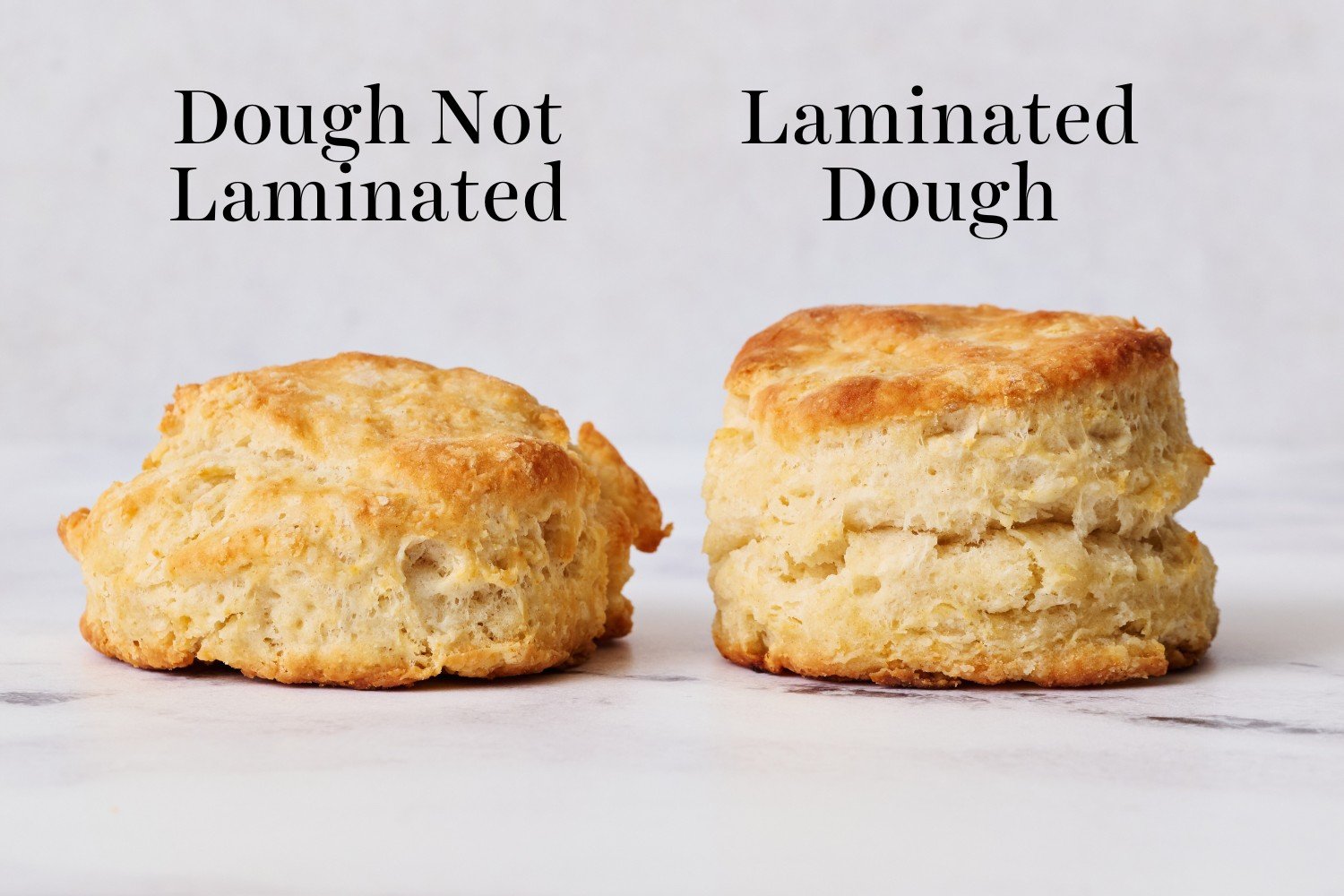
How to Laminate Biscuit Dough
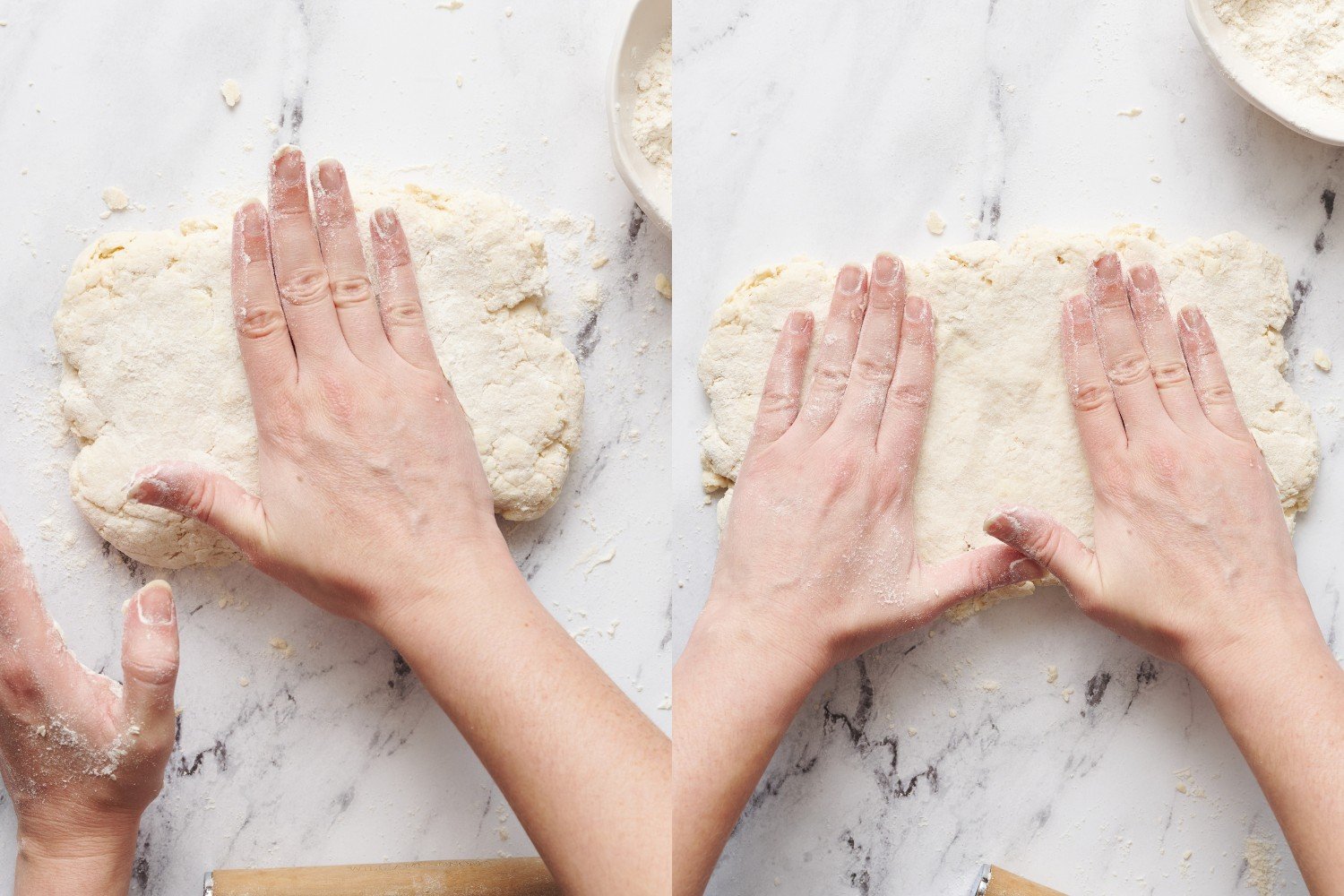
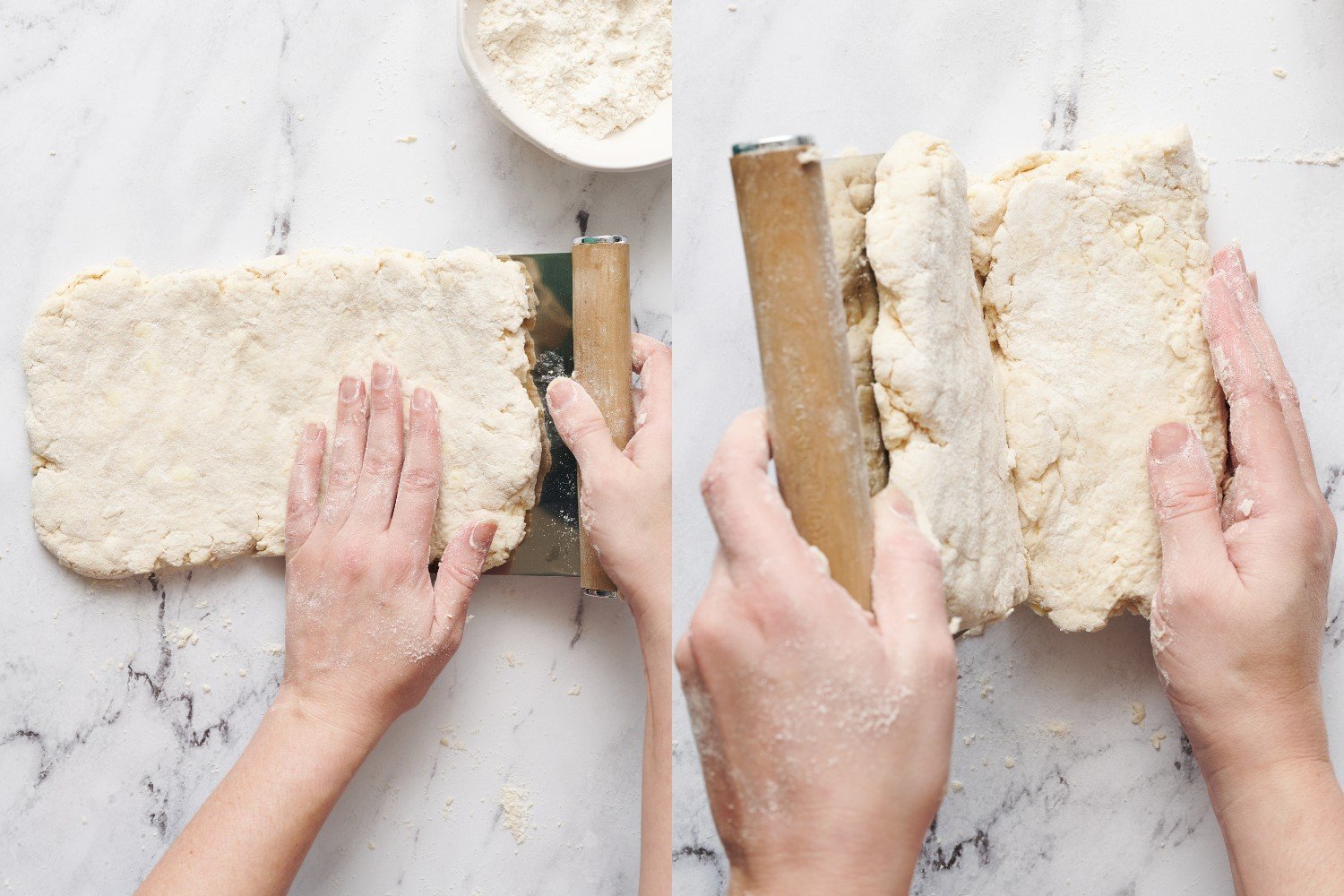
1. Turn the dough out onto a floured surface and dust the dough with flour. I like to use a powdered sugar shaker to dust a little flour without using too much. Gently pat the dough out into a 1/2-inch thick rectangle using your hands (no rolling pin needed!).
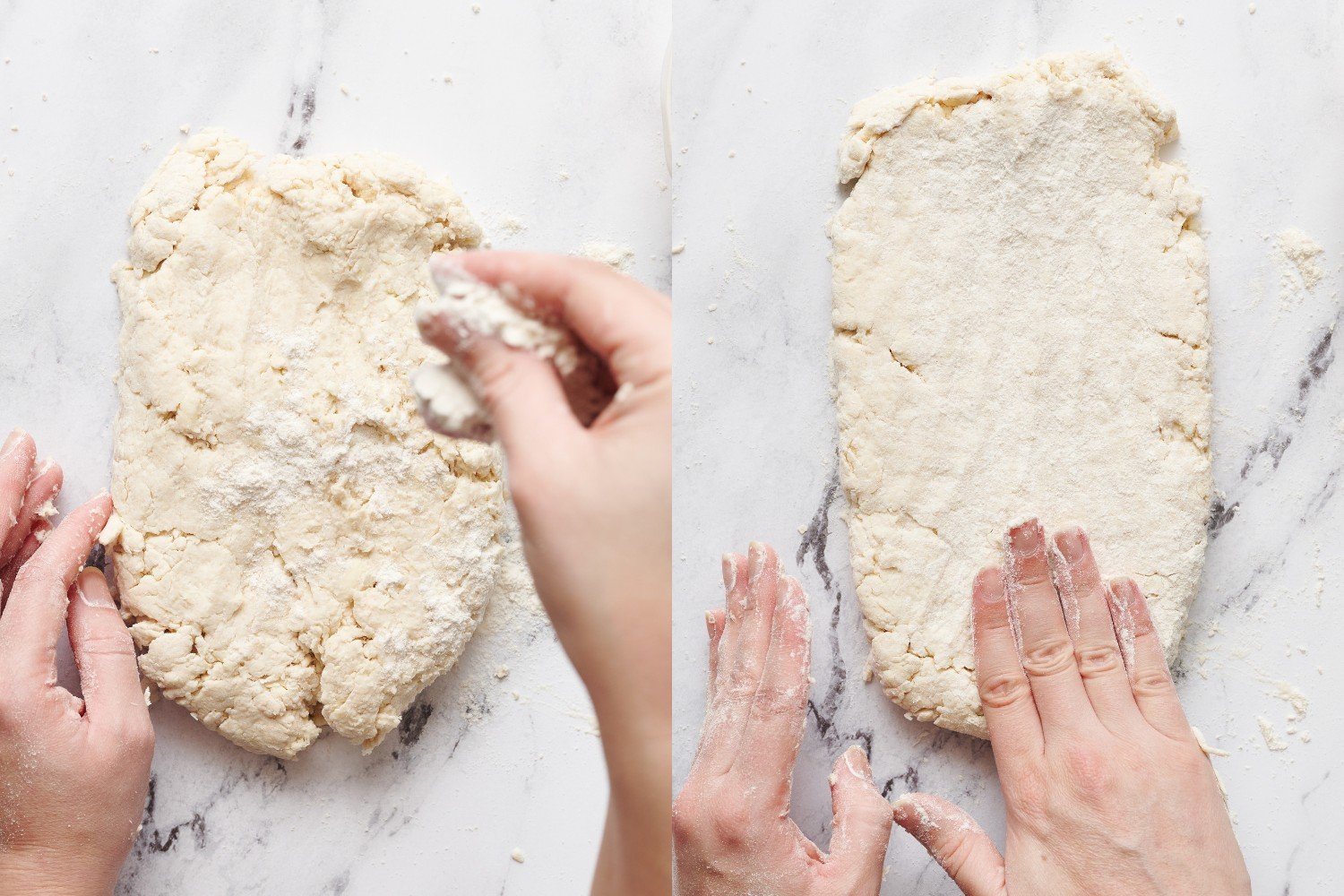
2. Fold the dough into thirds like a letter. Don’t worry if it’s not perfect. Be quick and gentle with the dough, and only use as much flour as necessary to prevent it from sticking. Adding too much flour will create dense, tough biscuits.
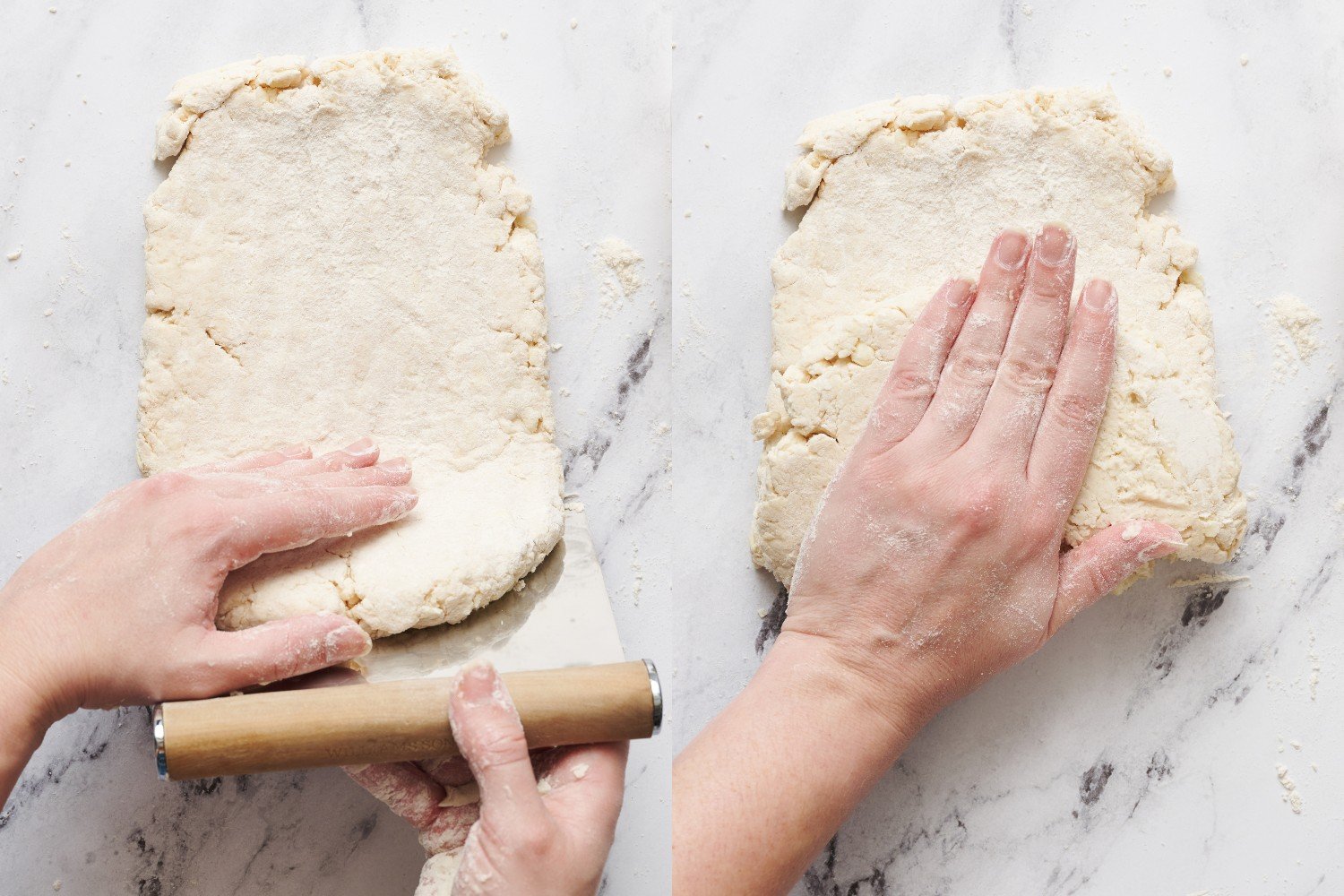
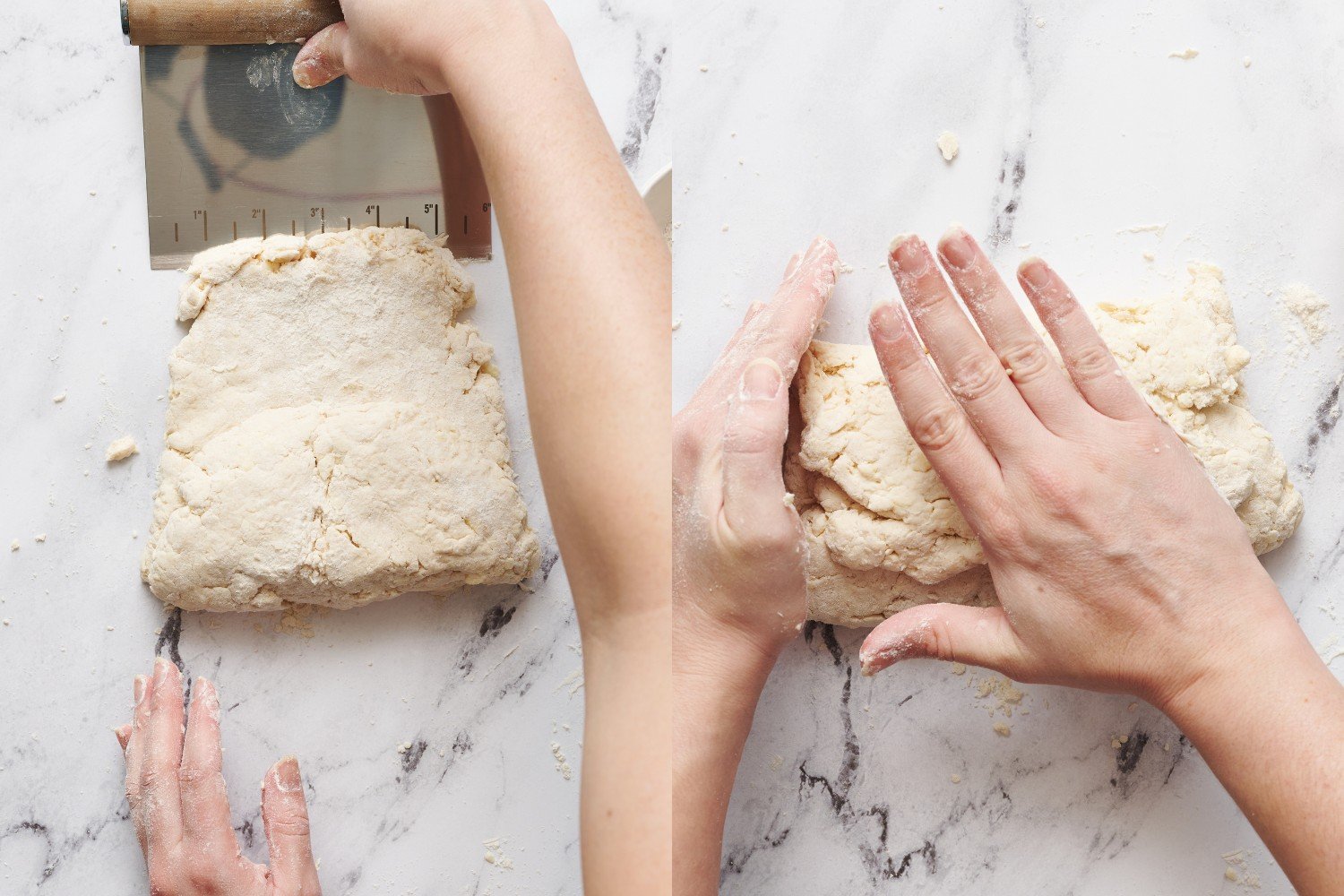
3. Repeat this process two more times, rotating the dough 90 degrees before each fold. Use a bench scraper to easily move the dough. This process creates layers of butter similar to a croissant, so the biscuit bakes up tall and super flaky!
Baking Buttermilk Biscuits
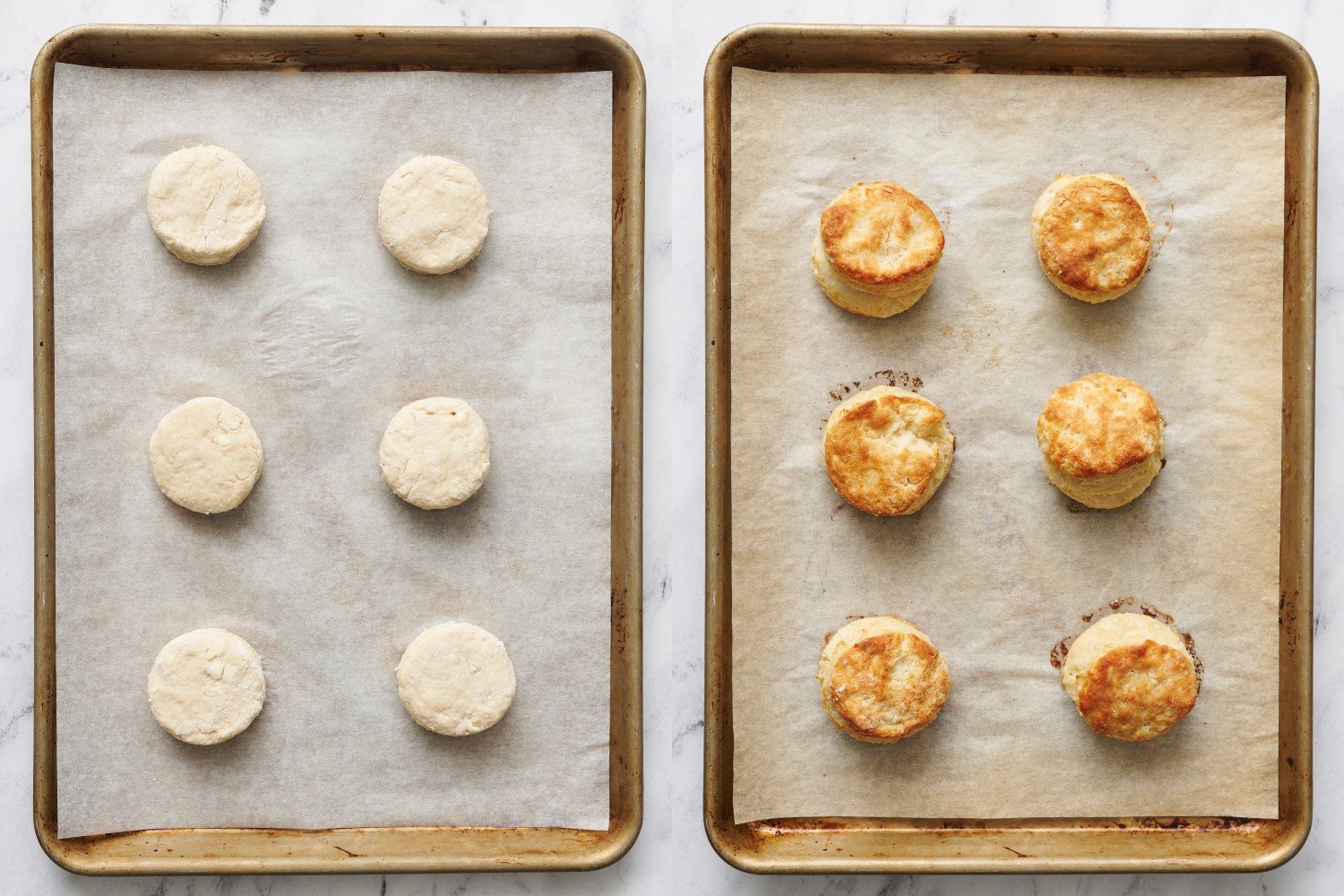
- Keep the butter cold. Pop the tray of shaped biscuits in the freezer while your oven preheats. This keeps the butter extra cold. When the biscuits hit the heat of the oven, the steam from the water in the butter creates those tall, flaky layers.
- Ensure your oven is fully preheated before baking. This helps the biscuits rise tall. If you don’t have an oven thermometer to be certain, wait at least 10 minutes after your oven tells you it’s preheated. Learn more oven tips for baking here.
- Baking preferences: I prefer my biscuits to develop a golden crust, but some people prefer their biscuits to be paler and tender without a crisp crust, so adjust the baking time to suit your preferences.
Can I Double This Recipe?
Sure – simply double all ingredients in the biscuit recipe below and follow the instructions. No modifications are needed to make about 16 to 20 biscuits.
How to Store Biscuits?
Since Buttermilk Biscuits are best served the day they’re baked, use the make-ahead instructions just below to prep biscuits ahead of time.
How to Make Biscuits Ahead of Time | How to Freeze Biscuits
To freeze before baking: Place the unbaked, shaped biscuits on a parchment-lined baking sheet and freeze until solid. Transfer to an airtight container and freeze for up to 2 months. Bake as directed in the recipe below, adding a few minutes to the baking time, or until golden brown.
To freeze after baking: Freeze baked biscuits in an airtight container for 1-2 months. Simply thaw to room temp, then reheat in the microwave or the oven at 300°F until warmed through.

Email This Recipe
Enter your email, and we’ll send it to your inbox.
Ingredients
- 2 cups (254 grams) all-purpose flour, plus more for dusting
- 2 teaspoons granulated sugar
- 1 tablespoon baking powder
- 1/4 teaspoon baking soda
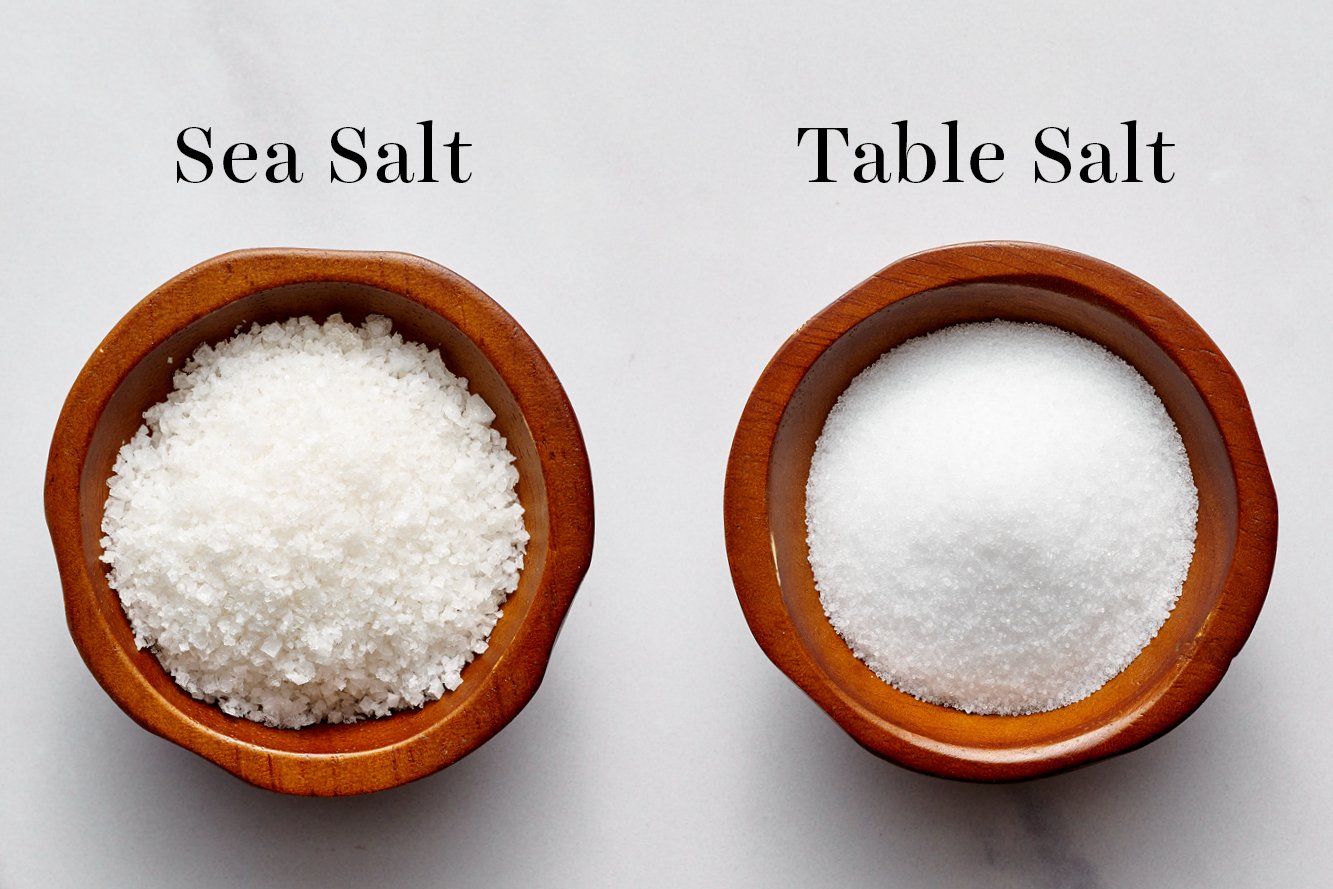
- 1 teaspoon fine sea salt
- 6 tablespoons (85 grams) very cold unsalted butter, cut into small cubes
- 1 cup (237 grams) buttermilk, chilled
Instructions
- In a large bowl, combine the flour, sugar, baking powder, baking soda, and salt. Using your fingertips or a pastry blender, cut the butter into the flour mixture until it resembles coarse meal. You can also do this in a food processor. The faster you do this, the better, as you want the butter to remain cold. Stir in the buttermilk until just combined. DO NOT overmix. The dough will be sticky.
- Turn the dough out onto a floured surface and dust the dough with flour. Gently pat the dough out into a 1/2-inch thick rectangle. Fold the dough into thirds like a letter. Repeat this two more times, rotating the dough 90 degrees before each fold.
- Pat the dough out into a final 1-inch thickness. If at any point the dough becomes too warm, pop it in the fridge until it’s firmed up slightly.
- Use a sharp 2-inch round metal biscuit cutter to push straight down through the dough to cut out circles. Don't twist the biscuit cutter, as this seals the edges and prevents the biscuits from rising as nicely. If you don’t have a sharp cutter, use a knife and cut squares instead.
- Place the biscuits on a parchment-lined baking sheet, spacing 2 inches apart. Reform the scrap dough into 1-inch thickness, being sure to work with it as little as possible, before cutting out more circles.
- Freeze the uncooked biscuits while you preheat the oven to 450°F.
- Make-Ahead Instructions: At this point, the unbaked biscuits can be frozen and stored in an airtight container in the freezer until ready to bake. Bake straight from the freezer, adding a couple minutes to the baking time.
- Bake the biscuits until golden brown, about 12 to 15 minutes.* Biscuits are best served the day they're baked.
Notes
This post was originally published in 2014 and recently updated with recipe changes and improvements and new photos. Photos by Joanie Simon.


Easy for a beginner baker. Delicious and a new family favorite.
I’d say, I found the best biscuit recipe!
I followed all directions and it came out PERFECT! Soft and buttery inside, a little leaves a little crust on the bottom and top of the biscuit
Made these with gravy tonight. Literally the best biscuits I’ve ever made. Reminded me of KFC!
I’m not a skilled baker by any stretch. Used bread flour, because it’s what I had, and followed the directions. Biscuits turned out perfect! Will definitely be making these again!
I’ve been making homemade biscuits for a while but this tops all of the recipes. Just the right texture, flaky, a bit sweet. Buttery goodness. I wish I could post a photo they came out so beautifully! I did just post on IG @elicbrowndesigns
Great recipe. I made an almost identical recipe with a southern friend a few weeks ago (they use self rising flour) and was looking for the recipe online. Came across your recipe and the results are fantastic. Thank you!
So glad you enjoyed these biscuits!
Made these twice: per the recipe and then without the sugar and with 2tbsp of a combo of thyme, rosemary, chives, parsley… both turned out fantastically and my family is clamoring for me to make them again… weekly if they had their way!
I do lower the temp to 400 degrees for 20 mins (better for my oven) and I just cut into squares (less fuss) but the recipe is PERFECT!
So happy to hear that works so well for you, Mari!! 🙂
These did not rise for me either. Flavor was good but they were flat
Hi Jan! Oh no, it definitely sounds like something went wrong here! Just in case you’re interested in troubleshooting at all, here are a few thoughts as to why these might have failed to rise.
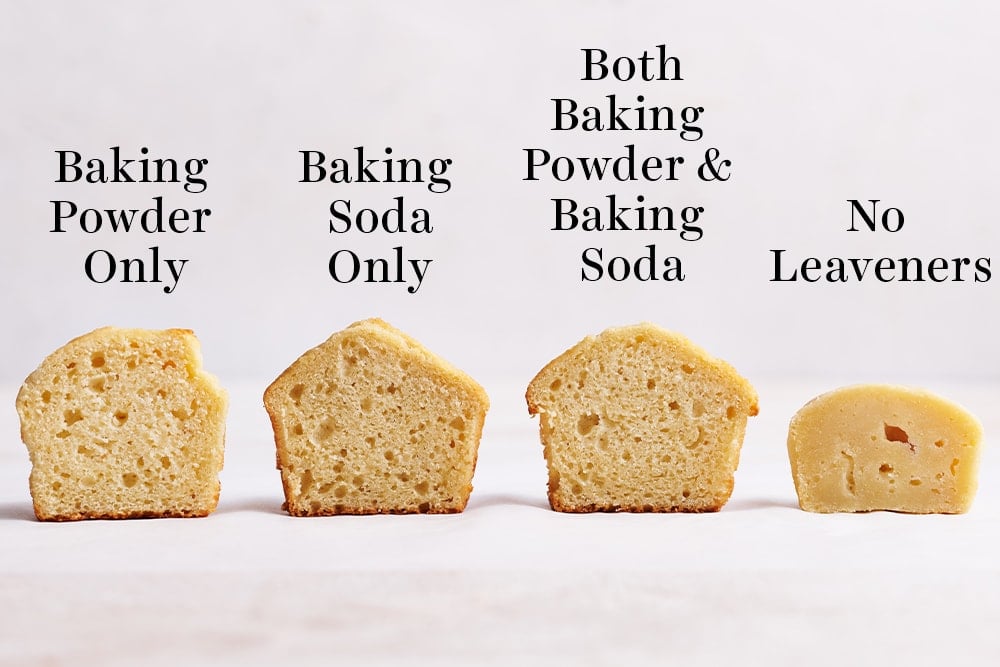
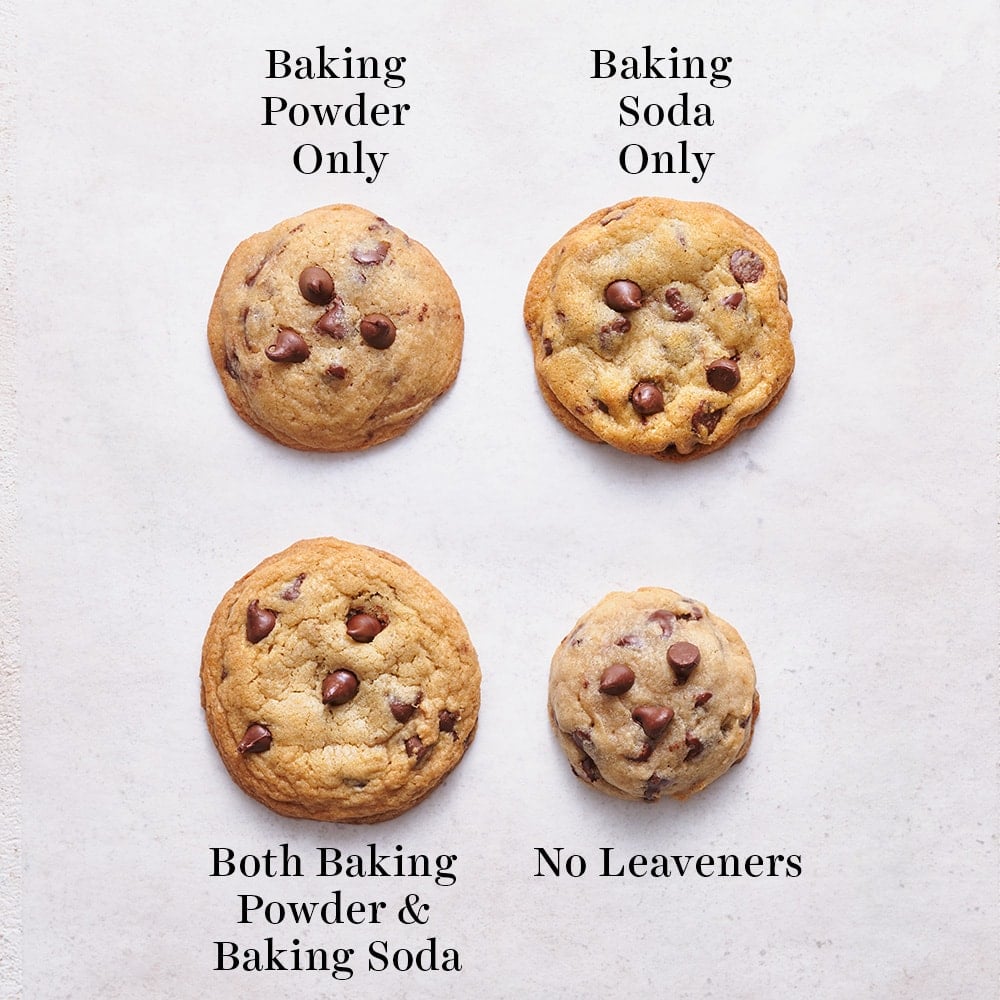
– One or both of your leavening agents could no longer be active. If your baking/soda powder are not fresh, they won’t do their jobs and your baked goods cannot rise properly. Tessa talks about the science behind leavening agents, and how to test for leavener freshness, in this article here!
– How do you measure your ingredients? By volume (using cups), or by weight (using a digital kitchen scale)? It’s so easy to add extra flour/sugar/etc to a recipe and throw off the entire chemistry of a recipe if measuring by volume. Tessa talks about how to best measure ingredients to ensure accuracy every time, in this article here!
– Did you use real buttermilk, or a DIY substitute? In our experience, the DIY version won’t work as well to activate the baking soda, and will therefore fail to rise much.
– If you have not already done so, I recommend reading all the tips Tessa has included on this recipe page, in the pink tip box above the recipe. There’s so much incredibly helpful information there, as well as the lamination technique Tessa developed that adds so much height to these biscuits!
I hope something here is helpful! If not, please feel free to reach back out to us – we are always more than happy to help!! Happy baking 🙂
How many times can the scrap be re-used? If at all?
Hi Sarah! We recommend just re-using the scraps once. You can absolutely try baking off anything that remains after that, but just know that it likely will have gotten overworked and be less flaky and tougher than the first ones. Let us know what you think when you try these! 🙂
This is a great recipe. My husband loves biscuit style chicken pot pie, but he was diagnosed with celiac a few years ago. I’ve tried dozens of biscuit recipes and this is the first one that actually makes fluffy, tender, tall, gluten free biscuits. I can hardly tell the difference. Thank you so much!!
FYI I usually just use cup4cup all purpose mix.
So happy that worked for you, Kimberly!! 🙂
Amazing! This has become a family Favorite with my grandchildren. I plait the biscuit dough so it is in flaky layers. I use the smallest of my biscuit cutters and they are just perfect for toddler hands! I LOVE THEM!
Aw, so fun! Happy to hear you’re baking memories with your grandkids 🙂