





Tessa's Recipe Rundown
Taste: Tons of bright fresh lemon flavor! The perfect balance of sweet and tangy.
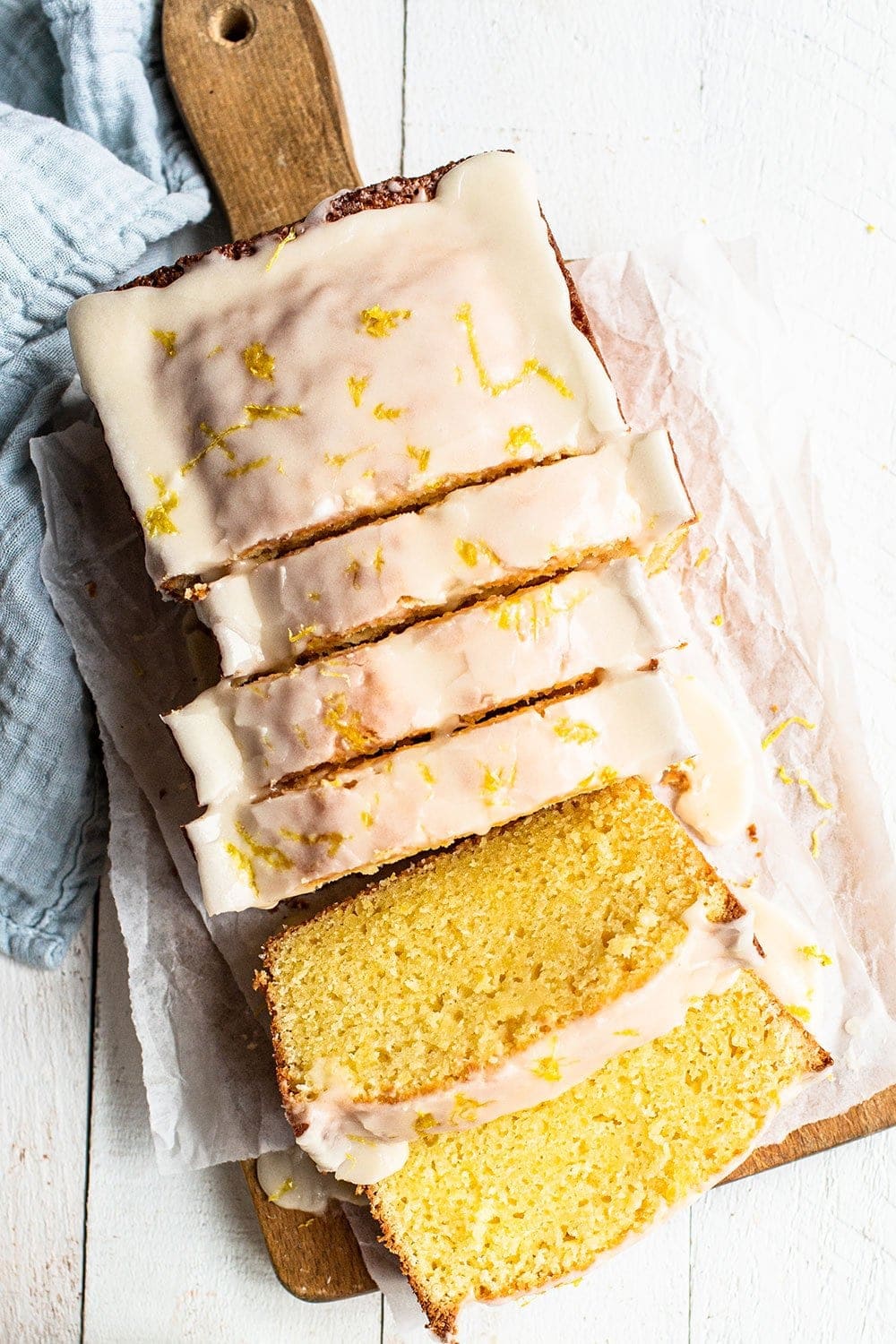
Texture: Ultra-buttery and moist with a thick, luscious glaze on top.
Ease: The batter comes together in minutes.
Why You’ll Love This Recipe: The most perfect spring or summer treat that any lemon lovers will go crazy over!
This post may contain affiliate links. Read our disclosure policy.







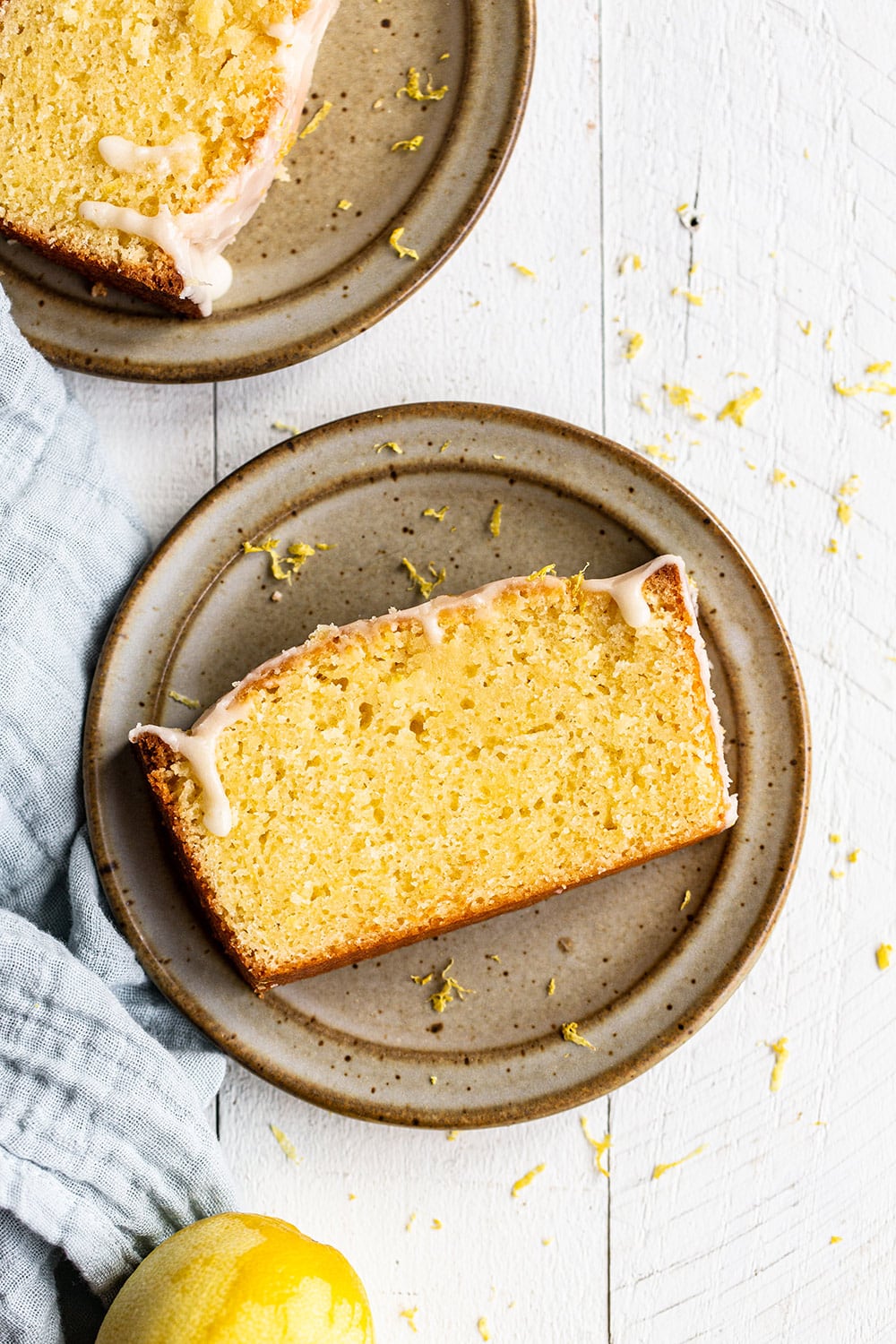
Inspired by the Starbucks lemon loaf, this homemade iced lemon pound cake is moist, rich, and finished with a thick, luscious glaze that sets beautifully before slicing.
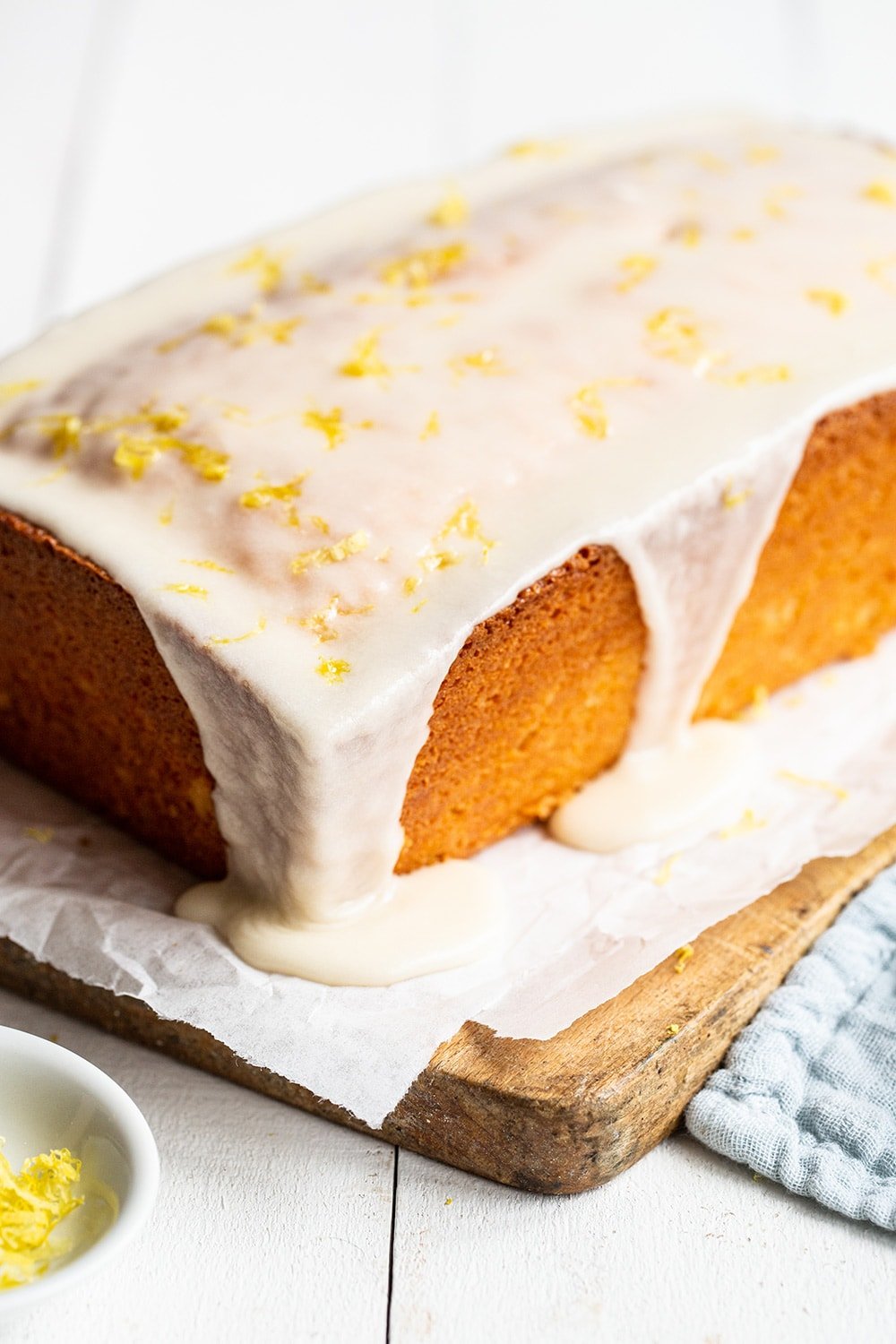
Many lemon recipes seem to lose the intensity of the lemon flavor after baking, so I worked to find a way to pack a strong lemon punch without using difficult-to-source ingredients.
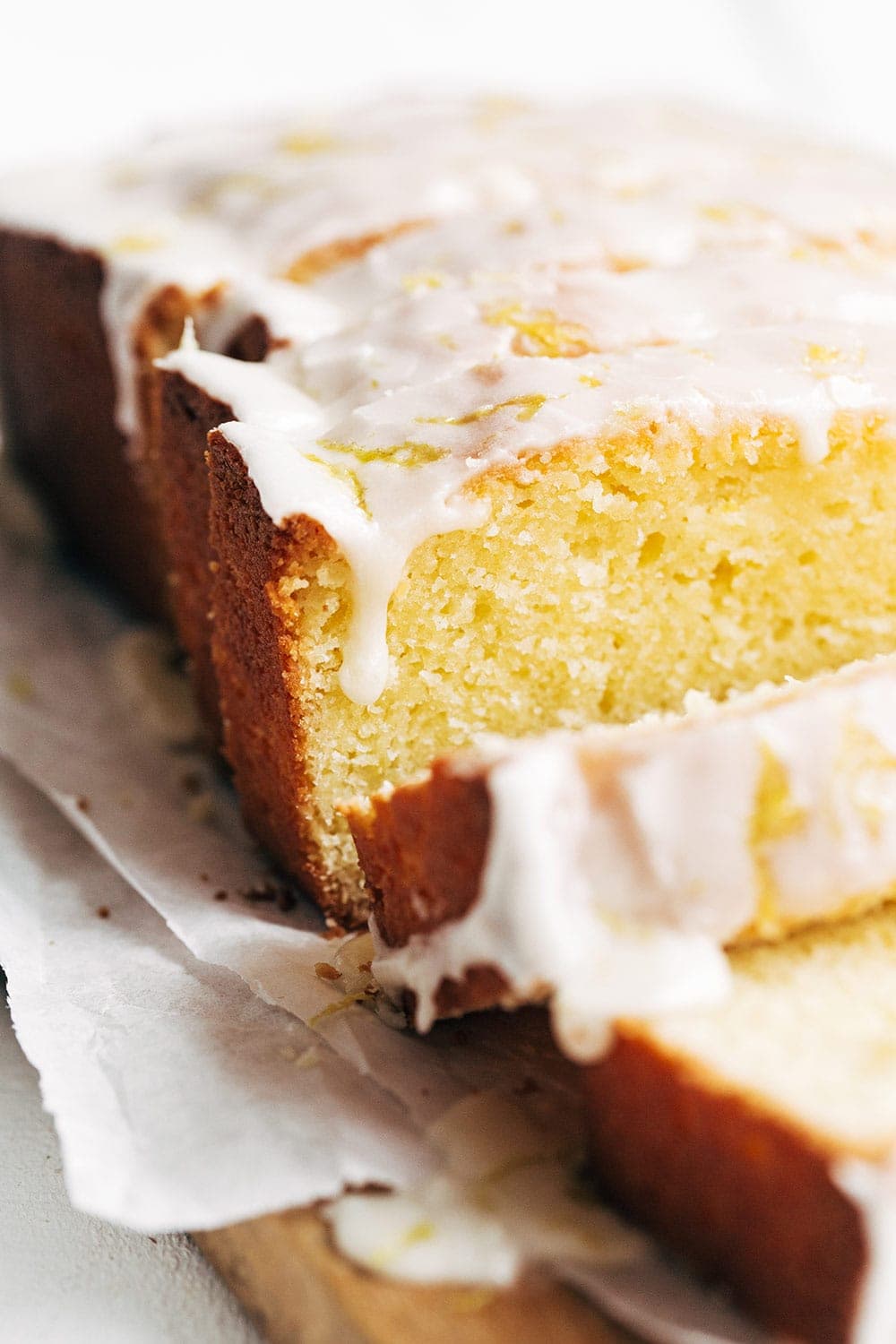
I tested batch after batch, tweaking and experimenting until I was obsessed with the final result!
Heavily inspired by Baked and Cook’s Illustrated recipes, this recipe turned out better than I could have imagined. Serve it for breakfast, brunch, tea, or dessert.
Reader Love
You will not find a better tasting, and best texture lemon loaf. I have made this recipe many times. It is truly the best lemon loaf recipe you will ever make!!!
–

Sprinkle of Science
Ingredient Notes
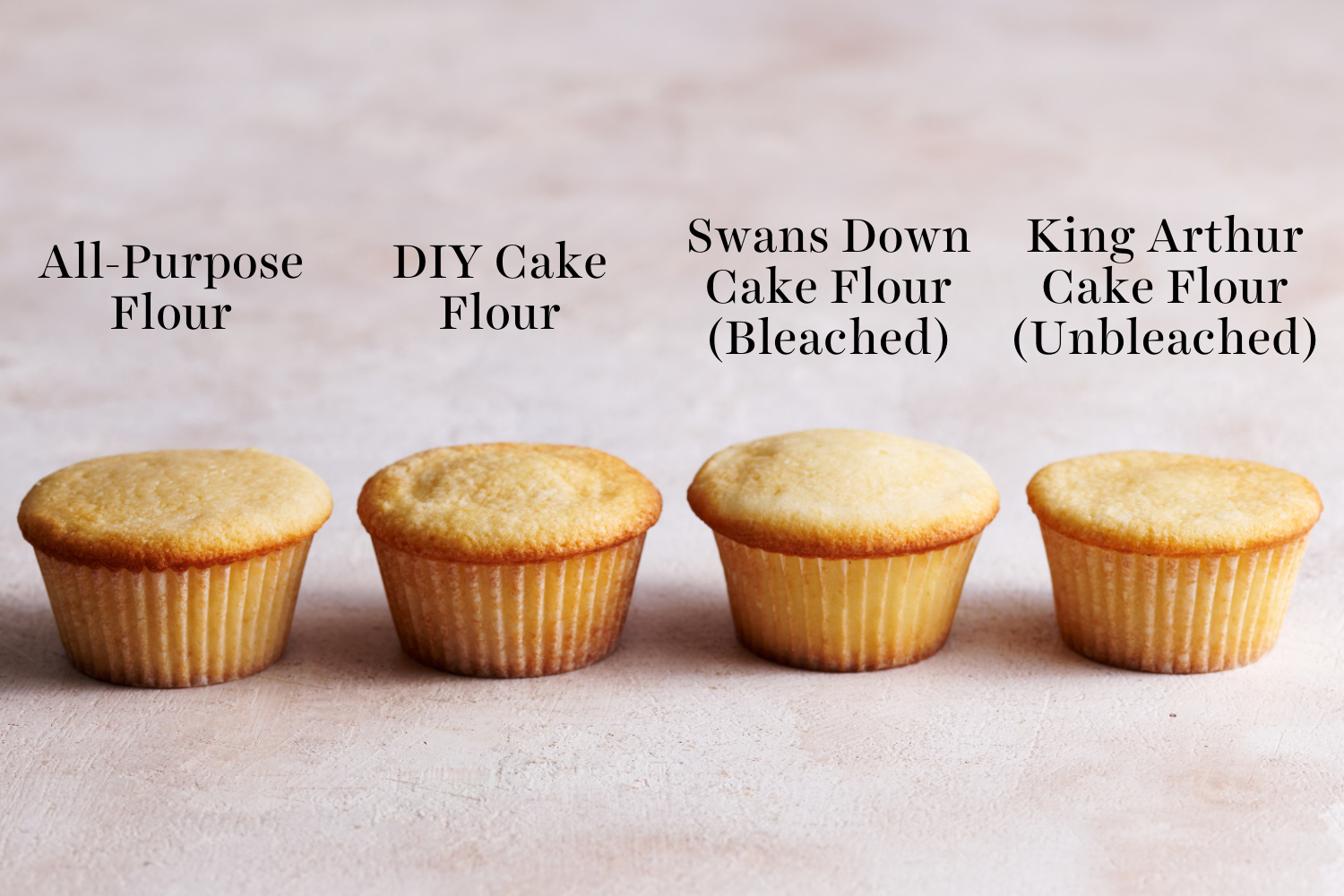
- All-Purpose Flour + Cake Flour: In testing, using only AP flour produced a more muffin-like cornbread-y texture. Using only cake flour made the loaf too delicate and crumbly. The combination gives structure and tenderness. I highly recommend real cake flour (not DIY substitutes). Learn more about cake flour here.
- Granulated Sugar: Do not reduce the sugar. This is a high-ratio cake (more sugar than flour), which creates moisture and a tight crumb. Reducing sugar negatively impacts texture and structure. Learn more about sugar’s role in baking here.
- Fresh Lemon Zest + Juice: The recipe calls for 2 tablespoons zest and 2 tablespoons juice in the batter — plus another tablespoon in the glaze. That’s about 3 large lemons total. This is essential for bold lemon flavor.
- Eggs: Provide richness and structure. Room temperature eggs blend more smoothly into the batter. I have not found a suitable substitute for the eggs.
- Sour Cream: Adds moisture, tenderness, and enhances the tangy flavor. Full-fat plain yogurt works well as a substitute.
- Unsalted Butter: Two full sticks of melted butter give this lemon pound cake its signature buttery flavor and moist texture. Drizzle it in slowly while blending to properly emulsify.
How to Make Lemon Loaf (Step-by-Step):
- Prepare the pan. Grease a 9×5-inch light-colored metal loaf pan and preheat oven to 350°F.
- If using ceramic or glass, reduce the oven temperature to 325°F and increase the baking time by about 10 minutes.
- If baking in an 8.5×4.5-inch pan, add 5 minutes to the baking time.
- Combine dry ingredients. Sift together the cake flour, AP flour, baking powder, and salt. Don’t skip this step!
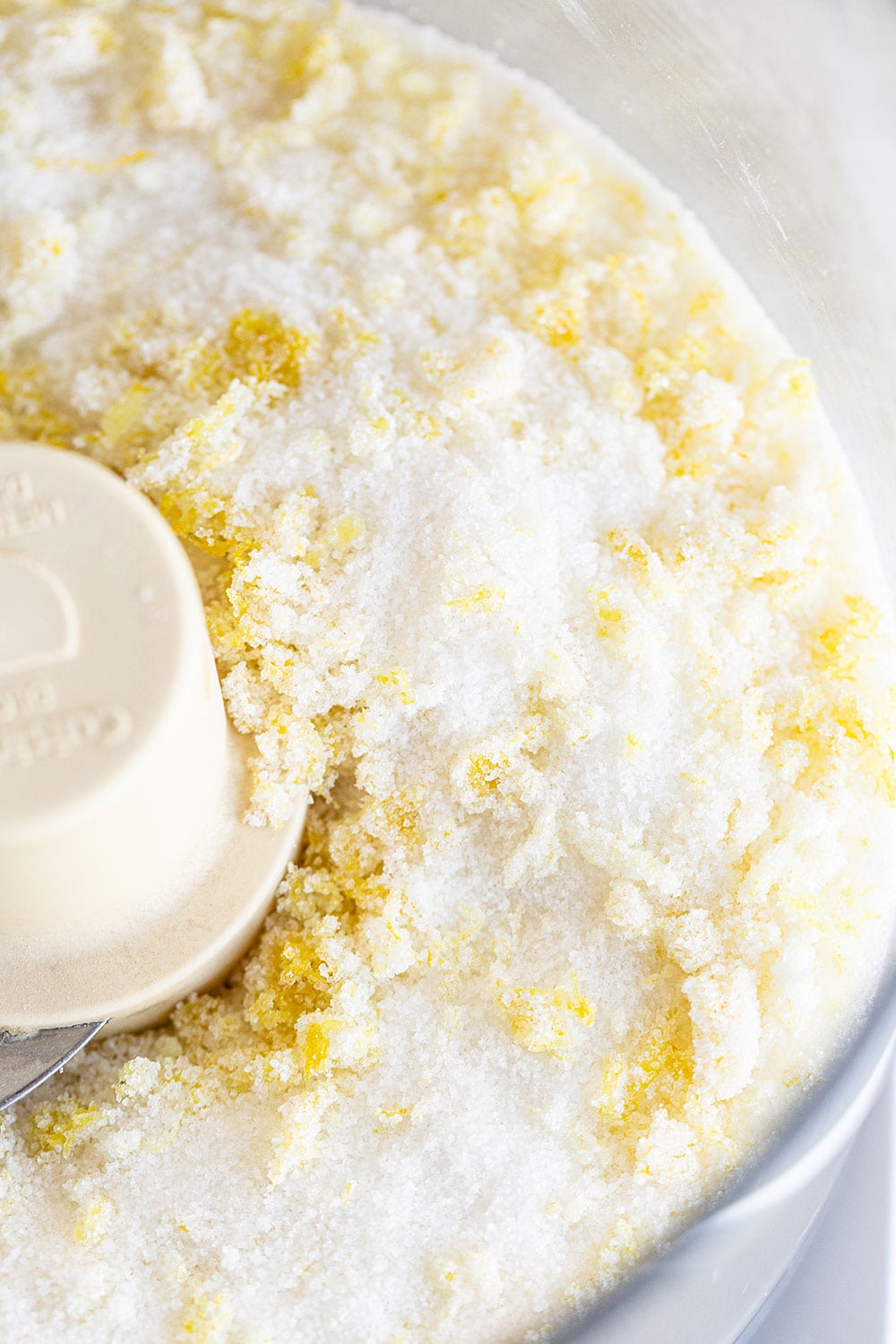
- Build lemon flavor. In a food process or high-speed blender, pulse the sugar and lemon zest. Add the lemon juice, eggs, and sour cream an pulse until combined.
- Emulsify the melted butter. With the machine on low speed, drizzle in the melted butter in a slow, steady stream. This is key to an ultra smooth batter and tight, tender crumb without needing to cream butter and sugar.
- Combine wet and dry. Make a well in the dry ingredients with a rubber spatula, pour in the wet ingredients. Gently fold to combine. Batter will be thin!
- Bake. Pour into the prepared pan and bake for 50 minutes, or until:
- A toothpick inserted into the center comes out with a few moist crumbs.
- An instant-read thermometer registers an internal temperature for 200-205°F.
- Cool properly. Cool in pan for 15-20 minutes. Run a thin, flexible knife around the edges of the pan before inverting onto a wire rack to finish cooling completely.
- Glaze. Whisk together the glaze ingredients until very thick but still pourable. Spoon over the loaf and let set for 15 minutes before slicing or storing. Don’t skip the glaze, it really amplifies the lemon flavor!
Storage & Make Ahead
The cooled, glazed Lemon Pound Cake Loaf can be covered in foil or plastic wrap and stored at room temperature for up to 2 days.
For freeze, wrap the unglazed loaf tightly in plastic wrap and store for 1 month. Thaw overnight in the fridge and then bring to room temperature before glazing. Your loaf will likely develop a moist or tacky surface on top, but the glaze should disguise it nicely.
FAQs
Pound cake is traditionally made with a pound of each of the four main ingredients: flour, butter, eggs, and sugar. While this makes a traditional pound cake recipe easy to remember, it doesn’t always produce the best results. You’ll see my recipe still uses a lot of butter and sugar, but the ratios vary slightly, for the best flavor and texture.
A lemon loaf is a loaf-style cake with a tight, moist crumb similar to pound cake. This version is rich with butter and topped with a lemon glaze, making it both dense and ultra flavorful. It’s like a pound cake and a loaf had a baby.
This recipe uses half all-purpose flour and half cake flour for the best of both worlds. When using only all-purpose flour, the loaf had more of a muffin texture. When using only cake flour, the loaf was too delicate and crumbly.
While you can use only all-purpose flour, I highly recommend using real cake flour for the best texture here. Learn more about cake flour (and why I don’t use DIY substitutes) here.
The heating process changes the flavor compounds. That’s why I use a generous amount of zest and juice, plus a fresh glaze on top to boost the lemon flavor. The flavor will intensify as the loaf sits.
It’s done when a toothpick comes out clean or with a few moist crumbs. For precision, the internal temperature should reach 200–205°F.
Yes. Freeze the unglazed loaf tightly wrapped for up to 1 month. Thaw overnight in the refrigerator and glaze before serving.
Yes. Double all ingredients and bake in a well-greased 10 to 12 cup bundt pan and bake for about 50 to 60 minutes.
OR, use my Lemon Bundt Cake recipe.


Email This Recipe
Enter your email, and we’ll send it to your inbox.
Ingredients
For the cake:
- 3/4 cup (95 grams) all-purpose flour
- 3/4 cup (85 grams) cake flour
- 1 teaspoon baking powder
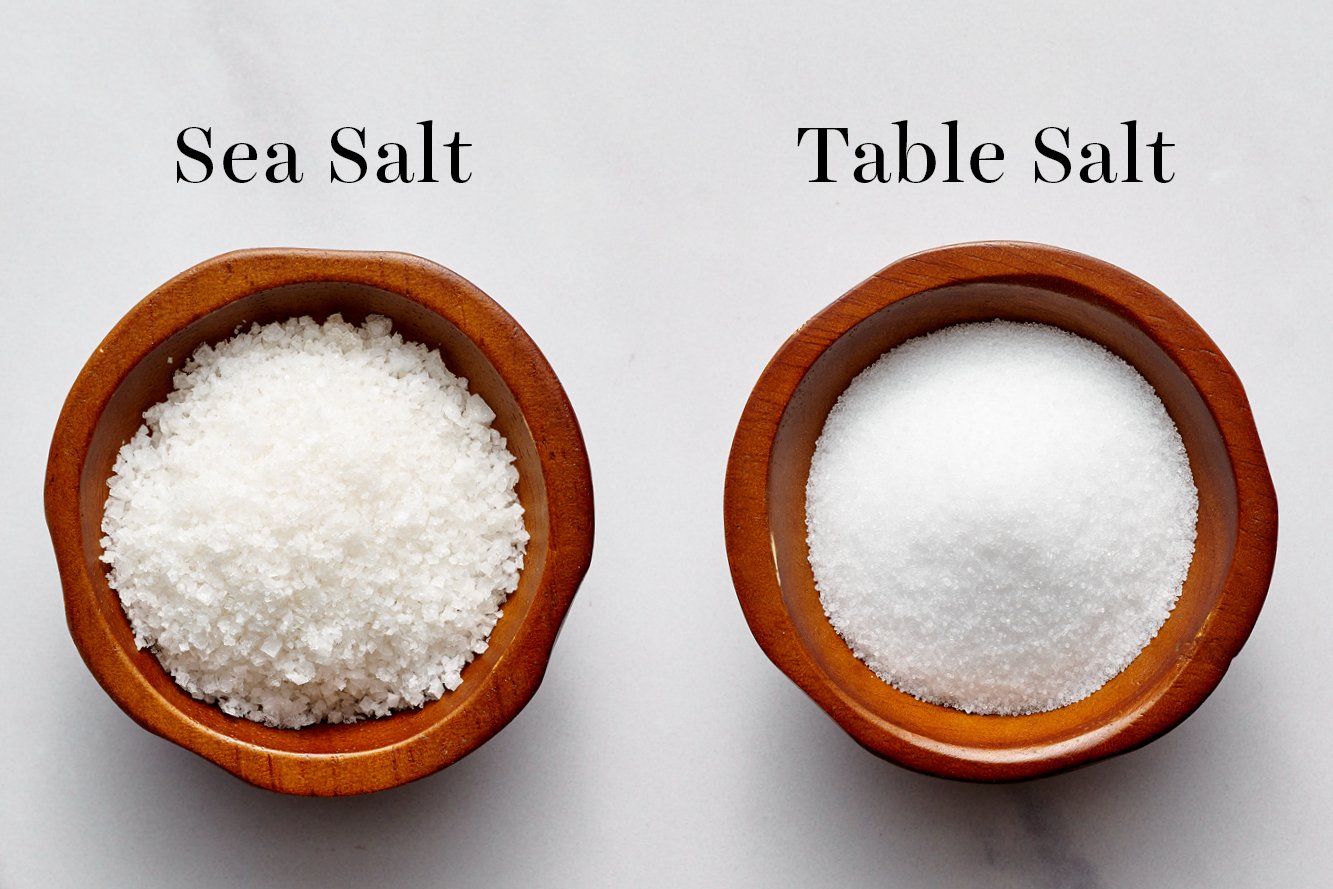
- 1/2 teaspoon fine sea salt
- 1 1/4 cups (250 grams) granulated sugar
- 2 tablespoons fresh lemon zest (from about 3 lemons)
- 2 tablespoons fresh lemon juice (from about 1 lemon)
- 4 large eggs, at room temperature
- 1/4 cup (57 grams) sour cream or plain yogurt, at room temperature
- 2 sticks (227 grams) unsalted butter, melted and cooled
For the glaze:
- 1 cup (125 grams) powdered sugar
- 1 tablespoon fresh lemon juice
- 1 tablespoon milk or cream
Instructions
Make the loaf:
- Preheat the oven to 350°F. Grease a 9 by 5-inch metal loaf pan.*
- In a large mixing bowl, sift together the cake flour, all-purpose flour, baking powder, and salt. Set aside.
- In the bowl of a food processor or high-speed blender, combine the sugar and lemon zest. Pulse a few times to evenly distribute the zest. Add the lemon juice, eggs, and sour cream and pulse until combined. On low speed, gradually drizzle in the melted butter in a slow steady stream until well combined.
- Make a well in the dry ingredient mixture. Pour in the wet ingredients. Mix gently with a rubber spatula until just combined. Batter will be slightly thin.
- Pour mixture into prepared pan and spread evenly. Bake until a toothpick inserted into the center comes out clean or with just a few moist crumbs attached, about 50 minutes if using a metal pan, or once an internal temperature of 200-205°F is reached.
- Cool in pan for 15 to 20 minutes then run a thin flexible knife around the edges before inverting onto a wire rack to cool completely.
Make the glaze:
- In a small bowl, whisk together the glaze ingredients until thick but pourable. Add more juice or milk to thin out or more sugar to thicken to your desired consistency. Spoon over the cooled loaf, letting it drip down the sides if desired. Let set for 15 minutes before slicing and serving.
Notes
More Lemon Desserts You’ll Love:
- Glazed Lemon Cookies – my favorite lemon cookies!
- Lemon Poppy Seed Muffins
- Lemon Cheesecake
- Raspberry Lemonade Cheesecake Bars
- Lemon Yogurt Zucchini Bread
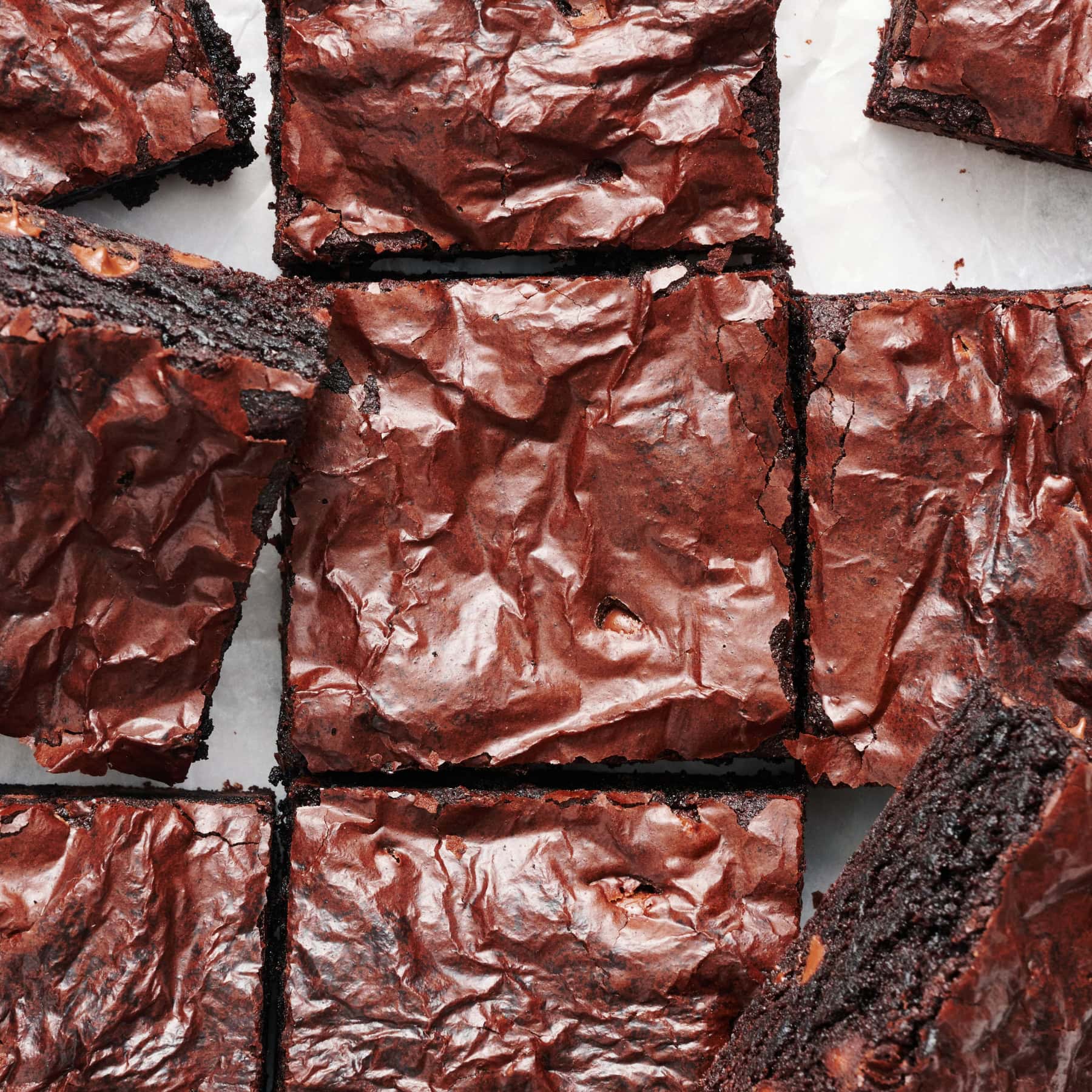
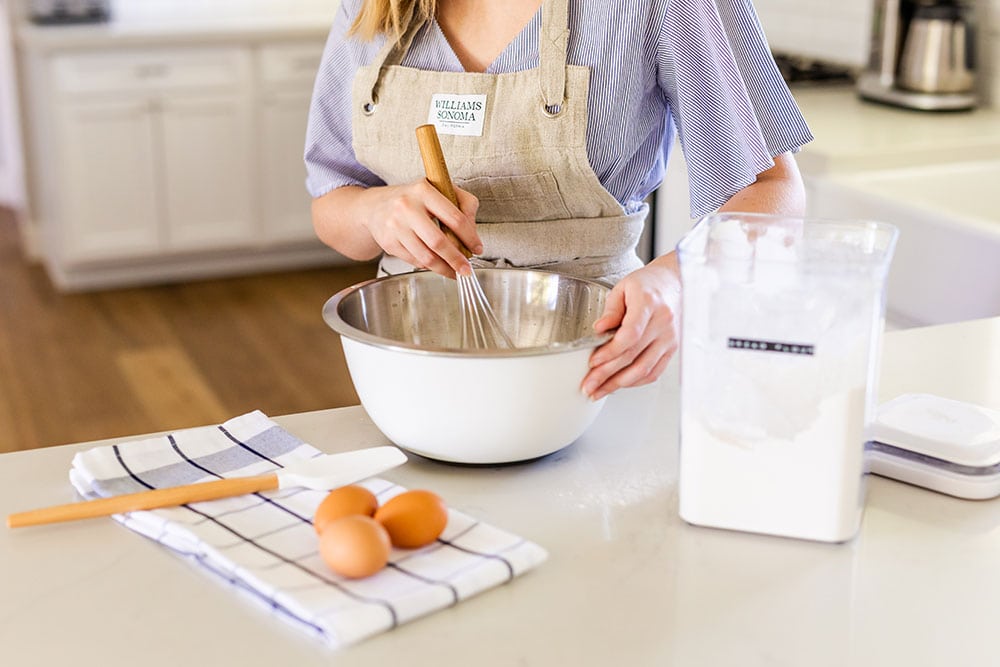


You will not find a better tasting, and best texture lemon loaf. I have made this recipe many times. It is truly the best lemon loaf recipe you will ever make!!!
El mejor panque de limón que he hecho y probado en toda mi vida.
Vale la pena ensuciar el procesador.
Lo hice en un Pyrex cuadrado y salió muy bien con la disminución de temperatura que sugiere la receta.
I would like to make this in 4 mini loaf tins, if possible how much batter, oven temp and for how long
Hi Sue! I’m sorry, but as we haven’t tried that, we can’t say for sure! I would just recommend following Tessa’s instructions (“Bake until a toothpick inserted into the center comes out clean or with just a few moist crumbs attached, or once an internal temperature of 200-205°F is reached”). I hope that helps! Happy baking 🙂
straightforward instructions, delicious result; great job!
I made this and it turned out quite scrumptious. Thank you for sharing the recipe.
Hi Jessica! Yay, I’m so happy to hear that you enjoyed this lemon loaf so much!!
Hi Tessa, thank you for sharing. Lemon Pound Cake looks delicious. The recipe is asking for four eggs. I was wondering if it will work with 3?
Thank you.
Olga.
Hi Olga! We haven’t tested the recipe with only three eggs, so I can’t say for sure! You will definitely lose some of the structure, moistness and tenderization that the extra egg will bring, so I don’t recommend skipping the last egg. I hope that helps!
Would I be able to make this in a bundt tin? And would I need to double the recipe? Looks delish!
Hi Abby! We actually have a lemon bundt cake recipe on our site (linked here)! It’s very similar to this pound cake, but the directions and tips are bundt-specific! Be sure to read all of Tessa’s great tips in the pink box above the recipe 🙂 Happy baking!
Oh great! I’ll give that a go. Thank you!
It looks delicious. Thanks for sharing this recipe.
We hope you give this recipe a try, Baishakhi! You’ll love it!
Honestly the best lemon cake recipe ever! Intense lemon perfection. Moist, not too dense, and the zest in the icing is a game changer. I used all purpose flour, and only had a smaller loaf pan. So I made a mini ramekin with the batter that didn’t fit in the small pan. Came out great! And I got to sample the ramekin while the loaf cooked. Highly recommend!
Yay – so excited to hear that you loved this pound cake, Becca!! I love the idea of a “chef’s sample” with your side ramekin while the loaf finished baking!! 🙂
Hi Tessa,
Can the eggs be swapped to flax? Looking for an eggless recipe 🙂
We haven’t tried that, so I can’t say for sure. Let us know how it goes if you experiment!
Has anyone had any luck making this into individual sized cakes? Like maybe in muffin pans?
Love this recipe. Made it 4 times in one month. The glaze is spot on as well. The only issue I seem to have is this dark brown hard crust along the top edges of the loaf. It gets disguised by the glaze of course and I don’t mind it, but I’m afraid people will think it is overdone when I serve it. Is it part of the charm of the recipe or am I doing something wrong? I bake in a dark metal loaf pan.
Hi Daphne! We recommend using a light colored metal loaf pan for that very reason! Here is Tessa’s favorite loaf pan. Let us know how it goes the next time you make this recipe!
Looks and smells amazing, but it is getting very overdone looking on top and it still has 20 minutes to go! I’m baking in a glass pan, center rack, 325, I just lowered the temp to 300….fingers crossed!
Anyone else baking in a new Samsung? Well, the top was a bit burnt, toothpick came out clean in 2 spots, then the middle fell out when I removed it from the pan and placed it on the cooling rack 20 minutes after pulling from the oven. It must be my oven? It’s a fairly new Samsung. I shaved off the top corners and poured the batter back in the under-belly of the loaf before placing back in the oven. The corners were lemony delicious! Can’t wait to see how the rest of round 2 turns out. I’ve never had so much trouble with a quick bread/loaf cake,
Hi Elizabeth! Oh no, I’m sorry your cake didn’t turn out as it should! If the middle was runny enough to pour, something definitely went wrong here! It could be your oven – do you have an oven thermometer to check that it’s definitely at the temperature it says it is? Check out Tessa’s article here about ovens, full of tips!! If you don’t have an oven thermometer to ensure your oven is at the temperature it says it is, invest in one now! They are inexpensive and really help your baking so much! This oven thermometer is one of Tessa’s favorites.
I also wonder what type of pan you’re using to bake? Glass vs metal pans can make a big difference on the baked result, as Tessa shows in this article here.
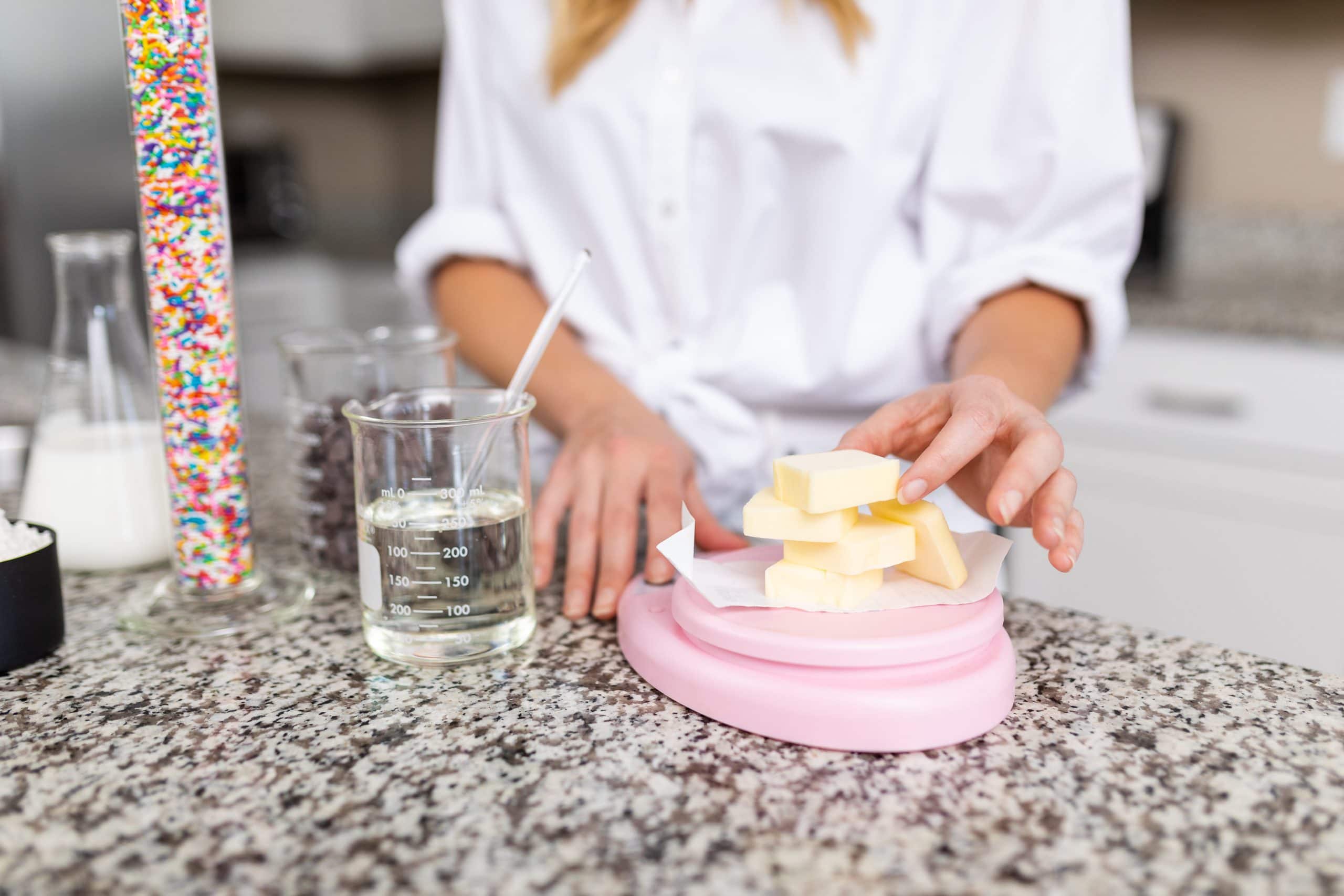
How do you measure your ingredients? By volume (using cups), or by weight (using a digital kitchen scale)? When measuring by volume, it’s so easy to mis-measure flour/sugar/etc and throw off the entire chemistry of a recipe. Tessa talks about how to best measure ingredients to ensure accuracy every time, in this article here!
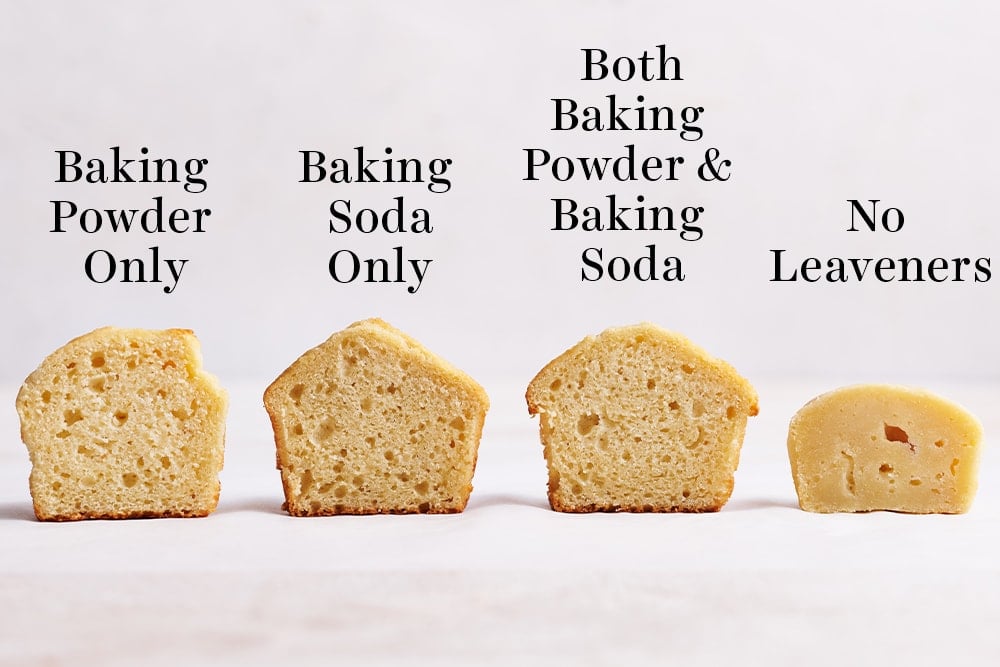
I also want to mention your leavening agent. If your baking/soda powder are not fresh, they won’t do their jobs and your baked goods can not rise properly, fall after baking, and much more. Tessa talks about the science behind leavening agents, and how to test for leavener freshness, in this article here!
Hopefully something here helped! Feel free to reach back out to us with any further questions – we are always happy to help!! 🙂