

Tessa’s Recipe Rundown
Taste: Uniquely balanced with a gentle cocoa backdrop, a hint of tang from the buttermilk and vinegar, and a smooth, buttery sweetness.
Texture: Moist and melt-in-your-mouth soft, with just enough structure to withstand generous layers of frosting.
Ease: Moist and melt-in-your-mouth soft, with just enough structure to withstand generous layers of frosting.
Why You’ll Love This Recipe: It’s a tried-and-true crowd-pleaser and tastes even better than it looks (which is pretty darn good). The red color makes it a great option for holidays like Valentine’s Day, the Fourth of July, or Christmas.
This post may contain affiliate links. Read our disclosure policy.
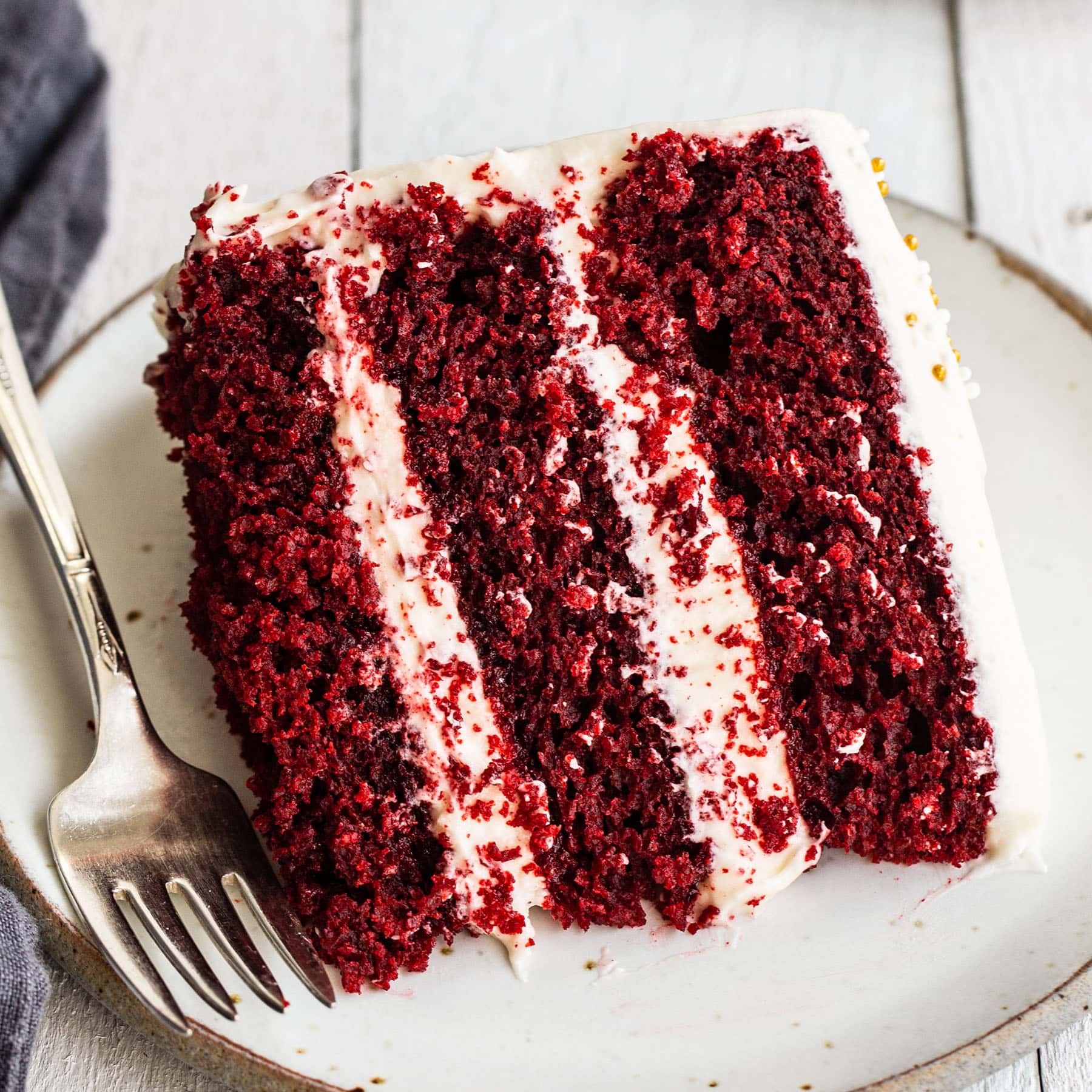
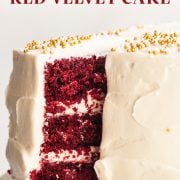
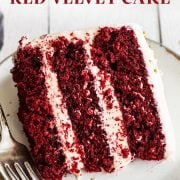
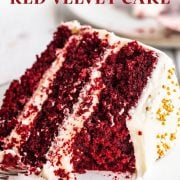
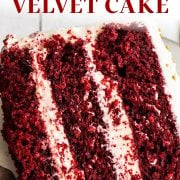
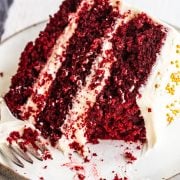
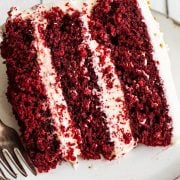
There’s something utterly irresistible about a classic Red Velvet Cake. It feels celebratory but familiar — decadent but never heavy. The combination of cocoa, vinegar, and buttermilk gives it a truly unique flavor.
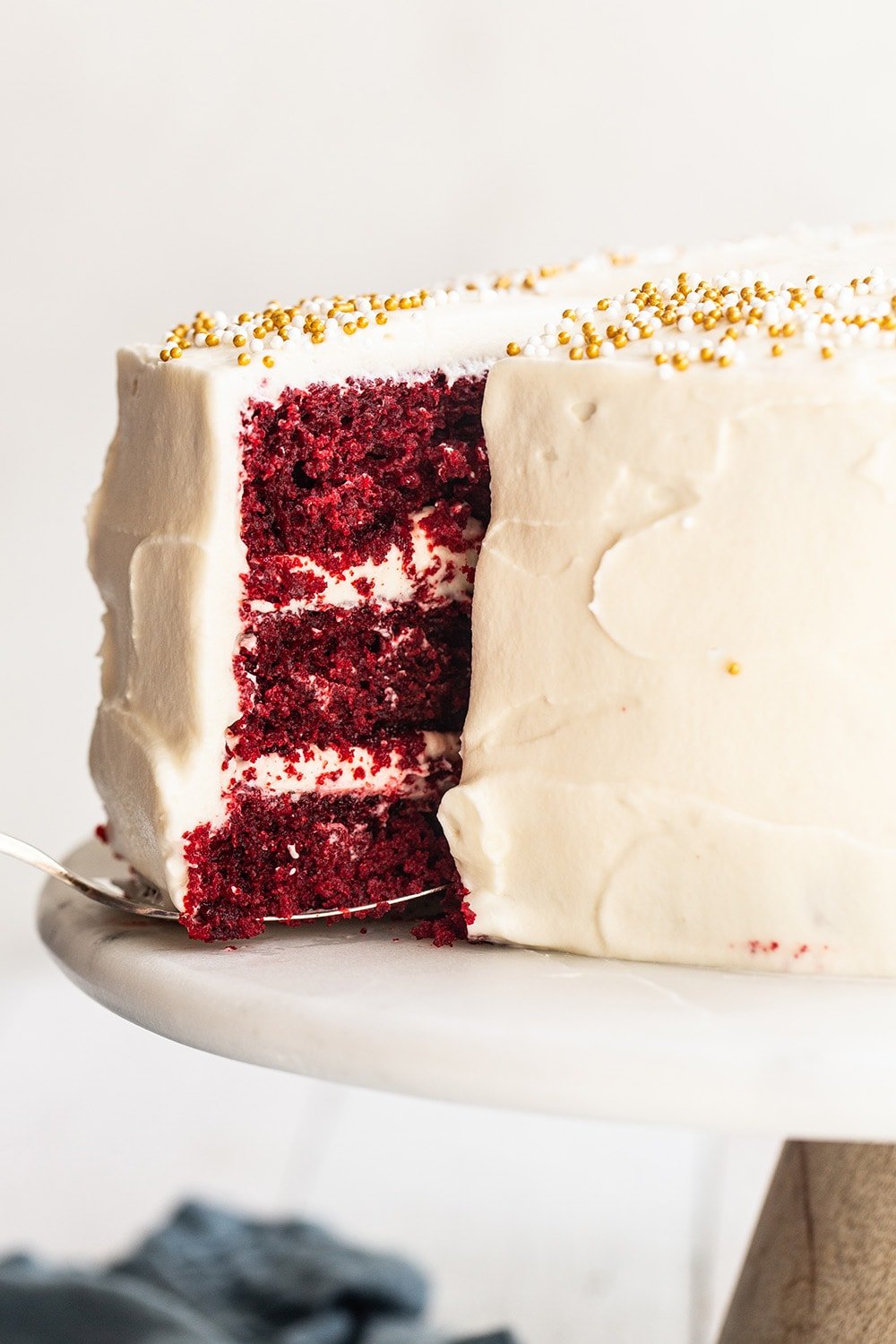
This recipe in particular makes a soft, buttery, and moist cake (the trifecta 😉). If you’ve never made red velvet before, this is the perfect place to start. The batter comes together easily, bakes up beautifully, and stays incredibly soft even after frosting!
Do you want to make cupcakes instead of a cake? Check out our Red Velvet Cupcake recipe.
Reader Love
Great recipe, stays moist and delicious, even stood up to me messing up the way its combined. 🙂
–
Reader Love
I baked this cake for my daughter’s birthday and it was delicious!!!!
–
What You’ll Need
While the ingredient list is on the longer side, each item plays an important role in creating the cake’s signature flavor and texture. Here’s what you’ll need:
- Cream cheese and unsalted butter: Used in the cake and frosting for richness and structure. Make sure both are at room temperature for smooth mixing.
- Dry ingredients (all-purpose flour, baking powder, baking soda, fine sea salt): This combination gives the cake lift and balance. Measure carefully to avoid a dense crumb.
- Sugars (granulated and powdered): Granulated sugar sweetens and moistens the cake, while powdered sugar helps make the smooth, stable frosting.
- Egg and egg yolk: Adds richness and helps create a tender crumb.
- Vegetable oil: Keeps the cake moist even after chilling (butter is not a good substitute).
- Unsweetened cocoa powder: Just enough to give classic red velvet depth without turning it into a chocolate cake.
- Hot coffee (or boiling water): Hot liquid blooms the cocoa, bringing out its full flavor. Water works as a substitute if needed, but coffee is preferred. (My Best Chocolate Cake is another delicious coffee-infused cake!)
- Buttermilk: Buttermilk helps create the tenderness and flavor. I don’t recommend substituting it, but whole milk can work in a pinch with slightly different results.
- Distilled white vinegar and vanilla extract: This recipe uses small amounts to balance the sweetness and activate the leavening process.
- Red gel food coloring: I recommend using gel food coloring over natural or liquid options. I use the Americolor or Chefmaster brands!
- Ground cinnamon (optional): This adds a subtle warmth and enhances the cocoa without being overpowering.
Helpful Tools
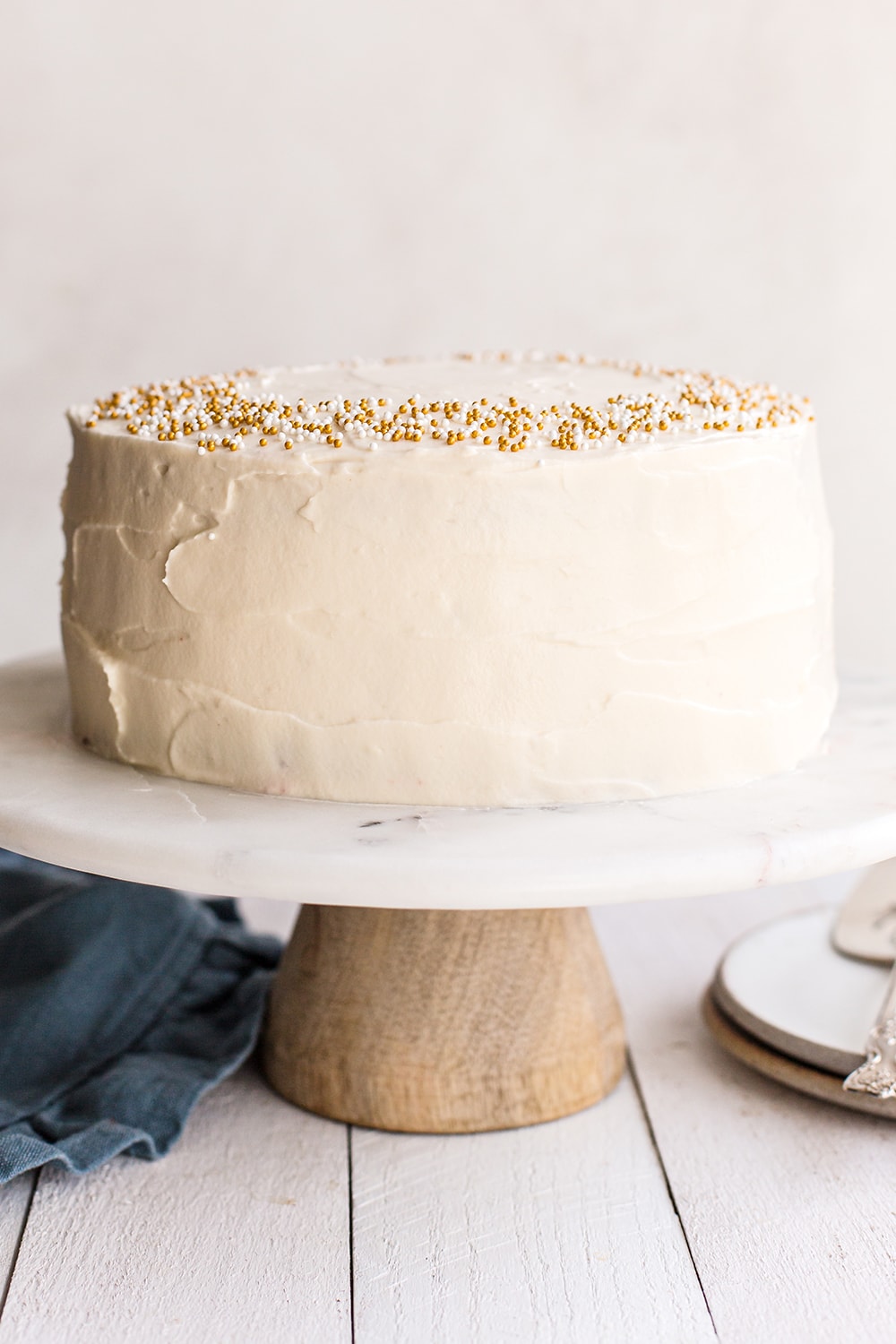
This red velvet cake recipe uses three 8-inch cake pans, which bake the layers evenly and give the intended cake height. Light-colored aluminum pans (like Fat Daddio’s) work best, while darker nonstick pans can cause the edges to overbake.
If needed, two 9-inch pans can work as a substitute. Fill each pan about ¾ full and increase the baking time by 5-10 minutes.
Some tools are optional but helpful:
- Parchment paper rounds
- Offset spatula or plastic side scraper (for smooth frosting)
- Turntable (makes frosting easier)
- Fine mesh sieve (for sifting cocoa or powdered sugar)
The Perfect Frosting
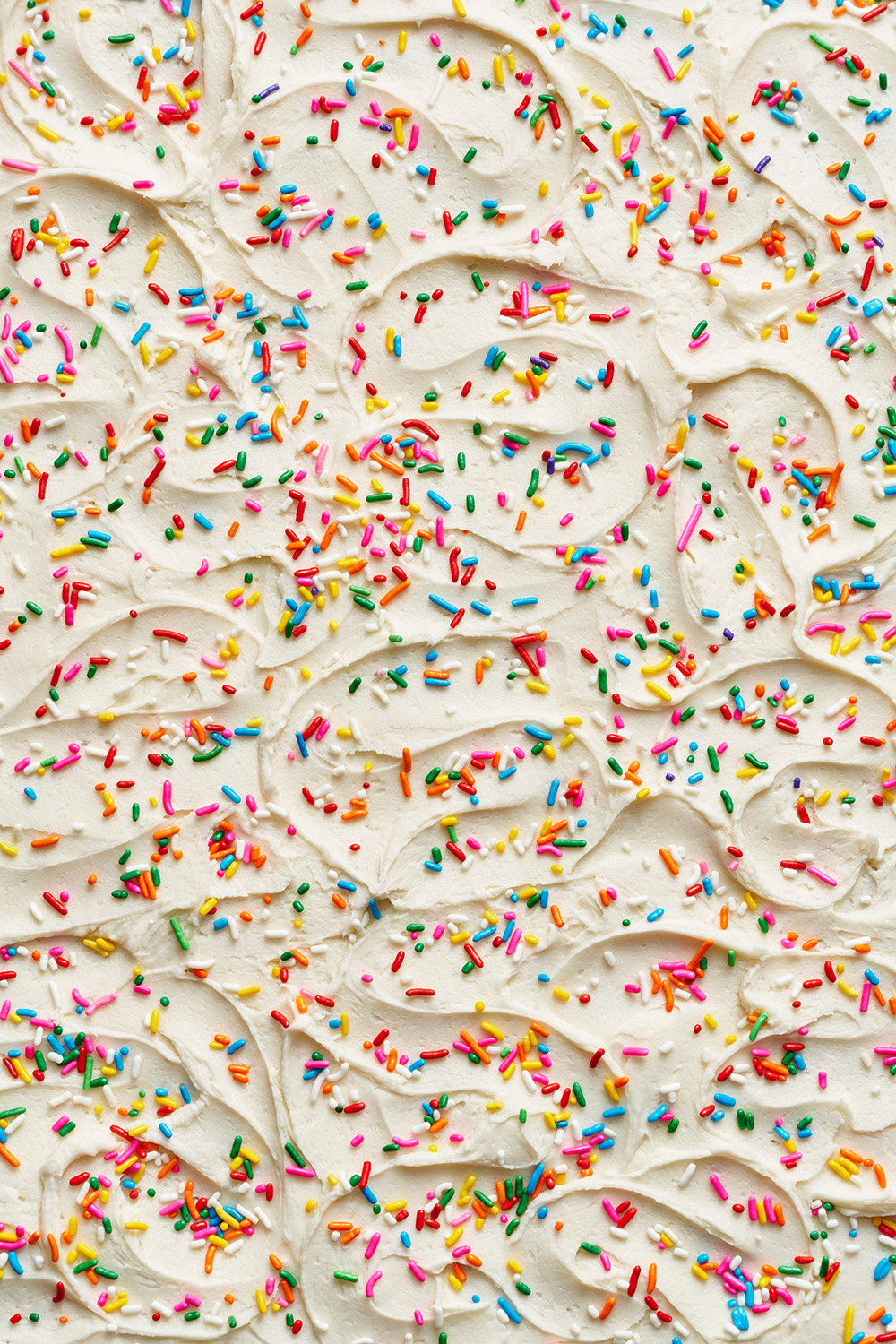
Cream Cheese Frosting is the go-to for red velvet cake because its tangy flavor complements the cake’s sweetness so well. This is the same frosting I use on my Red Velvet Cookies, and it works just as beautifully on layered cakes.
For something more sturdy or to add more detailed cake decorations, try my Best Buttercream Frosting instead.

Sprinkle of Science
How to Make Red Velvet Cake
This recipe comes together with a bit of whisking and a few simple details that make all the difference. Follow the steps below for soft, evenly baked layers and a deliciously classic cream cheese frosting.
1. Bloom the Cocoa and Mix the Dry Ingredients
In a heatproof measuring cup, whisk together the coffee and cocoa powder until smooth and well combined. Set it aside to bloom.
In a separate bowl, whisk together the flour, baking powder, baking soda, salt, and cinnamon.
2. Mix the Wet Ingredients
In a large bowl, whisk together the sugar, vegetable oil, and melted butter until combined. Add in the eggs and egg yolk and whisk until smooth.
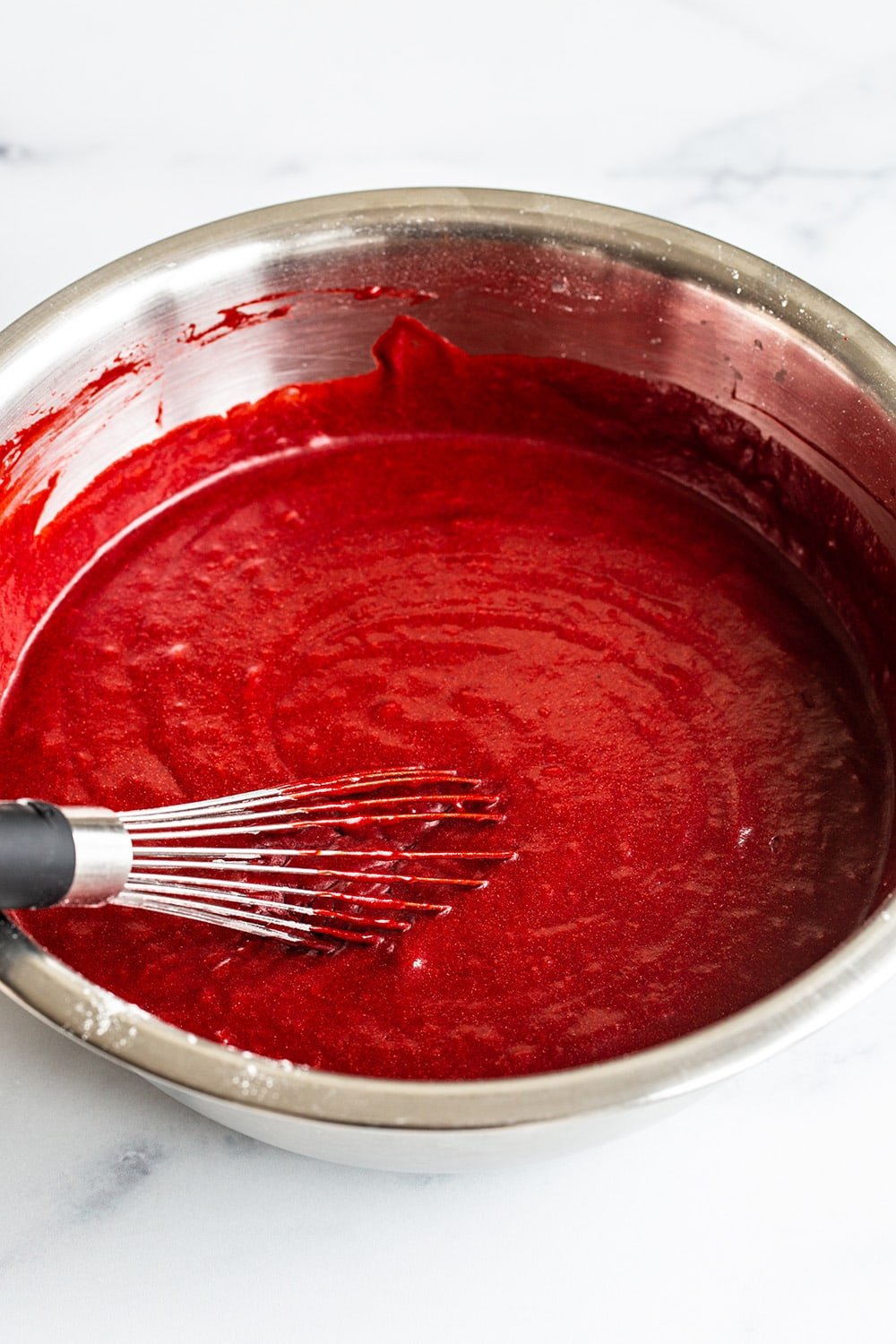
Whisk in the buttermilk, vanilla, and red food coloring until fully incorporated, then whisk in the vinegar and the coffee-cocoa mixture.
3. Combine the Batter
Using a fine mesh sieve, sift the dry ingredients into the wet mixture in three additions, gently whisking after each addition until just combined. Avoid overmixing here.
4. Bake the Cake Layers
Divide the cake batter equally between the prepared pans. Tap the pans gently against the counter a few times to release any air bubbles before baking.
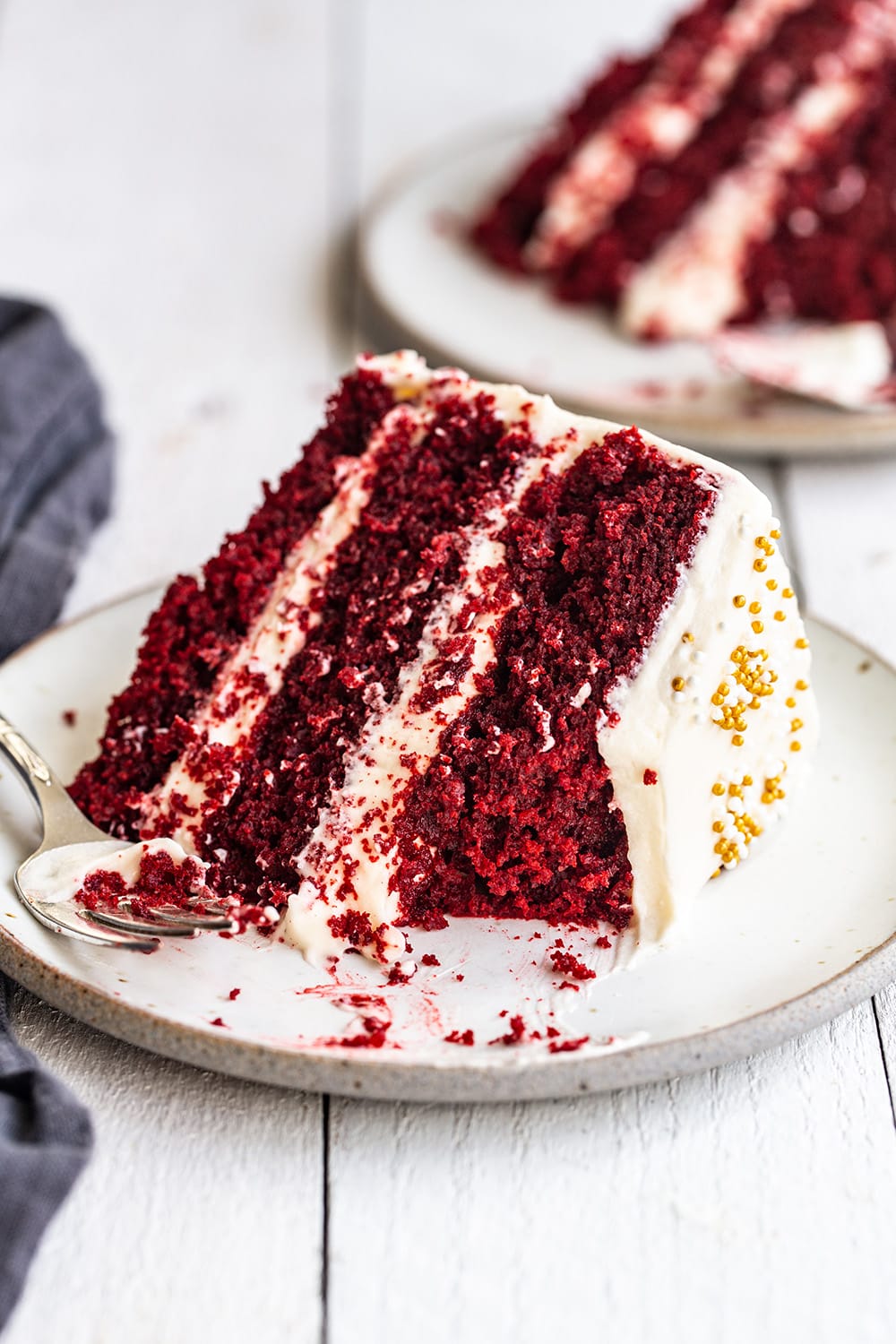
Bake for 25 to 30 minutes, or until a cake tester or toothpick inserted into the center comes out clean. Place the cake pans on cooling racks. Once cool enough to handle, run a thin knife around the edges, invert the cakes, and let them cool completely.
5. Make the Cream Cheese Frosting
Using the paddle attachment of an electric mixer, beat the cream cheese and butter on medium-high speed until smooth and creamy, scraping down the sides of the bowl as needed. Add the vanilla, then gradually mix in the powdered sugar on low speed and beat until fluffy.
6. Assemble the cake.
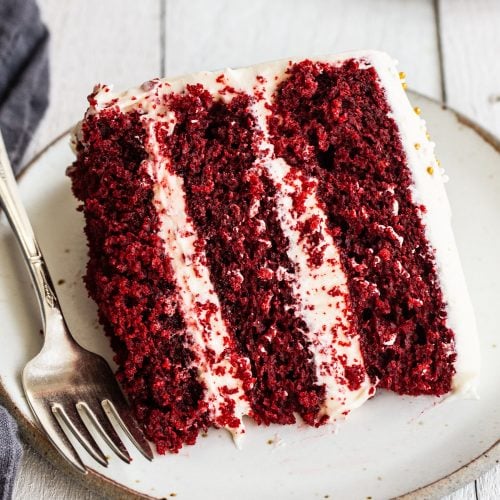
Place one cake layer, flat-side up, on a cake plate or pedestal. Tuck strips of parchment under the edges to keep the plate clean. Spread about one-third of the frosting over the first cake layer, then top with the second layer and repeat the process. Add the final cake layer, flat-side up, and use the remaining frosting to ice the top and sides of the cake.
Tessa’s Tip
Don’t overbake this layer cake! Even a few extra minutes can dry out the layers and dull the signature soft, velvety texture. Start checking for doneness early and pull the cakes as soon as a toothpick comes out clean.
Storing and Freezing
- Storing: The cream cheese frosting for this cake will spoil if left out for extended periods. Store the cake, covered, at room temperature for up to 6 hours, then refrigerate for up to 3 days.
- Freezing: For longer storage, freeze the cake for up to 2 months. Chill until the frosting is firm, then wrap tightly in plastic wrap or place in an airtight container. If freezing the cake whole, thaw it overnight in the refrigerator before serving. Thaw individual slices in the fridge or at room temperature for 1-2 hours.
- Make-ahead: To prepare in advance, wrap the uncut, cooled cake layers tightly in several layers of plastic wrap and place in a freezer bag or airtight container. Store cake layers at room temperature for up to 4 days or in the freezer for up to 2 months. Thaw overnight in the refrigerator.
Note: A fully frozen, well-sealed cake is still safe to eat after extended freezing (like for an anniversary bite), but some quality loss is normal. Over time, moisture migrates out of the cake, resulting in a drier, slightly spongy texture. The frosting may become grainy or weepy once thawed, and freezer odors may develop.
More Cake Recipes You’ll Love
Looking for more tried-and-true cakes? Browse some of my favorite cake recipes below, perfect for birthdays, holidays, and special occasions.
FAQs
What does red velvet cake actually taste like?
Red velvet cake is buttery, moist, and plush, with a soft, airy crumb. It has a mild chocolate flavor and subtle tang that gives it more depth than a standard vanilla cake.
Is red velvet cake basically a chocolate cake?
Not at all — it’s got a personality all its own! Unlike chocolate cake, red velvet cake uses only a small amount of unsweetened cocoa powder. It’s just enough to add color and depth, but let the other flavors shine through. The tangy ingredients help balance the sweetness and truly set it apart.
For a red velvet recipe that’s on the more chocolatey side, try my Chocolate-Stuffed Red Velvet Cupcakes!
Why is vinegar used in red velvet cake?
Vinegar enhances the subtle tangy flavor that makes red velvet cake distinct, while also playing an important role in the cake’s texture. It reacts with the baking soda, alongside the buttermilk and cocoa powder, to help create soft, tender layers.
What’s the secret to keeping red velvet cake moist and fluffy?
A few key elements work together to create that perfectly moist and fluffy crumb. Oil keeps the cake moist even after chilling or refrigeration, and the tiny bit of cocoa ensures it doesn’t dry out.
Be careful not to overmix the batter, as this can prevent the crumb from turning out tender and light.
Can I turn this recipe into cupcakes?
You can, but for the best results, I recommend using my Red Velvet Cupcakes recipe! It uses the same base flavors as this cake, with a few small adjustments to ensure the cupcakes bake evenly.
Red Velvet Cake

Email This Recipe
Enter your email, and we’ll send it to your inbox.
Ingredients
For the cake:
- ½ cup of plain hot coffee or boiling water
- ¼ cup (21 grams) unsweetened natural cocoa powder
- 2 ¼ cups (279 grams) all-purpose flour
- ½ teaspoon baking powder
- 1 teaspoon baking soda
- 1 teaspoon salt
- ¼ teaspoon ground cinnamon, optional
- 2 cups (400 grams) granulated sugar
- ½ cup (109 grams) fresh vegetable oil
- 1 stick (113 grams) unsalted butter, melted
- 2 large eggs, at room temperature
- 1 large egg yolk, at room temperature
- 1 cup buttermilk, at room temperature
- 2 teaspoons vanilla extract
- 3 teaspoons red gel food coloring, plus more if needed*
- 1 teaspoon distilled white vinegar
For the cream cheese frosting:
- 16 ounces (454 grams) cream cheese, at room temperature
- 2 sticks (227 grams) unsalted butter, at room temperature
- 2 teaspoons vanilla extract
- 4 cups (500 grams) powdered sugar, sifted
Instructions
For the cake:
- Preheat oven to 325°F and line three 8-inch round cake pans with parchment rounds.
- Spray parchment and sides of pans generously with nonstick cooking spray.
- In a glass measuring cup, whisk the hot coffee and cocoa powder together, then cover and let stand for 5 minutes.
- In a medium mixing bowl, whisk together the flour, baking powder, baking soda, salt, and cinnamon.
- In a large mixing bowl, whisk together the sugar, vegetable oil, and melted butter. Add in the eggs and egg yolk and whisk for around twenty seconds (or until very well combined). Add in the buttermilk, vanilla, and red food coloring and whisk to combine. Whisk in the vinegar and coffee mixture.
- Using a fine mesh sieve, sift the flour mixture into the batter in three additions, whisking until each addition is incorporated.
- Divide the batter equally between the prepared pans, then tap the bottoms of the pans against the counter several times to release any air bubbles.
- Bake for 25 to 30 minutes, or until a cake tester or toothpick inserted into the center comes out clean.
- Place the cake pans on cooling racks, and when they’re cool enough to touch, run a thin knife around the edges of the pans to loosen the cakes. Invert onto the wire racks and let cool completely.
For the frosting:
- In the bowl of a stand mixer (fitted with the paddle attachment), beat the cream cheese and butter on medium-high speed until very light, creamy, and smooth.
- Scrape down the bottom and sides of the bowl to ensure no clumps remain. Then, add the vanilla and beat until well combined.
- On low speed, gradually add the sugar and beat until fluffy (about 3 minutes). If the frosting is too thick, add a splash of milk or cream to thin it out. If it’s too thin, add more sifted powdered sugar.
To assemble:
- Lay one cake layer flat-side up on a cake plate or pedestal. Tuck in strips of baking paper under the cake edges to keep the plate clean.
- Use about a third of the frosting to fill the bottom cake layer, then top with the second cake layer and repeat.
- Place the final cake layer flat-side up and use the remaining frosting to ice the whole cake.
Recipe Notes
This post was originally published in 2013 and updated in 2022 with recipe improvements and new photos. Photos by Ashley McLaughlin.










Can you use 8 inch foil cake pans? It’s hard to find 8 inch pans. Just wondering if you’ve ever used to foil pan?
Hi Connie! We haven’t tested this recipe using foil cake pans, but I’d imagine they’d work fine, just make sure you still use parchment paper and grease the pans well so the cakes don’t stick. While we recommend using these 8×3-inch cake pans, this specific cake recipe doesn’t rise too much, so a slightly shorter pan should work ok – I’d suggest placing the pans on a rimmed baking sheet though just to be safe! You can also make this recipe into cupcakes if you’d rather not experiment. Check out the pink tip box above the recipe for more details. Let us know what you think of this recipe when you give it a try 🙂 Good luck!
Tessa ,Could either a strawberry ,or cherry ginache be used for both the filling & the icing ?
( Dairy is aAsthma Trigger for me )
Hi Juliet! We haven’t tried anything like that, so we can’t say for sure! Let us know how it goes if you try that 🙂
Know it’s not ideal but can I use a 9 x13 cake pan ?
Hi Ashley! We haven’t tried that ourselves, but other readers have done this with much success! Let us know how it goes 🙂
Hi there. My son’s favorite cake is red velvet, which I plan to make for his birthday. However, we have an elderly family member who cannot consume red dyes at all. Can I bake this without the red dye?
Hi Patricia! We haven’t tried that, so I can’t say for sure, but it shouldn’t really change anything but the appearance of the cake, so leaving out the food coloring entirely should be just fine. Let us know how it goes! Happy baking 🙂
Thanks very much for the best Red velvet recipe this is what I was really looking for
Hello! I have made this cake 2 times and wondered if I could use regular red food coloring and how much for the recipe if so? It’s hard to find just a red gel food coloring since we have to buy a 4 back of other colors just to get that 1! Thanks!
Hi Leigh! No, we don’t recommend using regular food coloring in this recipe. You would need so much of it to bring the same level of color, and that adds a substantial amount of liquid to the cake that will alter the flavor and texture of the cake. Tessa linked a couple gel colors in the pink tip box above the recipe – those are available on Amazon (and aren’t part of a pack!), so you can always get them shipped to your house whenever you plan to make this cake 🙂 I hope that helps! Happy baking!
Hello! This looks amazing. Can cake flour be used instead of AP?
Hi Rachel! Tessa wrote this recipe specifically using all-purpose flour, so we haven’t tried it with cake flour instead. We recommend sticking with all-purpose flour for best results, but let us know how how it goes if you give cake flour a try! 🙂
This was the cake that saved Valentine’s day!! Back in February, my mom had ordered a RV cake from someone to take to a work gathering, when she got it the day before she was stunned to see it was just a little bit bigger than a cupcake!!!! I’m not exaggerating… she had invited so many coworkers and what she got barely fed 2 people. She was so sad so I decided to make this for her, thankfully I was only missing like 2-3 ingredients. She bought them while I got off work, I clocked out at 10pm and I started making this!! It paid off because everyone LOVED IT! They asked me to make it again and so this week I finally did and again, it was a hit! Tessa wrote in an IG post once that this is the recipe for people that don’t like red velvet and it’s so true. Even my dad who does NOT like red velvet at all is OBSESSED with this one. Had to tell him to take it easy because he could eat one all by himself.
Hi! What brand of buttermilk do you use? (I’m in the USA) and I only see low fat buttermilk options at my store. Could you help expand on whether that’s okay/ suggest a brand?
Hi Shriya! Most commercially available buttermilks are made with low-fat milk and are therefore low-fat buttermilks. That’s okay – that’s what we used to create and test this recipe. I’ve personally found full-fat buttermilk products here and there at Walmart/Target, but when we test our recipes, we use the low-fat stuff because it’s much more widely available and will bring great flavor and texture to this cake. Brands vary across the country, so it’s hard to recommend one brand, but any buttermilk should work great. Let us know how it goes 🙂
I’ve made this a few times and it is so delicious! Although I just made it again and something weird happened. the top of the cakes got very crispy and took forever to cook. Any idea what went wrong?
Hi Jackie! I’m sorry your cakes suddenly started baking so strangely! Here are a few ideas as to what may have gone wrong:
– How do you measure your ingredients? By volume (using cups), or by weight (using a digital kitchen scale)? When measuring by volume, it’s so easy to mis-measure ingredients (particularly flour) and throw off the entire chemistry of a recipe. Check out Tessa’s article here, where she talks about how to best measure ingredients to ensure accuracy every time.
– How old are your leavening agents? If your baking soda/powder are not fresh, they won’t do their jobs and your baked goods can not rise properly, fall after baking, and much more. Tessa talks about the science behind leavening agents, and how to test for leavener freshness, in this article here!
– Your oven might be running a little cold. Do you have an oven thermometer to check that? Check out Tessa’s article here about ovens, full of tips!! If you don’t have an oven thermometer to ensure your oven is at the temperature it says it is, invest in one now! They are inexpensive and really help your baking so much. This oven thermometer is one of Tessa’s favorites.
I hope something here helped, Jackie! Let us know if you have any follow-up questions – we’re always happy to help! 🙂
Has anyone used this recipe with powder based food coloring? I just tried it as I’m baking it now. I peeked at the cakes and my only fear at the moment is them not rising enough. I did two 8” layers.
I made this for a friend’s birthday which happened to be Canada Day. Perfect for both occasions. It was so moist and the perfect red colour. I thought 4 cups of icing sugar would be too much, but it was just the right amount of sweetness. Will definitely make it again.
Let me begin by stating that i have never left a review before. But with this recipe I felt I must.
I own a bakery, and have for 5 years, however, for several years I’ve been searching and experimenting for a red velvet cake recipe that I loved. It is very important to me that my cakes are moist with a good flavor. Today I decided to try this recipe, I decided it would be my last attempt and if it was still dry and flat. I would give up.
I have just finished this recipe, I decorated the cake with my own cream cheese recipe and tasted it. It is PERFECT and will be my only go to red velvet recipe from here on. It is moist, perfectly fluffy, with an excellent flavor; I absolutely love how the coffee enhances it.
If you haven’t made this yet, please do so ASAP, but be warned, it’s very addicting!
Yay! So thrilled to hear that you loved this red velvet cake recipe, Kaylee! Thank you so much for your lovely comment 🙂