






Tessa Arias, Chef and Cookbook Author
This post may contain affiliate links. Read our disclosure policy.
A question I get asked frequently is, “Can I use less sugar in this recipe?”.
A common misconception about sugar is that its only role in baking is to add sweetness to a recipe. Sugar actually does a whole lot more in baking than most people know. In fact, reducing or substituting the sugar can create unexpected adverse results in your baking!
Let’s dive into the function of sugar in baking!
Quick disclaimer: this post is intended to give insight into the science of sugar’s role in baking. It is not intended to serve as a guide for people who must reduce sugar intake due to medical diagnoses or for weight loss. Here at Handle the Heat, we use sugar, dairy, eggs, and wheat in the majority of our recipes and fully believe dessert is an important part of enjoying life!
What is sugar?
In most baking recipes, you’ll find sugar either in the form of granulated (white) sugar, brown sugar, or powdered (confectioners’ sugar).
These are considered refined sugar products and are typically made by processing sugar beets or sugar cane into pure sucrose (the chemical name for sugar). There are other chemical forms of sugar, such as fructose (fruit sugar) and lactose (milk sugar).
Sugar is simply a carbohydrate.
Quick tip: learn to make your own brown sugar here!
What are the functions of sugar in baking?
Simply put, sugar provides a lot more than a sweet flavor in baking.
It actually contributes a moist and tender texture to many baked goods. When creamed with butter and sugar, it can also assist in leavening recipes like cakes for a light and fluffy texture. Sugar is also involved in the processes of caramelization and Maillard browning which impact both flavor and texture.
Sugar can also reduce iciness and hardness in frozen desserts and even prevent microbial growth (in some cases sugar acts as a sort of preservative!).
This is why altering the sugar in a recipe can have unexpected consequences!
What happens if you decrease the amount of sugar called for in cookies?
In sugar cookie baking, sugar works with the other ingredients to contribute sweetness, moisture, chewiness, and spread.
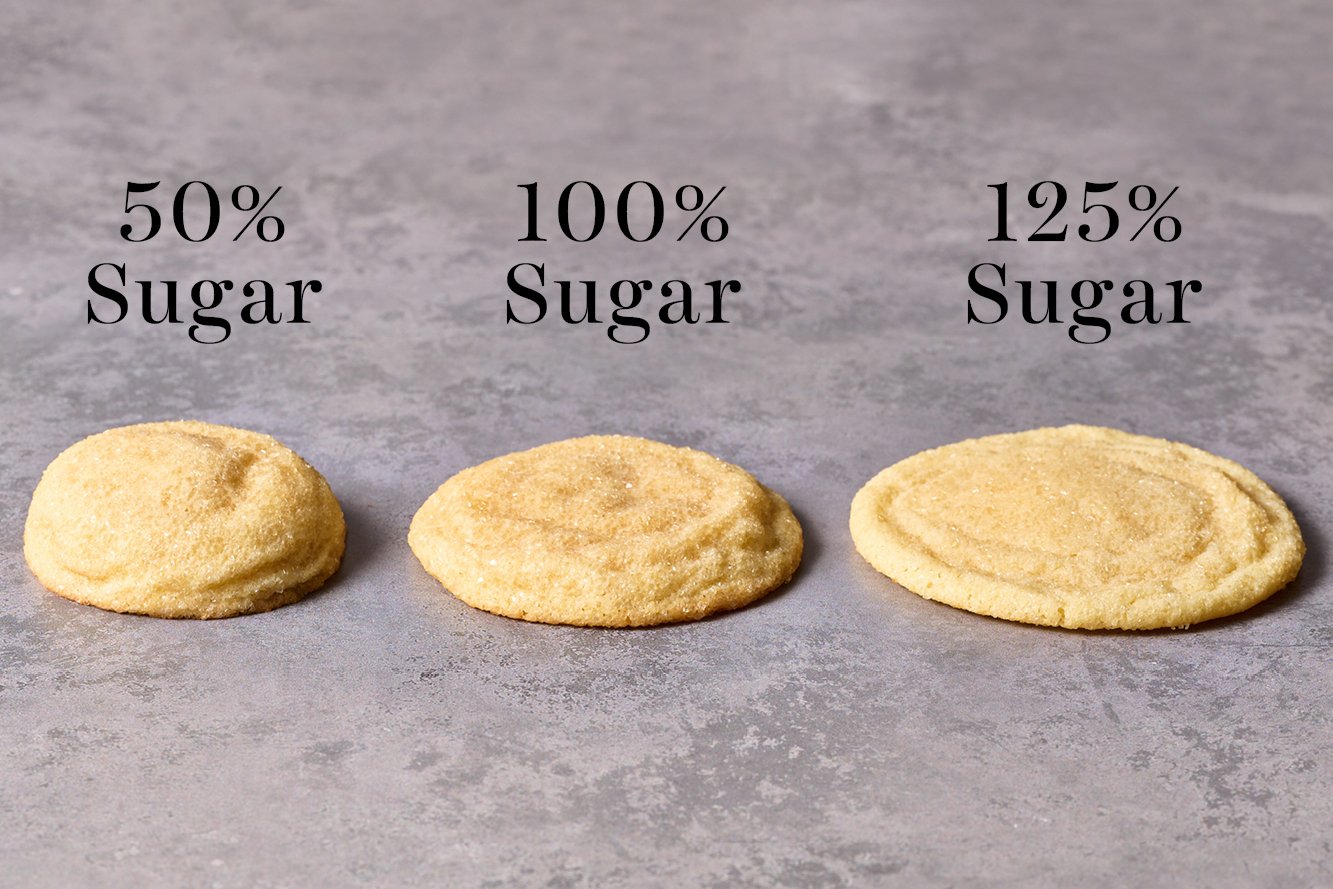
We recently experimented with my Soft & Chewy Sugar Cookies recipe to see the effects of decreasing the amount of sugar called for by fifty percent.
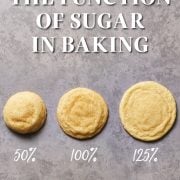
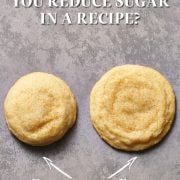
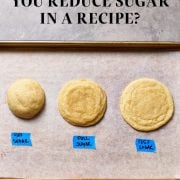
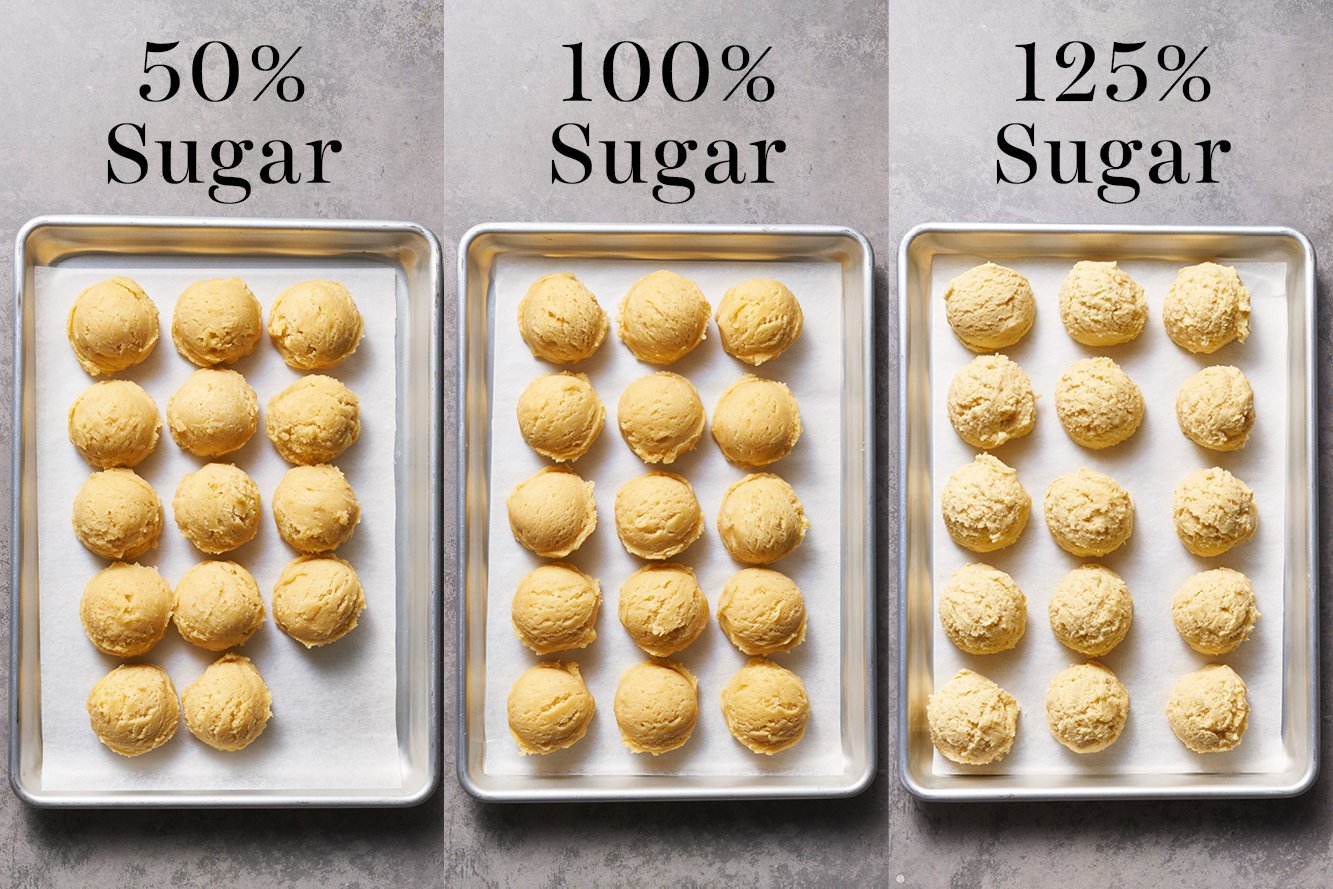
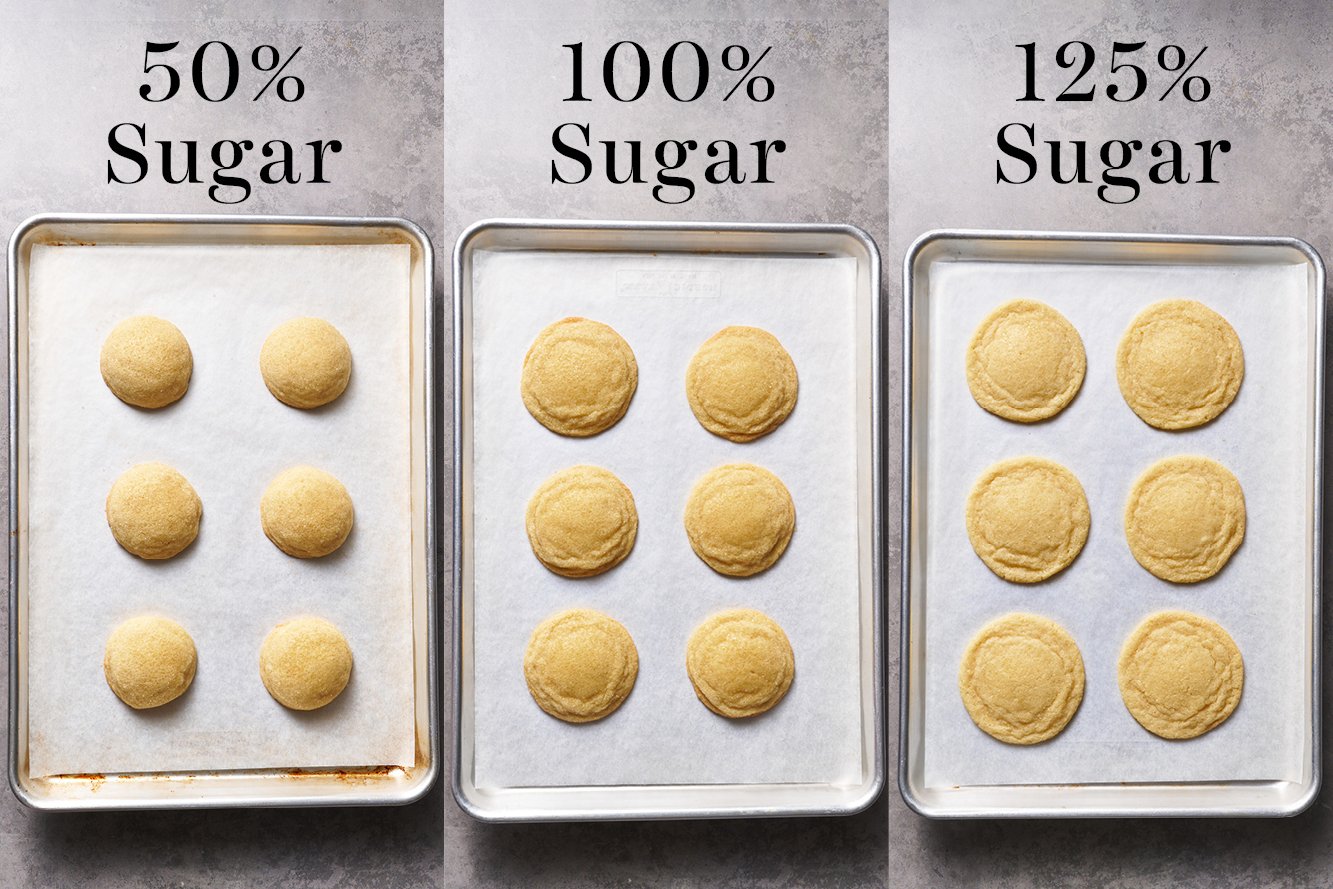
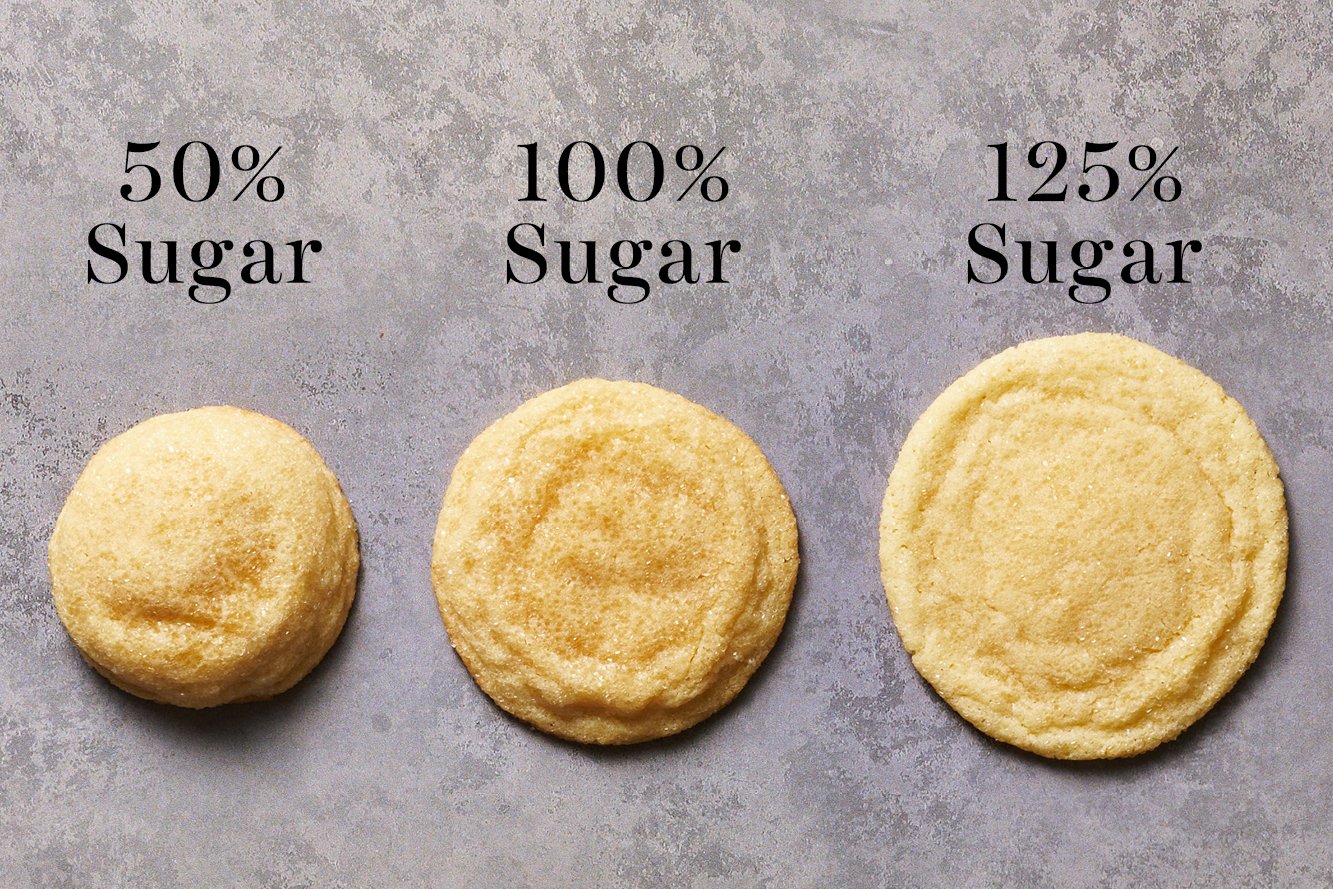
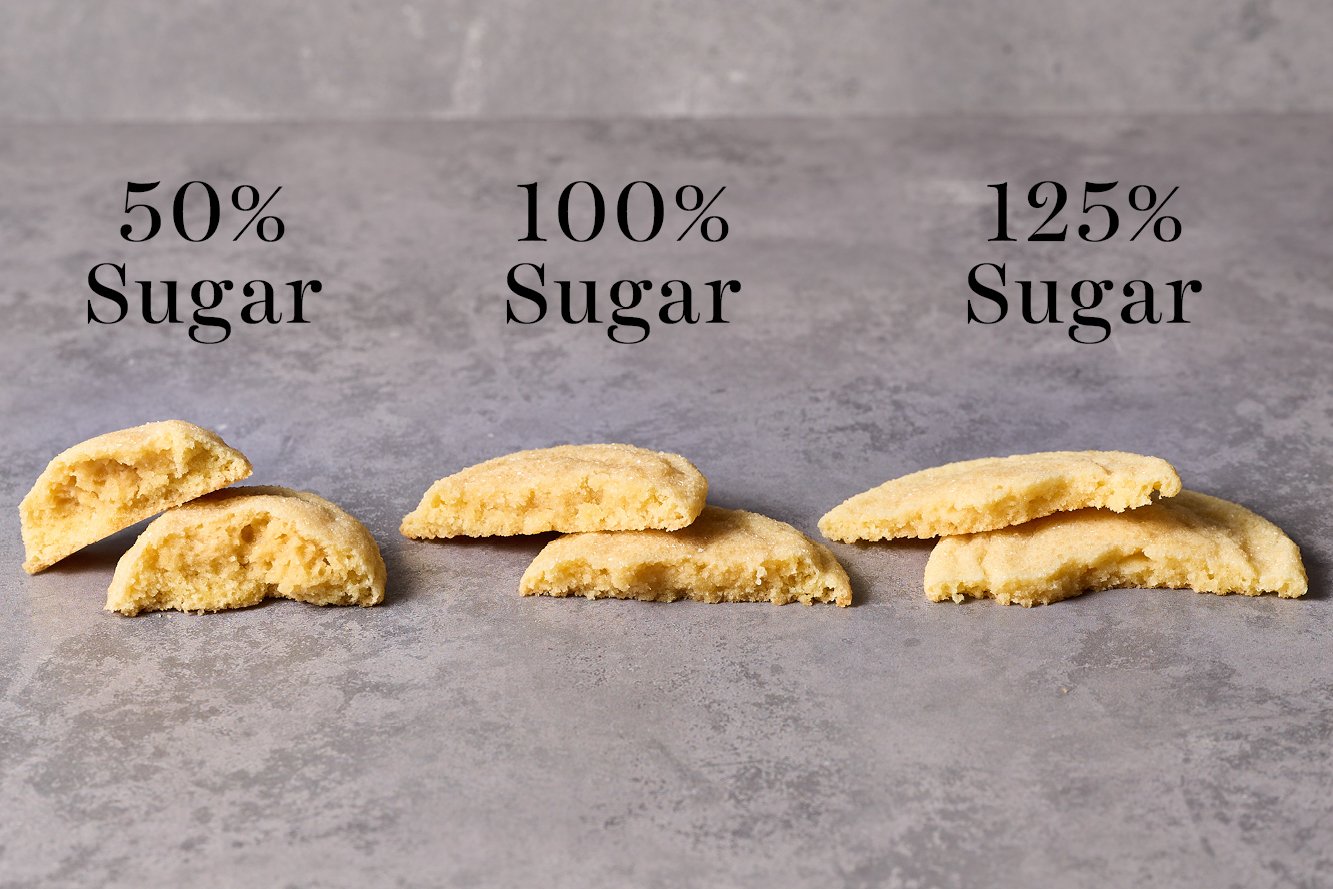
When you decrease the sugar in a cookie recipe, you won’t just get a result that’s less sweet. You’ll get cookies that are harder, drier, crumblier, and spread far less. It was also interesting to note that decreasing the sugar also yielded 1 less cookie dough ball.
Just take a look at these baking experiment results:
What happens if you increase the amount of sugar called for in cookies?
Conversely, when you increase the sugar in cookies, you’ll get cookies that spread more and have an ultra moist and chewy texture in addition to a sweeter flavor. The cookies in our experiment baked with 125% sugar as compared to the original control recipe were almost candy-like in their chewiness and sweetness, which some of our testers preferred!
Sugar is so essential to many baking recipes! I almost never advise reducing the sugar in a recipe unless you’re willing to alter the taste, texture, and appearance. If you find your baking is just too sweet, it may be that you need to add more salt or use the right kind of salt or balance with ingredients that lend bitterness or acidity.
Have you ever experimented with reducing the sugar in baking? What was the end result?
If you’re interested in learning more about the science of cookie baking, grab a copy of my top selling cookbook The Ultimate Cookie Handbook. In addition to containing 50 of my best cookie recipes, the entire first section of the book is dedicated to the VISUAL science of baking!! It’s a culinary school education and cookie bible all in one. Order your cookbook HERE!


Good article, I never reduce the sugar in a recipe and I never used processed sugar. I have great success using raw sugar or even raw sugar with honey granuals. For breads and muffins honey is also good. I just don’t care for the white processed sugar.
I typically always reduce the sugar called for in a recipe by a third and have never been able to notice that it’s missing. If I do that and the recipe calls for two types of sugar I apply that rule to both sugars with excellent results. It does explain why some cookies are more fluffy than others but the taste is always good! I don’t see anything wrong with trying to reduce the amount of processed sugar one eats or cooks with, but sugar is needed for some reactions to happen. I guess there’s a fine line between coming between science and our desire to be healthier.
Have you tried sugar in the raw or maple syrup?
Hello I’m Alex From Lanesborough Elementary and I’m finding your advice helpful for my science project on reducing sugar do you have any more info I could use?
Glad you found it helpful, Alex! We have an entire page dedicated to our baking science articles that could be a great resource, depending on the topic of your science project 🙂