





Tessa Arias, Chef and Cookbook Author
This post may contain affiliate links. Read our disclosure policy.
The idea to write this article came about when chatting with a friend who doesn’t bake from scratch often.
She was sharing with me some of her baking challenges and I realized she was using ingredients and equipment I would never use. And they were setting her up for failure and frustration.
So I thought I’d round up some of the ingredients I avoid in my baking and the reasons WHY to give you simple and maybe unexpected insights into the sweet science of baking.
Shortening
I kind of hate shortening.
It’s butter’s greasy, bland, and weird manufactured cousin.
Shortening’s lack of flavor and high melting point is what steers me away from using it 90% of the time.
Butter is so wonderful because of its incredible taste. Part of the reason it’s so enjoyable to eat something with a lot of butter is because its melting point is around human body temperature (95°F). It gives literal meaning to the idea of something “melting in your mouth.”
Shortening, on the other hand, has a higher melting point at about 120°F. This can leave behind what feels like a greasy film or residue on your palette.
Yes, it can also make shortening easier to work with in pastry applications since the dough won’t warm up as quickly. But it also doesn’t offer the same benefits of butter in SO many other ways. Just take a look at the examples below to get a quick insight.
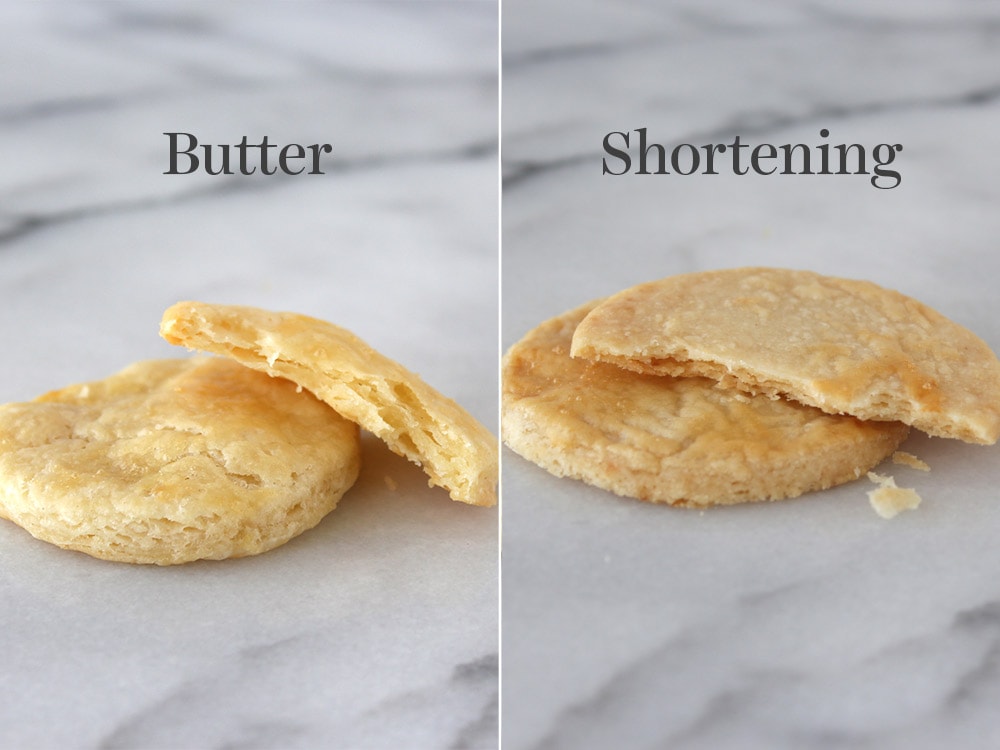
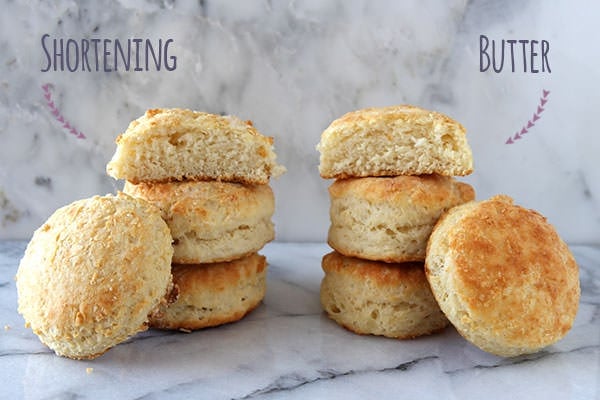
Bottom line? Butter all the way.
Learn more about Butter vs. Shortening here.
DIY Buttermilk
Simply put? DIY Buttermilk made by combining milk with an acid (vinegar or lemon juice usually) is *not* the same thing as actual buttermilk. The taste and texture this substitute offers usually falls very short of the real thing.
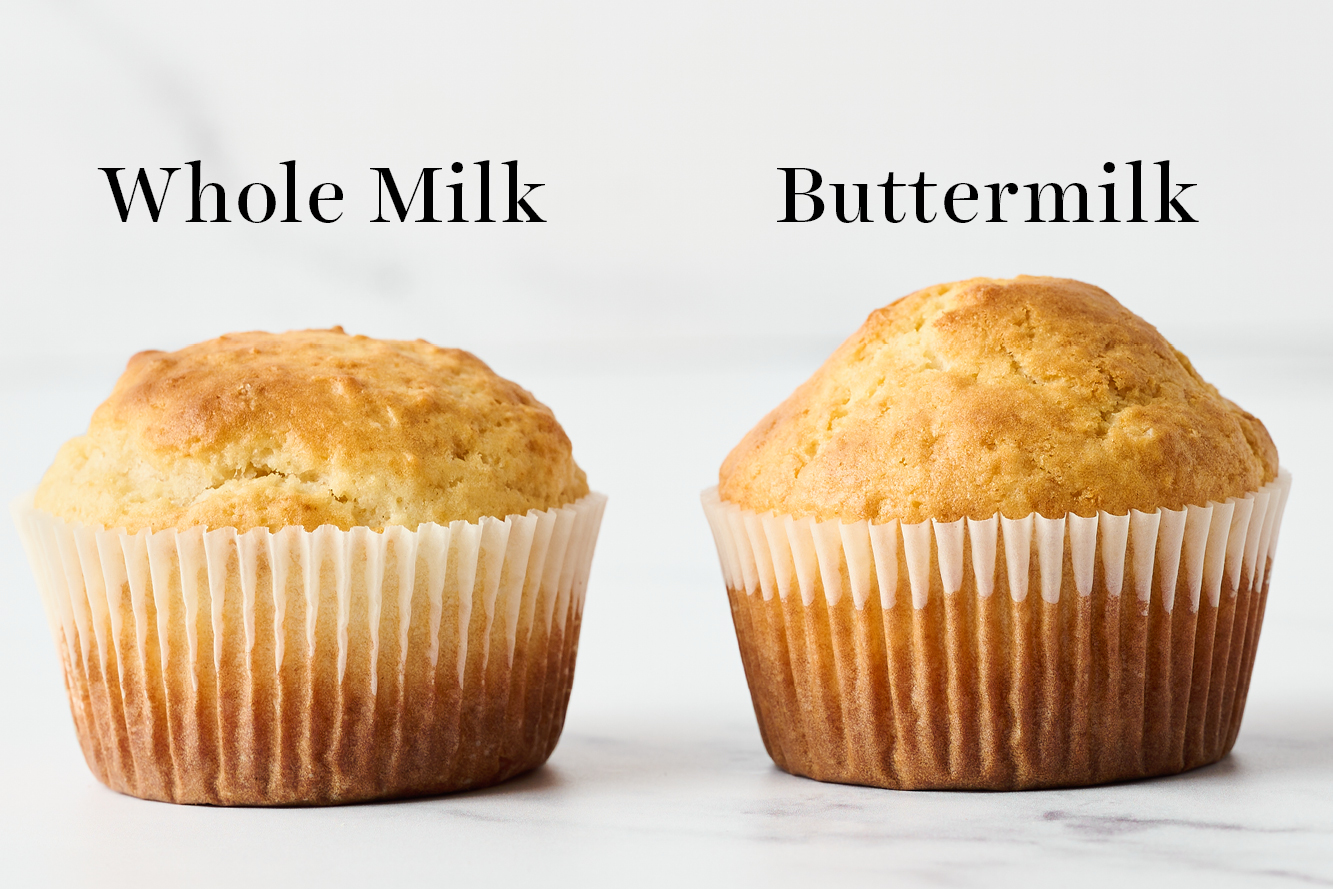
This is especially true in recipes where buttermilk plays a starring role, such as biscuits or pancakes. I can’t remember the last time I used a DIY buttermilk substitution instead of just adding buttermilk to my shopping list.
You can learn more about Buttermilk and see my experiments with different substitutes here.
DIY Cake Flour *or* Unbleached Cake Flour
This is really two different ingredients but I’m categorizing it into one to keep things simple.
DIY Cake Flour, in my opinion, is one of the biggest scams of all baking substitutions. It’s not even close to the real thing and since flour is literally the structural backbone of whatever you’re baking, it truly matters.
Real cake flour is harvested from a very specific type of wheat variety and processed in a very specific way.
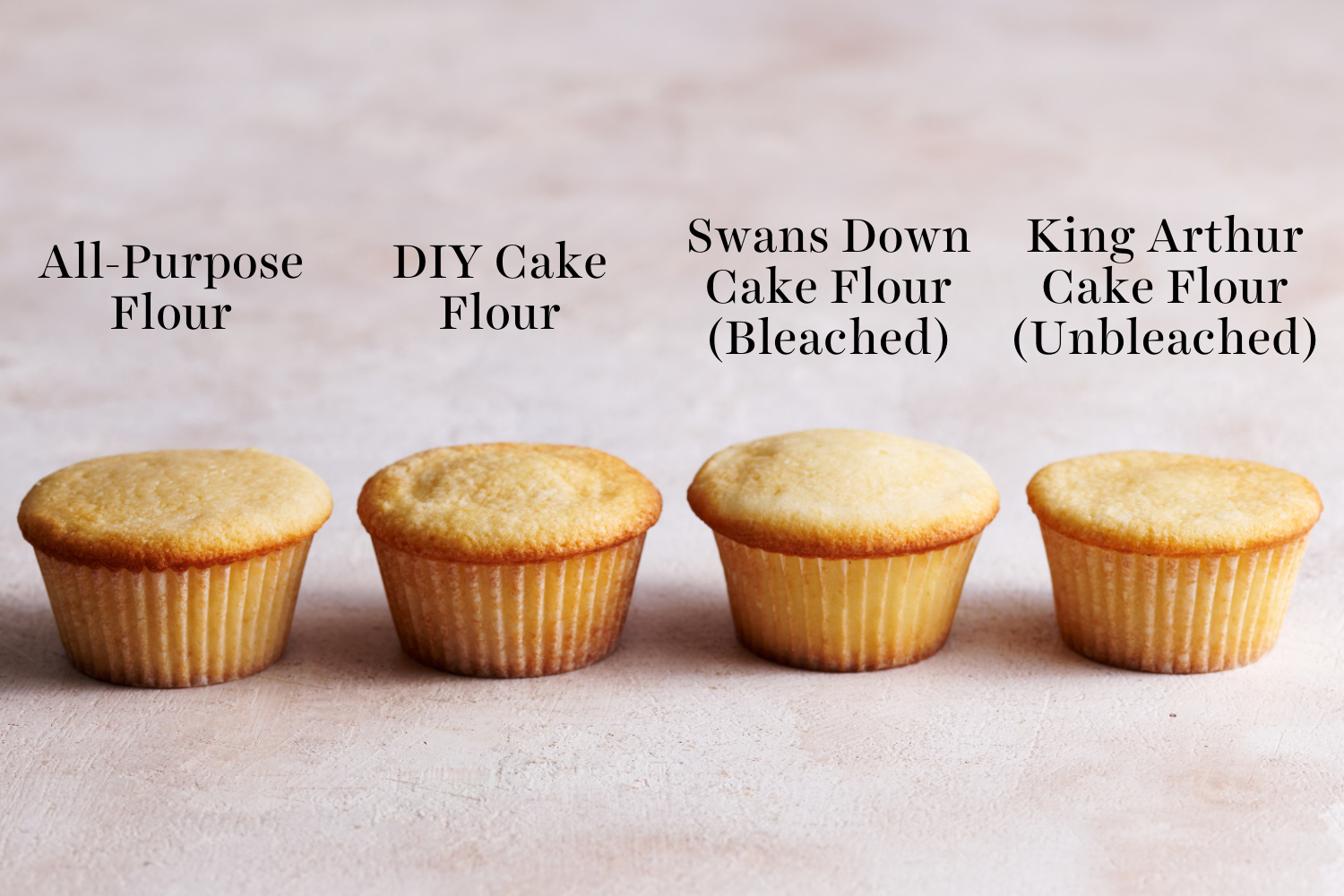
Adding cornstarch and sifting all-purpose flour does not get you the same result:
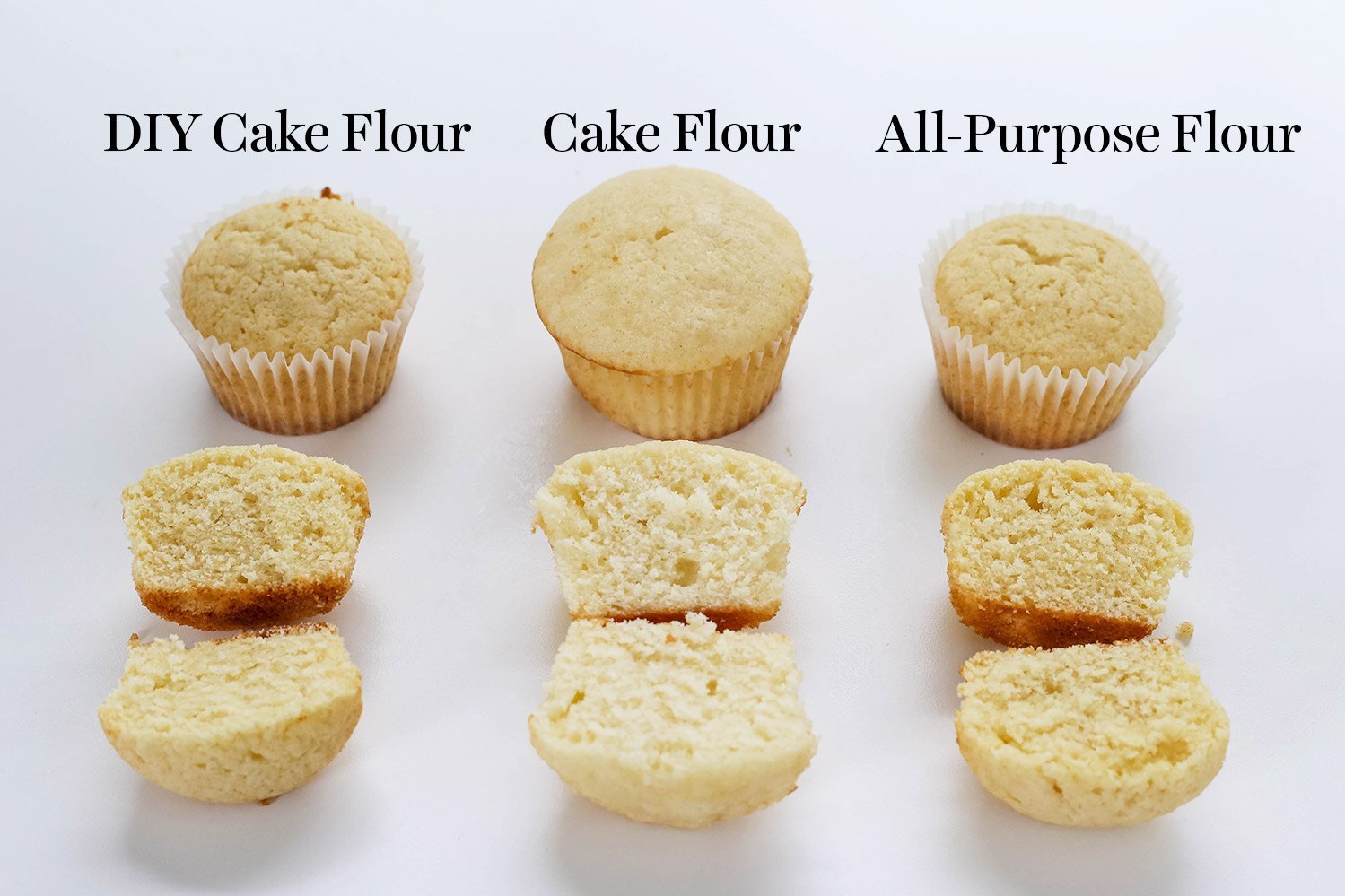
So if you’re following a recipe that uses cake flour, I always insist you use the real thing.
But that opens another question… Do you use bleached or unbleached cake flour?
The answer is BLEACHED.
Now I know that may not sound particularly appealing in a food product (but in reality it’s not that different from the processes used to filter your bottled water).
This one factor in this one ingredient makes a world of difference in the science of your baking. If you’ve ever had a cake, particularly a delicate one like angel food cake, come out flat and wrong, it may be because you made the mistake of using unbleached cake flour.
The bleaching process further weakens the proteins in cake flour (which are already weak due to the variety of wheat used) which prohibits gluten formation. This leads to a more soft and tender texture. Bleached flours generally soak up more water and produce thicker batters to allow cakes to rise taller and more evenly.
Learn more about Cake Flour here.
Farmer’s Market Eggs
I love the farmer’s market. I go almost every weekend.
I love to cook breakfast with fresh eggs from the local farms.
But I never use farmer’s market eggs or local ungraded eggs in my baking. Unless I weigh them first.
Why? The size of your egg can make a huge impact in your baking.
TIP: when it comes to brown eggs vs. white eggs, there’s virtually no difference.
In most modern recipes large eggs are called for. Whatever size egg the recipe calls for, use that specific size.
The difference between small eggs and extra large eggs can be a 50% difference! So if you use farmer’s market eggs or eggs from your chicken coop without weighing them first to see what USDA size they fall under, the entire structure and chemistry of your recipe could be negatively affected.
Salted Butter
I only ever use unsalted butter in my baking.
The primary reason? There’s no federal mandate about how much salt brands put in salted butter. Some brands can be nearly twice as salty as others, giving you no control over the final salt content in a recipe.
There are other reasons, which you can read about in my post on Salted vs. Unsalted butter here.
Iodized table salt
When I’m baking, I like to use fine sea salt. It dissolves into a batter or dough nicely (unlike kosher salt) and has a pleasant taste.
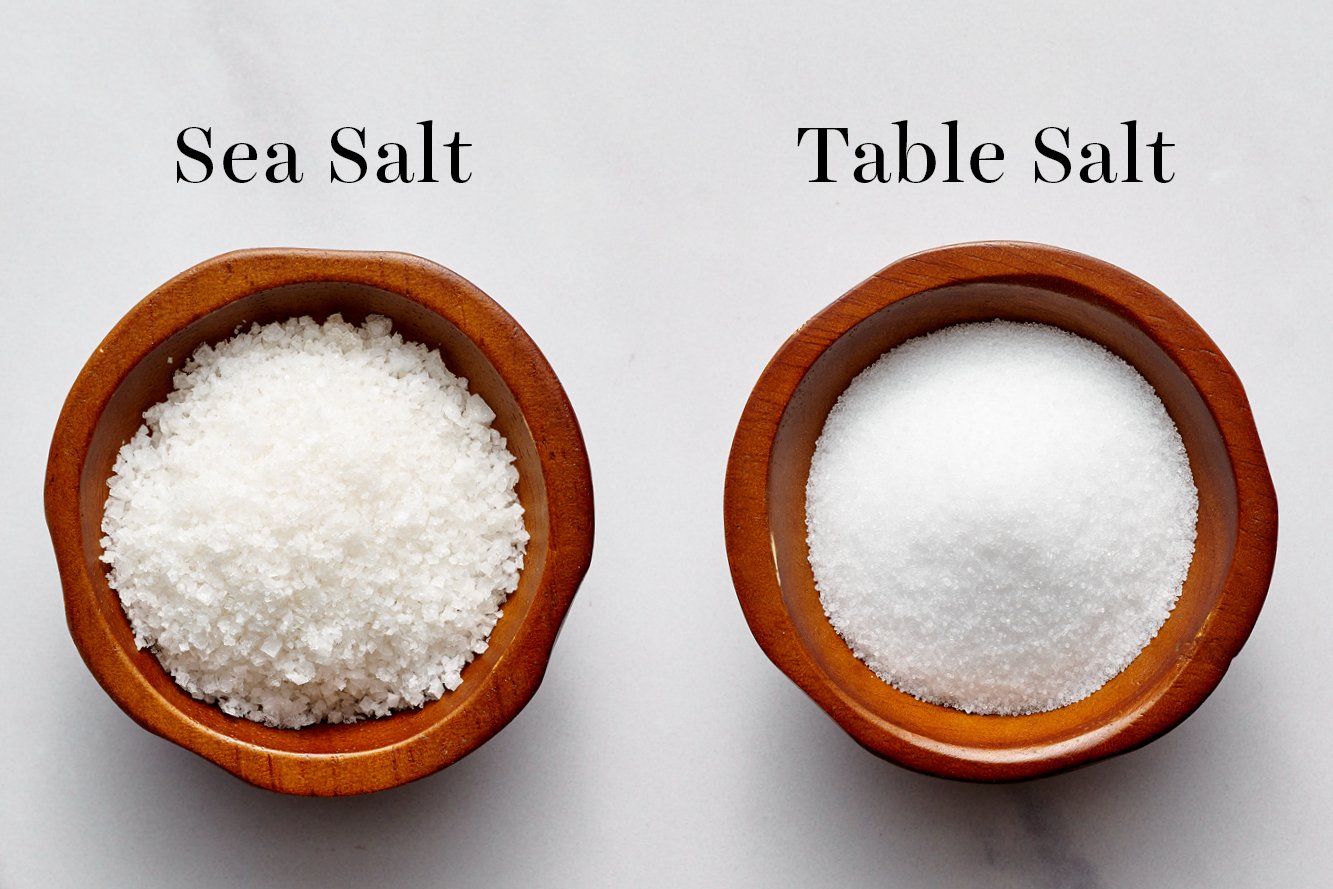
Iodized table salt tastes awful. If you don’t believe, do a side-by-side taste test… then toss your iodized table salt and use fine sea salt instead.
Sugar substitutes
Sugar does a lot more than simply sweeten foods. It’s responsible for a number of chemical reactions in baking and actually helps contribute moisture to baked goods.
Replacing the sugar called for in a recipe with something like honey or maple syrup will completely alter the moisture level of the batter or dough… among other things.
Low cal sugar substitutes (like Truvia), on the other hand, often lend dry, crumbly, hard, textures and off flavors. King Arthur Flour recently posted a great article comparing sugar alternatives here.
I firmly believe dessert should be an indulgence, which is why I almost exclusively use real butter, sugar, and flour.
Obviously some people have food allergies or medical diagnoses to contend with, and for those people my website is simply not the right place because there’s so many other bloggers creating amazing content for those needs.
“Natural” Peanut Butter
When I say “natural,” I’m referring to peanut butter products that just contain roasted ground peanuts (and maybe salt). Basically any peanut butter that doesn’t contain added palm or hydrogenated oil. At the very least there needs to be some kind of added oil.
These natural peanut butter products simply don’t work well in baking. The naturally occurring oil in the peanut separates from the mix and makes it difficult to use in a recipe. It also creates a more dry and crumbly texture in baking without that additional fat.
Conventional peanut butter is the only kind I use inside a recipe.
KEY TAKEAWAY? INGREDIENTS MATTER!
At the end of the day, baking truly is a science. And that knowledge can be empowering instead of intimidating. Because if you take the time and attention to go one step further than a lot of people when the bake from scratch, your results will be consistently more amazing.
This is exactly why I hate baking substitutions and have recently enacted a “no sub” policy here at Handle the Heat.
You can do whatever you want with my recipes, but I create them using specific ingredients for very specific reasons. It’s often a painstaking process to develop a new recipe and when changes are made to my recipes, I simply can’t guarantee the results will be as good.
Now I’m curious to hear from you… what ingredients do you avoid in baking??


Hi,
Since I don’t often use buttermilk, buying a full container means most of it goes to waste. I have started using dry powdered buttermilk in my baking and it seems okay. What do you think of this substitute? And can I freeze buttermilk?
Thanks,
Laura
Hi Laura! Tessa has a whole article dedicated to answering your questions – check it out here! Spoiler alert: yes, you can freeze buttermilk!
Excellent article…as always. And, as always, thanks!
Thank you for your excellent information, tips, and recipes. I really appreciate that you educate the reader.
I have a question about brown sugar, specifically dark brown sugar versus light brown sugar. I read someplace that dark brown sugar contains more molasses than light brown. My how do the different browns affect recipes?
Thank you very much.
Dee Dee
Hi Dee Dee! You’re right, the difference between light and dark brown sugar is the amount of molasses in the sugar. Dark brown sugar contains almost twice as much molasses as light brown sugar, which means that dark brown sugar gives baked goods a richer, deeper, more caramel-y, butterscotch-y flavor. The amount of molasses contained in the sugars also means they will contribute a different level of moisture to a recipe. My recommendation is to stick with the recipe as written the first time, and if you wish to experiment from there the next time, you can experiment as you like! I hope that answers your question! Happy baking 🙂
Hi Kiersten.
Thank you very much. Yes, it does answer my question.
Dee Dee
I agree with everything wholeheartedly other than the eggs, I always use eggs from our chickens and I just pick out the right size that I need for the recipe, works great. I don’t use store-bought eggs for any reason whatsoever and hope I never have to. But the rest of your tips, perfect! 🙂 🙂
I am loving all of your articles. I just started following and joined your FB and entered my first challenge. So I am caching up on all this information. Could you tell me your thoughts on Self Rising Flour, I have always used it, but I do know most recipes call for AP. I know the difference but what are your thoughts on using it. Just curious.
Welcome! We’re so happy to have you here 🙂 Excited that you joined your first challenge too, so fun! Tessa doesn’t normally use self-rising flour. She prefers the customization and flexibility to make her own mixup of ingredients (flour and leavener/salt) so she doesn’t have to rely on whatever the manufacturer made in their container of self-rising flour. I hope that helps!
Thank you for the reply. That makes perfect sense.
Great helpful information! Thank you!
When should you sift all purpose flour for baking? How does sifting affect baked goods?
Hi Maria! Unless the recipe you’re making specifically calls for sifting the all-purpose flour, the only time we actually sift flour is when we’re making a recipe with cake flour, otherwise using a whisk to mix the flour will work perfectly fine 🙂 Cake flour is a flour that can get really clumpy, so we always recommend sifting it. Hope that helps!
I am a follower of your blog and have made several of your recipes. I applaud your stand on following recipes as written and what ingredients to use and which ones to stay away from. I can say your way works 100% of the time. Although there are so many other factors that contribute to successful results in baking your choice of ingredients is number one!
Thank you for your kind comment, Mike! I’m so happy to hear that 🙂
Hi, I love all your tips and tricks. I live in Puerto Rico and I do not find buttermilk. What can I use?
Also, I’m into gluten free baking. Part of my family can’t use gluten. Any tips and tricks for gluten free baking?
Rose
As noted on our Contact Us page, Handle the Heat follows a No Substitution Question Policy. I do not publish allergen-free recipes.
We do have a few seasoned readers in our free Facebook community who like to share the results of their allergen-free or special dietary baking. You’re welcome to join the Facebook group to ask for their recommendations, but also so you can see their tips and posts; otherwise, the best suggestion I have is to search online for gluten-free recipe bloggers. There are plenty of bloggers and publishers online who have far more expertise in that area. That way you’re not having to guess with substitutions and can be assured your outcome will turn out the same as the recipe
Yes, yes, and yes!!! To all the above bad habits and substitutions! Keep preaching, girl! I don’t have the training you have but am a 50+ year baker. I do enjoy America’s Test Kitchen and their publications. I recently came across your posts on IG. I have tried a couple with excellent results. Thank you!
btw, I am known as the “Cookie Queen” locally 🙂
Dorian
North Carolina
So wonderful to meet you, Dorian! It sounds like you have plenty of experience if you’re called the Cookie Queen! 🙂 Thank you so much for your sweet comment! Also, if you haven’t already, I’d love for you to join our private Facebook community! It’s full of wonderful bakers like yourself, and everyone has a lot of fun posting pictures of things they’ve made as well as it just being a safe and caring place to ask any baking questions 🙂 Here is the link: https://www.facebook.com/groups/handletheheatcommunity Hope to see you there!
My question is about Vanilla, what does pure vanilla mean, over baking vanilla, and if it call for vanilla bean that is unavailable for me, what is the ratio bean to teaspoons?
I made your thin crispy chocolate chip cookie FANTASTIC
thank you. Natalie
I teach foods at the high school level – residential kitchens. I agree on most of these topics, but never say never. My students bake with salted butter, because that’s what most people have in their homes. They will never use margarine in my kitchens. They’ve discovered the difference when cooking at home. If the recipe calls for unsalted, then know to decrease 1/4 tsp per 1/2 cup. Buttermilk is not often found in most homes and impacts the food budget. We substitute if we must. It’s better than buying a quart when you only need 1/2 c.
I do plan to have them experiment with the different chocolate chip cookie versions. This sounds like fun. Thanks for your work.