





Tessa Arias, Chef and Cookbook Author
This post may contain affiliate links. Read our disclosure policy.

If you’ve been following me for a while, you’ve probably seen me talk about the correct way to measure flour at one time or another.
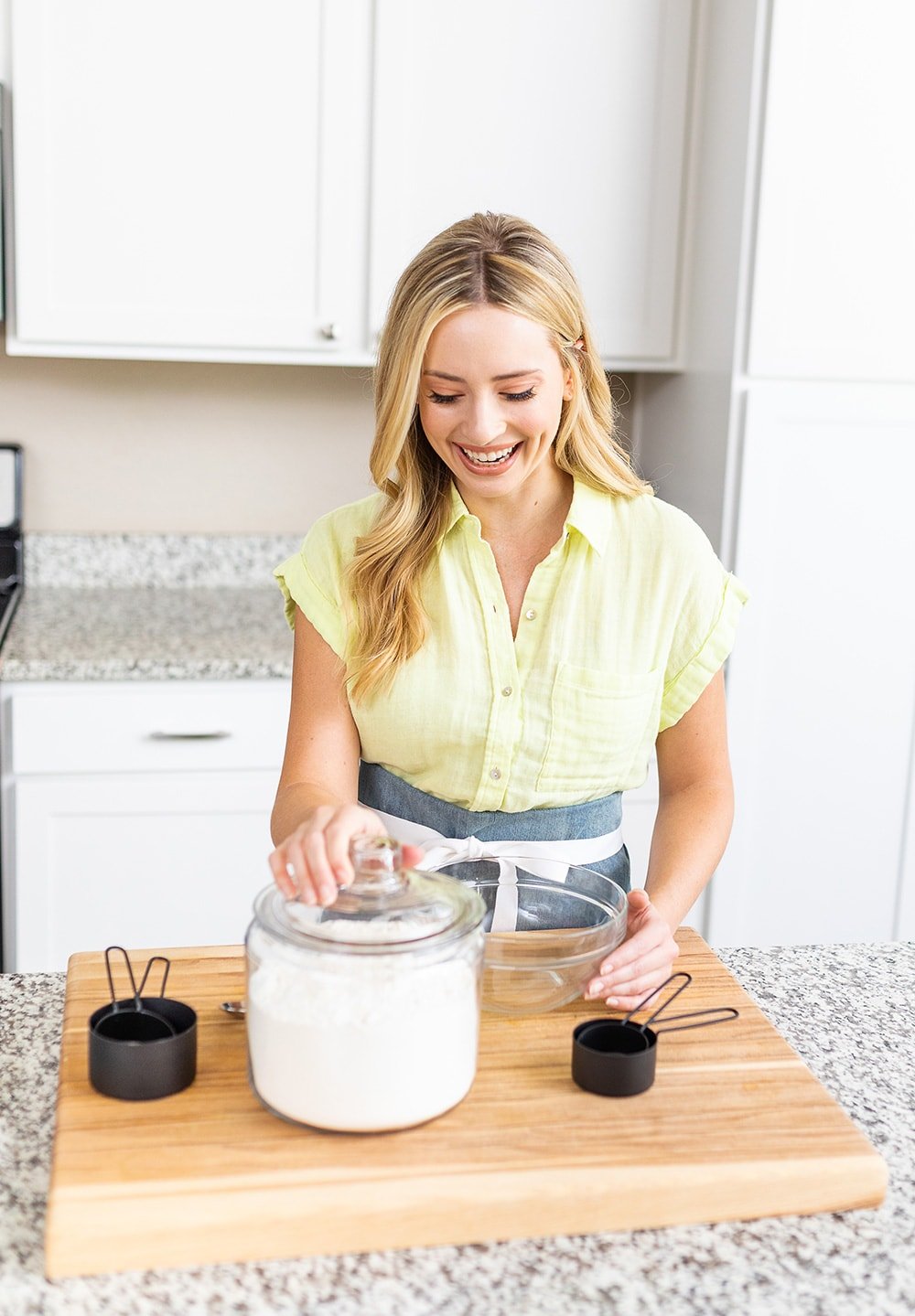
How you measure your baking ingredients can make or break your success in the kitchen.
It’s actually kind of crazy just how critical this one step can be! I see so many frustrated comments and messages from readers asking what could have gone wrong when a recipe doesn’t turn out. Most of the time, it’s due to measuring issues.
The easiest ingredient to mismeasure is flour. That’s because it can be so easily compacted into a container or measuring cup without realizing.
Other ingredients can be mismeasured, too, but flour is the most commonly mismeasured – and the results can be disastrous. Accidentally adding more flour than the recipe calls for can yield baking results that are:
- Dry (instead of moist)
- Dense (instead of light and fluffy)
- Crumbly (instead of moist, chewy, or fudgy)
- Tough (instead of tender)
- Rubbery (instead of delicate)
Basically, results that no one wants!
Luckily with a few simple tricks, it’s easy to improve your baking by learning how to measure your flour correctly. I’ve laid it all out in the video and instructions below. If you follow these guidelines every time you bake a recipe, you’ll see much more consistent results.
Sprinkle of Science
How to Measure Flour Correctly
Why is it Important to Measure Flour Correctly?
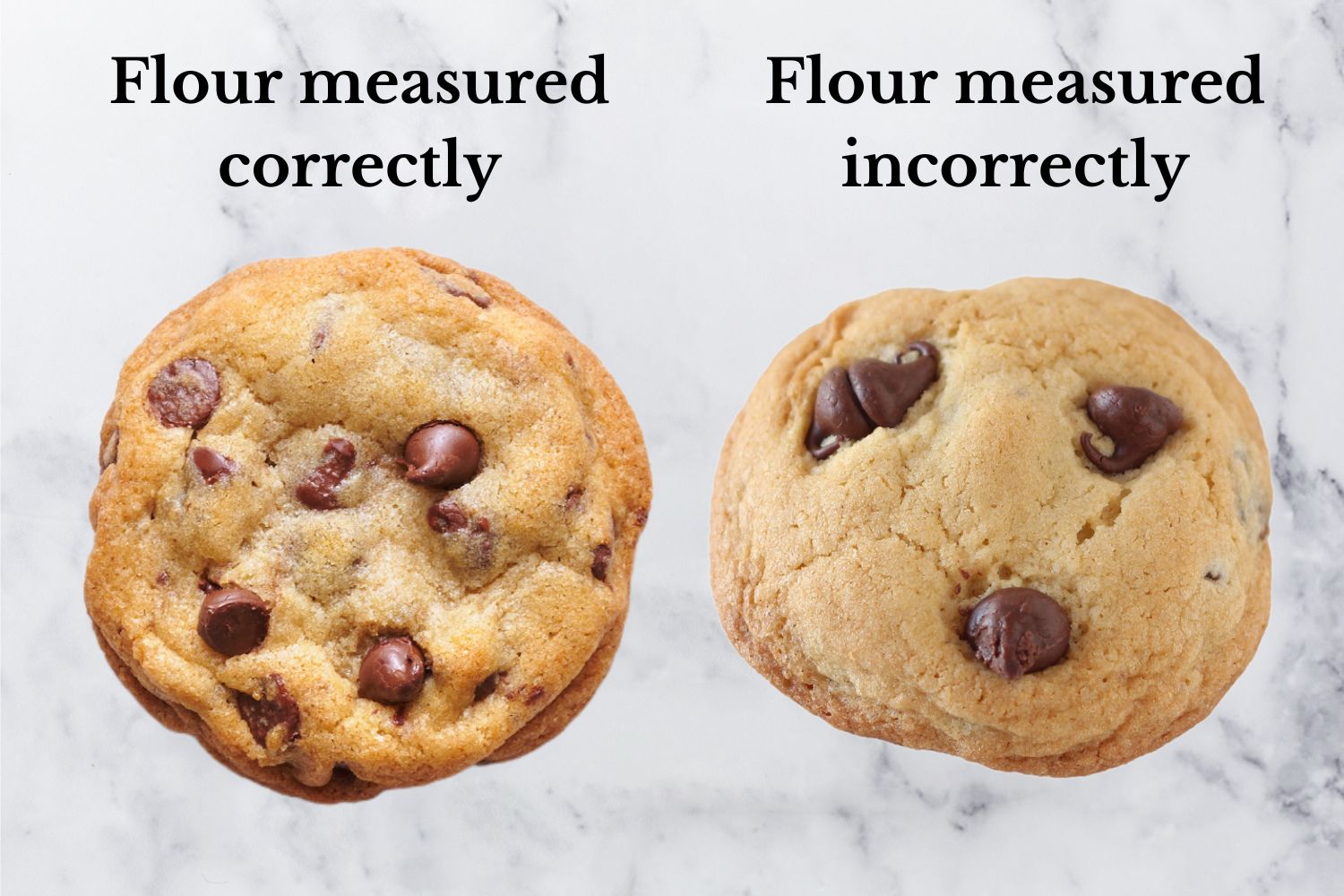
The cookies below were made using the exact same recipe – but the cookie on the left was made by measuring flour with a scale, and the cookie on the right was made with compacted cups of flour. The cup-measured cookies ended up being dry and tough, and hardly spread while baking:
Fluff Your Flour
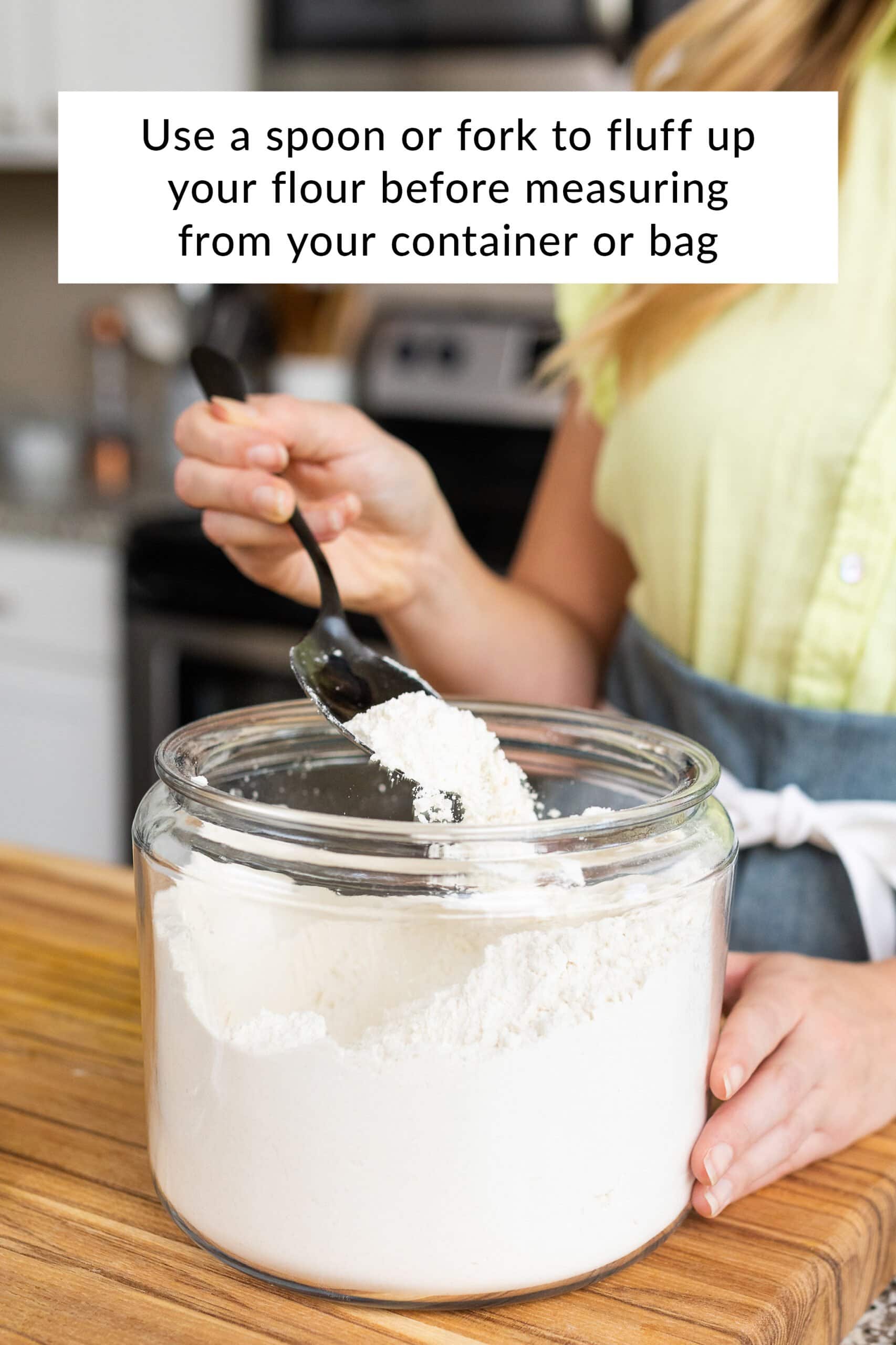
The first step to measuring flour is to fluff up your flour in its container or bag. Simply take a spoon or fork and fluff the flour around to loosen it up.
Measuring with a Scale
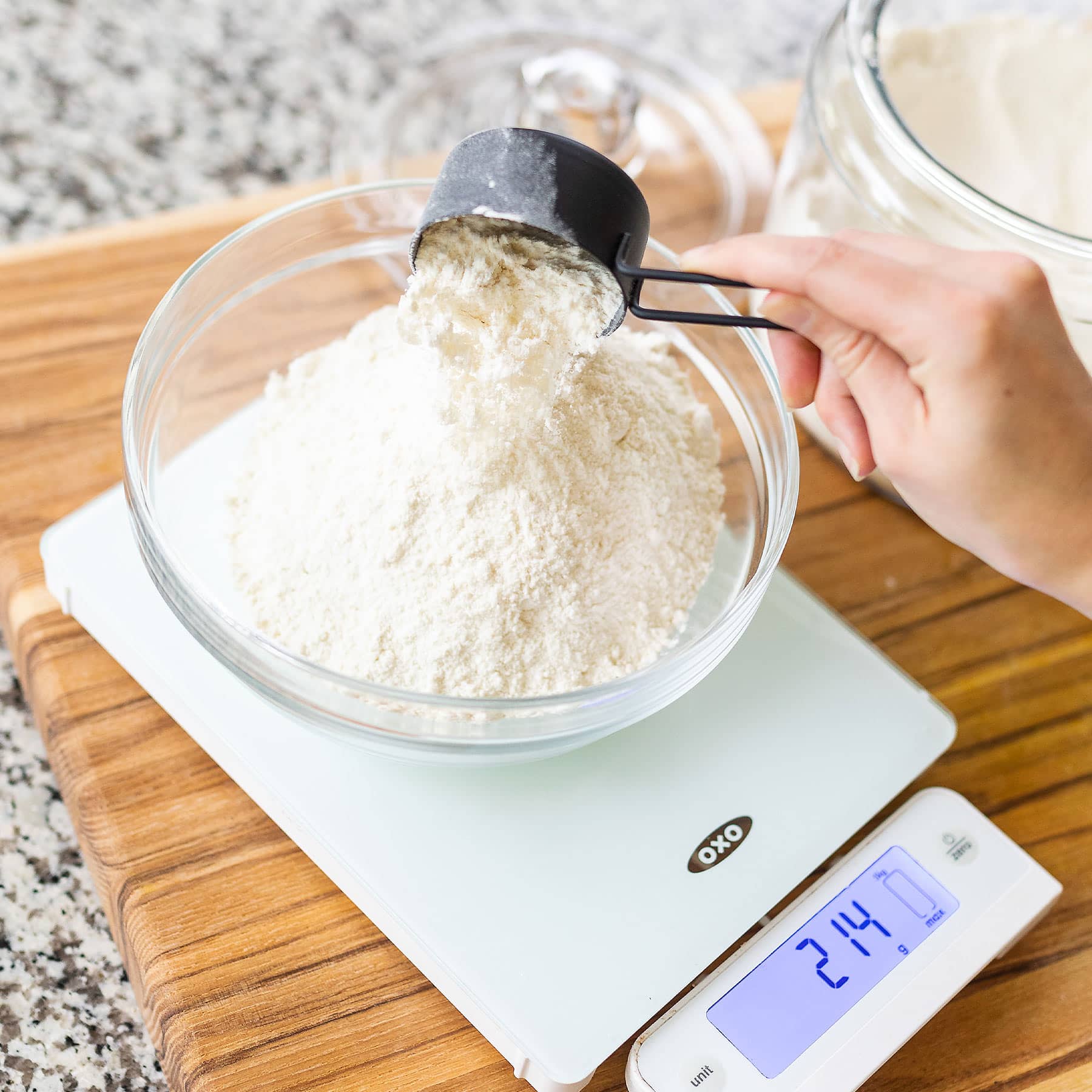
Measuring with a digital kitchen scale is the best and simplest way to improve your baking. Measuring with a scale gives you 100% accuracy. It also dirties fewer dishes because you aren’t using a bunch of measuring cups.
This is my favorite scale by OXO. This one is a cheaper alternative I also like.
How to Measure Flour with a Scale
- Use a spoon or fork to fluff up your flour before measuring. Flour easily settles and compacts into its container, which can make it easy to add too much to your recipe.
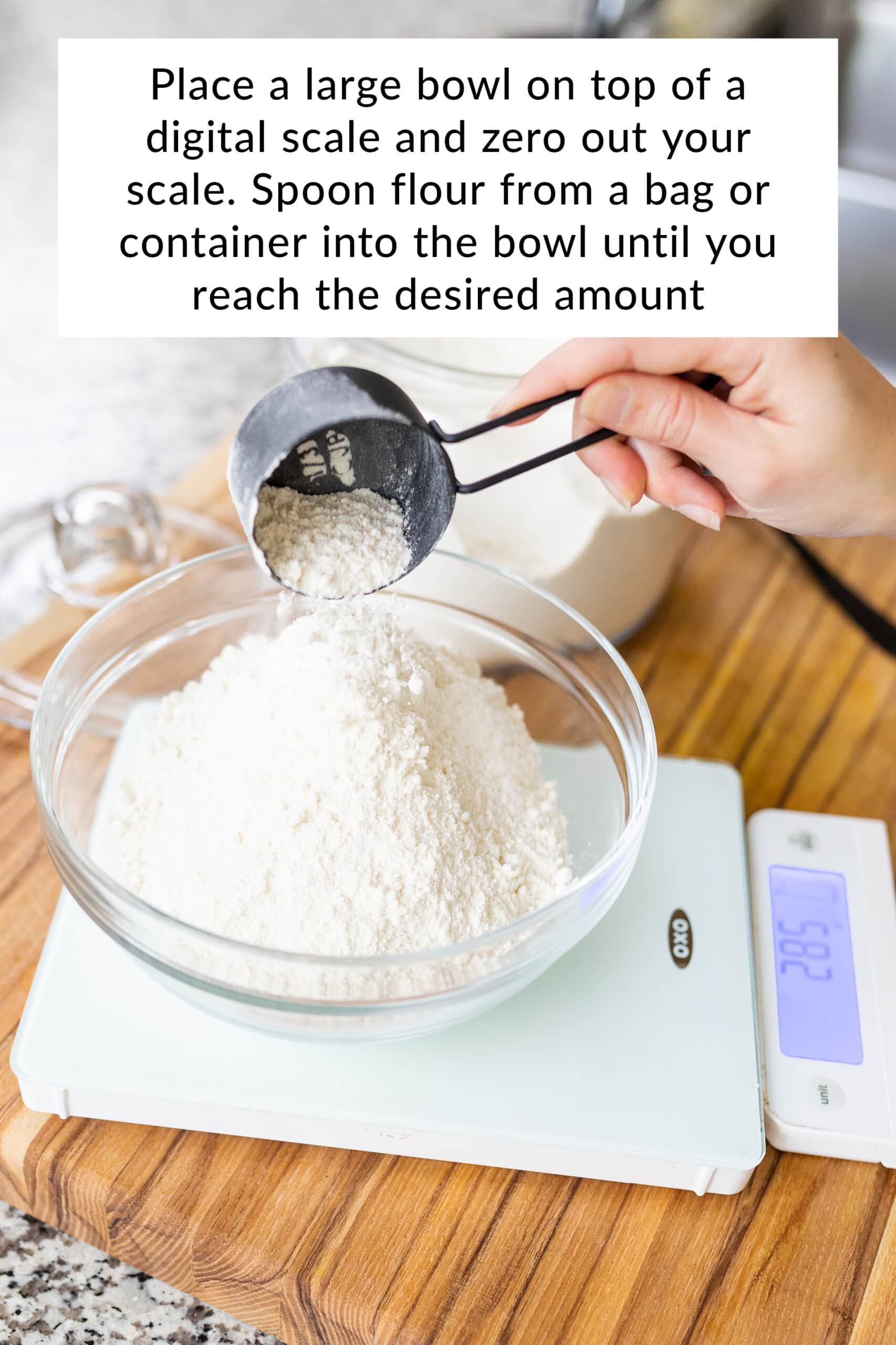
- Place a large bowl on top of a digital scale. Press the zero / tare button on the scale to return the weight to zero before weighing your flour.
- Spoon flour into the bowl until you reach the required amount.
- Press the zero / tare button to return the weight to zero before adding each new ingredient.
Note: Different Ingredients Weigh Different Amounts
- 1 cup of every ingredient will NOT weigh 8 ounces, as different ingredients have different densities.
- If that’s confusing, think of it like this: 1 cup of rocks would not weigh the same as 1 cup of feathers.
- The majority of my baking recipes here on Handle the Heat include weight measurements in grams. I find grams to be the easiest unit to work with.
- You can also download my handy printable Ingredient Measuring Guide, so you can measure in grams even if a recipe lists only in volume!
If You Don’t Have a Scale, Use The Spoon & Level Method
If you don’t have a kitchen scale, the ‘spoon and level’ method is the second best way to measure flour. Though not as precise as a scale, the spoon and level method helps to ensure you don’t accidentally compact too much flour into your measuring cup.
How to Measure Flour with the Spoon & Level Method
- Use a spoon or fork to fluff up your flour before measuring.
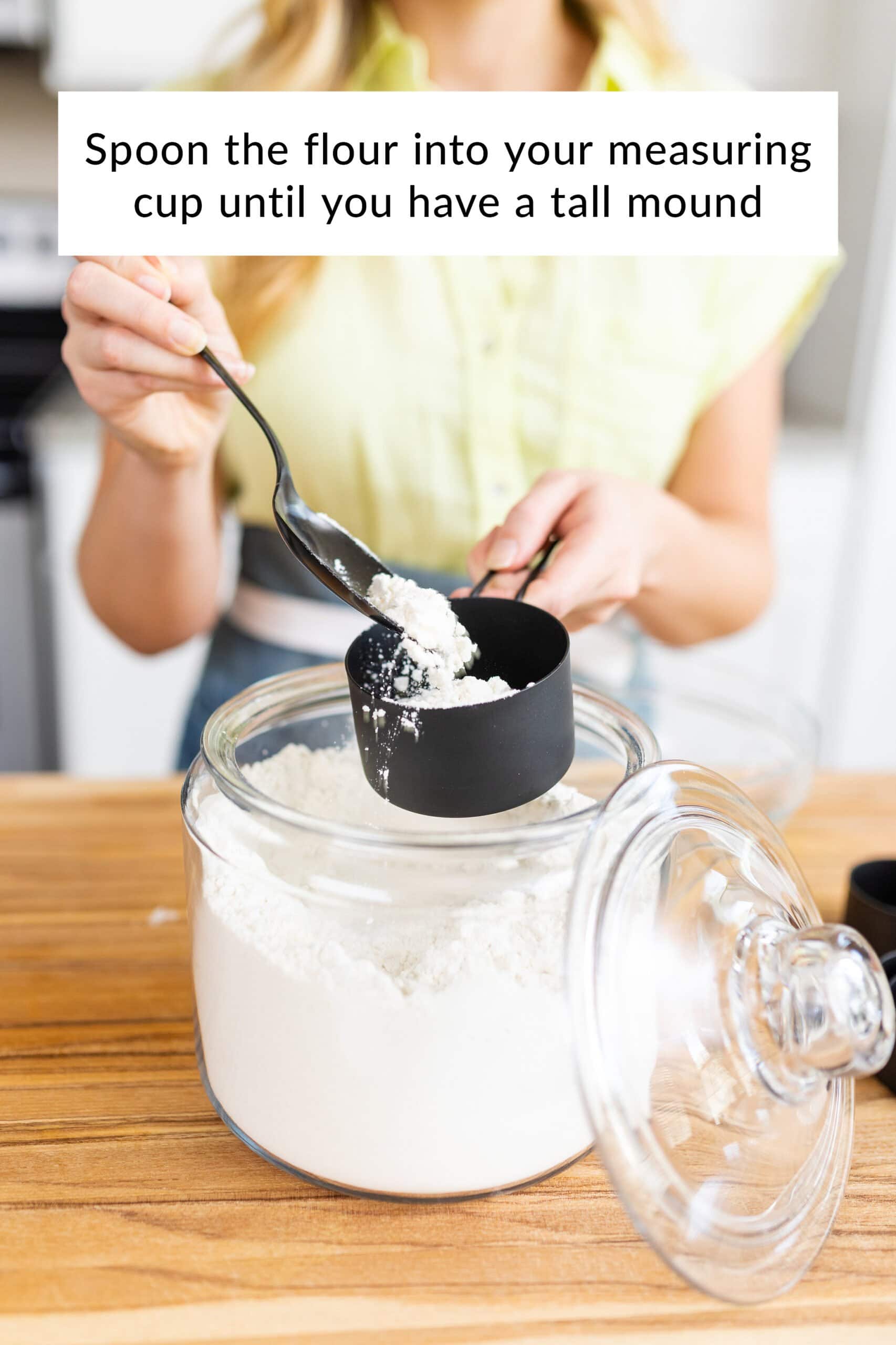
- Spoon the flour into your measuring cup until you have a tall mound. Do not place a measuring cup directly into your flour bag or container (more on this below).
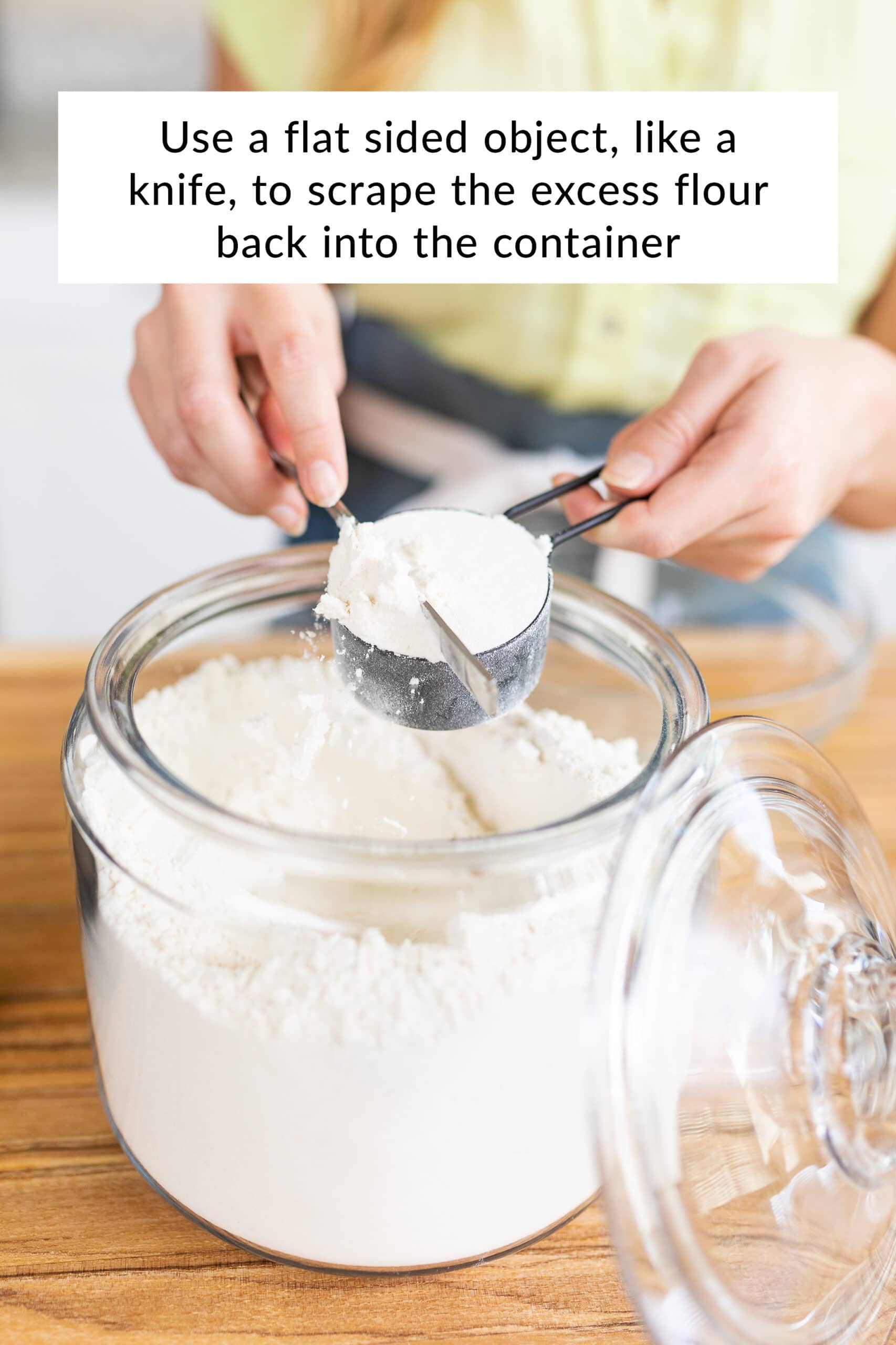
- Use the flat edge of a knife to scrape the excess flour back into the container.
Never Scoop Directly From Your Flour Container!
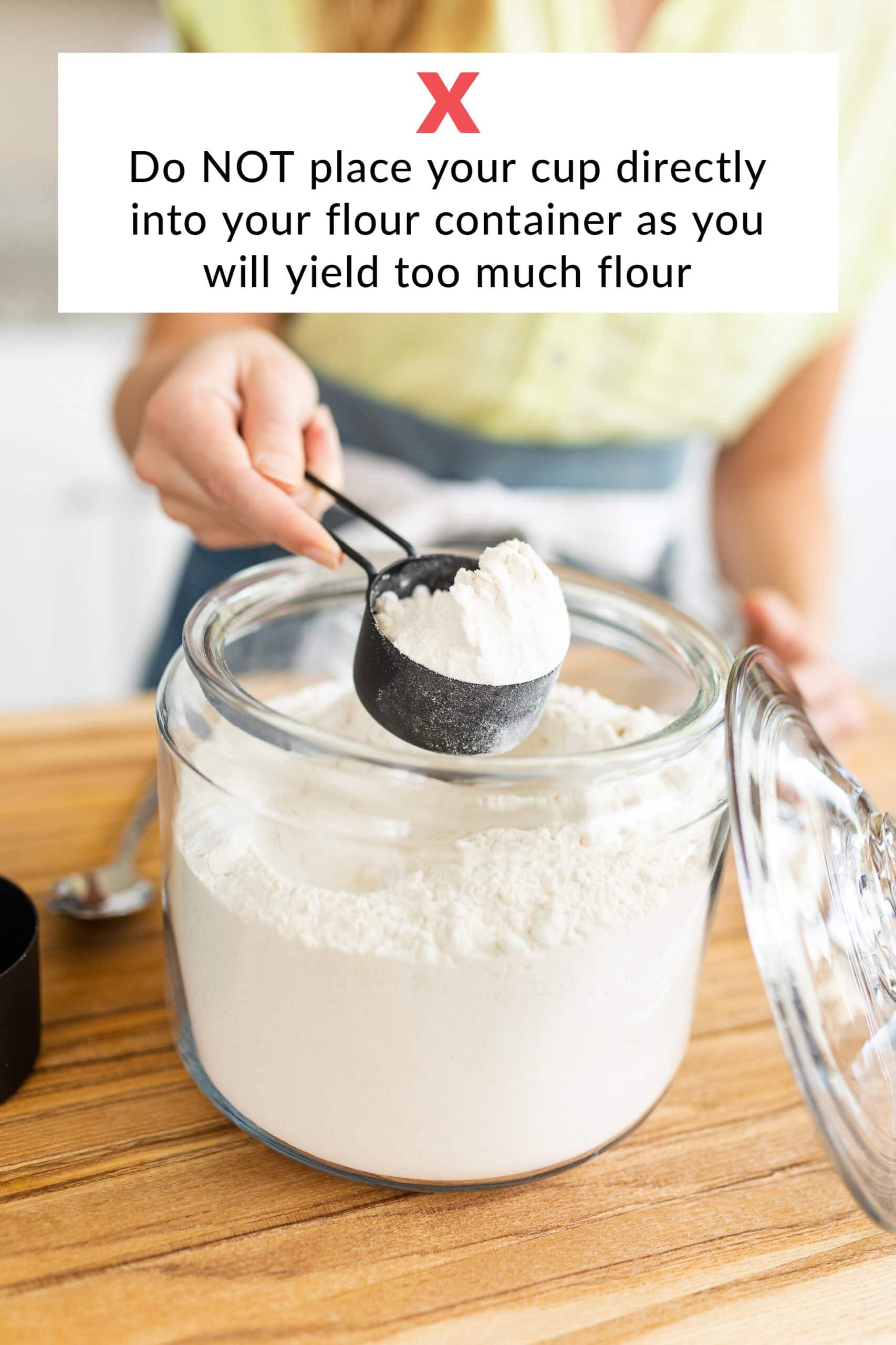
Never place a measuring cup directly into your flour bag or container, as this will pack too much flour into your measuring cup.
Do you Measure Flour Before or After Sifting?
Whether to measure flour before or after sifting depends on how the ingredient is called for in the recipe. For example, if the recipe calls for “1 cup flour, sifted,” measure the flour first and then sift. If a recipe calls for “1 cup sifted flour,” sift the flour first, then measure.
Recipes You’ll Love:
Now that you’ve learned one of the most crucial steps in baking, make sure to check out some of my top recipes!
Photos by Lauren Peachie.


Hi Tessa,
I’m curious why one would need to fluff their flour before measuring if they’re measuring it with a digital scale? Doesn’t this negate the step of fluffing as it’s a pure measurement regardless of how it’s scooped into the bowl? I always measure by scale but do not fluff. Please advise.
Thanks,
Kara
Hi Kara! Fluffing the flour up simply helps to loosen it up in the container so it’s not so compacted and you’re not scooping up packed flour. You’re welcome to do so with a digital scale (though not necessary), but it’s most important for the Spoon & Level Method 🙂
Thanks! I’ve always just put the measuring cup in the flour. I’ve recently started weighing but I’m visiting family and don’t have one handy.
Hi Tessa! If the weight of my flour is significantly heavier than your measurement of 127 grams/cup, should you go with the 127 or go with the weight measurements on the bag of flour? My flour (wheat Montana Unbleached All-Purpose flour) says a cup of flour is 152 grams/cup. So would I need to add more to your recipes or should I stick to the 127 grams? Thank you! I have been loving learning the science behind baking!
Hi Holly! We always suggest using the weight provided by the recipe you’re following regardless of the brand; otherwise, it can alter the outcome of the recipe. Be sure to use a digital scale to ensure accurate results! So happy you’re enjoying all of our science behind baking articles! You might be interested in signing up for our free Ingredient Measuring Guide to help out for future baking 🙂 Hope that helps! Feel free to reach out with further questions!
I Tesa. My name is Gonzalo Herrera.
It has been a pleasure to know about your recipes and take all your advices and lesson to bake as a professional.
I have a restaurant and inside there is a cafe where I sell some cakes.
One of the most sold is the chocolate one I learned from you
This week I learned how to make Nutella brownie and it as wonderful. Next week I will launch.
Thanks for all.
Making brownies, wondering why my brownies always falls?
I am unable to download the free measuring chart. I have followed the instructions provided. Unfortunately, I do not receive an email from you to complete the confirmation. I would really like to get the information provided in the download. Is there anyway you could supply this to me. Thanks.
Hi Donna! I can see on my end that the email has been successfully sent to you! Did you check your spam? Haley just let me know she got your email this morning and will be sending you a direct link just to be safe 🙂
Hi, for your muffins tips request overnight fridge may I know when taken out from fridge and bake immediately does it need more time to bake?
Those instructions are covered in this blog post: https://handletheheat.com/how-to-bake-tall-bakery-style-muffins/. Enjoy!
When do you need to actually sift the flour?
I only sift flour when the recipe specifically calls for it! I do recommend always sifting cake flour, though. Hope that helps!
Do you fluff the flour before you measure to weigh flour
You said to “fluff up” the bag or canister of flour. I have not heard that term before, & am wondering how to accomplish fluffing up my flour.
Thank you so much for this! I’ve tried to figure out why all of my cookies turn out to be little puff balls instead of nice flat cookies. Now I know!
Isn’t it crazy how much of a difference flour makes?! So glad you found this article helpful.
You say to keep butter at 67 degrees for cookies but some recipes call for soft butter. That’s hard to get soft butter at 67 degrees. What do you suggest?
I definetly feel like I have issues with 67 degrees still being to hard to mix in. It doesn’t get creamy…instead I get hard chunks that don’t incorporate into dough very well. I don’t know if using a stand mixer vs a hand mixer would make a difference. I use a hand mixer.