





Tessa's Recipe Rundown
Taste: The perfect amount of sweetness.
Texture: My favorite part, each bite is the ideal balance between soft and chewy.
Ease: Super easy 30-minute sugar cookie recipe with no chilling required.
Why You’ll Love This Recipe: Fun, simple, and perfect for holidays from Christmas to Valentine’s Day, even 4th of July. Everyone LOVES these cookies.
This post may contain affiliate links. Read our disclosure policy.













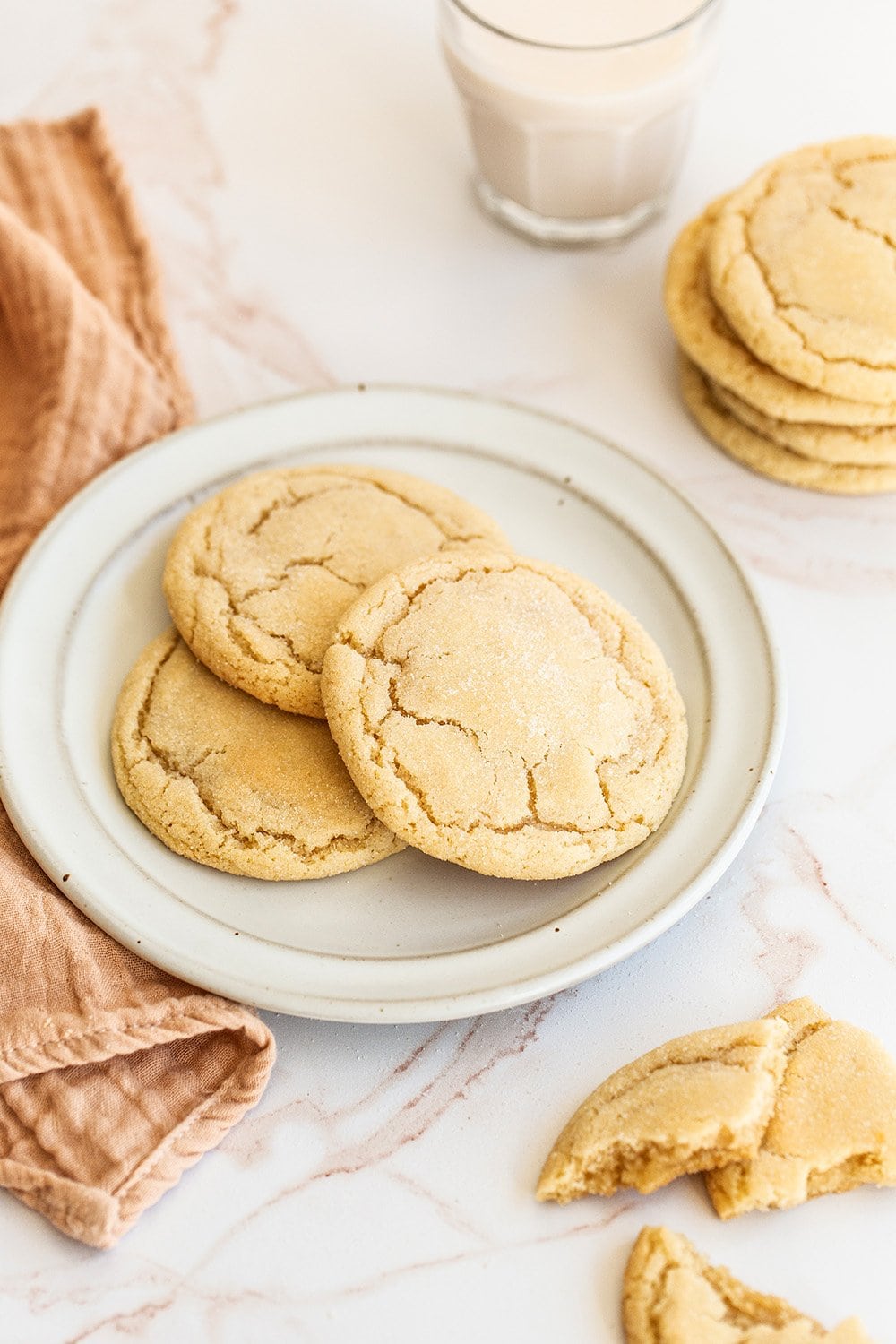
Not to boast, but everyone who has tasted or made this sugar cookie recipe has said it became their instant favorite!! It took weeks of testing to get it just right.
These Soft & Chewy Sugar Cookies require NO CHILLING and are incredibly easy to bake up.
Reader Love
Delicious! Just made these with my 3 year old daughter. Easy to follow recipe and will be my go-to for sugar cookies! Only difference was adding rainbow sprinkles (the round ones) to the sugar to roll the balls in before baking.
–
This recipe is perfect for your Christmas cookie boxes or just enjoying with a glass of milk. If it’s a warmer time of year, it also makes a great base for ice cream sandwiches!
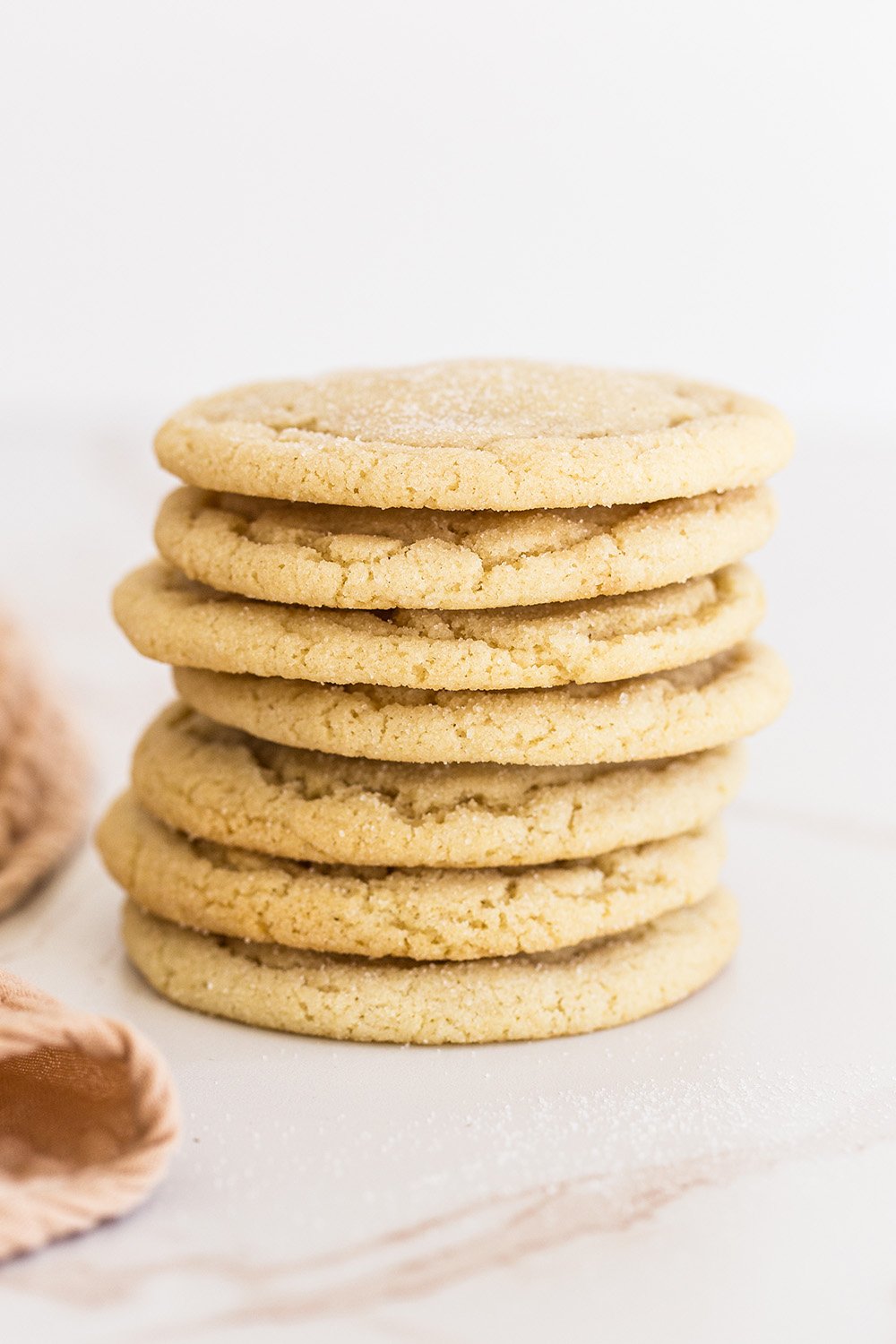
Originally, I had created a recipe with cream cheese that was ultra-soft. However, I found that it would become claggy, and each bite would get stuck to the roof of your mouth.
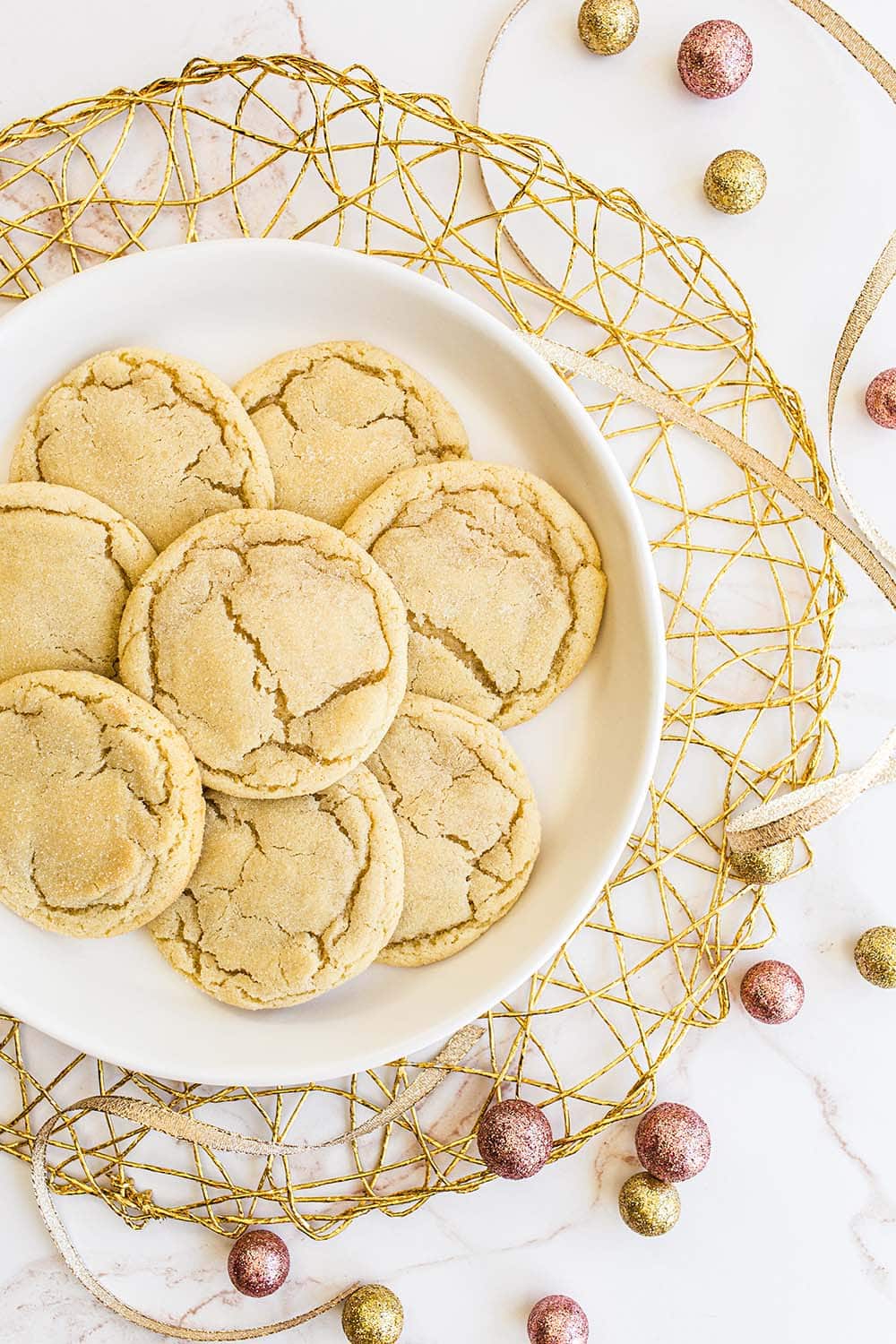
After many rounds of recipe testing, I finally nailed an easy sugar cookie recipe that’s soft and chewy (and STAYS soft) and has that perfect sparkly crackled top.

Sprinkle of Science
Ingredients Notes
- All-purpose flour – Make sure to weigh your flour accurately. If you add too much flour, your cookies won’t spread at all and won’t be soft or chewy.
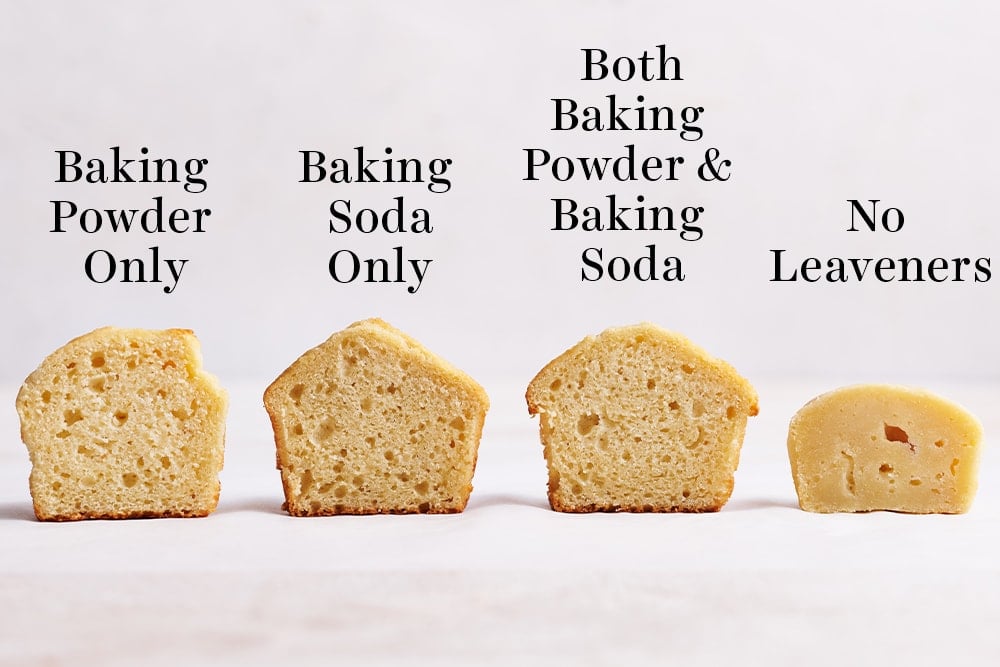
- Baking powder – This gives the sugar cookies lift, without adding too much spread or browning.
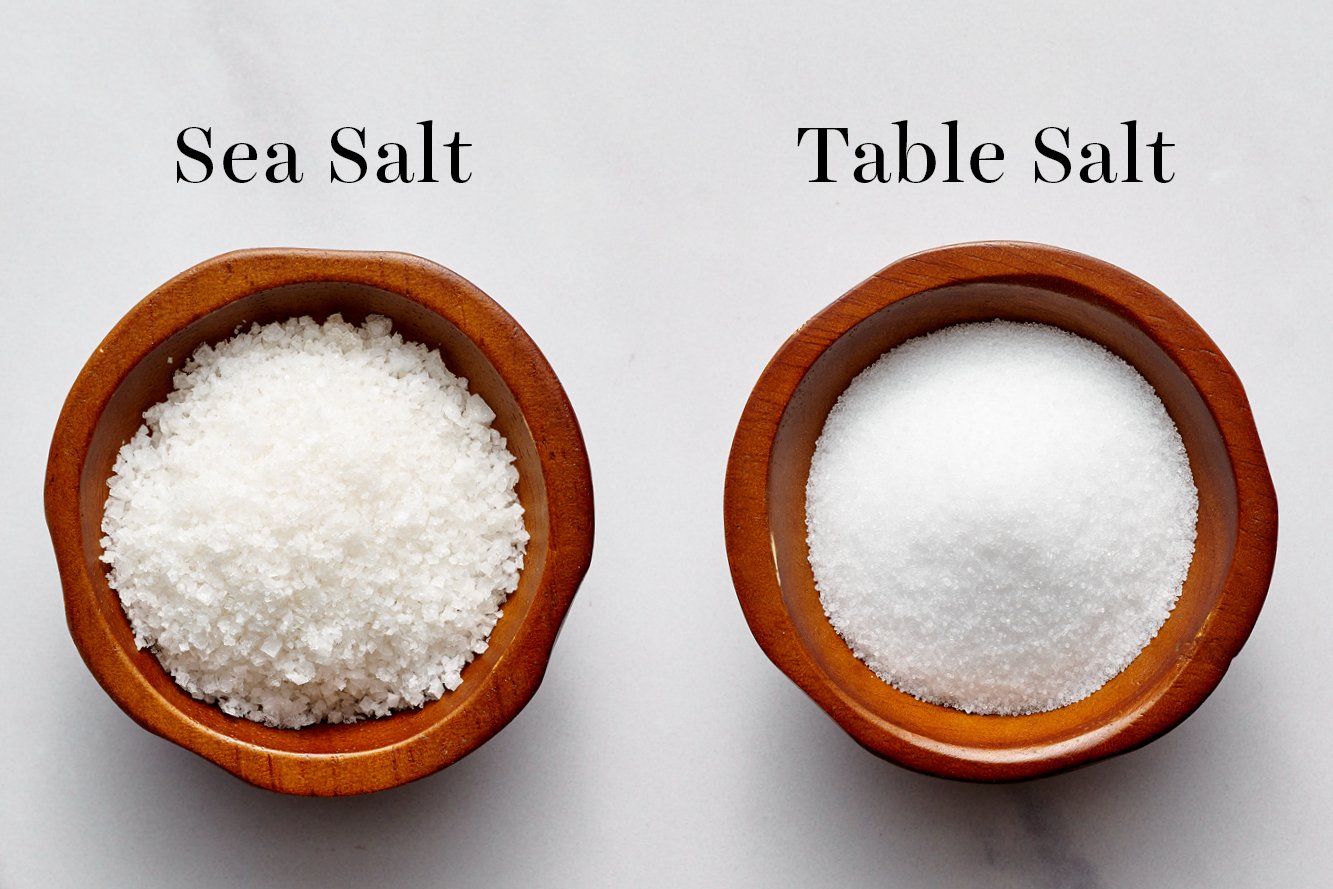
- Fine sea salt – So important to balance the sweetness!
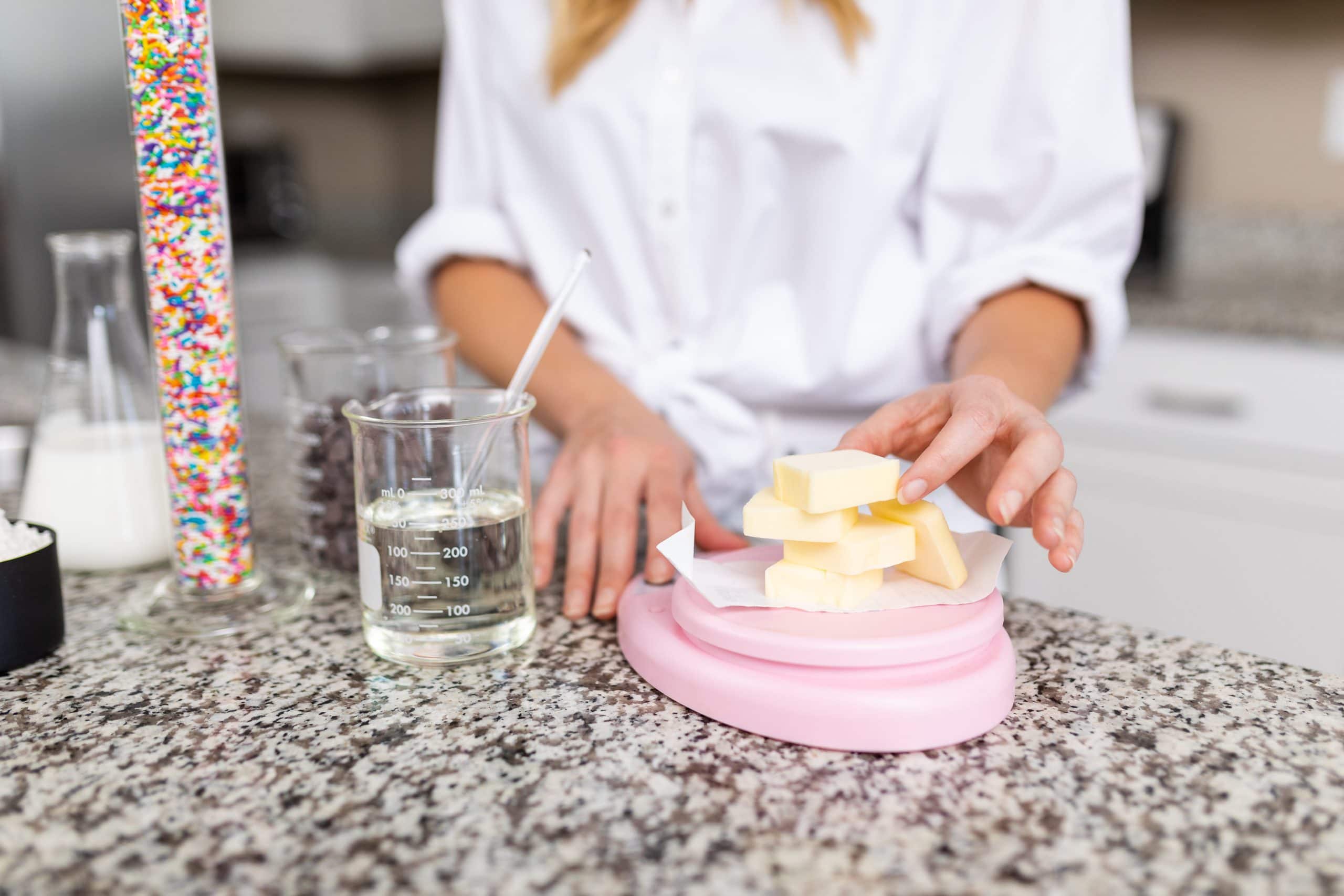
- Unsalted butter – It’s important that your butter is at a cool room temperature (around 67°F), otherwise your cookies may spread.
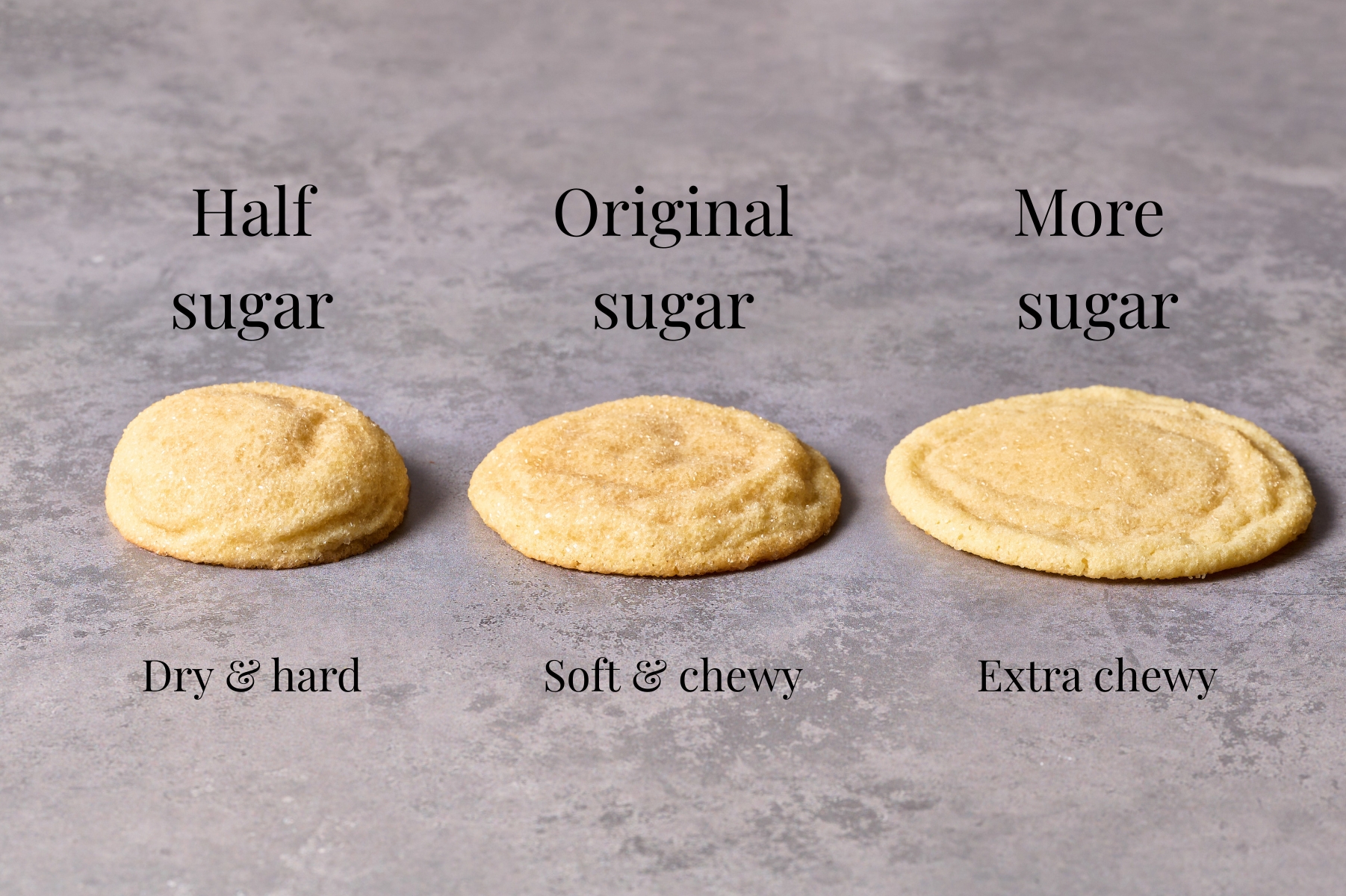
- Granulated sugar – The star ingredient! Don’t reduce the sugar – find out why here and peek the image below.
- Eggs – One whole egg with an extra egg yolk lends richness and chewiness to the texture. Make sure they’re at room temperature.
- Vanilla extract – No sugar cookie recipe is complete without the flavor of vanilla extract.
Keys to SOFT Cookies
- The extra egg yolk helps to add more moisture and richness, for a soft and chewy texture.
- The other trick is found in the size of the dough ball…. a whole 3 tablespoons in each! This creates larger cookies that spread out perfectly with ultra-soft centers.
- Whatever you do, don’t overbake this sugar cookie recipe. They should still look ever so slightly ‘wet’ in the center when you pull them from the oven.
How to Prevent Cookie Spreading
To prevent flat sugar cookies that spread into little puddles, it’s important to make sure your butter is at a COOL room temperature.
Your sticks of butter should give slightly when pressed with your finger but still hold their shape. To be precise, your butter should be 67°F.
Crinkly Tops in Sugar Cookies
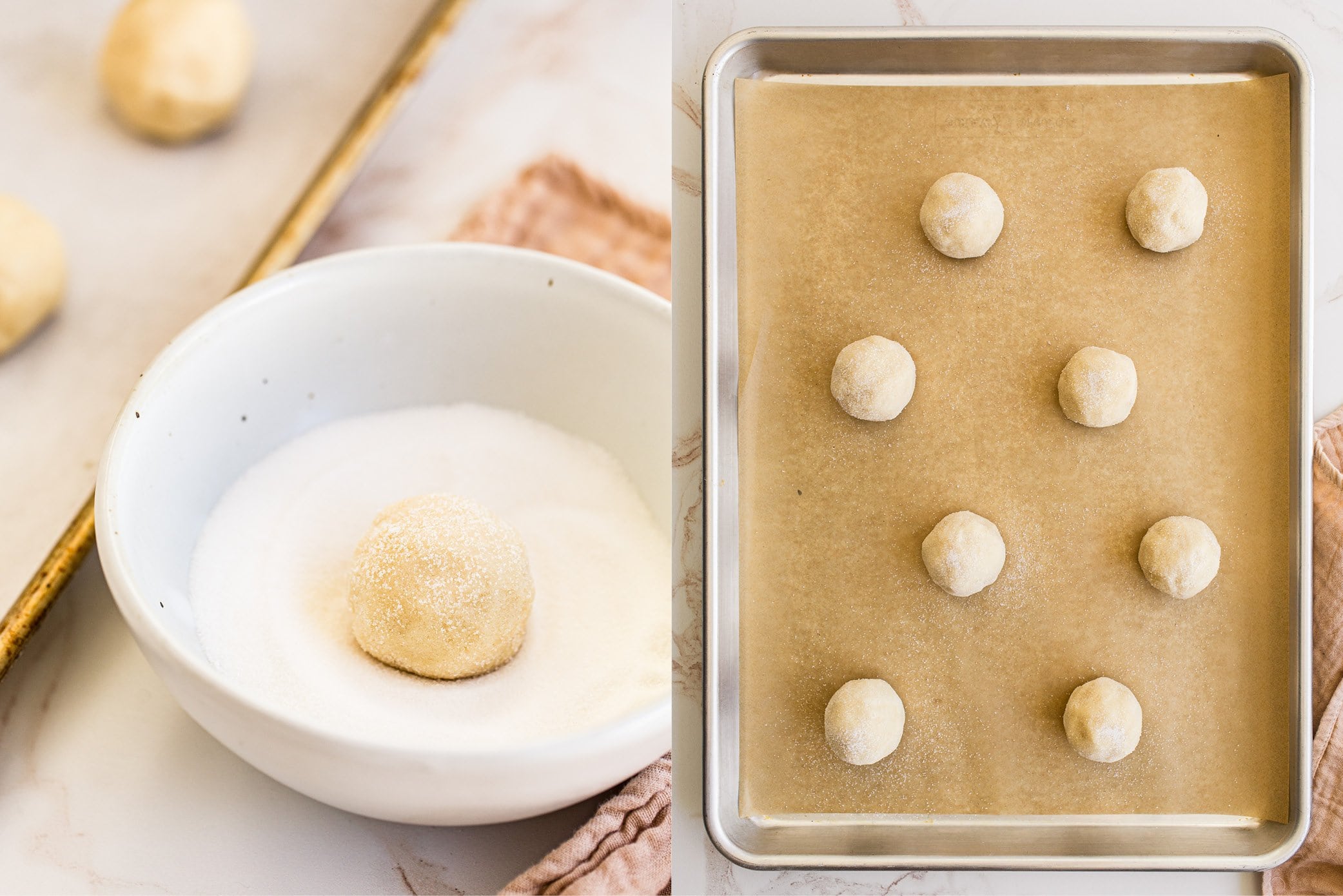
Besides rolling in sugar, baking powder is one ingredient that gives these cookies their characteristic cracks, so make sure your baking powder is fresh.
TIP: When the cookies are piping hot out of the oven, use a round cookie cutter to swirl around the edges of each cookie to re-shape into a perfect circle and enhance those crinkly tops.
The Best Baking Sheet for Cookies
The below photo features cookies from the same exact batch of dough, baked for the same amount of time at the same temperature.
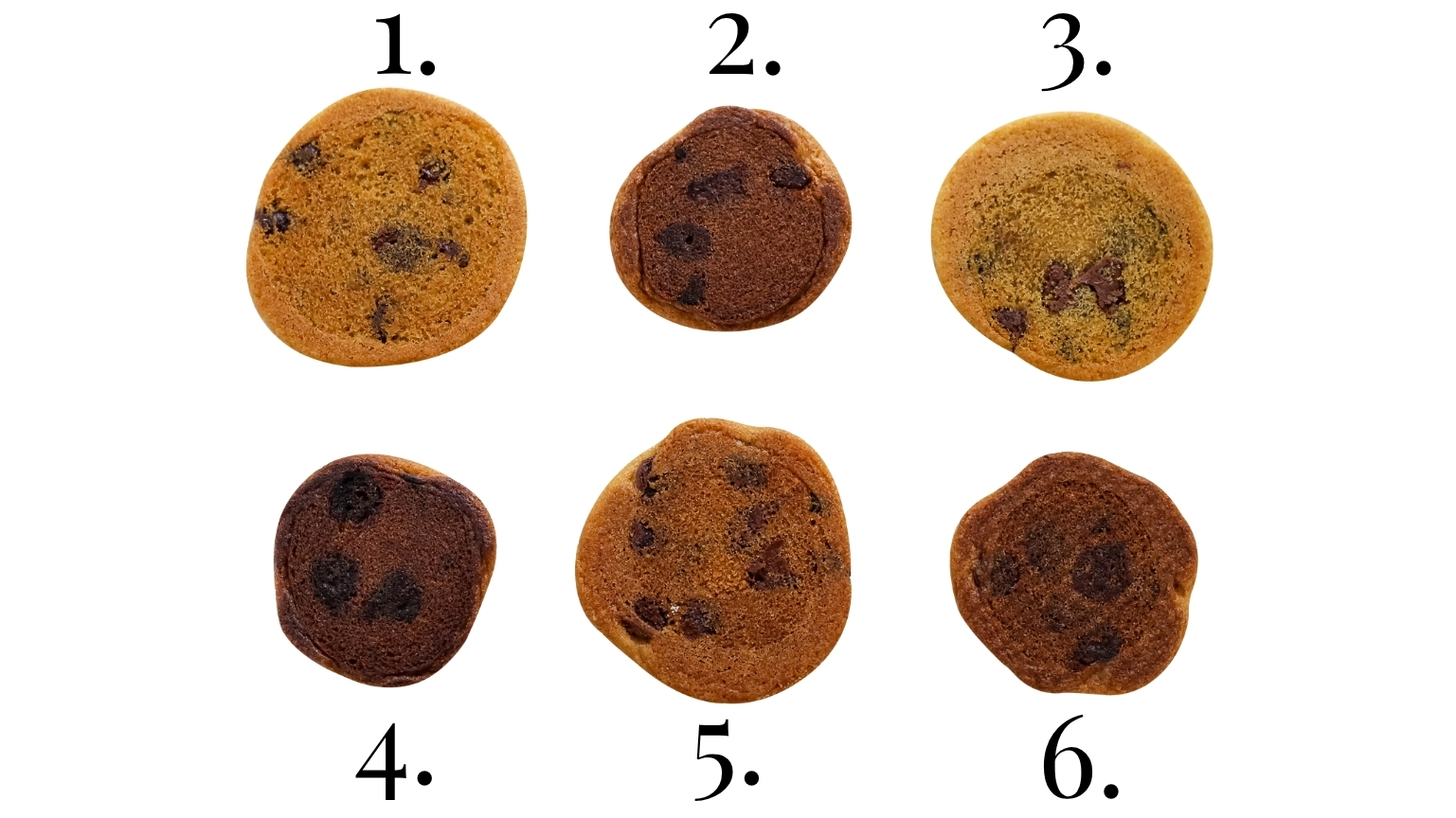
2. Wilton Non-Stick: browned heavily with less spread
3. Walmart Mainstays: pale cookies, pan warped and rusted
4. Viking Ceramic Lined: cookies burnt on the bottom
5. Nordicware Unlined Aluminum: my favorite Goldilocks pan*
6. OXO Gold Nonstick: browned heavily with less spread
A light-colored aluminum half sheet pan is my favorite for baking cookies. Avoid dark nonstick pans altogether, they brown too much and may burn the bottoms of your cookies. Check out my Baking Pans 101 post for all the surprising details.
Do You Need to Chill the Dough?
It’s not required, baking immediately after mixing will result in absolutely delicious cookies.
However, if time permits, chilling the scooped dough in an airtight container for 24-72 hours does result in cookies that are thicker, chewier, and more flavorful. Roll in sugar after chilling otherwise the sugar will absorb into the dough. Learn more about chilling cookie dough here.
What Temperature and How Long to Bake
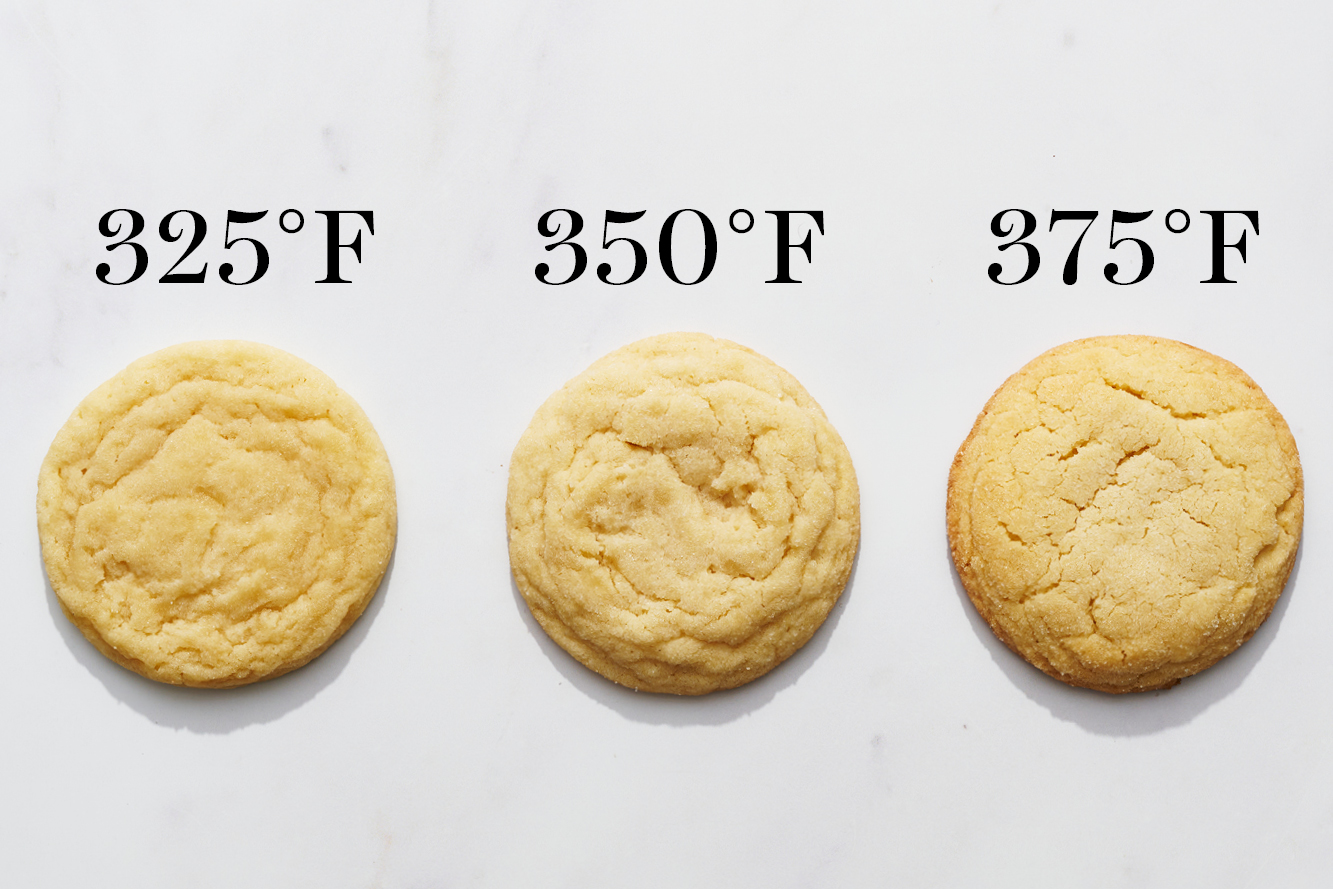
Bake at 350°F for 10 to 12 minute, or until the sugar cookies are set and are just beginning to brown around the edges, for classic thick & chewy sugar cookies.
The higher the temperature and/or the longer you bake, the crispier your cookies will be.
If you like really soft, almost dough-y cookies, bake at 325°F, adding a few minutes to the bake time.
How to Store Cookies to Keep Soft
Store sugar cookies in an airtight container at room temperature for up to 3 days. Store cookies with a tortilla, apple wedge, or piece of bread to keep them soft for longer.
Freezing
This sugar cookie recipe freezes beautifully. Freeze the uncoated, pre-portioned balls of cookie dough in a freezer-safe container, tightly wrapped in plastic wrap, or in a Ziploc bag. Allow them to thaw overnight in the fridge or for 30-60 minutes at room temperature, then bake as directed below.
FAQs
Yes! A hand mixer will work just as well as a stand mixer.
No, this sugar cookie recipe was designed for simple drop-style cookies. If you want cookie cutter sugar cookies instead, check out my Cut Out Sugar Cookie recipe here.
It makes quick and easy work of portioning the dough uniformly so no one fights over the biggest cookie. I love using a 3-Tablespoon size cookie scoop for this sugar cookie recipe. Learn more about Cookie Scoops and how to use them here!
Yes! Feel free to add 1/2 – 1 teaspoon almond extract for a fun twist.
Yes, either omit the salt entirely, or reduce the amount to 1/2 teaspoon.
This is totally optional, as these cookies are so pretty by themselves – but if you want to make them a more colorful treat, here some ideas:
-Roll the balls of dough in colored sugar before baking.
-Fold in 1/4-1/2 cup of multi-colored jimmies or holiday jimmies or sprinkles as a last addition to the dough.
-Use my Best Buttercream Frosting recipe for decorating.
-Another favorite is my Best Cream Cheese Frosting recipe!
I prefer parchment paper for cookies over silicone mats, it’s easier and quicker to clean up. Learn about parchment vs. Silicone mats here.
Whatever you do, never use nonstick cooking spray when baking cookies. This will lead to too much browning and spread (hello, burnt cookie puddles).

Email This Recipe
Enter your email, and we’ll send it to your inbox.
Ingredients
- 2½ cups (318 grams) all-purpose flour
- 2 teaspoons baking powder
- 3/4 teaspoon fine sea salt
- 2 sticks (226 grams) unsalted butter, at cool room temperature
- 1¼ cups (250 grams) granulated sugar, plus ¼ cup (50 grams) for rolling
- 1 large egg plus 1 egg yolk
- 1 teaspoon vanilla extract
Instructions
- Preheat the oven to 350°F. Line baking sheets with parchment paper.
- In a medium bowl, whisk together the flour, baking powder, and salt to combine.
- In a large bowl, use an electric mixer fitted with a paddle attachment on medium-high speed to beat the butter and 1¼ cups sugar until light and fluffy, 2 to 3 minutes. Scrape down the sides and bottom of the mixing bowl. Add the egg, egg yolk, and vanilla, and beat until combined, scraping the bowl down as needed. Slowly beat in the flour mixture.
- Place the remaining 1/4 cup sugar in a shallow dish. Using a large (3-tablespoon) spring-loaded scoop, divide the dough into balls, then roll in sugar to coat evenly. Place the dough balls on the prepared baking sheets, spacing 2 inches apart, and flatten slightly with the bottom of a measuring cup.
- Bake for 10 to 12 minutes, or until the cookies set and begin to brown. Cool for 5 minutes before removing to a wire rack to cool completely. Cookies can be stored in an airtight container at room temperature for up to 3 days.


Hi, can I make these with brown butter and then refrigerate the butter, before mixing then chill the dough 2 days? Would any of those latter cookie recipe tips help in this older recipe? I don’t know if I need to adjust anything if I’m doing any of that. I do know for sure, that the chocolate chip cookies all benefited. Thanks!
Hi Danny! Your question is actually a complicated one to answer! American butter is about 80% butterfat and 20% water (on average, depending on the brand of butter), so when you brown butter, you lose that extra moisture/water as it evaporates through the browning process. It takes some experimentation to alter a regular non-browned-butter recipe to work with browned butter for this reason. You can simply try adding a little water back into the recipe, or start with more butter than the recipe requests, in order to compensate for the moisture you’ll lose as it browns. It’s something you’ll have to experiment with a little in order to perfect, but it can be done, and it’s a fun experiment in the meantime! To answer your question about browning the butter in advance, yes you can refrigerate brown butter to use and cream later, but this will react differently than normal butter when creaming, so keep a close eye on it as you cream the two, and look out for the visual cues Tessa talks about in creaming butter/sugar here. Although this sugar cookie recipe is a couple years old, it’s absolutely delicious as-written, too! Let us know how it goes as you experiment 🙂
Thanks 4 the reply! Another question. Is there any difference between using melted butter then chilling vs. using cold butter then chilling? Since they both end up cold and chilled at the end anyways?
Hi Danny! There is a difference and it’s because butter that is too warm (or once became too warm) won’t aerate properly when beaten with sugar. The water and butterfat in butter are an emulsion, which can break when melted and re-solidified, so if your recipe depends on butter to create air or structure, butter that was once melted (or even sat out at room temperature for too long and became too warm) will no longer work to create the necessary structure or stability. This is why most recipes formulated to use brown butter won’t then call for creaming, and why it can take a lot of tinkering to reach a great result (particularly with spread and texture) with an existing creaming-based recipe. They also often need extra leavening agents, to compensate for the lack of structure from the creamed butter/sugar. I hope that makes sense – it’s a complicated one to wrap your head around! I recommend checking out Food 52’s article here, and/or King Arthur Baking’s article here, for more info 🙂
what’s the nutritional information of these cookies?
Hi Marry! We don’t have nutritional information for our recipes, as we believe that dessert should be an indulgence! You should be able to find a nutritional calculator online to assist with this, if you wish! 🙂
I’m giving 5 stars because the recipe mix was great. Flavor and texture were soft and chewy. I followed recipe exactly and did not chill the dough. My cookies spread quite a bit. Next time I will chill the dough and I expect they will be the perfect soft sugar cookie I was looking for. Thanks!
Hi Donna! I’m so glad you enjoyed these cookies, but the excess spread is likely due to your butter being a little too warm when creaming. Check out our notes and tips on this in the pink tip box, above the recipe 🙂 Chilling the dough next time will also definitely give you a thicker texture of cookie, too. Happy baking!
THE BEST COOKIES EVER! DELICIOUS!
Perfect, chewy consistency. Everyone loved them and I am definitely printing this recipe!
Perfect!
love them
best cookies ever
Hya! Idk what I did wrong:( my cookies spread wayy too much, they turned out tasting like baked butter. I think I added too much butter, well that would make sense, but I used everything how the recipe said. Through trial and error I tried baking ones with more flour (like a LOT more, maybe 150 grams more), and they held their form a lot nicer. They still taste very buttery, like I can’t eat more than one, because I feel like my heart will start fat burning. Anyway, all this ended with me mentally breaking down:(
I love that others love this recipe, but I’m helpless and don’t know what went wrong…
Hi Sam! I’m so sorry these cookies didn’t turn out as they should! It can be hard and upsetting when things don’t turn out, but please try not to beat yourself up – with each baking mistake, we learn – and that’s how we improve and get better! Without having baked alongside you, it’s hard for me to pinpoint exactly what went wrong here, but here are a few things that may have caused your cookie issues here:
– Is it possible something was mis-measured? How do you measure your ingredients? By volume (using cups), or by weight (using a digital kitchen scale)? When measuring by volume, it’s so easy to mis-measure ingredients (particularly flour, but potentially butter in your case too?) and throw off the entire chemistry of a recipe. Check out Tessa’s article here, where she talks about how to best measure ingredients to ensure accuracy every time.
– Was your butter maybe too warm when you went to cream it? We were all taught growing up that totally-room-temp butter was what we needed to bake with, but it’s not true! About 65-67°F is perfect when creaming. Slightly cooler butter like this will give you thicker cookies that don’t spread as much, and have a better consistency. The length of time you cream for also plays into this. Have a look at this article, where Tessa shows some great visuals and explains why butter temperature and creaming time are important.
– How old is your baking powder? If your leavening agents (baking powder, in this case) are not fresh, they won’t do their jobs and your baked goods can not rise properly, spread too much, fall after baking, and much more. Tessa talks about the science behind leavening agents, and how to test for leavener freshness, in this article here.
– Finally, what type of pan are you baking on? Different materials of pans conduct heat differently, so some will cook the bottom quickly, and not leave the cookie appropriate time to spread out gently and evenly. Tessa discusses and shows the differences between a variety of baking pans in this article here!
I hope something here helps, Sam, and I truly hope you give these cookies another try. They really are soooo good! Remind yourself that it’s just baking and it’s okay if they’re not perfect. We all get it wrong sometimes, and that’s totally okay. Be kinder to yourself 🙂 Hugs from Team HTH!
The cookies were delicious and very soft!
My father considers himself to be a connoisseur of sugar cookies. I made these for him (it’s a fun recipe to make), and he decided they were the best he’s ever had and requests them constantly.
Tessa, can you tell us what temperature the dough should be if it was refrigerated overnight? Specifically, how cool should the cookie dough balls be before going in the oven? Does this affect the baking temp or time or the flattening required given that the dough is much colder?
Hi Theresa! If you’re refrigerating the dough overnight and then baking, it’s totally fine to bake straight from the fridge – you might just find that they bake up a little thicker and taller than if you were to bake before refrigerating. If you’re baking from frozen, more adjustments are needed – but just from the fridge won’t make much of a difference to the timing of the baking; the most you would need to add to the bake time is a minute or so. I hope that helps 🙂
can you freeze the cookies after baking?
Hi Cassandra! You absolutely can, though we actually prefer to freeze the cookie dough unbaked in order to enjoy freshly baked cookies at a moment’s notice 🙂 In testing, we found that we preferred the texture and flavor of this versus baking the cookies, then freezing. Check out the pink tip box above the recipe for more details. I hope that helps!