






Tessa Arias, Chef and Cookbook Author
This post may contain affiliate links. Read our disclosure policy.
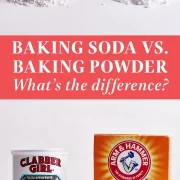
I get questions about baking soda and baking powder all the time, and I get it. It’s easy enough to mix them up. They look similar and likely live side by side in your pantry. But they behave very differently when added to your baked goods.
By the end of this post, you’ll know exactly when to use each one, why you usually can’t swap them 1:1, and even how to check if yours are still fresh. Understanding these fundamentals with clear, practical advice will help you bake with confidence!
The Difference Between Baking Soda vs. Baking Powder
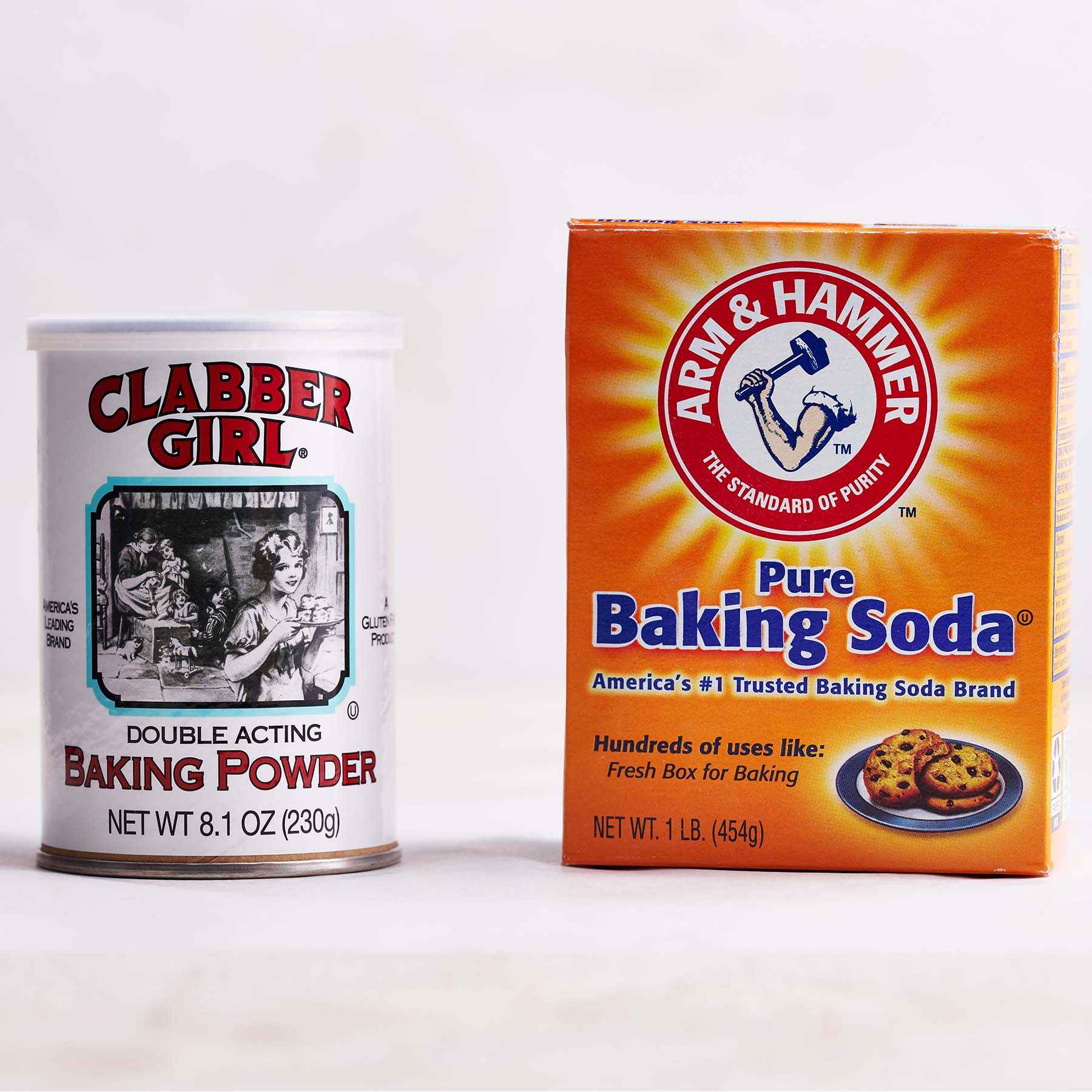
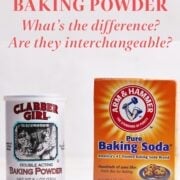
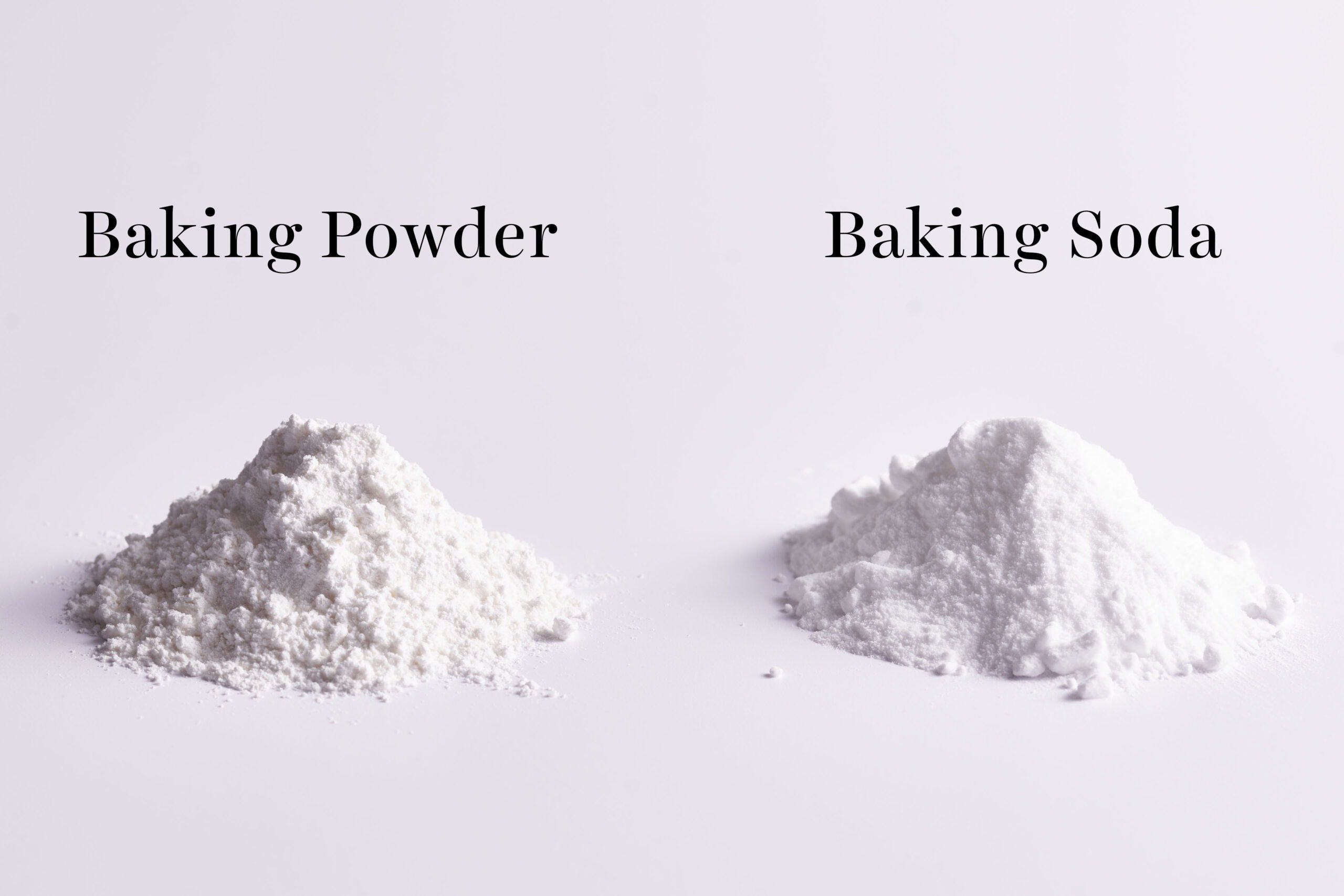
Baking soda is pure sodium bicarbonate. It needs an acid in the recipe, like buttermilk, lemon juice, or brown sugar, to activate and create lift. Without an acid, it won’t do much in your batter or dough.
Baking powder is a complete leavening system. It contains baking soda, plus a dry acid, usually cream of tartar or tartaric acid, and a little cornstarch to keep it dry. All it needs to work is moisture and heat.
Most baking powders in the U.S. are double-acting baking powders, which means they react once when mixed and again when baked. Single-acting powders react only once when wet, so bake immediately after mixing.
This means that baking powder-leavened doughs and batters can be stored and baked at a later time, giving you a little wiggle room to prep ahead without losing rise.
Tessa’s Tip
If using aluminum-free baking powder, I recommend looking for one marked as double-acting for the best results.
What Each One Does in Your Recipe
Both are chemical leaveners. They release gases, primarily carbon dioxide gas, through chemical reactions between acids and bases. I like to think of their effects in 3 main ways: lift, texture, and flavor/color.
Baking Soda
- Lift: It releases carbon dioxide as soon as it hits a liquid and an acid. This creates bubbles that expand in the oven, helping my cakes or cookies rise. But because it reacts immediately, I know I need to bake quickly after mixing, especially in wet batters.
- Texture: As the bubbles form, they gently stretch the batter, resulting in baked goods with a slightly more tender crumb. It doesn’t create as soft a crumb as baking powder, but it does make a noticeable difference in cookies, brownies, and quick breads.
- Flavor and color: Raises pH to promote browning. That’s why cookies spread nicely and get those golden edges. The acid in the recipe neutralizes its flavor. Using too much may result in an unpleasant metallic, soapy, or bitter taste.
Baking Powder
- Lift: Works in two stages (double-acting), once when wet, and again when heated, so it gives batter or dough more stable lift and better bench tolerance. I can mix my muffin batter in the morning and bake it later without worrying about collapse.
- Texture: The small acid content in baking powder lowers the pH slightly, which relaxes gluten and creates softer, more delicate textures. That’s perfect for cakes, muffins, and biscuits.
- Flavor and color: Since it has less alkalinity than soda, baked goods are paler and milder in flavor. It won’t create the same browning or spread as soda, which is why I sometimes use both to get the best of each.
Tessa’s Tip
Chilling cookie dough can improve texture and flavor because the chemical reaction from baking soda (and/or baking powder) happens more slowly in the low-moisture dough. This gives cookies a better spread and browning when baked!
When to Use Each
If you’re ever unsure which one to grab, I use this simple rule of thumb: look at the ingredients and think about the result you want in your baking recipes.
Use baking soda when:
- There’s an acidic ingredient in the recipe. That includes buttermilk, sour cream, yogurt, brown sugar, unsweetened cocoa powder, lemon juice, honey, or molasses.
- You want more spread, browning, and crisp edges. It raises pH, which encourages caramelization and a richer color. That’s perfect for cookies and gingerbread.
- Timing matters. Because it reacts as soon as it hits wet ingredients and acid, I try to bake batters that rely on it right away.
Use baking powder when:
- There’s little or no acid in the recipe. It already contains its own acid, so it doesn’t need help from other ingredients.
- You need structure and lift. Most brands are double-acting, meaning it reacts in stages, giving a stable rise and a tender, delicate crumb. That’s great for muffins, biscuits, and cakes.
- You want prep flexibility. Thanks to its bench tolerance, batter or dough can sit a little longer before baking without losing leavening power.
Can You Substitute Them?
I get asked this a lot, and the short answer is: not easily. While BP contains BS, they aren’t interchangeable. Baking soda is about 4 times stronger, so swapping them 1:1 can affect both the texture and flavor of what you’re baking.
For reference, 1 teaspoon of baking powder will raise a cup of flour, whereas only a 1/4 teaspoon of baking soda can produce the same effect. A general rule of thumb is that 1 teaspoon of lemon juice or vinegar neutralizes ½ teaspoon of baking soda.
I don’t recommend substituting at all in recipes that rely on BS for browning and spread, or on BP for structure and lift. If a recipe calls for baking soda paired with cream of tartar instead of pre-mixed baking powder, follow it as is, too. This gives more control over lift, browning, and flavor. Snickerdoodles are a classic example.
Why Some Recipes Use Both
Sometimes a recipe uses both because you want the best of both worlds!
You’ll often see this combo in recipes that contain some acidic ingredients, but not quite enough to activate baking soda on its own. Pancakes, banana bread, and my Ultimate Chewy Chocolate Chip Cookies are great examples. In these cases, baking soda neutralizes excess acidity and improves color and spread, while baking powder ensures your baked good still rises.
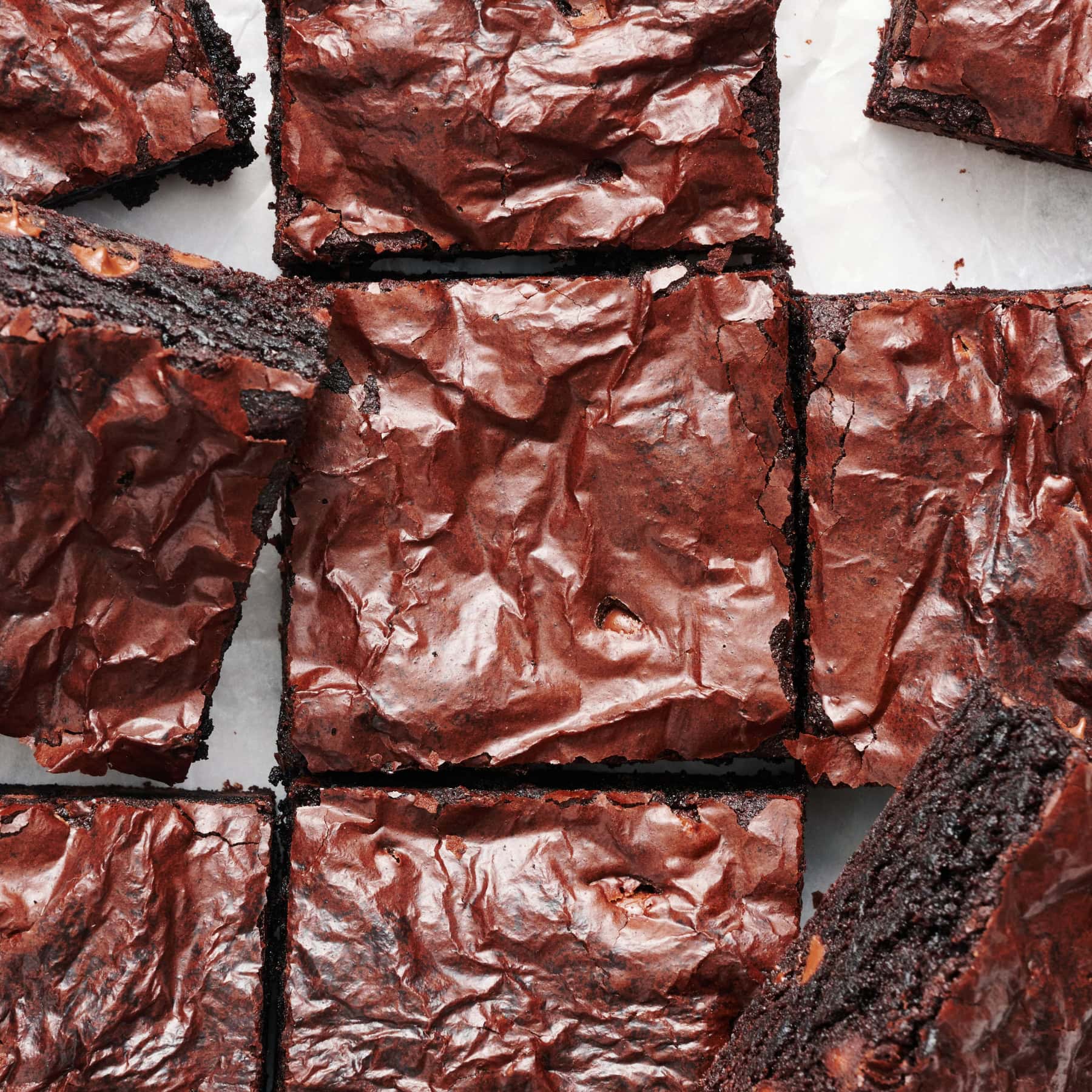
On the flip side, some recipes don’t use either. Recipes containing yeast, baked goods that whip lots of air into the batter, or custard-based desserts may not need chemical leaveners. I keep both out of my Best Ever Chewy Brownies for that chewy, fudgy texture!
Why Using the Right Leavener Matters (With Baking Results)
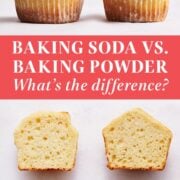
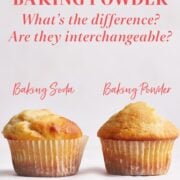
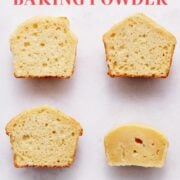
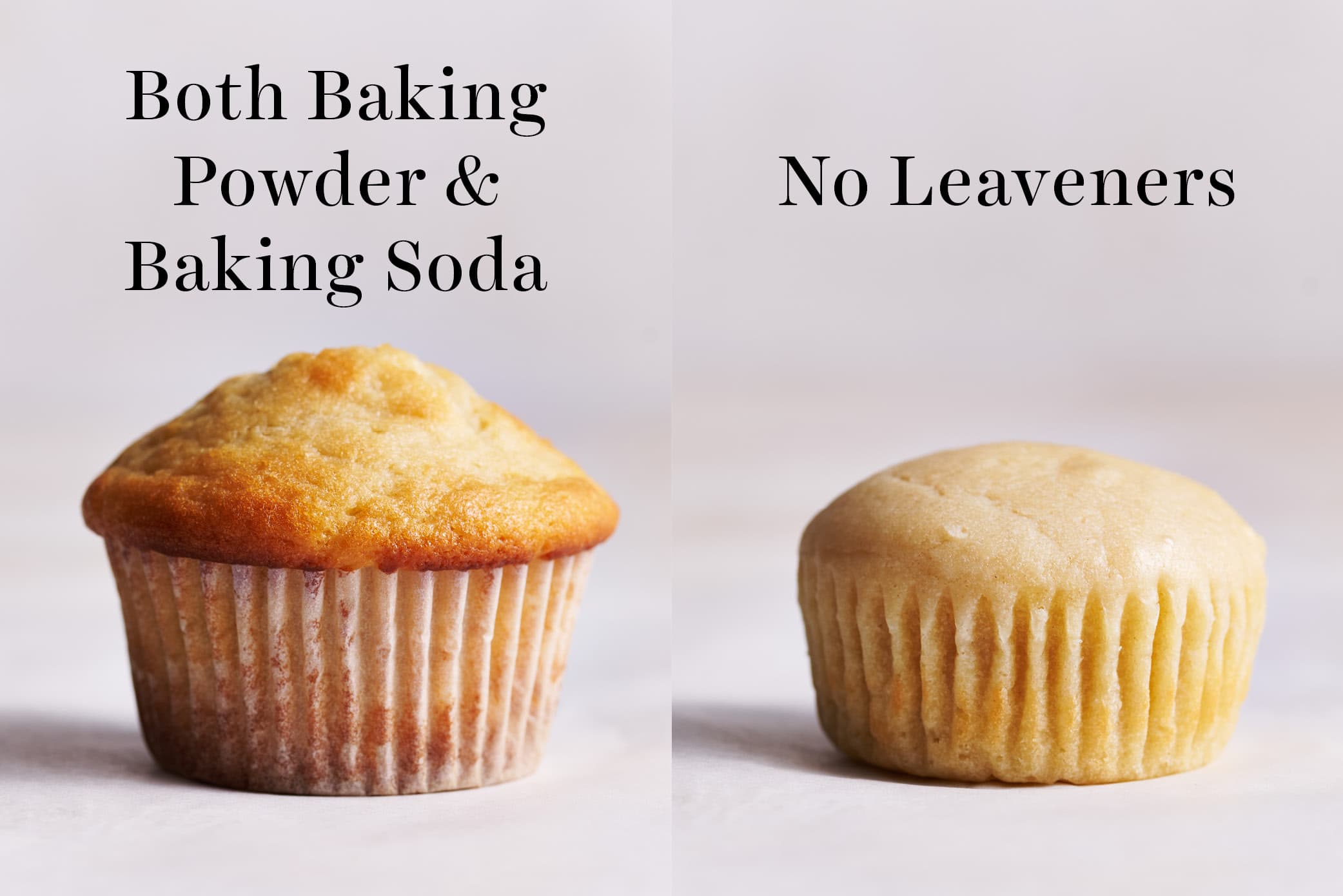
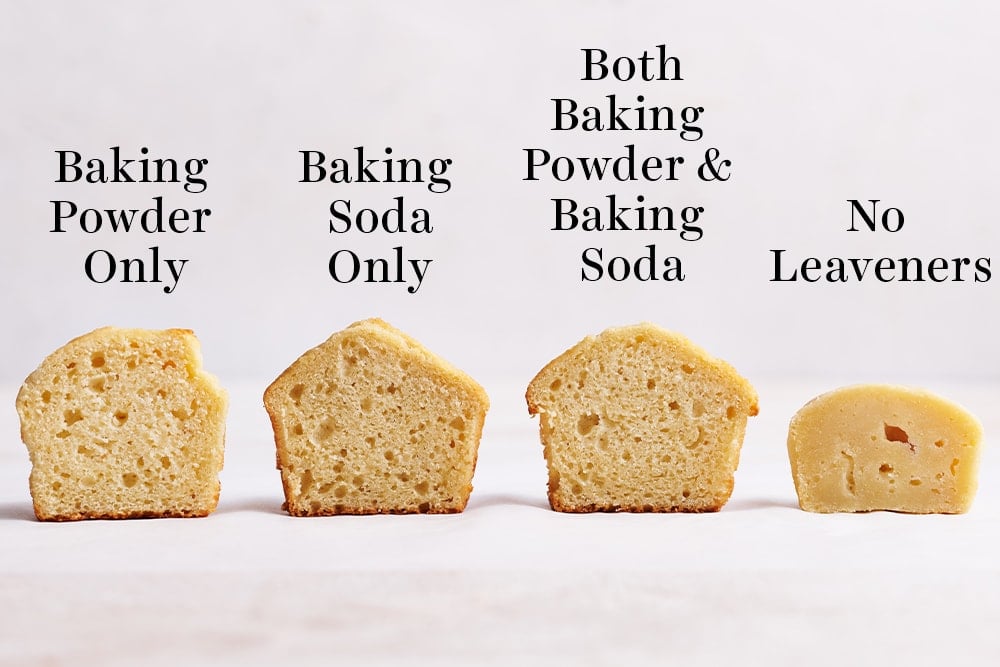
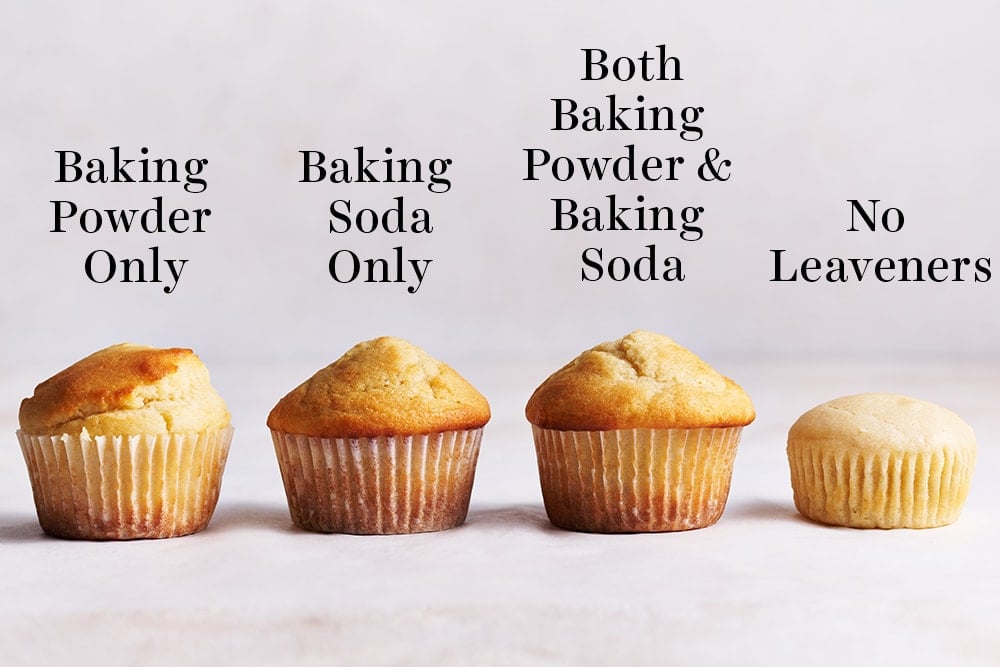
Take a look at my results using the same exact base muffin recipe, baked in the same pans at the same temperature for the same amount of time. The only difference is the chemical leavening agent used:
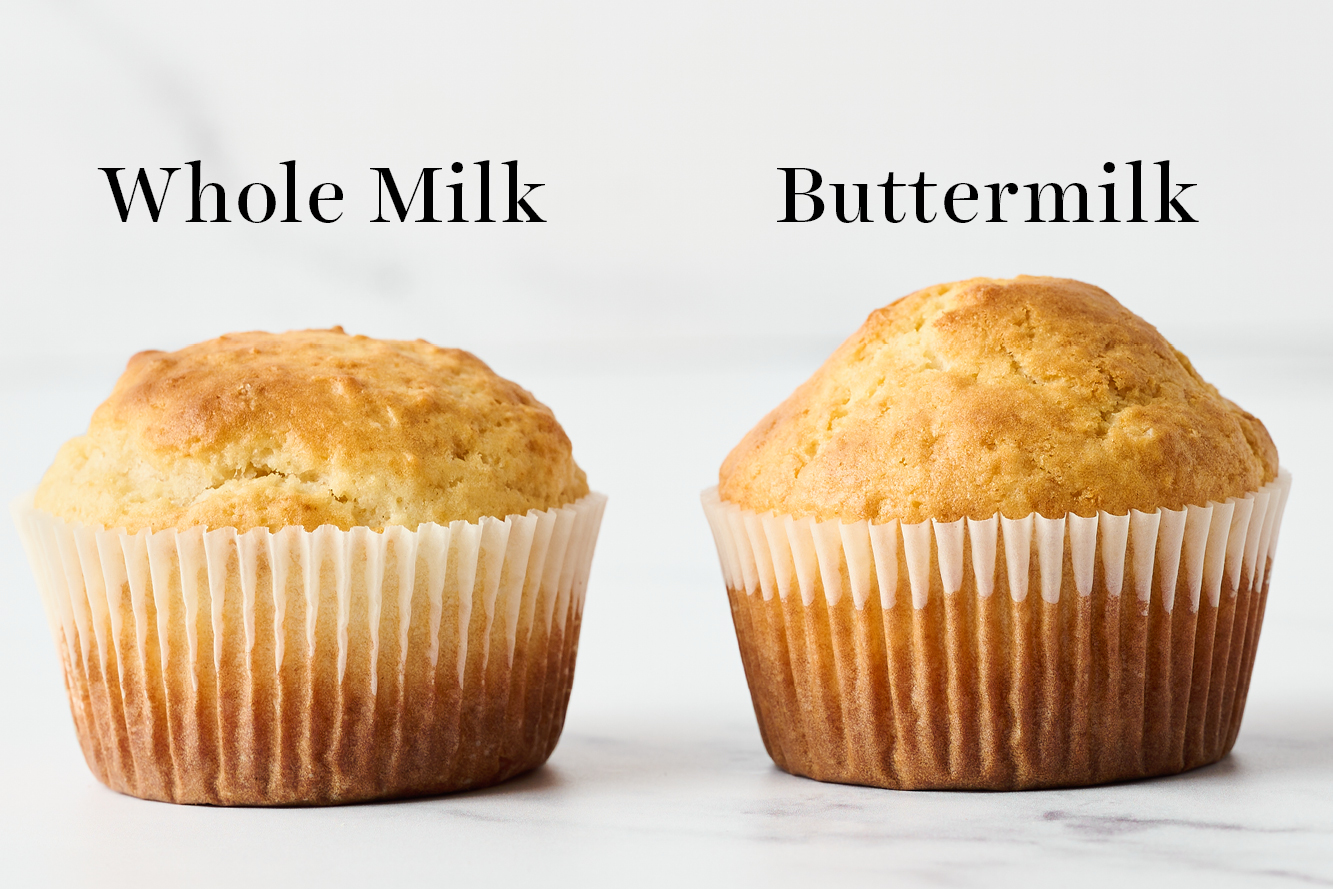
- Baking powder muffins: These were tall, light, slightly delicate, fluffy, and cakey. They were evenly domed on top. These were my favorites!
- Baking soda muffins: These were slightly more browned, with very tall peaks in the center. They had a somewhat sour aftertaste, almost like there was sour cream in the batter.
- Both baking soda and powder muffins: These muffins were the most browned and caramelized and had a more springy texture.
- No-leavener muffins: These were leaden, dense, rubbery, and really just a doughy, inedible mess.
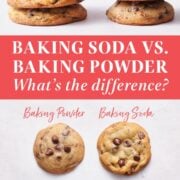
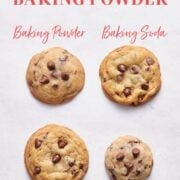
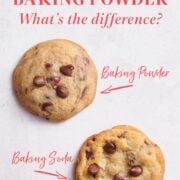
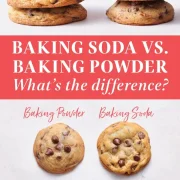
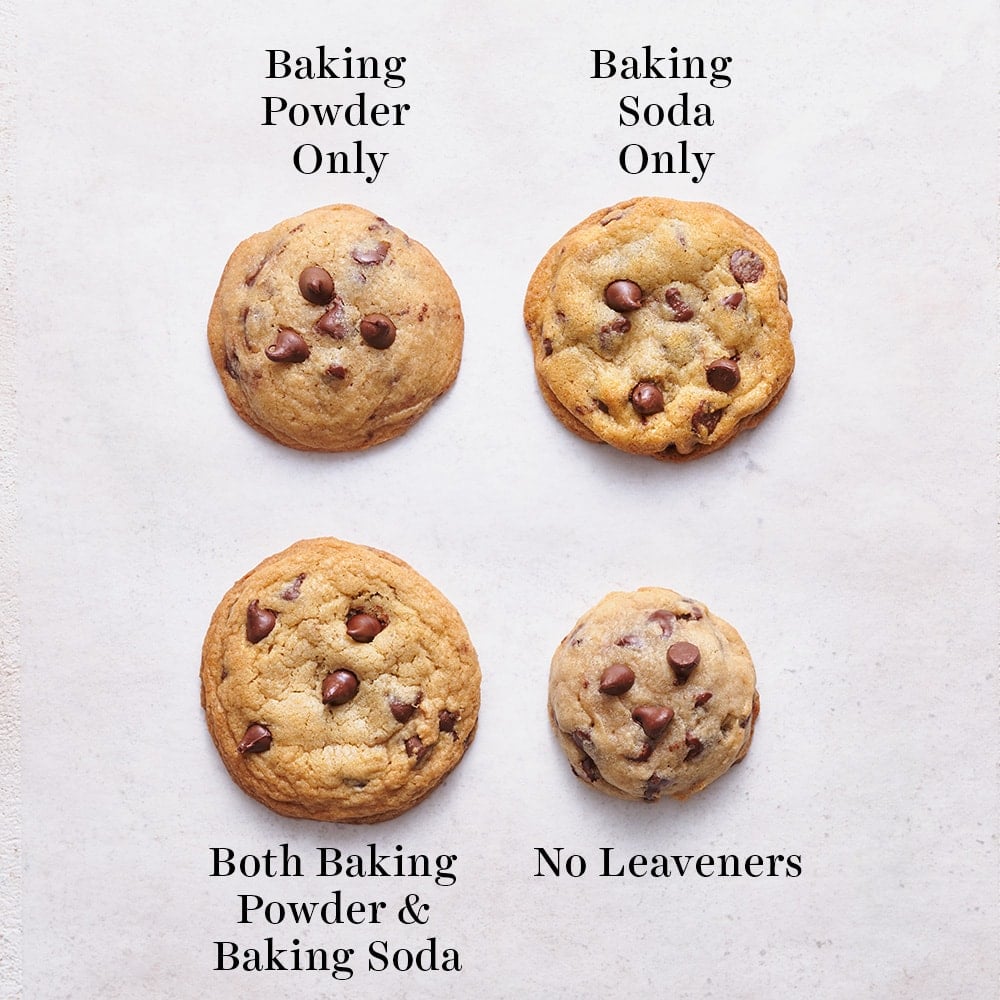
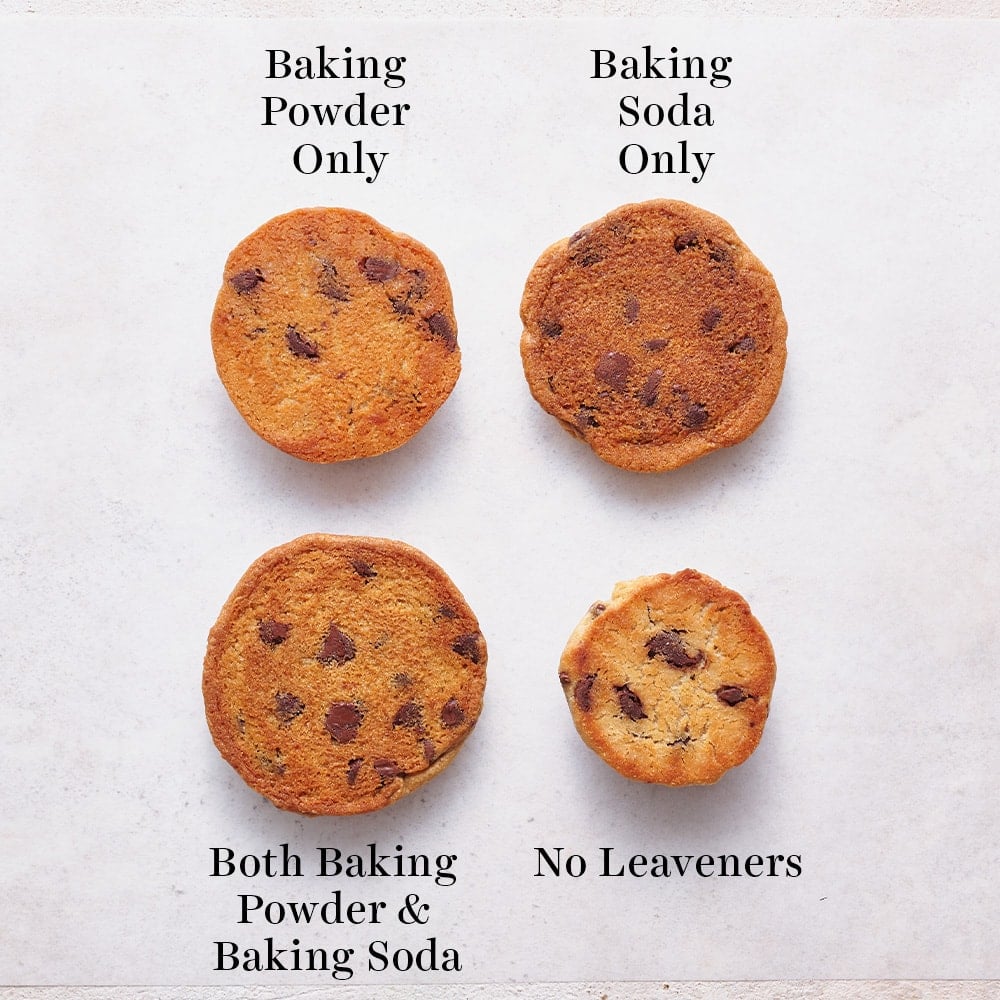
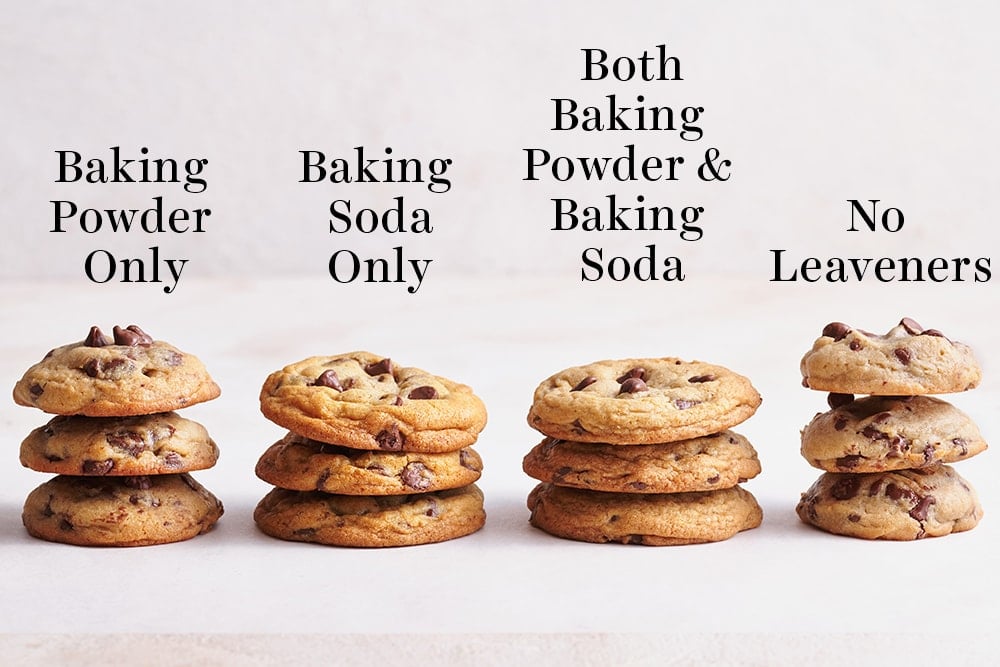
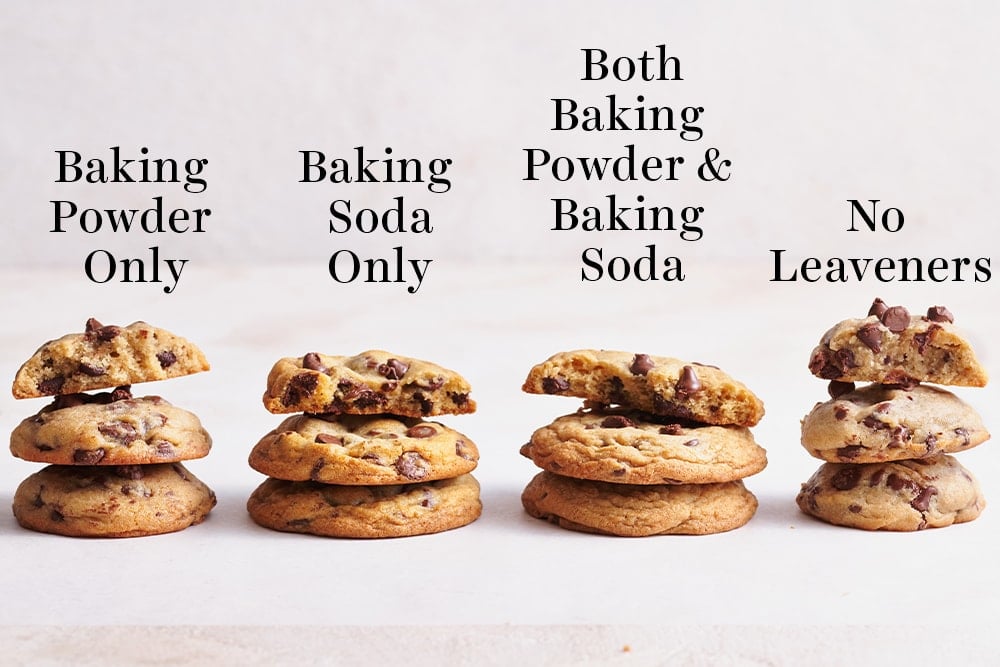
I repeated the same experiment comparing baking soda vs. baking powder in cookies with my Bakery Style Chocolate Chip Cookie Recipe:
- Baking powder cookies: These were extra thick and tall, not chewy, more fluffy, and not quite as flavorful.
- Baking soda cookies: These cookies were well-browned with slightly crispy edges, chewy interiors, and regular thickness. They were my favorite!
- No-leavener cookies: These were dense and heavy, with a texture similar to that of Mexican wedding cookies.
How to Tell if Yours Is Still Fresh
Even if baking soda or baking powder hasn’t hit its expiration date yet, it can still lose effectiveness over time. Air, moisture, and light all weaken chemical leaveners, which is why stale baking soda or baking powder often leads to flat, dense baked goods with little rise.
To test your baking soda, place about 1/4 teaspoon in a small bowl and pour a teaspoon of vinegar over it. If it bubbles up right away, it’s still good. If you see little to no reaction, it’s time to replace it.
To test your baking powder, stir about 1 teaspoon into a cup of hot tap water. Fresh baking powder will bubble noticeably. If nothing happens, it’s no longer effective.
Once opened, it’s best to use both within about 6 to 12 months. If your baked goods aren’t rising as they used to or sinking in the middle, checking the freshness of your leaveners is one of the easiest fixes.
Common Myths
Before you get to baking, I wanted to clear up a few common myths I’ve seen about leavening agents. Understanding these details is one of the easiest ways to avoid baking disasters:
- More baking soda = more rise. Nope. Too much baking soda can create a bitter, metallic taste, and it won’t always make your baked goods rise more.
- Leavening lasts forever. Even before the expiration date, baking soda and baking powder lose potency if exposed to air, moisture, or heat. Old leavening can lead to flat, dense results.
- Double-acting baking powder allows you to prepare hours ahead. It helps with bench tolerance, but it doesn’t make it infinite. Eventually, the first reaction happens, and the batter will start to lose lift if left out too long.
How to Store Leavening Agents
I always store my leavening agents in a cool place in an airtight container. Keep them away from air and light, as they can cause baking powder and baking soda to lose their effectiveness before their expiration date.
Avoid keeping them above the oven or near the dishwasher, where heat and steam can sneak in. Refrigerating them usually isn’t necessary either. It can actually introduce moisture unless the container is perfectly sealed.
If you bake often, it’s best to buy smaller containers and replace them regularly. Fresh leavening agents make a noticeable difference. Using a weak one will result in flat, dense baked goods, even when everything else is done correctly.
FAQs
If you use baking soda instead of baking powder, your baked goods may rise unevenly, brown too quickly, or result in a bitter or soapy taste. Baking soda is much stronger and needs an acid to activate, so if the recipe doesn’t contain enough acid, you may end up with flat, dense results.
Yes, “bicarb soda,” or bicarbonate of soda, is simply another name for baking soda. Those in the United Kingdom, Australia, and New Zealand commonly refer to it as that. Both terms refer to the same ingredient: sodium bicarbonate, a pure alkaline leavener that needs an acid to activate in baking.
Neither one is better than the other. It really depends on the chemistry of the recipe and your desired outcome.
In general, baking soda creates more browning, spread, and chewiness, which is ideal for cookies with crisp edges. Baking powder provides lift and a soft, fluffy texture, which works well for muffins and cakes.
Baking powder creates a lighter, more delicate crumb because it reacts in stages and doesn’t need extra acid, so the cake holds its structure. Baking soda reacts immediately with acid, which can produce more browning and a slightly coarser, more open crumb in a cake recipe.
More on the Science of Baking:
- Artificial vs. Natural Food Coloring in Baking
- Everything You Need to Know About Sugar in Baking
- How to Measure Flour
- Kosher Salt vs. Sea Salt vs. Table Salt
Recipes to Try
- Chai Sugar Cookies
- How to Make Perfect Scones
- How to Make Soft Batch Cookies
- Peanut Butter Chocolate Chip Cookies
- Ultimate Muffins
Photos by Joanie Simon.


Great article, but I clicked on a link that was suppose to tell me how to test for freshness. The article taught me all these wonderful things, but the answer about testing frashness should have been revealed immediately. If it’s in there, then there is too much reading to get to it.
Hi Mac, thanks for your feedback! If you view the Table of Contents at the top of the page, you can click straight to the section that explains how to check for freshness 🙂
Hi. If making your own baking powder is there a way to make it double action. So I can keep cookies muffin batter in fridge overnight thanks
We’ve never made our own baking powder, so I can’t say for sure!
This was a wonderful and helpful article, thank you so much. I made a bath of cranberry chocolate chip cookie dough and froze it to use later. It contained both baking soda and baking powder. When I pulled it out to bake the cookies the cookies ran terribly??? Should I not have frozen it because of the additional soda? I like to keep cookie dough in the freezer, but don’t think I have had anything like this happen before. They were not pretty and doughy in the middle. Thank you again for the article and your help.
I’ve been baking over 60 years and never knew the differences between baking powder and baking soda. I also did not realize using these leaveners when outdated would render undesirable results, including flavor! Thanks for educating me! I’ll be baking better now!
I should add I tested my baking soda for freshness and am substituting it for baking soda, as I’m out!
Oh my, I’m meant I’m substituting baking soda for baking powder!
Me too! This article, I went right to my kitchen to test my baking powder and baking soda!! I recently made some muffins and they sank just like the picture. I do a lot of baking and never had that happen. I’m going right in and test my soda and powder
1
Hi, I made a cake using self-rising flour + baking powder + baking soda. The result was that the cake became dense at the base and didn’t rise much. I got this recipe from a vegan cooking blog. What could have happened? Is there a chemical reaction that cancels out the effects of leavening? Your blog is very interesting, I look forward to your response eagerly!
Hi Cecilia! I’d actually recommend reaching out to the author of that cake recipe! Without knowing their recipe or how it’s written, it’s tough to say what went wrong, whether it’s the leavener that’s at fault or something else. Good luck!
thank you i leaned a lot will be using some of your reecipes
*learned
This article is/was so helpful in understanding baking soda and baking powder. I had often wondered about what they do for recipes. Thanks!
This is the best, most comprehensive and understandable explanation of the chemistry of leaveners I’ve come across. With this information I feel able to manipulate them myself. Thank you for sharing. The photo’s were helpful. Thank you for going to all the trouble to do the baking. It really adds to comprehension. This is a most generous contribution.
Thank you. You helped me understand how to make my new ginger cookies less flat and brown. That recipe called for 4 C flour to 3/12 tspn baking soda and only one tspn baking powder. I make choc chip cookies whose texture I like with 2/14 C flour 1 tspn baking powder and 1/4 tspn baking soda. I will alter the ginger cookie amounts, almost switching the amounts of powder vs soda. I appreciate the tests for freshness, too. Sorry that I don’t have the cookies on hand to upload images now.
Hi Coyote! Glad you found Tessa’s article helpful! Can’t wait to hear how your cookie recipe modifications go! Happy baking 🙂
this article helped a lot with my science project thank you