





Tessa Arias, Chef and Cookbook Author
This post may contain affiliate links. Read our disclosure policy.
I adore baking bread.
Any dough risen with yeast is nothing short of magical. A few simple ingredients come together and slowly transform into the most delightful, aromatic, and comforting thing known to humankind… BREAD!
Working with yeast can be intimidating. While it does take practice, there’s absolutely no reason to avoid it or be scared by it. I promise you, with a few helpful articles like this one (and my article on how to knead dough), you’ll be well on your way to fantastic homemade bread in no time.

Sprinkle of Science
Is active dry the same as instant yeast?
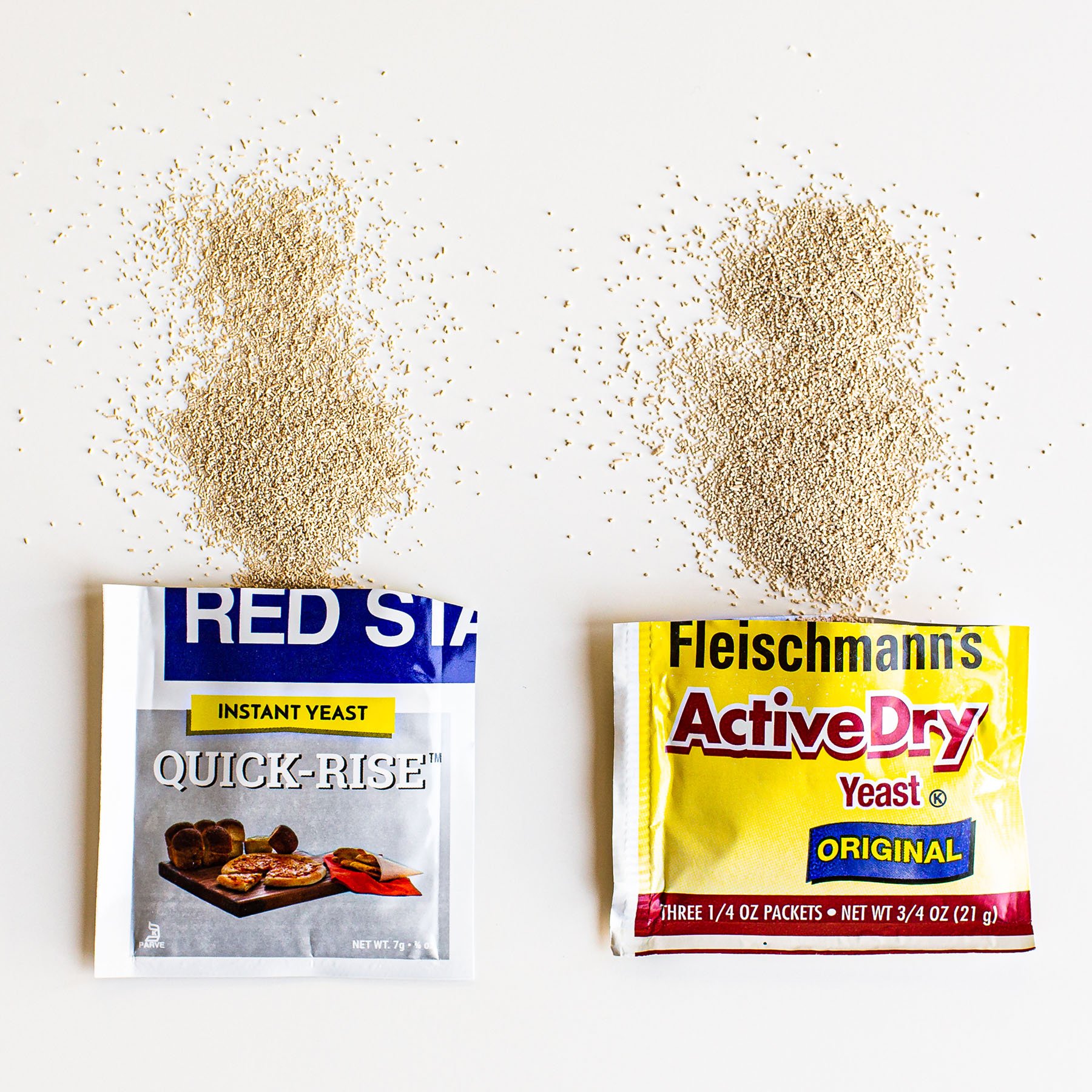
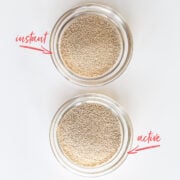
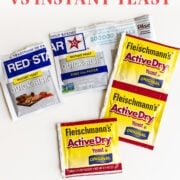
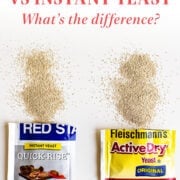
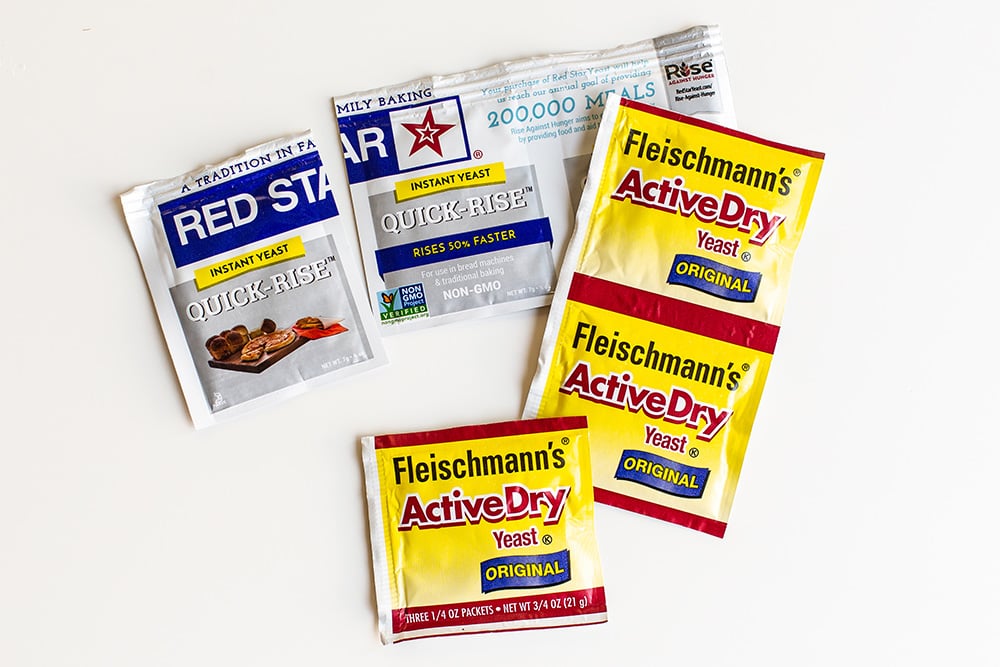
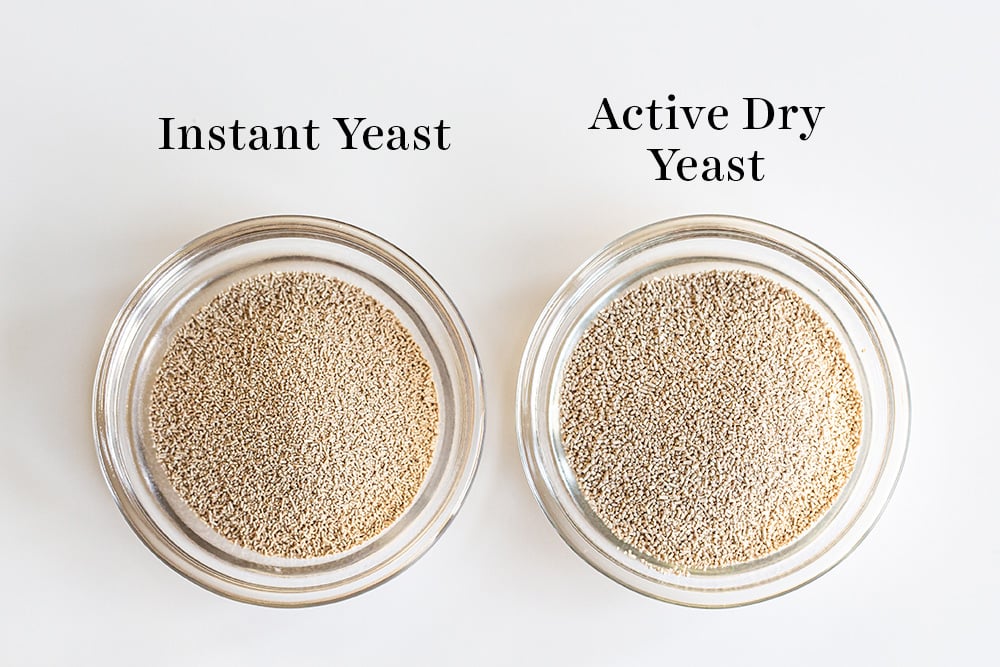
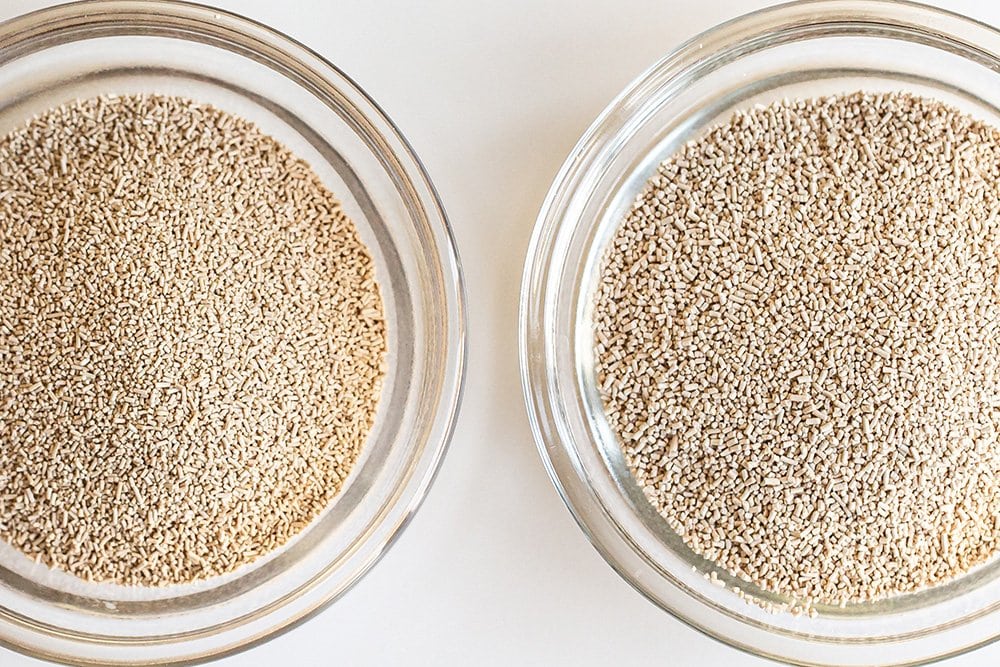
Active Dry and Instant, also called ‘quick rising’ or ‘fast rising’ are much more similar than most people think. In fact, they can be used interchangeably in most recipes. They’re both commercial products made from drying fresh yeast into granules.
Active dry simply works a little more slowly than instant.
This is why in many recipes which call for active dry, you’ll see instructions for proofing included. This is simply when you mix active dry with warm liquid (110-115°F) and sugar to activate it. This helps kick start the yeast’s activity.
Since instant has a quicker rate of action thanks to a special manufacturing process, many recipes will instruct you to simply add the yeast in straight with the other ingredients without proofing it.
You can proof them both, or skip proofing for either kind altogether. The only difference will be how quickly your dough will rise.
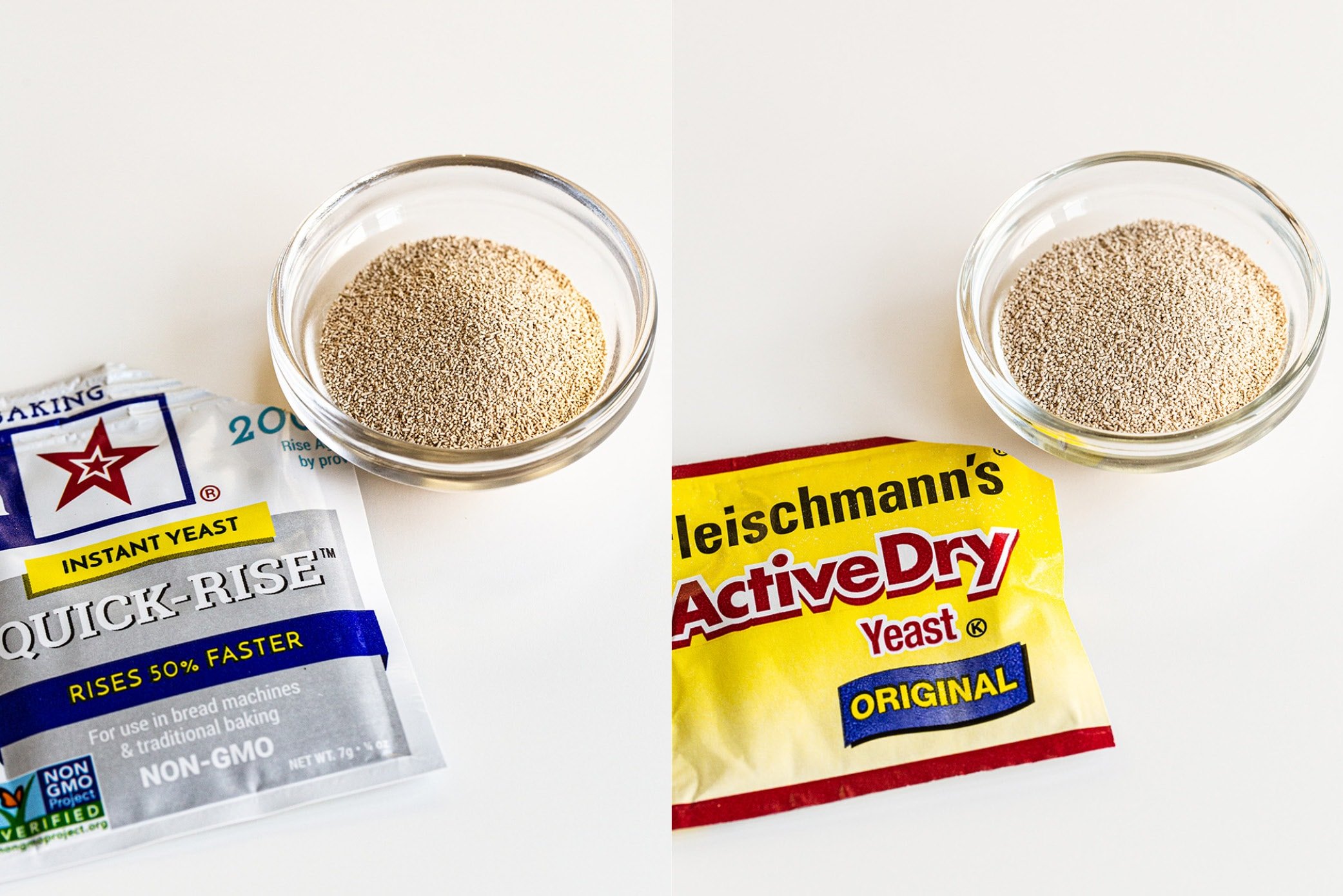
How to Substitute Instant Yeast for Active Dry (or vice versa)
Active dry and instant yeasts can be substituted for one another at a 1:1 ratio. Active dry will take about 15 to 20 minutes longer to rise than instant. To encourage active dry to start its activity without having to proof, just use very warm water in your dough mixture (120-130°F).
For any traditional dough making where you’re kneading by hand or with a machine and allowing the dough to rise, this 1:1 ratio will work.
When not to substitute:
Active dry and instant may not be interchangeable when using a bread machine since they use higher temperatures to raise dough. When baking in the bread machine and substituting instant for active dry, reduce the amount of instant by 25%.
You may also want to use the specific yeast called for in recipes with very long fermentation times (typically active dry in those cases).
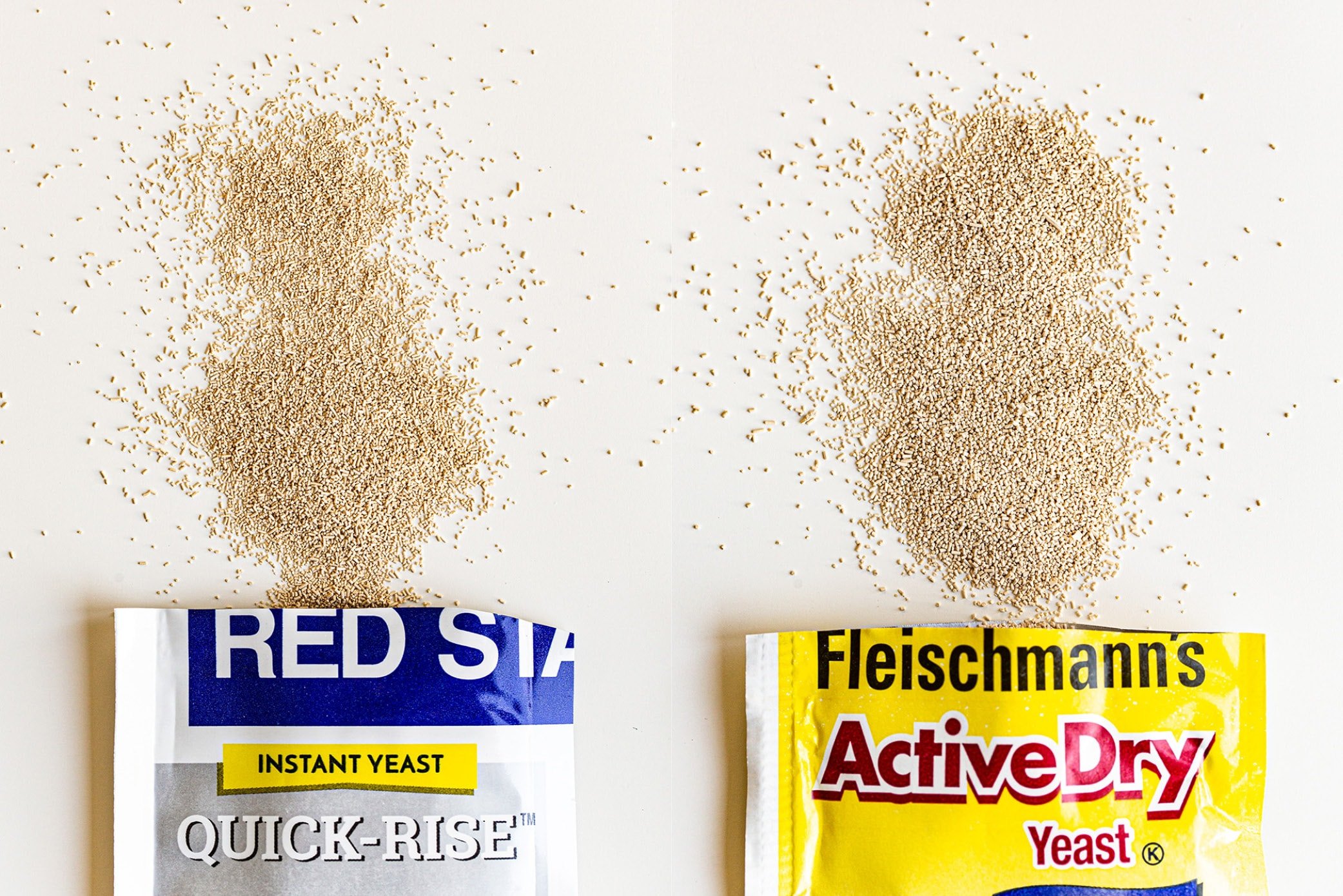
Is one type of Baker’s Yeast better than the other?
One isn’t better than the other, it’s usually personal preference and which you have easy access to. I tend to stock up on Instant in a large jar or package and store it in the freezer. This is more economical, and since instant works quickly, I find it more convenient.
How do I measure?
Since it’s sold in a variety of packages, here’s a quick conversion:
1 packet = 2 1/4 teaspoons = .25 ounces = 7 grams
How to store:
Unopened yeast will keep for up to 2 years. Once opened, it’s really best to store in the freezer in an airtight container for up to 1 year. Allow the amount you need to come to room temperature before using in a recipe.
How to test freshness:
Yeast is very perishable when exposed to air, and while it should be used by the “best if used by” date (2 years after packaging if unopened), it can often go bad before then. It can also arrive at your home already dead if it hasn’t been stored properly by the seller.
To test for freshness, in a liquid measuring cup combine 1 teaspoon of granulated sugar with 1/2 cup of lukewarm water (110-120°F). Add in one package, or 2 1/4 teaspoons, of active dry and stir until there are no more yeast granules floating on top of the water. Within five minutes, the yeast should have absorbed enough water to activate.
After ten minutes, the mixture should be very foamy and have risen to at least the 1-cup measurement, as shown in the above photo. If your yeast did not rise to the 1-cup mark, it should be discarded.
Important Note:
Modern manufacturers of yeast for home bread baking have made a lot of improvements in their production. These improvements have all been in the effort of making yeast as easy to use and foolproof as possible. Old rules like ‘you must proof’ or ‘salt will kill all the yeast’ aren’t very accurate nowadays. Certain things may slow down activity, but for the most part, total disasters are easy to avert.
Don’t be scared. It takes a little practice to get the hang of it, but there’s truly nothing more satisfying!
Yeast-Risen Recipes:
- Gooey Cinnamon Rolls
- Homemade Pizza Dough
- Focaccia Bread
- Cinnamon Swirl Bread
- Salted Honey Butter Rolls
Love the science of baking? Check out these articles:
- Kosher Salt vs. Sea Salt vs. Table Salt
- Baking Soda vs. Baking Powder
- How to Measure Flour
- Butter vs. Oil in Baking
Photos by Ashley McLaughlin.


Hi, i was able to make some bread with this thank you for the help.
yo wsg gng what yeast should I genlowkirkenuinley use to make garlic knots.
I have tried using yeast, but without any luck with a finished product. Very disappointing since I do a lot of baking. With this post, maybe I will make another attempt with your advice !
Here in Germany we only have one type of dry yeast. Suppose it’s equal to your active dry yeast, so I can take that one but usually we’re using a cube of ‘fresh’ yeast. Don’t know if you have experience with that one but if so, would it make a difference if I use that one instead of dry yeast?
Hi Achim! Yes, there is a difference between using active dry yeast and fresh yeast. Our team doesn’t have a lot of experience with fresh yeast since it’s a little more difficult to find in the U.S.;however, King Arthur Baking (a trusted baking source) has an article here that shares how to properly swap in fresh yeast for active dry or instant yeast. I hope that helps!
Thank you, Emily. That helps … and now I’m going to experiment but to be on the safe side I better use dry yeast first for your recipes.
Thank you for defining the differences in rapid and dry yeast. I am new to making bread/rolls. This will take the guess work out of my recipe.
what about instant bread machine yeast…do I have to use it in a bread machine? it was all I could find so I am hoping it can still be used the traditional way.
thank you.
Hi Coco! Bread machine yeast is just a type of instant yeast. You can use the bread machine yeast in any recipe where instant yeast is called for. You can also use it when a recipe specifies active dry yeast, and it will just rise a little faster than the recipe states. Happy baking! 🙂
Hello Tessa,
I found a recipe on Wilton site for Hot Cross Buns using 2pkgs. of Active Dry Yeast. I have 3 pkgs. of Rapid Rise Instant Fast Acting Fleischmanns. I know I have to use less but exactly how much less? I’ve only made Hot Cross Buns about 30 years ago and they were rock hard lol so using yeast intimidates me big time. Please help as I will make another mad attempt at it again.
THANK YOU!
Constantina
Hi Constantina! You won’t have to use less yeast as active dry and instant yeasts can actually be substituted for one another at a 1:1 ratio. I looked up Wilton’s recipe, and they do include a short proofing period of time in which you add the warm milk, yeast and 1T sugar together. You can either skip the standing period of 5-10 minutes as you’re using instant yeast and it doesn’t need a kick start, OR you can follow the recipe just the same with no issues. The only difference in using instant will be how quickly your dough will rise. I hope that helps!
Thank you
Most of my bread (gluten free) recipes call for instant yeast- I only have active dry yeast. Do I have to account for the water and sugar I use in activating the dry yeast, that wouldn’t be used when adding the instant dry yeast?
Hi Janet! You shouldn’t have to add additional water or sugar than what is called for in your recipe. Just know that active dry yeast dough will take longer to rise than when using instant yeast, about 15-20 minutes longer. Please let me know if that didn’t answer your question, I’m happy to assist further.
I have made homemade hard bread sticks for many years and, I think I have used both the active and instant dry yeast but I never really paid attention. I need to get some new yeast and wonder if it is all right to dissolve the instant yeast in warm water like I do with the active yeast. I have never mixed yeast directly into the flour while making my breadsticks, but, instead, dissolve it in 1 cup of warm water. Could I do the same with instant yeast?
Hi Andrea! The great thing about instant yeast is that you don’t need to wait for it to dissolve in water and can instead add it directly to your other ingredients. Feel free to dissolve it in the water first though, it’ll work fine either way, but just know it’s not necessary. 🙂 I hope that helps!
Thank you for this simple explanation about yeasts. I have been working with yeast only a few months and never could make sense of when to substitute, etc.
Thank you!!
So happy to hear you found it helpful, Debi! 🙂
This is so helpful and clear! I have heard the instant yeast is not good for recipes that require a second rise. Is that true? Thanks again for sharing all your yumminess!
So happy this article helped! Instant yeast is great in that it doesn’t have to be proofed first and can be mixed right in with the dry ingredients. If a recipe specifically calls for two rises, however, you should still do them both. America’s Test Kitchen (or Cook’s Country) published an article back in ’08 where they actually tested this. They found that letting the rapid-rise yeast proof actually helped to speed up its rise. Here is a link to the article if you’re interested, though it’s behind a paywall: https://www.cookscountry.com/how_tos/6140-yeast-101 So to answer your question, it should be completely fine! I hope that helps!
Thank you so much for the quick reply! Very helpful!